Plan and listen to Memorial To Overseas Greeks, Thessaloniki with Audiala.
Audio guide in your pocket, itinerary in your browser. Built for the way you actually visit.
Introduction
The Memorial to Overseas Greeks in Thessaloniki stands as a powerful symbol of migration, resilience, and the enduring bond between Greece and its global diaspora. Located along Thessaloniki’s scenic waterfront, this monument commemorates the millions of Greeks who left their homeland over the centuries in search of safety, opportunity, and a better life. Thessaloniki itself, founded in 315 BCE, has long been a crossroads of civilizations, shaped by successive waves of migration and cultural exchange (Wikipedia: Greek diaspora; Go Ask a Local).
This guide delves into the historical context of Greek migration, the memorial’s design and significance, practical visitor information, and how to integrate your visit with Thessaloniki’s rich heritage trail. Whether you are a traveler, a member of the Greek diaspora, or a history enthusiast, this article offers detailed insights to enrich your experience.
Historical Context of the Greek Diaspora
Ancient and Medieval Roots
Greek migration dates back to the Homeric era, when ancient Greeks established colonies around the Mediterranean and Black Sea for trade, settlement, and survival. These communities maintained strong cultural and economic ties with their homeland, laying the foundations for a diaspora that would persist through millennia (Wikipedia: Greek diaspora).
The Byzantine and Ottoman periods saw further expansion of the Greek diaspora. Following the Ottoman conquest of Thessaloniki in 1430, Greeks established thriving communities in cities such as Marseille, Alexandria, Odesa, and London, preserving their language, religious practices, and cultural identity.
Thessaloniki as a Migration Crossroads
Thessaloniki’s strategic location on the Aegean and Via Egnatia trade route made it one of history’s great cosmopolitan centers, inhabited by Greeks, Romans, Byzantines, Ottomans, and Jews (Go Ask a Local; Greek City Times). The arrival of Sephardic Jews expelled from Spain in 1492 transformed the city into a vibrant multiethnic hub—earning it the title “Jerusalem of the Balkans.”
The Modern Diaspora
The 19th and 20th centuries ushered in mass Greek emigration, driven by economic hardship, political upheaval, and war (notably the Balkan Wars, World War I, the Asia Minor Catastrophe, and World War II) (Wikipedia: Greek diaspora). Thessaloniki’s port became a primary departure point for those seeking new lives in the Americas, Australia, Western Europe, and beyond. Diaspora Greeks have since played key roles in commerce, shipping, and philanthropy, maintaining robust ties to their homeland.
The Jewish Community: A Parallel Diaspora
Before World War II, Thessaloniki was home to a flourishing Sephardic Jewish community, making up nearly half the city’s population. The Holocaust decimated this community, with most deported to Auschwitz in 1943 (Greek Reporter; Ekathimerini). Today, the city honors this heritage through monuments and the Jewish Museum.
About the Memorial to Overseas Greeks
Location and Design
The Memorial to Overseas Greeks is situated along Thessaloniki’s famed Nea Paralia waterfront promenade, a lively, pedestrian-friendly zone renowned for its landscaping, public art, and sea views (Voyage Tips). It is nestled among other prominent monuments, including the “Umbrellas” sculpture and the Monument of Alexander the Great (Saloniki Guide), ensuring high visibility and accessibility.
Architecturally, the memorial is a contemporary structure, often designed in marble and bronze. Its abstract forms evoke movement and migration, symbolizing the journeys undertaken by millions of Greeks. Inscriptions commemorate significant overseas communities and notable individuals, while seating areas invite contemplation.
Symbolism and Meaning
The memorial embodies the unity and perseverance of the Greek diaspora, celebrating their achievements abroad while honoring the sacrifices of those who left. Its waterfront location poignantly recalls the sea crossings that defined many migration stories, and its presence within Thessaloniki’s multicultural landscape highlights the city’s role in fostering global Greek identity (Harvard Gazette).
Visiting the Memorial
Hours, Tickets, and Accessibility
- Hours: The memorial is outdoors and accessible 24/7, year-round (Voyage Tips).
- Admission: Free of charge; no tickets required.
- Accessibility: The site is wheelchair accessible via paved pathways. Local public transportation (buses, taxis) conveniently serve the area. Some adjacent areas may have cobblestones or uneven surfaces; plan accordingly if you have mobility needs.
Guided Tours and Special Events
While there are no dedicated tours for the memorial, it is frequently included in broader walking tours of Thessaloniki’s diaspora history and multicultural sites. Annual commemorations, such as Greek Independence Day and Diaspora Day, often feature ceremonies at the memorial, attracting locals and visitors alike.
Practical Tips
- Best Times to Visit: Early morning and late afternoon offer pleasant weather and excellent photo opportunities. Evenings along the promenade are lively and atmospheric.
- Amenities: Cafés, restaurants, and kiosks line the promenade. Public restrooms and shaded seating are available nearby.
- Cultural Etiquette: Respect the memorial as a site of remembrance. Photography is encouraged, but be discreet during ceremonies.
- Safety: Thessaloniki is generally safe. Remain aware of your belongings, especially in crowded areas.
Integrating the Memorial with Thessaloniki’s Heritage Trail
The Memorial to Overseas Greeks is ideally situated for integration into a broader exploration of Thessaloniki’s historical sites.
Nearby Historical Sites
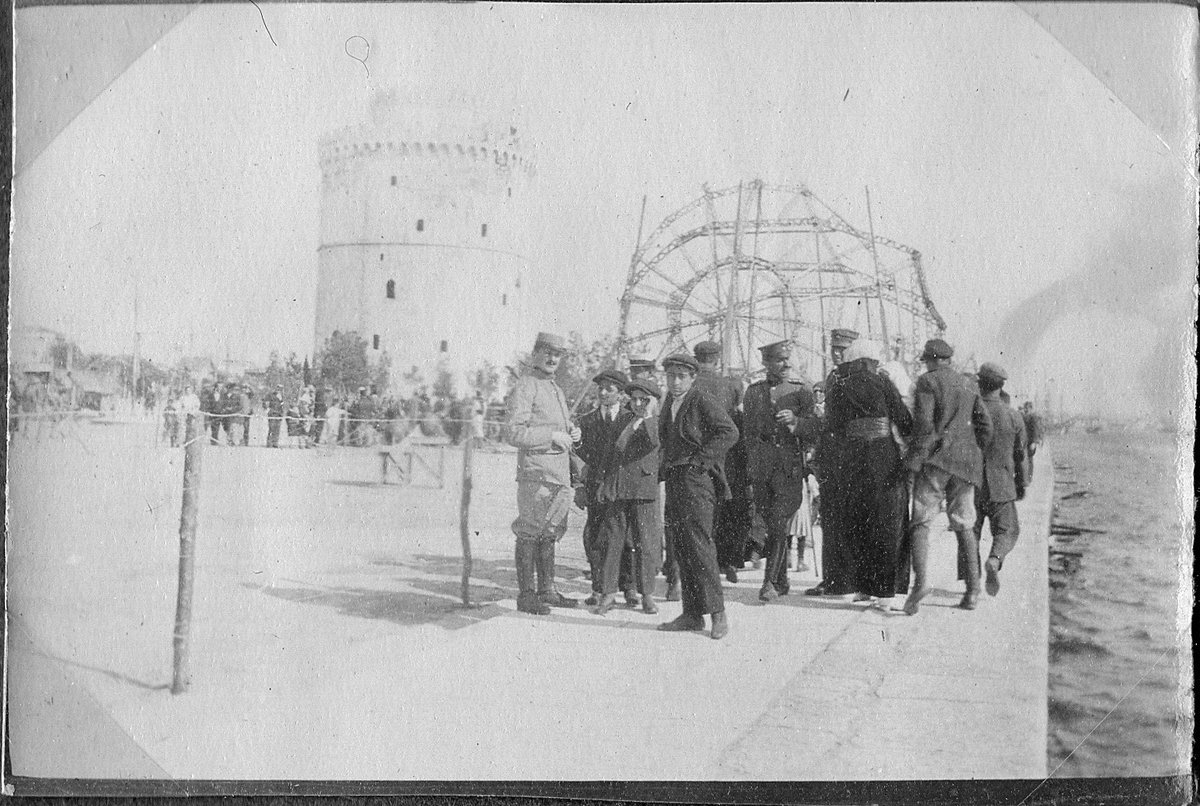
- White Tower: Thessaloniki’s most iconic monument, now a museum detailing the city’s history (Greeka).
- Aristotelous Square: The city’s central plaza, bustling with cafés and shops.
- Roman Forum and Arch of Galerius: Reminders of Thessaloniki’s Roman legacy (Travel Greece).
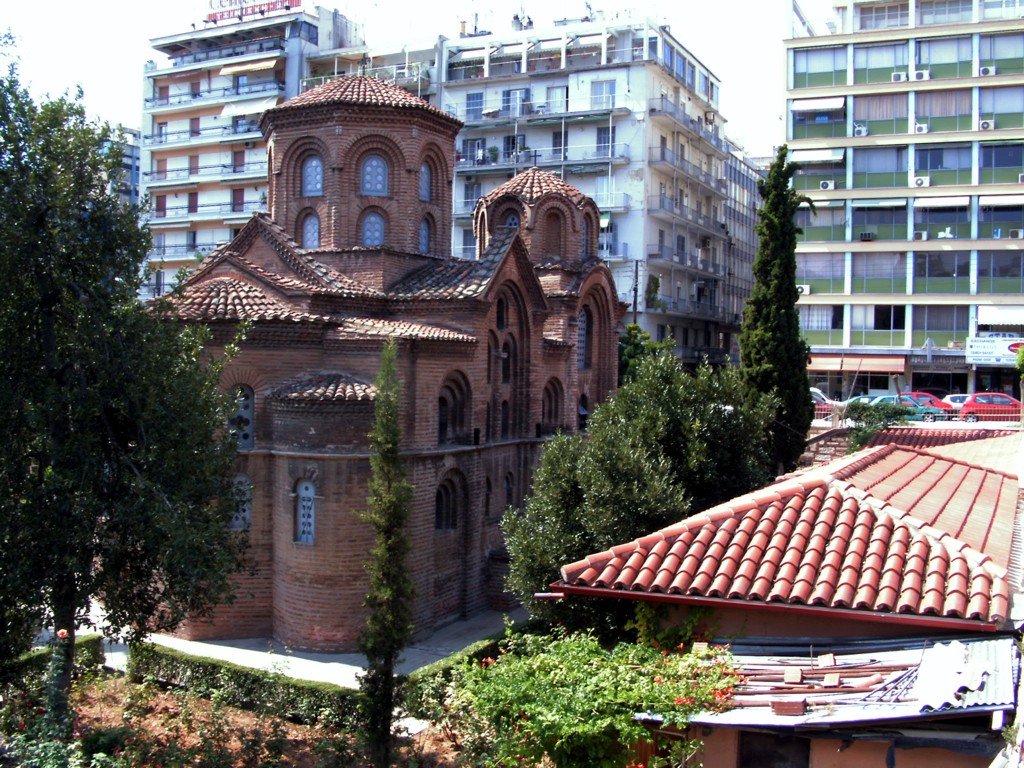
- Early Christian and Byzantine Monuments (UNESCO): Including the Rotunda, Church of St. Demetrius, and Byzantine walls (UNESCO Monuments).
- Jewish Museum of Thessaloniki: Chronicling the city’s rich Jewish heritage (History of Thessaloniki).
- Ano Poli (Upper Town): A hillside district with preserved Ottoman and Macedonian architecture (Kiwi Box).
Heritage Walking Tours
Combine your visit to the memorial with a self-guided or organized walking tour covering Thessaloniki’s main historical and cultural landmarks. Many operators and digital platforms, including the Audiala app, offer thematic tours focusing on migration, religion, and cross-cultural exchange (Voyage Tips).
Frequently Asked Questions (FAQs)
Q: What are the opening hours of the Memorial to Overseas Greeks?
A: The memorial is accessible 24/7 as an outdoor public space.
Q: Is there an entrance fee?
A: No, it is free to visit.
Q: Are guided tours available?
A: The memorial is included in many city walking tours that explore Thessaloniki’s historical and cultural sites.
Q: Is the memorial wheelchair accessible?
A: Yes, the area features paved pathways and ramps.
Q: Can I combine my visit with other sites?
A: Absolutely. The memorial is located near several major landmarks and fits easily into a heritage walking itinerary.
Q: Are there annual commemorative events?
A: Yes, especially during Greek national holidays and Diaspora Day.
Listen to the full story in the app
The whole Memorial To Overseas Greeks, Thessaloniki,
told well.
Audio guides for 1,100+ cities across 96 countries. History, stories, and local insight — offline ready.

Verified, and shown.
Researched and written by the Audiala editorial team from historical records, architectural archives, and local expertise.
Retrieved from https://en.wikipedia.org/wiki/Greek_diaspora
(2025). Thessaloniki travel guide. Retrieved from https://goaskalocal.com/blog/thessaloniki-travel-guide
(2025). Thessaloniki the jewel of the Aegean. Retrieved from https://greekcitytimes.com/2025/01/03/thessaloniki-the-jewel-of-the-aegean/
(2025). Greece marks departure of first death train carrying Thessaloniki Jews. Retrieved from https://greekreporter.com/2025/03/16/greece-marks-departure-first-death-train-thessaloniki-jews/
(2025). Jewish Salonika and the preservation of memory. Retrieved from https://www.ekathimerini.com/society/1206032/jewish-salonika-and-the-preservation-of-memory/
(2025). Things to do in Thessaloniki. Retrieved from https://www.voyagetips.com/en/things-to-do-in-thessaloniki/
(2024). Tracing largely forgotten history of major community. Retrieved from https://news.harvard.edu/gazette/story/2024/05/tracing-largely-forgotten-history-of-major-community/
(2025). Thessaloniki expands its efforts to receive refugees and migrants. Retrieved from https://eurocities.eu/stories/thessaloniki-expands-its-efforts-to-receive-refugees-and-migrants/
(2025). Things to remember about Greek diaspora. Retrieved from https://www.greeka.com/greece-travel/things-remember/
(2022). Thessaloniki’s WW2 Allied prisoner memorial proposal advances. Retrieved from https://neoskosmos.com/en/2022/08/03/news/thessalonikis-ww2-allied-prisoner-memorial-proposal-advances/
(2025). Historical sites to visit in Thessaloniki city. Retrieved from https://travel-greece.org/historical-sites-to-visit-in-thessaloniki-city
Researched from Wikidata, Wikipedia & official sources · fact-checked · How we make our guides →