Plan and listen to Church Of The Saviour with Audiala.
Audio guide in your pocket, itinerary in your browser. Built for the way you actually visit.
Introduction
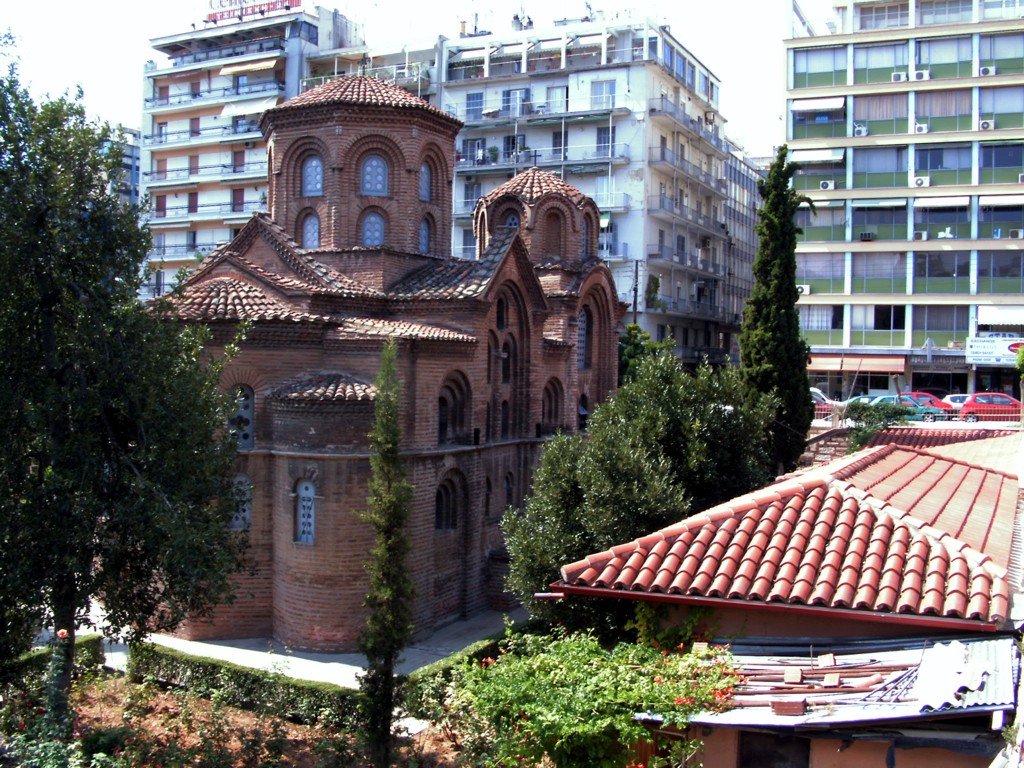
Nestled in the vibrant heart of Thessaloniki, the Church of the Saviour (Naós tou Sotíros, Ναός του Σωτήρος) is one of the city’s most cherished Byzantine monuments. Dating from the early 14th century, this small yet architecturally intricate church stands as a testament to Thessaloniki’s pivotal role in the religious, artistic, and cultural life of the Byzantine Empire. Today, the Church of the Saviour is recognized as part of the city’s UNESCO World Heritage ensemble, offering visitors an evocative glimpse into the spiritual and artistic currents that shaped Byzantine civilization (UNESCO World Heritage Centre, Thessaloniki Municipality).
This comprehensive guide explores the church’s historical context, architectural and artistic features, practical visitor information—including hours, ticketing, and accessibility—and travel tips to help you make the most of your visit to Thessaloniki’s Byzantine treasures.
Historical Background & Foundation
The Church of the Saviour was constructed in the early 14th century, a period marked by the so-called Palaeologan Renaissance—a revival of classical learning and artistic innovation during the Palaiologos dynasty (UNESCO World Heritage Centre). Thessaloniki, then the empire’s second city after Constantinople, was a major urban and spiritual center. The church’s foundation reflects the city’s enduring status as a stronghold of Orthodox Christianity and a catalyst for artistic development.
Archaeological investigations, especially after the 1978 earthquake, revealed a small lead reliquary beneath the altar, suggesting the church’s original dedication was likely to the Virgin Mary before being rededicated to Christ the Saviour (Spotting History). Unlike many Byzantine churches that were converted to mosques during Ottoman rule, the Church of the Saviour retained its Christian character, further highlighting its significance within the local community (Saloniki Guide).
Architectural Significance
The Church of the Saviour exemplifies the late Byzantine "cross-in-square" typology, a hallmark of Orthodox ecclesiastical architecture. Its compact ground plan (approximately 7.5 by 7.5 meters) supports a prominent octagonal dome, giving the structure a harmonious sense of verticality and spatial unity (Byzantine Architecture). Built with cloisonné masonry—alternating layers of brick and stone—the church’s exterior features modest decorative brickwork and blind arches consistent with late Byzantine aesthetics (Byzantine Thessaloniki).
A key engineering feature is the use of pendentives to transition from the square nave to the circular dome, distributing the dome’s weight efficiently and allowing for the insertion of windows that introduce dynamic natural light into the interior.
Artistic Heritage: Frescoes & Mosaics
Frescoes
The interior of the Church of the Saviour is renowned for its exceptional frescoes, considered masterpieces of the Palaiologan Renaissance (Byzantine Art). The dome presents a majestic Christ Pantokrator surrounded by angels and prophets, symbolizing the unity of heaven and earth. Below, depictions of the Virgin Mary, apostles, and narrative scenes from the life of Christ and the Virgin adorn the drum and pendentives. The expressive figures, vibrant color palette, and intricate iconographic details are characteristic of the era’s artistic achievements.
Mosaics
Though only fragments remain, the church’s sanctuary once featured intricate mosaics with geometric and floral motifs set against gold backgrounds, enhancing the spiritual atmosphere (UNESCO World Heritage Centre).
Theological & Cultural Importance
The Church of the Saviour is more than an architectural relic; it continues to function as a place of worship and community gathering. Its iconographic program reflects key Orthodox theological themes—Christ as Pantokrator, the Divine Liturgy, and the communion of saints—emphasizing salvation and the unity of the faithful (Byzantine Iconography). The church’s integration into Thessaloniki’s urban fabric, alongside monuments like the Rotunda and Hagia Sophia, underlines its historical role in the spiritual and social life of the city.
Visiting Hours, Tickets, and Accessibility
Opening Hours
- General Hours: Tuesday–Sunday, 9:00 AM – 5:00 PM (closed Mondays and major public holidays)
- Note: Hours may vary seasonally or for religious services. Always check with the Thessaloniki Tourism Office or Saloniki Guide before your visit.
Tickets
- Admission: Free (no "Church of the Saviour tickets" are required)
- Donations: Voluntary contributions are welcomed to support conservation.
Accessibility
- Physical Access: The entrance is at street level, but the doorway is narrow and the floor uneven—wheelchair users may require assistance.
- Facilities: No restrooms or cloakrooms on site; amenities are available nearby.
- Language: Bilingual (Greek/English) signage; local guides available in several languages.
Photography
- Allowed without flash. Please respect ongoing services and the sacred nature of the space.
Tips for Visitors
- Dress Code: Modest attire is expected; cover shoulders and knees, remove hats.
- Best Times: Early morning or late afternoon for quieter visits and optimal lighting.
- Family & Group Visits: Best suited for individuals or small groups due to limited interior space.
- Public Transport: Centrally located near the Arch of Galerius and easily accessible by foot or city bus (lines 2, 5, 12).
- Safety: The area is generally safe; exercise standard precautions for personal belongings.
- Guided Tours: Many walking tours of Byzantine Thessaloniki include the church; inquire with local operators for curated experiences.
Nearby Attractions & Suggested Itineraries
The Church of the Saviour is ideally situated for a self-guided tour of Thessaloniki’s historic center. Nearby highlights include:
- Arch of Galerius (Kamara): Iconic Roman triumphal arch.
- Rotunda: Monumental Roman mausoleum turned Byzantine church.
- Hagia Sophia: 8th-century basilica with outstanding mosaics.
- Panagia Chalkeon: 11th-century church, famed for its brickwork and frescoes.
- Roman Forum: Ancient civic center.
A suggested walking itinerary: Rotunda → Arch of Galerius → Church of the Saviour → Hagia Sophia → Panagia Chalkeon (inlovewithgreece.com itinerary).
Frequently Asked Questions (FAQ)
Q: What are the visiting hours?
A: Tuesday to Sunday, generally 9:00 AM – 5:00 PM. Closed Mondays and major public holidays.
Q: Do I need a ticket?
A: No; admission is free, with optional donations.
Q: Are guided tours available?
A: Yes, the church is featured in many local Byzantine history tours.
Q: Is the church wheelchair accessible?
A: The entrance is at street level, but interior access is limited. Assistance may be necessary.
Q: Can I take photographs inside?
A: Yes, but without flash. Be mindful during services.
Q: Where is the church located?
A: At the intersection of P.P. Germanou and Egnatia streets, near the Arch of Galerius.
Listen to the full story in the app
The whole Church Of The Saviour,
told well.
Audio guides for 1,100+ cities across 96 countries. History, stories, and local insight — offline ready.

Verified, and shown.
Researched and written by the Audiala editorial team from historical records, architectural archives, and local expertise.
Researched from Wikidata, Wikipedia & official sources · fact-checked · How we make our guides →