Plan and listen to Church Of The Acheiropoietos with Audiala.
Audio guide in your pocket, itinerary in your browser. Built for the way you actually visit.
Introduction
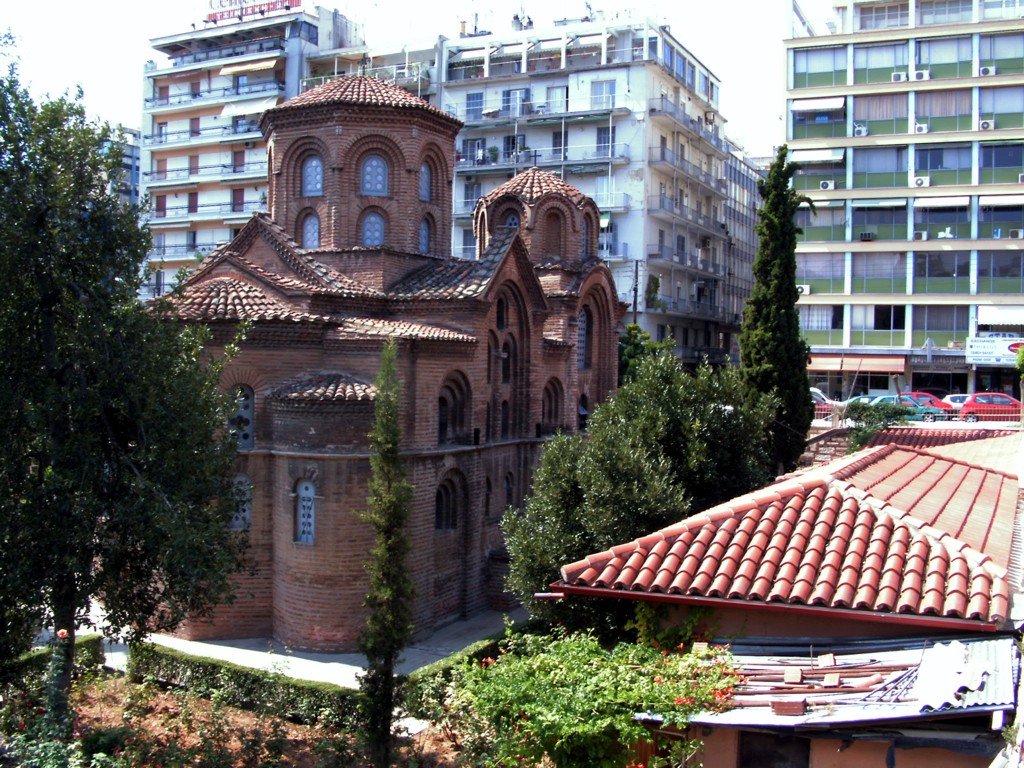
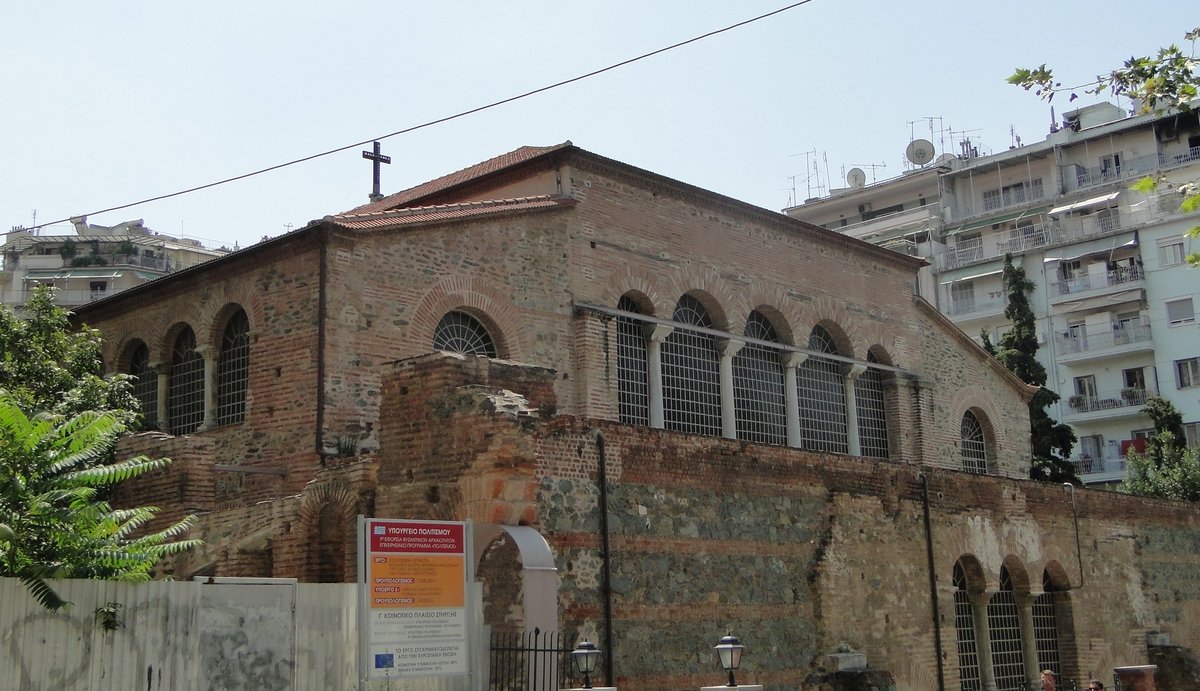
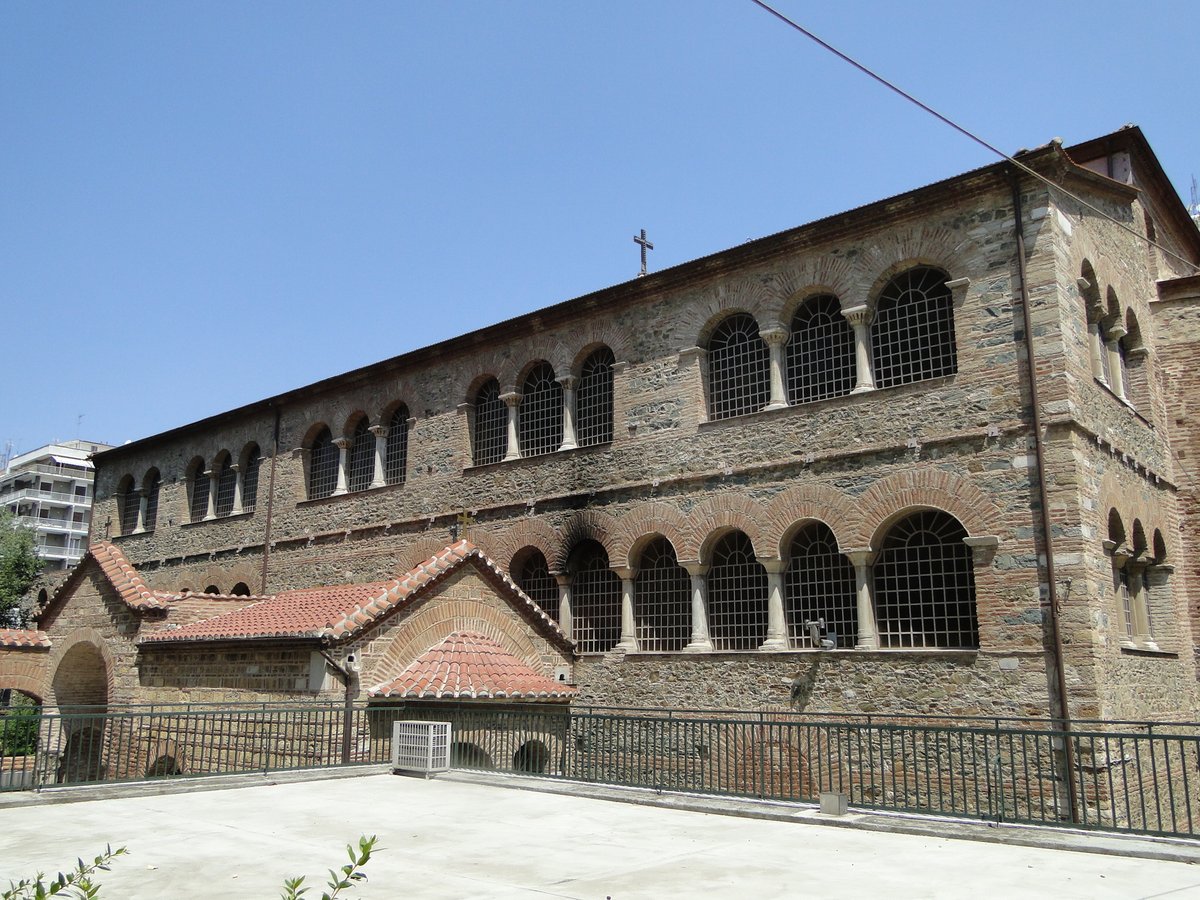
Situated at the heart of Thessaloniki, Greece, the Church of the Acheiropoietos stands as one of the most significant monuments of early Christian and Byzantine architecture. Built in the mid-5th century CE under Emperor Theodosius II, this basilica is a prominent example of the city’s rich, multicultural past and spiritual heritage. Its name, “Acheiropoietos” (“not made by human hands”), refers to a miraculous icon of the Virgin Mary once enshrined here, signifying its importance as a center of pilgrimage and devotion (UNESCO; Visit Greece).
Notable for its triple-aisled basilica design, marble columns—many repurposed from Roman structures—elaborate mosaics, and preserved liturgical furnishings, the Acheiropoietos reflects centuries of religious, artistic, and cultural evolution. Over its long history, it has transitioned from a Christian basilica to an Ottoman mosque (Eski Camii), and back to a Christian church, bearing witness to Thessaloniki’s layered identity (Greeka; Saloniki Guide; SpottingHistory; Wikipedia).
This guide provides a comprehensive overview of the church’s architecture, historical significance, visitor information, and travel tips for making the most of your visit to this remarkable monument.
- Early Christian Foundations and Construction
- Architectural Evolution and Features
- Decorative Elements and Artistic Highlights
- Religious and Cultural Significance
- Historical Transformations
- Visiting Acheiropoietos: Hours, Tickets, and Tips
- Frequently Asked Questions (FAQ)
- Summary and Visit Tips
- Sources and Further Reading

1. Early Christian Foundations and Construction
The Acheiropoietos was constructed between 450 and 470 CE atop the remains of a Roman bath complex, a practice common in the era as Christianity established itself in former urban centers of the Roman Empire (UNESCO). Its dedication to the Virgin Mary and association with the acheiropoietos icon—a miraculous image believed to be created without human hands—cemented its role as a revered pilgrimage site (Visit Greece).
2. Architectural Evolution and Features
Basilica Structure
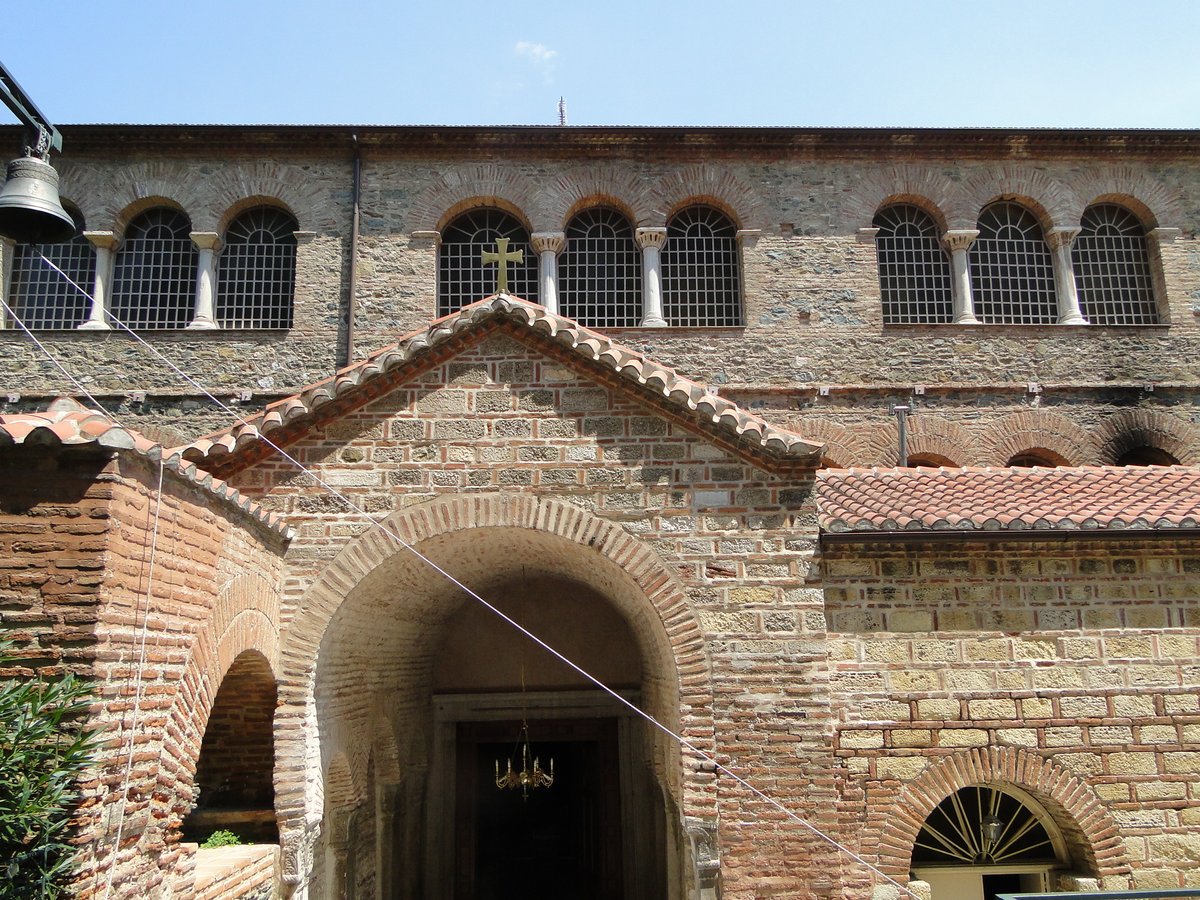
The church is a three-aisled basilica, with a central nave approximately 14.2 meters wide—exceptional for its time—and flanked by two side aisles. The nave is separated by colonnades of marble columns, many sourced from Proconnesos and earlier Roman buildings, reflecting both resourcefulness and the city’s importance (ArchNet; Greeka). The sanctuary at the eastern end features a semicircular apse, housing the rare syntrotron (tiered clergy seats) and bishop’s throne.
Galleries and Auxiliary Spaces
Above the aisles, galleries accessible by northeast staircases provided additional space, likely for female worshippers in accordance with early Christian customs (Macedonian Heritage). The narthex and exonarthex (outer vestibule) form the transitional entry, while remnants of the underlying Roman baths are still visible, linking the site to its pre-Christian history.
3. Decorative Elements and Artistic Highlights
Columns and Capitals
The marble columns are adorned with Theodosian and Ionic capitals, decorated with acanthus leaves and crafted by artisans from Constantinople, indicating the church’s connection to the imperial capital (Macedonian Heritage).
Mosaics
Acheiropoietos preserves some of the oldest mosaics in Thessaloniki, especially in the upper colonnades and apse. These feature intricate geometric and floral motifs in gold and vibrant colors, evoking the heavenly realm and early Byzantine artistic ideals (The Byzantine Legacy).
Frescoes
Notable frescoes from the 13th century depict the Forty Martyrs of Sebaste, representing a transition in Byzantine art toward more expressive, naturalistic styles. Though partially preserved, they provide insight into the spiritual and artistic life of medieval Thessaloniki (Greeka).
Floor Decoration
The original Proconnesian marble pavement in the central nave features geometric designs, exemplifying the artistry and resources dedicated to the church’s construction (Saloniki Guide).
4. Religious and Cultural Significance
Dedicated to the Virgin Mary, the Acheiropoietos played a central role in both the veneration of the Virgin and the cult of Saint Demetrius, Thessaloniki’s patron. Major feasts, especially the Dormition on August 15th, draw worshippers and visitors alike (Thessaloniki Tourism).
5. Historical Transformations
Byzantine Period
Throughout the Byzantine era, the Acheiropoietos underwent several modifications, including the addition of galleries and updated liturgical furnishings, mirroring changes in ecclesiastical practice (Wikipedia).
Ottoman Period
In 1430, following the Ottoman conquest, the church was converted into the Eski Camii, Thessaloniki’s first mosque. Islamic features such as the mihrab and an inscription by Sultan Murad II were added, while much of the Christian architecture remained intact. The church’s conversion ensured its preservation through five centuries of Ottoman rule (SpottingHistory).
Modern Era and UNESCO Recognition
After Thessaloniki’s liberation in the early 20th century, Acheiropoietos was restored for Christian worship. It provided refuge to fire victims and refugees, and underwent major restorations. In 1988, it was inscribed on the UNESCO World Heritage List as part of the Paleochristian and Byzantine Monuments of Thessaloniki (UNESCO).
6. Visiting Acheiropoietos: Hours, Tickets, and Tips
Visiting Hours
- Monday to Saturday: 07:30–12:00 and during evening Vespers (typically 17:00–19:00; times may vary seasonally)
- Sunday: Closed to tourists except during religious services
For the latest updates on opening hours, call +30 231 022 7369 or +30 231 027 2820 (inthessaloniki.com; Thessaloniki Blog).
Tickets and Admission
- Entry: Free for all visitors. No reservations required (Thessaloniki Blog).
- Guided tours: Available through local operators; book in advance for peak seasons.
Accessibility
- Main entrance at street level; however, accessibility may be limited due to historic flooring and lack of ramps or elevators.
- Wheelchair users may require assistance; restrooms are not available on-site.
Dress Code and Visitor Etiquette
- Shoulders and knees must be covered.
- Maintain respectful silence, especially during services.
- Photography without flash is generally allowed, but check signage.
- No food or drink inside.
Facilities
- No public restrooms inside; use nearby cafes.
- Limited seating available.
- Interior lighting is subdued to protect artworks.
Directions and Nearby Attractions
- Address: 54 Agias Sofias Street, Thessaloniki, Greece (Google Maps)
- Accessible by bus (lines 2, 5, 15), taxi, or on foot from Aristotelous Square.
- Paid parking lots nearby.
Combine your visit with:
- Rotunda and Arch of Galerius
- Church of Agia Sofia
- Byzantine Walls
- Archaeological Museum of Thessaloniki
7. Frequently Asked Questions (FAQ)
Q: What are the visiting hours?
A: Monday–Saturday: 07:30–12:00 and during evening Vespers. Closed to tourists on Sundays except for services.
Q: Is admission free?
A: Yes, entry is free; no tickets required.
Q: Are guided tours available?
A: Yes, through local tour agencies.
Q: Is the church accessible for people with disabilities?
A: Accessibility is limited; no ramps or elevators.
Q: Can I take photographs inside?
A: Non-flash photography is usually allowed; check signage.
8. Summary and Visit Tips
The Church of the Acheiropoietos is a living testament to Thessaloniki’s transformation through the Roman, Byzantine, and Ottoman eras. Its remarkable basilica architecture, preserved mosaics, and unique liturgical features offer visitors a rare glimpse into early Christian worship and art. The site’s central location makes it ideal for combining with other major attractions.
Visit tips:
- Arrive early for a peaceful experience and better lighting.
- Dress modestly and respect religious practices.
- Use local guided tours or audio guides for a richer understanding.
- Explore nearby monuments to appreciate Thessaloniki’s layered history.
For audio guides and up-to-date visitor information, consider the Audiala app.
Listen to the full story in the app
The whole Church Of The Acheiropoietos,
told well.
Audio guides for 1,100+ cities across 96 countries. History, stories, and local insight — offline ready.
Verified, and shown.
Researched and written by the Audiala editorial team from historical records, architectural archives, and local expertise.
Researched from Wikidata, Wikipedia & official sources · fact-checked · How we make our guides →