Plan and listen to Church Of Panagia Chalkeon with Audiala.
Audio guide in your pocket, itinerary in your browser. Built for the way you actually visit.
Introduction
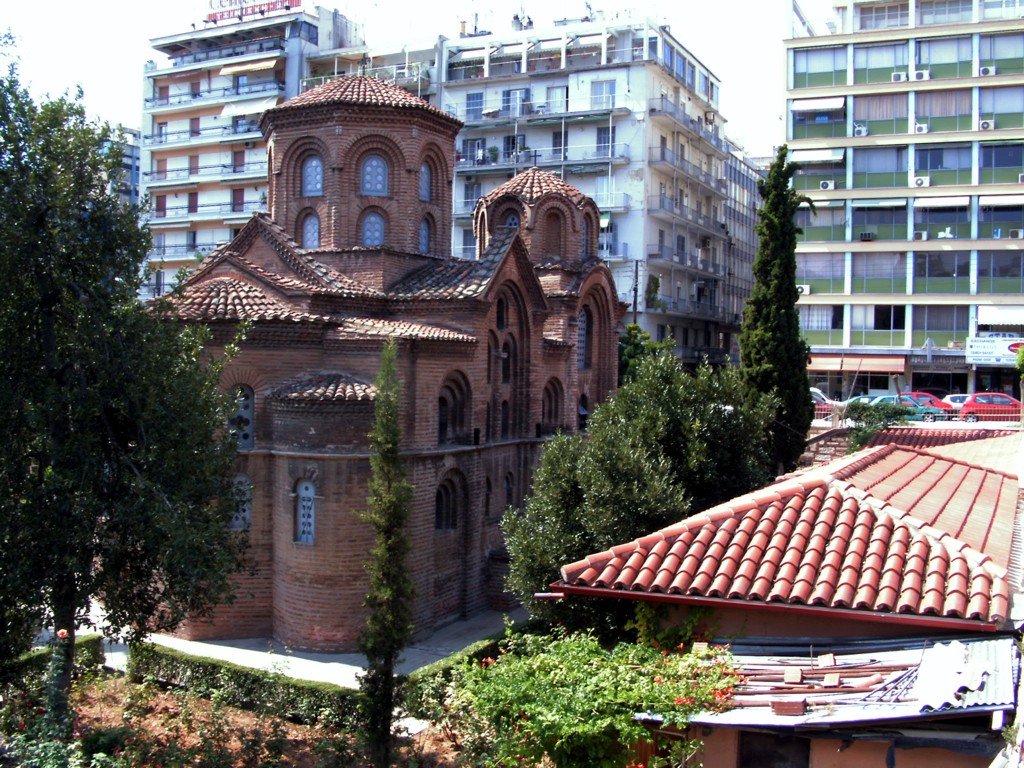
The Church of Panagia Chalkeon, affectionately known as the “Red Church” for its striking brickwork, is a shining jewel of Byzantine Thessaloniki and a testament to the city’s rich religious, artistic, and community life. Founded in 1028 AD by the Byzantine official Christophoros and his family, this church was not only a place of worship but also a center for the city’s coppersmith guild, reflecting the vibrant integration of faith and craft in Thessaloniki’s urban fabric (Archaeology Wiki; Wikipedia). Today, Panagia Chalkeon stands as a living monument—an active Greek Orthodox church and a UNESCO World Heritage Site—inviting visitors to explore its layered past, extraordinary architecture, and enduring cultural significance.

History and Foundation
Panagia Chalkeon was established in the early 11th century, as confirmed by a dedicatory inscription, by Christophoros, the Byzantine katepano of Longobardia, and his family. The church’s name, meaning “Our Lady of the Coppersmiths,” stems from its location within the coppersmiths’ quarter, embedding it deeply in the artisanal fabric of medieval Thessaloniki (SpottingHistory). Archaeological studies suggest that the church was built atop a former pagan temple, symbolizing the city’s transition from ancient to Christian worship (inthessaloniki.com; The Byzantine Legacy).
Architectural Significance
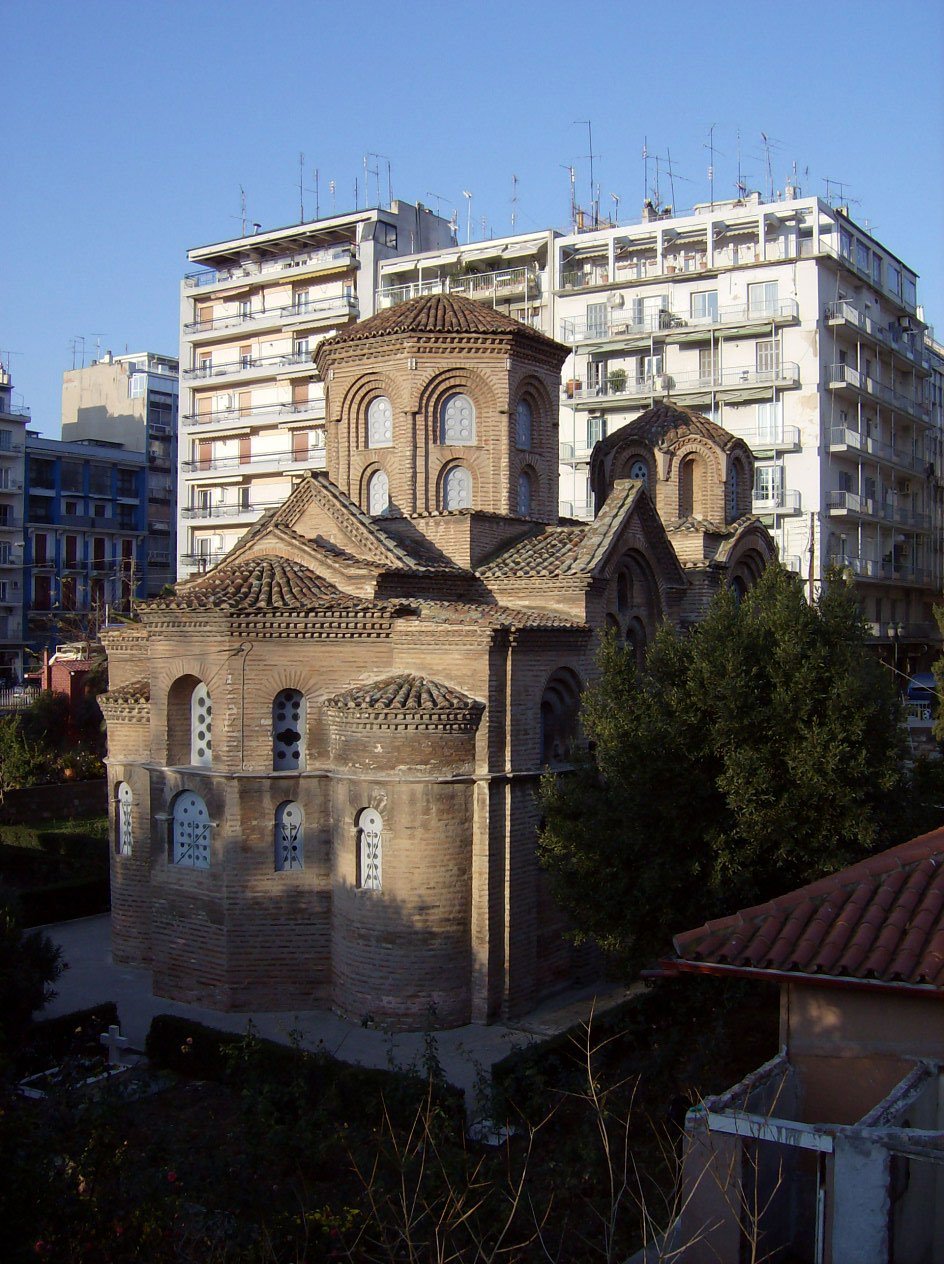
Panagia Chalkeon exemplifies Middle Byzantine architecture with its cross-in-square plan, central octagonal dome, and elegant use of red brick—hence its nickname. Its prominent features include:
- Exterior: Decorative brickwork, arches, and pilasters inspired by Constantinopolitan design. The church’s form is accentuated by saddleback roofs and triangular pediments, making the arms of the cross visible from outside (SpottingHistory).
- Interior: The naos is defined by four marble columns supporting the dome, with pendentives transitioning to the octagonal drum. The narthex and upper gallery likely served liturgical and sacristy functions.
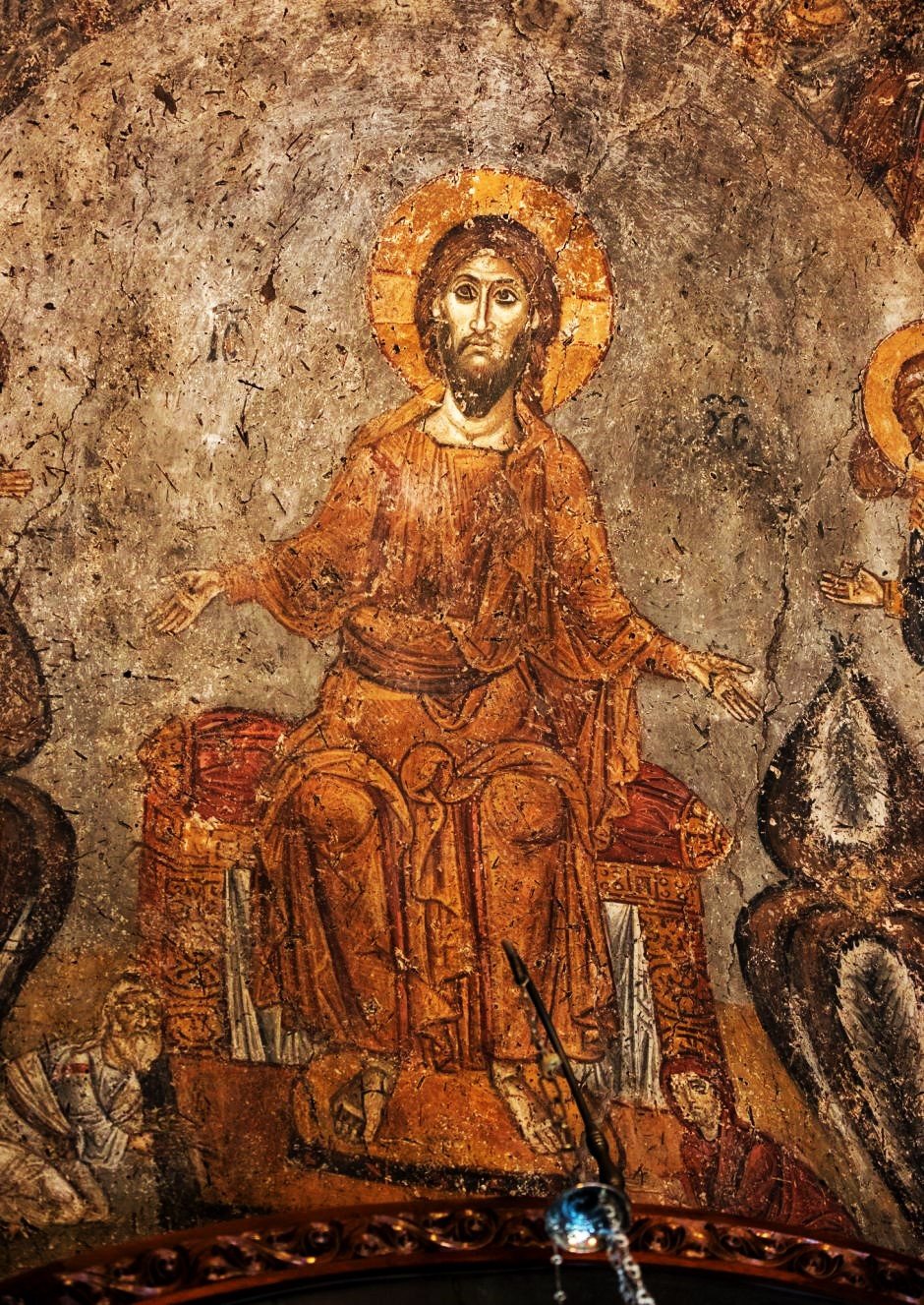
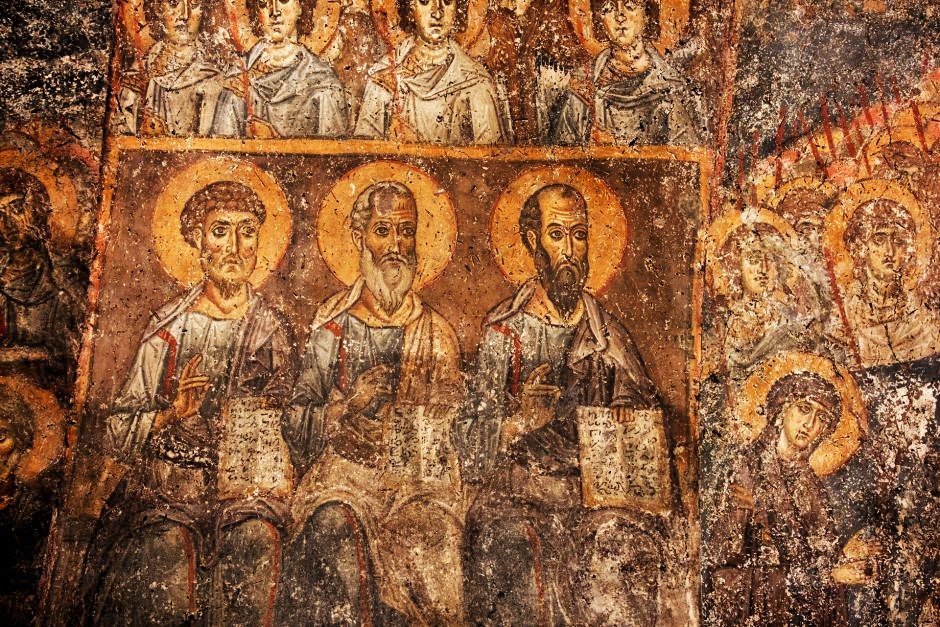
- Iconography: The dome depicts the Ascension of Christ, surrounded by prophets and seraphim. The narthex features the Last Judgment, emphasizing resurrection and eschatology. Fragments of 11th-century painting, later Palaiologan additions, and depictions of the Dormition of the Virgin and saints remain (SpottingHistory).
- Funerary Role: The founder's tomb is unusually set in an arcosolium within the naos, reinforcing the church’s function as a family mausoleum (The Byzantine Legacy).
Role in Thessaloniki’s Culture and Religion
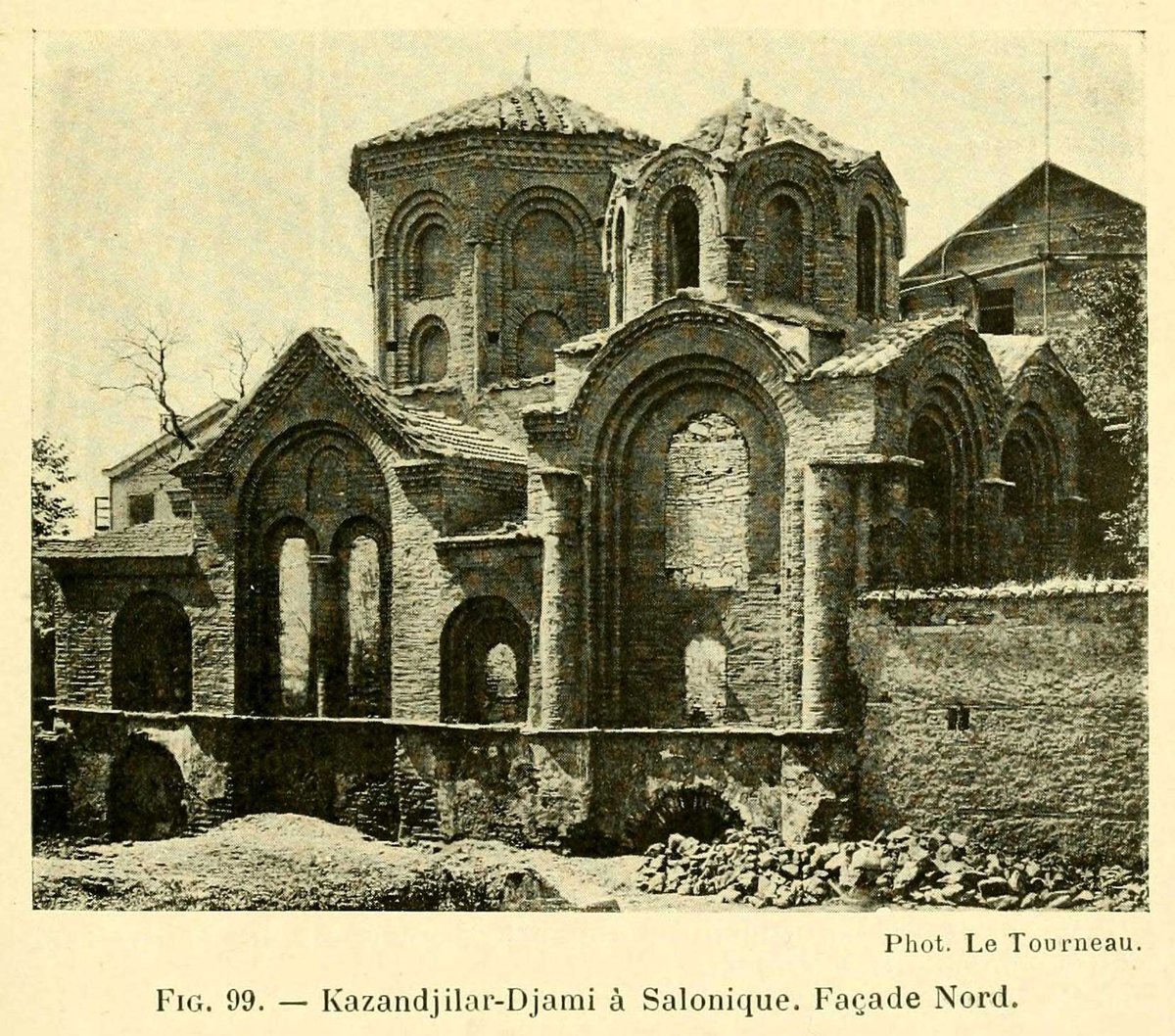
Serving the city’s coppersmith guild, Panagia Chalkeon was both a religious and communal nucleus. It survived tumultuous centuries, including its conversion into a mosque (Kazancilar Camii) during Ottoman rule and restoration to Christian worship after 1912. Today, it remains an active parish church, hosting major religious celebrations such as the Dormition of the Virgin Mary on August 15th (Religious Greece; UNESCO).
The church’s layered history—as church, mosque, and restored monument—embodies Thessaloniki’s spirit of coexistence and transformation, making it a symbol of the city’s multicultural heritage.
Visiting Information
Hours and Tickets
- Monday–Friday: 07:30–12:00
- Saturday: 07:30–11:00
- Evenings: Vespers (varies by season, typically 16:30–17:00 in winter and 18:00–18:30 in summer)
- Sunday: 10:00–13:00 (varies on feast days)
- Admission: Free of charge (Official Thessaloniki Tourism)
Arrive at least 30 minutes before closing; the church may close for services or private events.
Accessibility
- Physical Access: The church is partially accessible for those with mobility challenges; some steps and uneven floors remain.
- Facilities: No restrooms or café on-site; amenities are available in nearby Aristotelous Square.
- Languages: Greek is spoken; basic English is usually understood. Informational plaques are provided in Greek and English.
Dress Code and Etiquette
- Modest attire required (shoulders and knees covered)
- Remove hats inside
- Speak quietly and respect worshippers
Guided Tours and Special Events
Guided tours are offered by local agencies and are included in many walking tours of Thessaloniki’s Byzantine churches (Time Travel Turtle). The church is especially vibrant during Orthodox feast days, particularly August 15th, when special services and community events take place.
Nearby Attractions & Travel Tips
- Location: Junction of Egnatias and Chalkeon Streets, central Thessaloniki (Google Maps)
- Nearby Sites: Rotunda, Hagia Sophia, Archaeological Museum, Roman Agora, and Aristotelous Square
- Transport: Easily reached by foot or public transport; bus lines 8 and 31 stop nearby
- Photography: Allowed without flash; dome iconography and exterior brickwork are highlights
Travel Tips:
- Visit early morning or late afternoon for the best light and fewer crowds.
- Join a walking tour for greater historical context.
- Bring water, especially in summer, and plan for nearby amenities.
Frequently Asked Questions (FAQ)
Q: Is there an admission fee?
A: No, entry is free.
Q: Are there guided tours?
A: Yes, through local tour operators or as part of city walking tours.
Q: Is photography allowed?
A: Yes, but without flash and not during services.
Q: Is the church accessible for people with disabilities?
A: Partially; some areas have steps or uneven flooring.
Q: What are the main religious services?
A: Major feasts, especially August 15th (Dormition of the Virgin Mary), and regular Vespers.
Q: What nearby attractions should I combine with my visit?
A: The Rotunda, Hagia Sophia, and Aristotelous Square are all within walking distance.
Q: Are there any holiday closures?
A: Yes; the church is closed on January 1, March 25, Easter Sunday, May 1, and December 25–26. Hours may vary on religious holidays (Official Thessaloniki Tourism).
Listen to the full story in the app
The whole Church Of Panagia Chalkeon,
told well.
Audio guides for 1,100+ cities across 96 countries. History, stories, and local insight — offline ready.
Verified, and shown.
Researched and written by the Audiala editorial team from historical records, architectural archives, and local expertise.
Researched from Wikidata, Wikipedia & official sources · fact-checked · How we make our guides →