

Place
Greece Updated Apr 2026
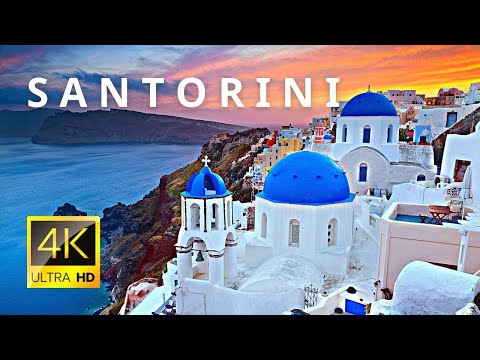
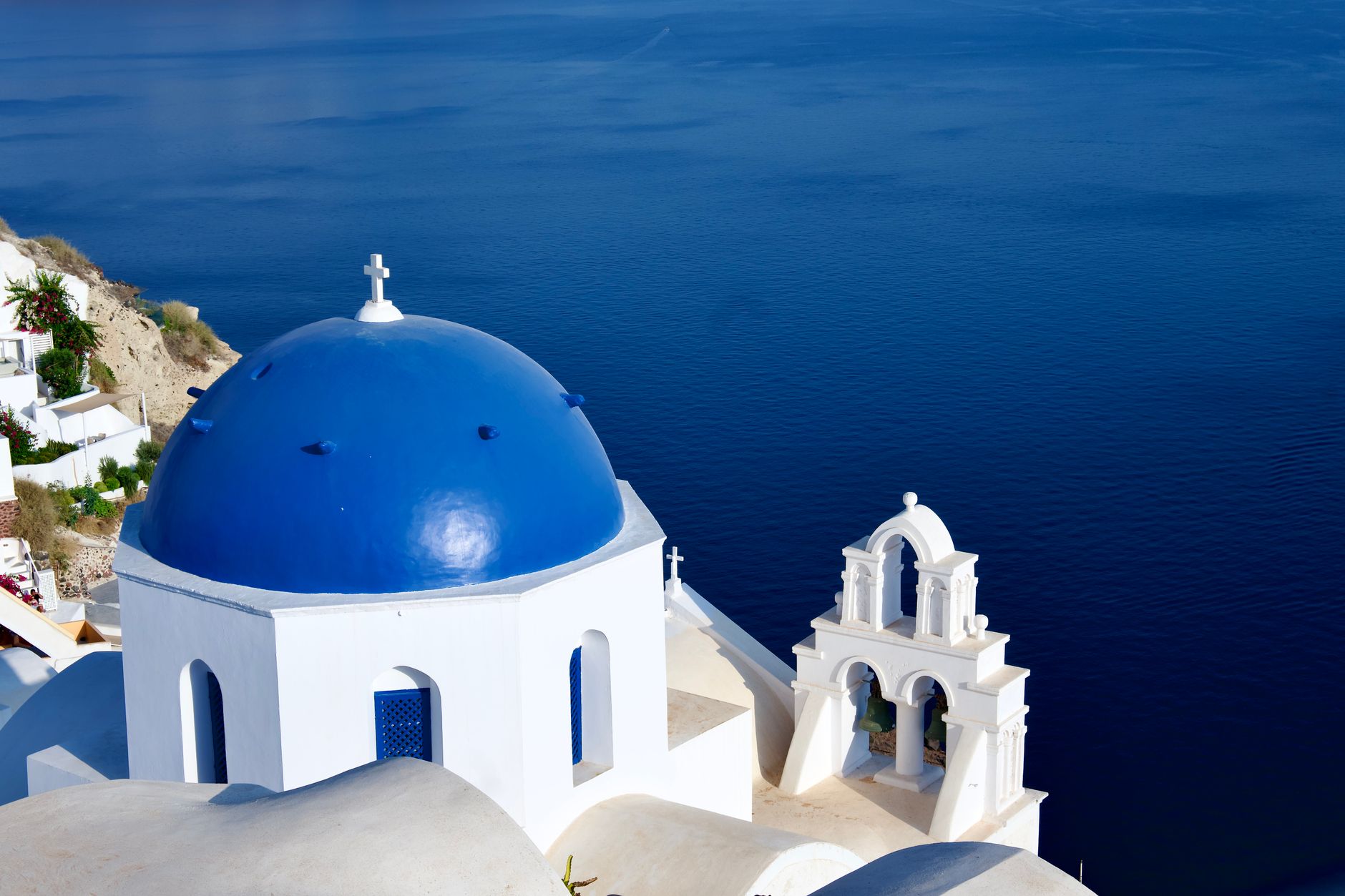
The caldera at the heart of Santorini, Greece, is not a scenic bay — it's the hollow of a volcano that erased a Bronze Age civilization in a single catastrophic eruption around 1,600 BCE, buried it under meters of ash, and kept the geology restless enough that an active volcanic islet still emits sulfur plumes in the middle of the water today. The cliffs you photograph from above are the surviving walls of that crater. The beaches are volcanic ash. The wines taste of mineral earth that grows nothing like itself anywhere else on the planet.
 Photo: Pixabay / Pexels
Built from cited sources · see the method · How we make our guides →
Three and a half million visitors arrive each year on an island of 76 square kilometers — 220 tourists for every permanent resident at peak season. That number is not a footnote; it is the defining condition of a visit. Oia's famous sunset draws thousands to the castle ruins simultaneously, and the caldera-view restaurants price accordingly. But the same island in late April, or the first week of October, or at 7am before the cruise ships dock, is genuinely different.
The volcanic soil does two things with unusual intensity: it grows Assyrtiko grapes and cherry tomatoes that have no real equivalent elsewhere. Assyrtiko produces a dry white wine with a saline-mineral finish and high enough acidity to cut through anything from the sea — closer in spirit to Chablis, but more austere. The cherry tomatoes, grown without irrigation in pumice soil with roots that chase deep moisture, develop a sweetness-to-acid ratio that is almost jarring when you eat one warm. Both have EU PDO protection. Both have been cultivated here continuously for over 3,000 years.
Most of Santorini's real life happens inland, away from the caldera rim. Pyrgos, Megalochori, Exo Gonia — these are working villages where fava is ordered by people who eat it every week. The island has five intact medieval kastelia, a Hellenistic ruin sitting on a 365-meter summit, and a museum in Fira holding Minoan frescoes so vivid in color that you instinctively doubt their age. Most visitors never enter any of them.
Not every monument, just the ones we'd walk you past ourselves.
Where to wander, by quarter — each with its own rhythm.
Before you go
From Bronze Age city-state to the world's most-photographed caldera
Fishermen and farmers arrived on a volcanic island already exhaling sulfur. Ceramic shards link them to the Saliagos Culture of the mid-5th millennium BCE — a thin scatter of human presence on land that would, four thousand years later, swallow them whole. The settlement at what is now Akrotiri was a beginning so modest it barely registers in the archaeological record. Nothing about this early fishing camp predicted what it would become.
By 2000 BCE, Akrotiri had become something extraordinary: a prosperous trading city of several thousand people with paved streets, covered drainage channels, and two-story buildings decorated with vivid frescoes. Ships from Cyprus, Egypt, and Minoan Crete stopped here regularly, drawn by the island's position at the crossroads of Aegean copper trade. The sewage system connected individual buildings to street drains. Europe would not see that level of sanitary infrastructure again for roughly 3,000 years.
Precursor earthquakes emptied the city first — no human remains have been found in the ash, meaning the population escaped before the catastrophe struck. What followed was a VEI 7 event, one of the five largest volcanic eruptions in human history: 28 to 41 cubic kilometers of rock ejected, pyroclastic flows reaching the coast, tsunamis crossing the Aegean, and 7 centimeters of ash recorded on Crete. The island's center collapsed into the caldera. What remained was the horseshoe-shaped ridge we stand on today.
According to Herodotus, Phoenician settlers occupied the depopulated island for eight generations and named it Callista — the most beautiful. Their contribution turned out to be weightier than the name: during this period, the Phoenician alphabet was adapted to write Greek here. Inscriptions in the Phoenician-derived script found at Ancient Thera include some of the oldest Greek alphabetic writing known anywhere. An isolated Aegean island quietly became a relay station for one of civilization's most consequential technologies.
A Spartan regent named Theras — descended, by tradition, from the royal house of Cadmus — led a company of Dorian Greeks to Callista and renamed it after himself. He had served as regent for the young Spartan twin kings and chose exile over subordination when they came of age. The city he established on the summit of Mesa Vouno, 396 meters above the sea, remained the island's primary urban center for a thousand years. He gave Santorini its Greek name, and the name has outlasted everything else about him.
After seven years of drought, Theran emissaries consulted the Oracle at Delphi and received clear instructions: sail to Libya and establish a colony. They resisted for years; the drought continued. In 631 BCE, a nobleman named Battus led the expedition that founded Cyrene, which grew into one of antiquity's great intellectual centers — it produced Eratosthenes, who calculated Earth's circumference to within 1% accuracy, and the philosopher Aristippus. This single act of reluctant colonization is the island's most consequential contribution to world history. Thera exported its people, and the people changed the world.
The Ptolemaic successors of Alexander the Great transformed the Mesa Vouno summit into a major naval base for their Aegean fleet. An Egyptian garrison was stationed here; temples to Ptolemaic rulers and Egyptian gods were built alongside the existing Dorian sanctuaries. The ruins that visitors climb to today — the gymnasium, the theatre, the inscriptions — date substantially from this era of Egyptian administration. It was, for a century, one of the more generously funded building campaigns in the island's history.
The historian Strabo recorded that a new volcanic islet, called Iera (sacred), emerged from the caldera in 197 BCE — the first documented eruption since the Bronze Age catastrophe. The island rose in fire and steam, visible from every village on the rim. For the Greeks watching from above, an island materializing from open water was not merely a geological curiosity. Nineteen centuries of caldera eruptions, each one adding slightly to what is now Nea Kameni, began at this moment.
When the caldera erupted in 726 CE, Byzantine Emperor Leo III the Isaurian read it as divine endorsement for his Iconoclasm — the prohibition on religious images. Byzantine chronicles record the eruption explicitly in this political context: God had spoken, in ash and fire, against the veneration of icons. It is a curious moment in the island's history, when a geological event became state theology. The volcano that had already destroyed one civilization was now being recruited to reform the spiritual practice of another.
Emperor Alexios I Komnenos commissioned the Church of Panagia Episkopi at Mesa Gonia around 1090. It still stands. Its early Christian mosaics remain the finest Byzantine ecclesiastical art in the Cyclades — the quality of the marble altar, the scale of the nave, the precision of the stonework all reflect imperial patronage rather than provincial piety. Fifteen hundred years of uninterrupted religious use have left the building half-buried in accumulated earth, so its interior seems to descend into the island rather than rise from it.
The Arab cartographer Muhammad al-Idrisi, working for the Norman King Roger II of Sicily, produced his geographical compendium around 1153–1154 and recorded the island by the name Santorini — the oldest known written use of the name, derived from the Venetian Santa Irini, Saint Irene. The Greeks continued calling it Thera. The name that would eventually dominate global usage first appeared not in a Greek chronicle but in an Arabic text written for a Norman Christian king. The island has always been a place where identities collide and names accumulate.
After the Fourth Crusade sacked Constantinople, the Venetian nobleman Marco Sanudo sailed through the Cyclades seizing islands almost unopposed, establishing the Duchy of the Archipelago. Santorini passed to the Barozzi family as a feudal fief — Venetian barons ruling a Greek-speaking Orthodox population from hilltop castle towns. Five fortified kasteli were built against pirate raids: Skaros, Pyrgos, Emporio, Akrotiri, and Agios Nikolaos at the island's northern tip. The whitewashed cave-house architecture the island is famous for begins here, carved into volcanic cliff faces where attackers could not reach.
Ottoman admiral Hayreddin Barbarossa swept through the Cyclades in 1537 with a fleet that met no serious resistance. Santorini became an Ottoman tributary — paying taxes to the Sultan while technically remaining under the Duchy of Naxos. The island retained its Latin administrative apparatus and its unusual combination of Orthodox and Catholic Christians, but the geopolitical ground had shifted permanently. Full Ottoman incorporation was only a generation away.
Ottoman admiral Piyale Pasha formally annexed Santorini in 1579, ending more than three centuries of Latin governance. The Ottomans called the island Dermetzik — small mill. What changed was administration; what didn't change, remarkably, was the Catholic minority's right to worship. The unusual confessional arrangement — Orthodox and Catholic churches coexisting on the same volcanic hillside — persisted through the entire Ottoman period and survives today in Pyrgos, where a Catholic church still holds services alongside the Orthodox chapel fifty meters away.
Fifteen kilometers northeast of Santorini, the Kolumbo submarine volcano erupted in 1649 and briefly breached the sea surface in a column of fire and ash. The spectacle was not the worst of it. Toxic gases — hydrogen sulfide and sulfur dioxide — drifted back to the main island and killed approximately 70 people on shore. Tsunamis damaged the eastern coast. The eruption lasted four months and deposited pumice layers 250 meters thick on the crater walls. Today Kolumbo sits 18 meters below the surface, still geothermally active, still monitored, still capable.
Through the 18th and 19th centuries, Santorini's merchant fleet carried Vinsanto — a sun-dried Assyrtiko dessert wine of concentrated sweetness — north to Russia, where it was prized by the Orthodox Church and the aristocracy alike. By 1810, the island possessed the 7th largest fleet in all of Greece: 32 ships, an extraordinary measure of maritime prosperity for a 76-square-kilometer rock. Santorini wine was also sold to France, where it was blended into Burgundy and Bordeaux to raise their alcohol content. The French eventually, and understandably, banned the practice.
On May 5, 1821, six weeks after the mainland revolt began, Evangelis Matzarakis raised the Greek revolutionary flag on Santorini and expelled the Ottoman officials. The transition was nearly bloodless; the garrison was small and the islanders organized. The island's population at independence stood at approximately 13,235. Nine years later, the London Protocol made it official: Santorini was part of the new Greek state, ending 242 years of Ottoman rule over a community that had never fully surrendered its Greek identity.
Spyros Markezinis was born in Santorini in 1909 and eventually rose to become Prime Minister of Greece — for approximately seven weeks in 1973, appointed by the military junta to manage a controlled democratic transition. The experiment ended when students occupied the Athens Polytechnic in November; a counter-coup replaced him with a harder line. His ancestral mansion in Messaria has been preserved. He is the island's most politically prominent native, which says something about how history-making usually happened somewhere else.
At 5:11 AM on July 9, 1956, a magnitude 7.7 earthquake struck south of Amorgos — the strongest in 20th-century Europe. Santorini absorbed catastrophic damage: 53 dead, more than 3,200 buildings damaged, roughly 35% of all houses collapsed. The tsunami reached 25 meters at Amorgos. What the earthquake started, the aftermath completed: in the following years, the majority of the island's population emigrated to Piraeus and Athens. Entire villages depopulated. Oia — today the island's most coveted address — was essentially abandoned.
Archaeologist Spyridon Marinatos had suspected for years that a major Bronze Age site lay beneath the volcanic ash at Akrotiri. In 1967, working with 40 local pumice miners, he proved it: multi-story buildings, paved streets, covered drains, and frescoes of extraordinary quality lay preserved under 30 to 60 meters of ash — sealed for 3,600 years. The Spring Fresco, the Fleet Fresco, the Boxing Boys: images from a vanished world emerged into afternoon light. The site rewrote what archaeologists believed was possible for Bronze Age Aegean civilization.
Spyridon Marinatos died on October 1, 1974, when a wall at the Akrotiri excavation collapsed on him. He was 73 and is buried on-site, inside the Bronze Age city he spent the last seven years of his life uncovering. His successor, Christos Doumas, continued the work for decades after. After more than fifty years of excavation, archaeologists estimate that only about 3% of Akrotiri has been exposed. The island Marinatos believed in — the one that changed everything about Bronze Age chronology — is still mostly underground.
Santorini's Thira National Airport opened at Monolithos in 1979, and the island that had been a yacht-circuit destination became accessible to the mass market almost immediately. Oia — evacuated after 1956, its cave-houses carved into volcanic pumice — was rebuilt and marketed to international travelers as the essential honeymoon destination. By 2018, the island received more than 3 million visitors per year: roughly 220 tourists for every permanent resident. The sunset at Oia now requires arriving 90 minutes early to secure a position in the crowd.
Born in Oia, shipping magnate Aristeidis Alafouzos donated a desalination plant to the island in 1992, solving a chronic freshwater shortage that had constrained both population and development since antiquity. The island has no rivers and receives little rain; until the plant was built, fresh water arrived by tanker ship. Alafouzos also funded hospital construction on the island and, through his family's media holdings, became one of the most influential Greek businessmen of the 20th century. The island produced him; he gave it back running water.
Beginning January 25, 2025, Santorini experienced its most intense seismic crisis since 1956: over 28,000 earthquakes in six weeks, with 129 events exceeding magnitude 4.0 and a peak of M 5.2 on February 5. The government declared a state of emergency; approximately 11,000 people left voluntarily by ferry and air. A UCL and IOC study published in November 2025 identified the cause: pulses of magma intruding laterally at depths of more than 10 kilometers, pushing horizontally through 20 kilometers of rock. No eruption occurred. The magma lacked the buoyancy to reach the surface — this time.
Winemaker · 1967–2017
Founded Hatzidakis Winery 1997, worked on island until death
Hatzidakis spent his last two decades converting one of Greece's most overlooked wine regions into something that earned serious international attention. He pioneered organic methods and indigenous yeasts on Santorini at a time when neither was common practice in the Cyclades, and pushed Mavrotragano — a nearly extinct red variety — back into viable production. He died at 50; the winery continues under his family.
Shipowner and media mogul · 1924–2017
Born in Oia
Alafouzos built a shipping empire and acquired the Kathimerini newspaper, but his most personal gesture toward Oia was a 1992 donation of a desalination plant — practical, unglamorous, and exactly what a remote island with near-zero summer rainfall actually needs. He also funded the island's hospital construction. His son Giannis now runs SKAI media group and Panathinaikos F.C., keeping the family name in Greek public life.
Politician, Prime Minister of Greece · 1909–2000
Born in Santorini
Markezinis served as Prime Minister for seven weeks in 1973 under the military junta, attempting a managed return to civilian democracy — a transition ended when a counter-coup removed him before it could take hold. He was born in Santorini; his ancestral mansion survives in Messaria, today a quiet inland village best known for its neoclassical architecture and, to a smaller number of visitors, its connection to this brief and ultimately unsuccessful chapter of Greek political history.
Folk singer and music educator · born 1944
Lived in Mesa Gonia age 9–16
Koch spent her formative years in Mesa Gonia, a village largely destroyed by the 1956 earthquake and now largely abandoned — roofless churches, collapsed facades, alleys frozen mid-century. She learned Byzantine chanting at the family chapel there and went on to record traditional Greek folk music from 1971 onward, competing in Eurovision and teaching music for decades. She has called Santorini the island of her heart, which, given that she knew it partly in ruins, says something about what the place does to people.
Where locals actually book dinner — not the tourist menus.
A PDO-protected yellow split pea (Lathyrus clymenum) cultivated uninterrupted for 3,500 years in volcanic soil — earthier and creamier than mainland versions because the minerals in the pumice change the bean's character. Eaten warm and pureed, with raw white onion and caper buds scattered on top. Order it everywhere and compare.
Cherry tomato fritters made from a variety grown without irrigation — the plants' roots chase deep moisture through volcanic rock, concentrating sugars until the tomatoes are almost sweet enough to eat like fruit. Mixed with mint, onion, and flour and pan-fried until caramelized outside and nearly molten inside. One of the few dishes that exists only because of this specific geology.
The island's dominant white grape, its vines trained in low kouloura basket-coils to survive the meltemi without stakes or trellises. Bone-dry with very high acidity and a wet-stone minerality that winemakers elsewhere spend careers trying to approximate. Try it at Domaine Sigalas near Oia for a smaller, more focused experience, or at the Santo Wines cooperative above Pyrgos for the panorama alongside the glass.
Sun-dried grapes pressed and aged minimum two years in oak barrels, reaching 15–20% alcohol — rich, amber-colored, with dried fig and toasted walnut. PDO-protected and genuinely difficult to find off the island in good condition. The island was producing this before Assyrtiko became an international talking point.
A red variety nearly extinct by the late 20th century, revived primarily by Domaine Sigalas. Tannic, full-bodied, and nothing like what most people expect from a Greek island wine. Production is small and export is rare — if it appears on a wine list while you're here, order it. You may not see it again.
White wine made from Assyrtiko, Athiri, and Aidani grapes harvested at night (nykteri translates as 'of the night') to preserve acidity in summer heat, then barrel-aged until rounder and richer than standard Assyrtiko. Worth trying alongside fava or grilled fish — it shows how much a single grape can vary depending on how the winemaker chooses to handle it.
The restaurant Santorini locals recommend to each other — a courtyard in the inland village of Exo Gonia with no caldera view and no sunset angle. Caramelized cherry tomatoes, silky fava, grilled meats, honest local wine. The absence of a panorama is precisely what keeps the kitchen paying attention.
A family farm, restaurant, and cooking school on the Akrotiri peninsula: fava purée, tomato fritters, local cheese, and house wine from their own vineyard. Cooking classes run alongside the restaurant service. The kind of place that exists because someone decided to grow food properly rather than to serve tourists efficiently.
Small things that change how the city treats you.
The city, as it actually looks.
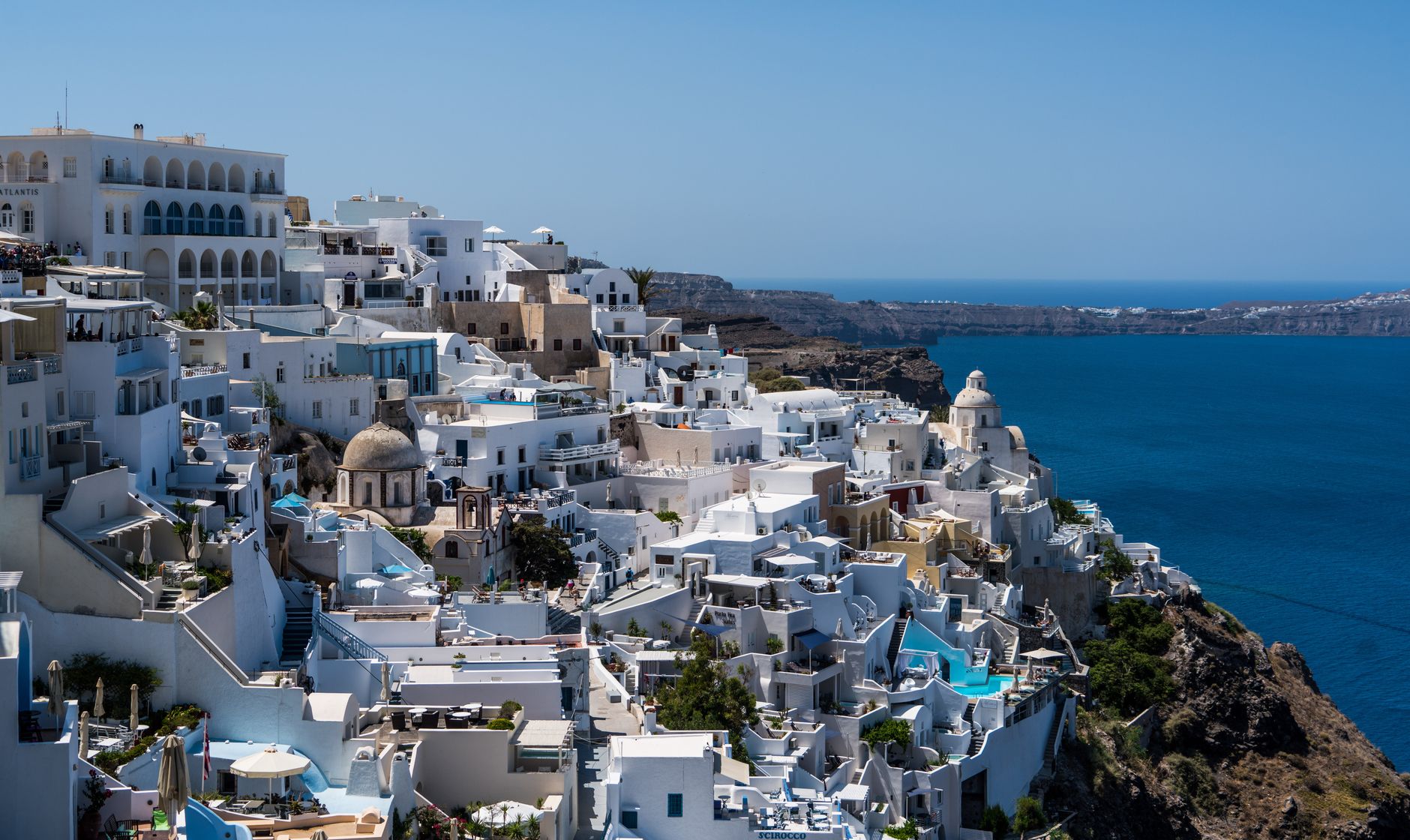

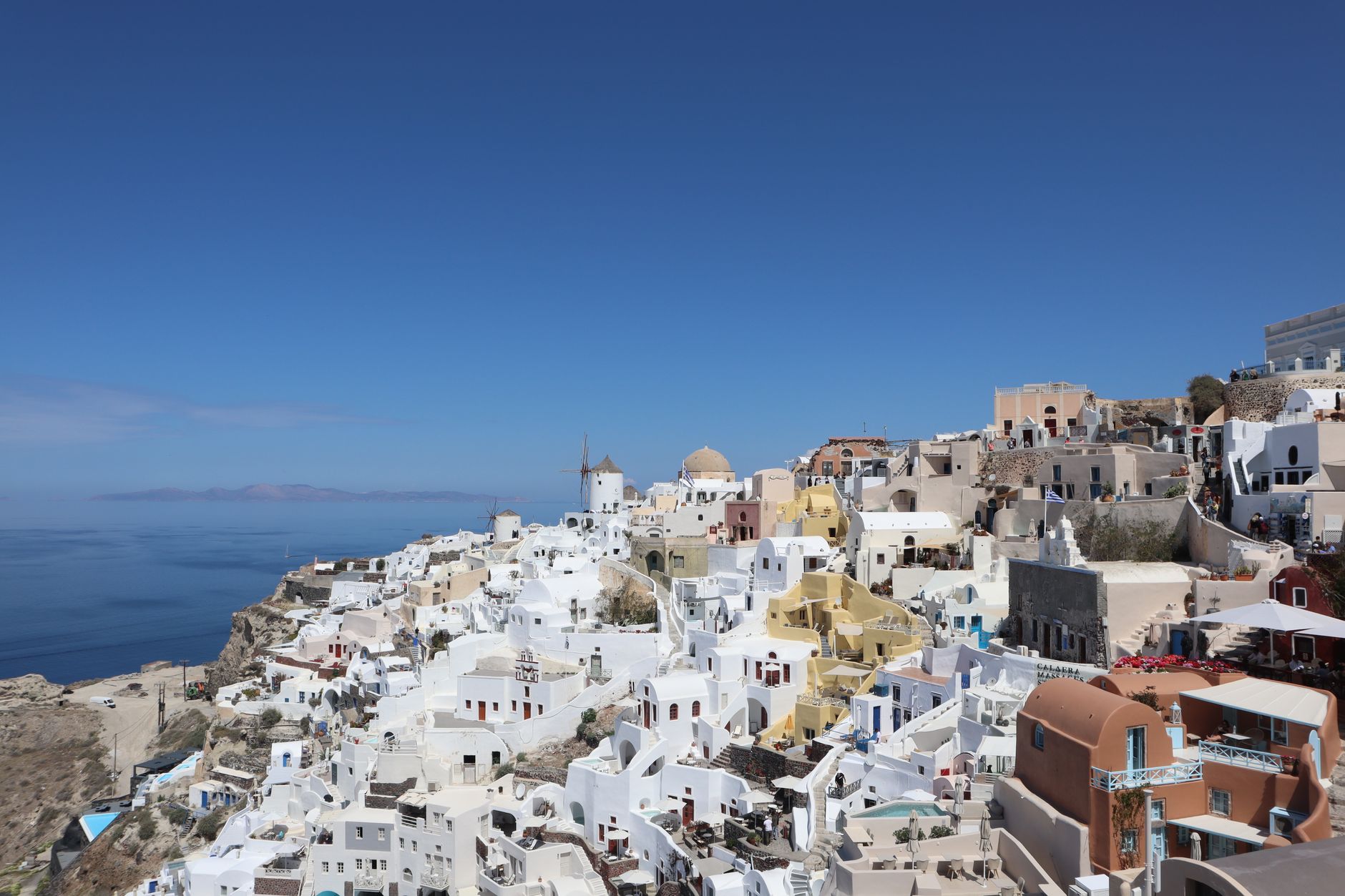
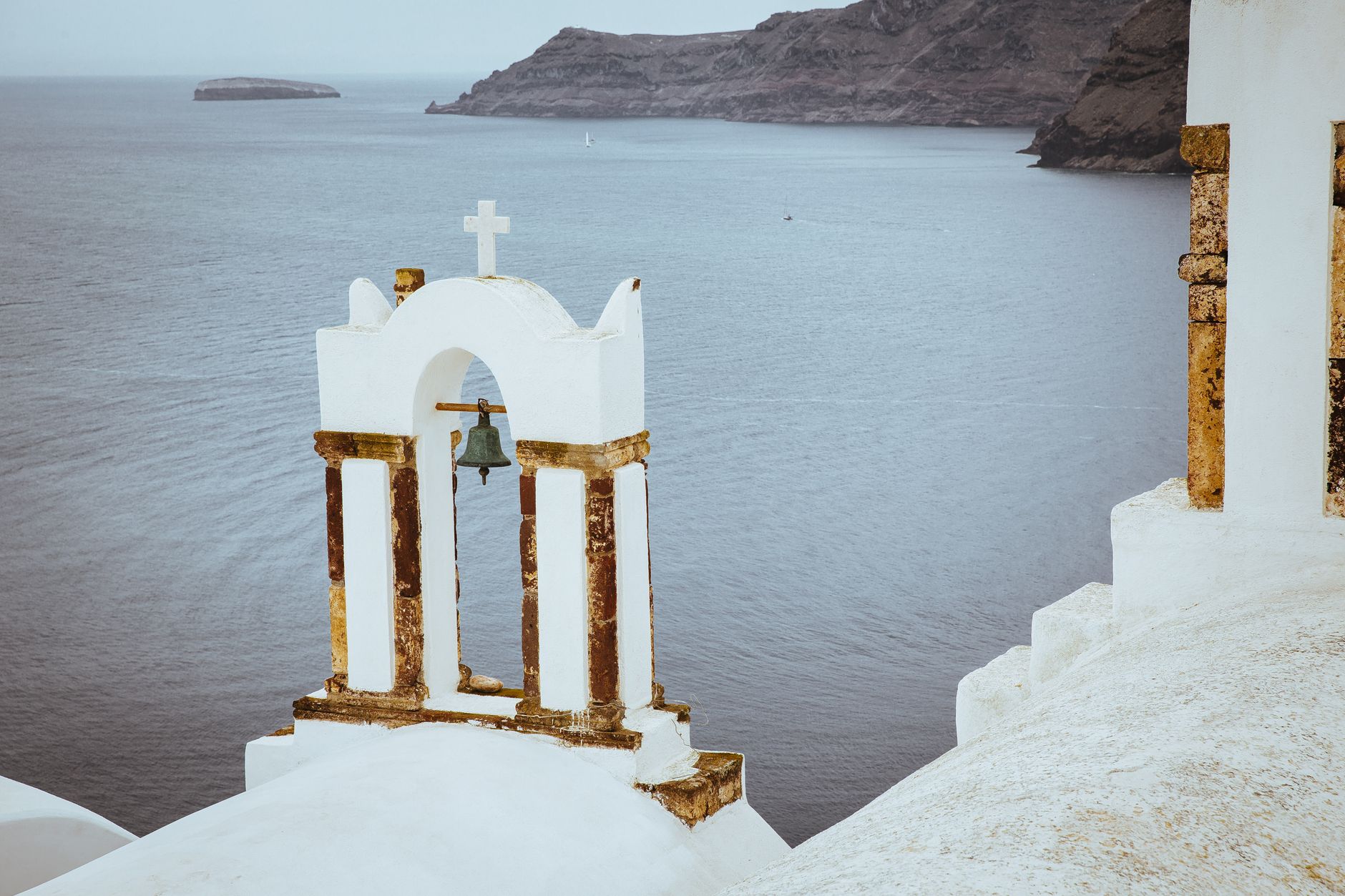


Yes — but with eyes open. The island receives 3.4 million visitors yearly, 220 per resident at peak, so overtourism is not an abstraction. What justifies a visit is specific: the Akrotiri excavation (a 3,600-year-old Minoan city preserved under volcanic ash), wines grown in soil found nowhere else, and a caldera formed by geological catastrophe rather than postcard design. Time it for May or September and spend at least a day inland.
Four to five days. That covers the Fira–Oia caldera hike (3–4 hours), a half-day at Akrotiri, one or two winery visits, beach time, and a real sunset — without rushing or padding. Under three days feels too compressed; beyond six, the island starts to feel small.
The KTEL bus costs €2.00 and takes 10–15 minutes, running roughly every 60–90 minutes from 06:15 to 23:00. A taxi costs €30–45, but there are only around 40 taxis on the whole island, so waits can be long without advance booking. For late-night or early-morning flights — midnight to 5 AM — pre-book a private transfer, as bus service is essentially nonexistent in those hours.
Very safe overall, with low violent crime. The three genuine risks are ATV accidents (the most common tourist injury — roads are narrow and hilly), heat exhaustion on exposed trails in July–August, and pickpocketing in crowded spots like the Oia sunset area and Fira bus station. Female solo travelers consistently report the island as comfortable and harassment as rare.
May and September. May is warm (around 23°C), crowds are manageable, and everything is open. September offers the warmest sea (24°C), thinning crowds, and ideal conditions for the caldera hike. July–August brings peak heat (35°C+) and the island's most intense crowds; the Meltemi winds also pick up, which can be pleasant or disruptive depending on your plans.
Yes, though with limitations. KTEL buses run a hub-and-spoke network from Fira for around €2.20 per ride (cash only), covering Oia, Kamari, Akrotiri, and the airport. The Fira–Oia caldera trail handles the main rim on foot in 3–4 hours. The main limitation: routes like Oia to Akrotiri require a change at Fira. E-bikes from Santo Cycles extend your range considerably with none of the ATV risk.
Three dishes grown here and effectively nowhere else: fava (volcanic-soil split-pea purée, PDO-protected and cultivated continuously for 3,500 years), tomatokeftedes (cherry tomato fritters made from tiny volcanic-soil tomatoes dried by hot winds, not irrigated), and white eggplant — a local seedless variety with no bitterness. Order all three and judge a taverna by the fava: if it's warm, creamy, and finished with caper buds, you're in the right place.
One of the most expensive islands in Greece, particularly on the caldera rim where restaurants price against the view. Costs drop in inland villages — Exo Gonia, Megalochori, Pyrgos charge noticeably less — and the island's best attractions are free: the caldera hike, Ancient Thera ruins, and all beaches. The Santorini Discount Card (~€30) claims up to €180 in savings across participating restaurants and activities over three days.
Saved and recently read places — kept on this device only.
Photos may have been resized or cropped.