Rethymno

Greece

Rethymno

Rethymno layers Venetian keys, Ottoman minarets and Europe’s densest Renaissance doors into one walkable old town—plus a summer theatre inside a 16th-century fortress.

location_on 22 attractions
calendar_month late April–mid-June & Sept–Oct
schedule 3–4 days

Introduction

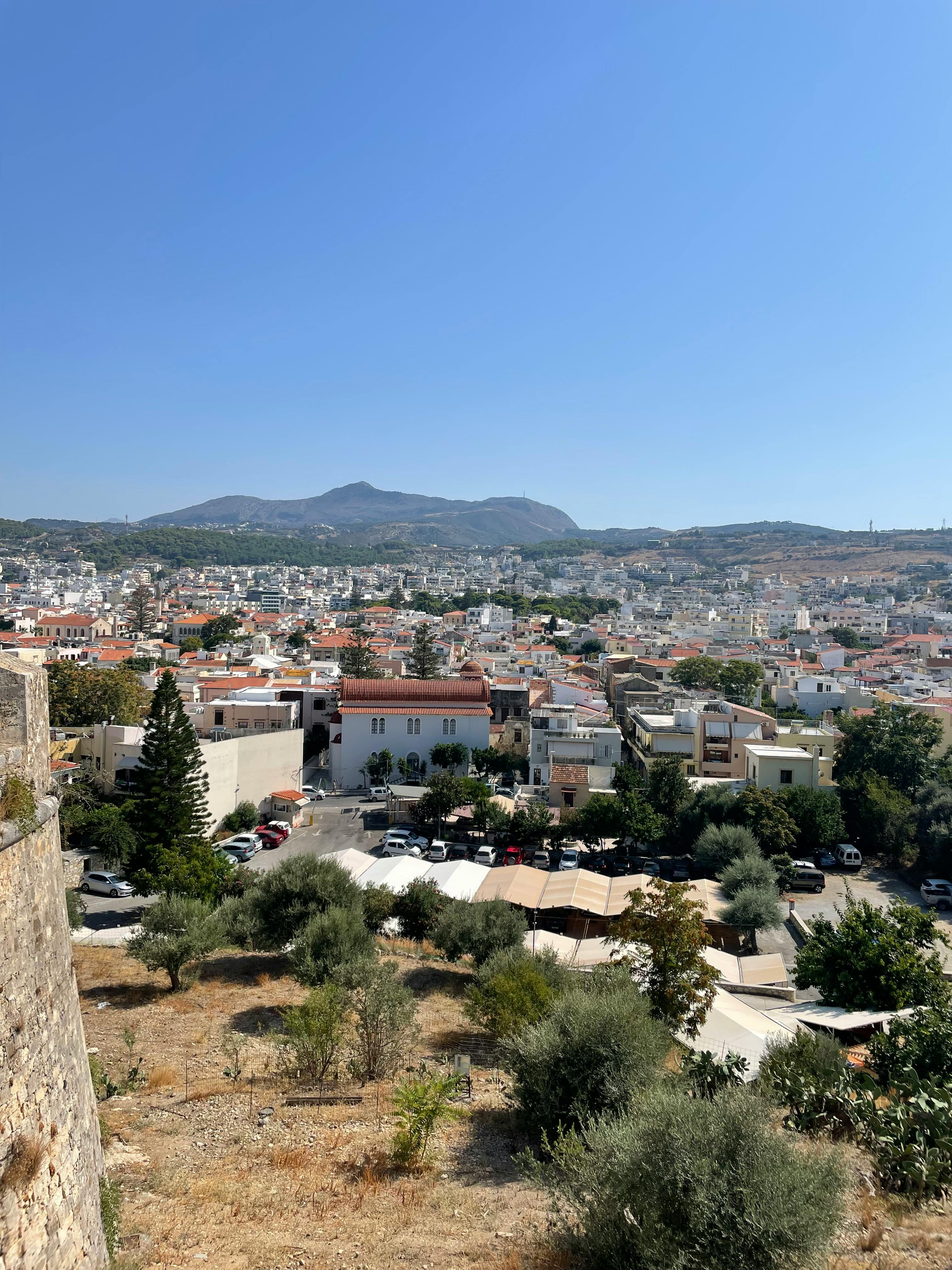
The lighthouse that guards Rethymno's harbor isn't Venetian at all—it was erected by Egyptian soldiers in 1838, a reminder that this small Cretan city has always been a crossroads of empires. From the star-shaped Fortezza fortress to the minaret of a converted mosque now used for concerts, Rethymno layers five centuries of conquest and co-existence into streets barely a mile wide.

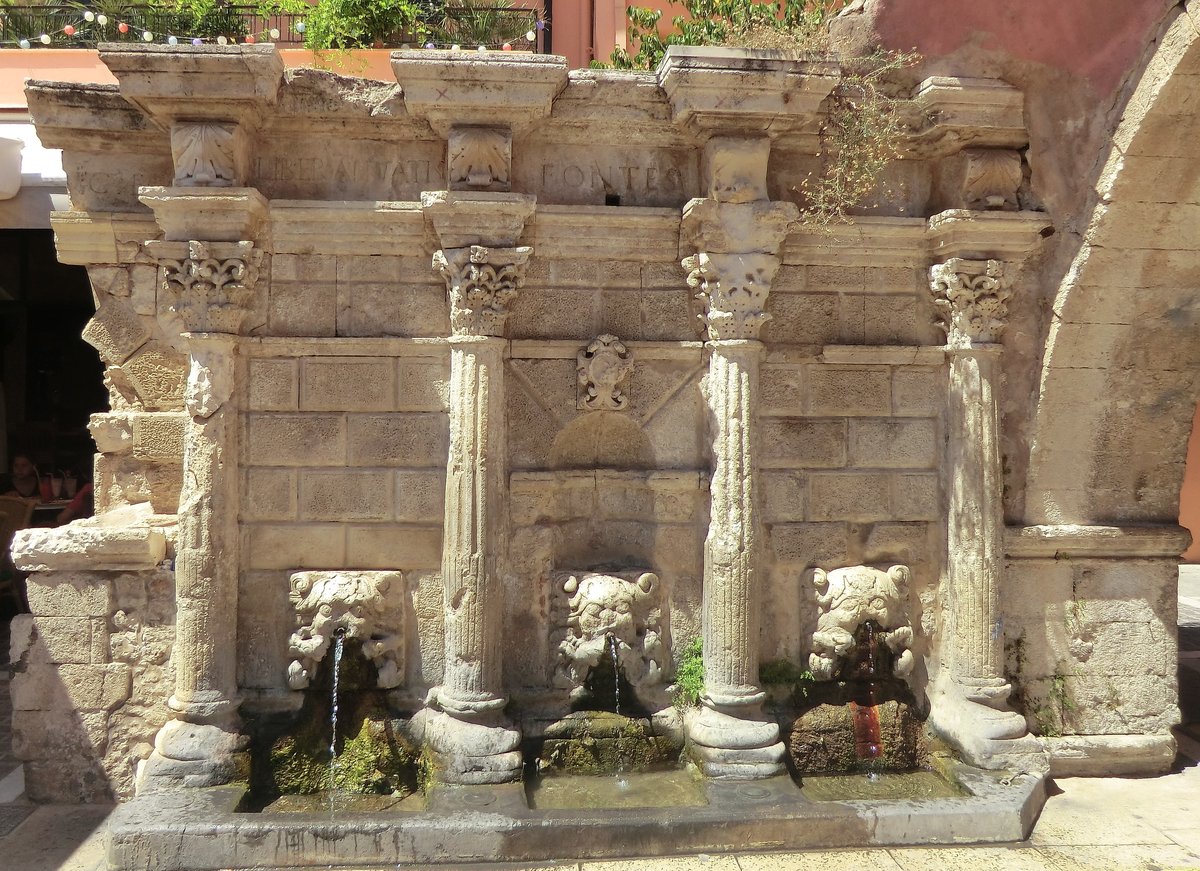
Walk the old town at dawn and you'll hear two sounds: the slap of octopus against harbor stones as fishermen prep for tavernas, and the click of worry beads from kafenion regulars who've occupied the same chairs since the junta years. Between the Venetian loggia and the Ottoman fountain still flowing after 400 years, every alley ends in architectural whiplash—Renaissance coat of arms above, Islamic arch below, wi-fi router bolted somewhere in between.

This is Crete's university town, which means the nightlife punches above its weight. Students spill from rakadika taverns where raki appears unbidden with fried snails, while classical concerts echo inside a 16th-century mosque. The result is a city that feels lived-in rather than preserved, where bakeries still hand-roll kataifi on Vernardou Street and the best tables aren't on the postcard harbor but two streets back, where the same families have been plating lamb with stamnagathi greens since the Ottoman tide receded.

Places to Visit

The Most Interesting Places in Rethymno

What Makes This City Special

Venetian-Ottoman Palimpsest

Rethymno’s old town is a living collage: Rimondi Fountain still flows from 1626, the 1573 Fortezza crowns the hill, and minarets rise above Renaissance doorframes—more carved portals than anywhere else in Greece.

Contemporary Pulse in Stone

Inside the 16th-century Fortezza, the open-air Erofili stage hosts summer tragedies, while the Neratze Mosque—once church, then seminary—now fills its domes with conservatory concerts.

Gorge & Lighthouse within 20 min

Walk Mili Gorge at breakfast—abandoned watermills and lemon trees—then watch sunset from the 1838 Egyptian lighthouse; both sit inside the city limits, no car needed.

Historical Timeline

Where Empires Left Their Footprints in Stone

From Minoan anchorage to Renaissance stage to fortress town

public
c. 1350 BCE

First Fireplaces on the Bay

Pottery shards and obsidian blades turn up in the sandy soil—evidence of sailors who beached here two centuries after Knossos fell. They called the place Rhithymna, 'the flowing,' probably for the stream that still cuts under today's old town. Nothing grand yet, just a safe cove with sweet water.

science
4th c. BCE

Silver Drachms, Dolphin Design

The city mints its own coins: Artemis on the obverse, a leaping dolphin on the reverse. The imagery brags about the harbor and the sanctuary on Paleokastro hill. Merchants from Alexandria to Rhodes now know the name Rhithymna.

gavel
67 BCE

Rome Pulls the Plug

Roman legions land at nearby Eleutherna; Crete becomes a senatorial province. Rhithymna's town council is dissolved, its fleet folded into imperial supply routes. The mint closes. What had been a city shrinks to a village of fish-salters and olive growers.

castle
961 CE

Byzantine Flags Over Castell Vecchio

General Nikephoros Phokas drives the Arabs out after 137 years. On the hill above the bay engineers patch a small fort they call Castell Vecchio—'old castle' in the Venetian dialect already spoken by imperial mercenaries. The name sticks.

gavel
1211

Venice Buys an Island

Boniface of Montferrat sells Crete to the Republic of Venice for 1,000 silver marks. Rethymno is upgraded to a fortified trading post between Candia (Heraklion) and Canea (Chania). Genoese pirates grumble; the wine monopoly makes Venetian merchants rich.

castle
1540

Land Walls Rise

Engineers trace a new enceinte that swallows Castell Vecchio and pushes the defenses 300 m inland. Local stone, coral-lime mortar, forced labor. The town triples inside its new stone corset; Jews, Greek artisans, and Venetian nobles jostle for house plots.

local_fire_department
7 July 1571

Corsair Torches the Town

Uluç Ali's galleys slip past the harbor chain at dawn. By sunset every wooden roof is burning; 500 prisoners are rowed away to Algiers. The stench of tar and charred beams drifts as far as Mount Ida. Venice finally admits the old walls aren't enough.

castle
1573-1580

Fortezza: A Star is Born

On the ruins of the Artemis sanctuary, 40,000 tons of limestone become a six-bastioned star. The plan copies Palmanova in Friuli, but the labor is Cretan. Inside: a cathedral, warehouses, and 107 cannon positions. Cost: 107,000 ducats—Venice's most expensive Cretan fortress.

palette
c. 1600

Georgios Chortatzis Writes Erofili

In a house near the Loggia, the poet crafts the first Greek tragedy printed in vernacular: a princess who kills herself to save the man she loves. Performances in the main square draw thousands; the text travels to Zakynthos and Venice, seeding modern Greek theatre.

swords
13 Nov 1646

Ottoman Flag on the Fortezza

After 45 days of mining and plague, the Venetian commander opens the gates to Hüseyin Pasha. The cathedral becomes a mosque; bells are melted into cannon. Rethymno is now Resmo, seat of a sanjak. Minarets sprout where campaniles once stood.

church
1657

Neratze Mosque Opens for Friday Prayer

The Venetian church of Santa Maria rededicated: mihrab carved, minaret rising 27 m, fountain gurgling in the courtyard. The sound of the first call to prayer echoes off the Loggia's Renaissance arches—an audible collision of centuries.

person
1700

Ahmed Resmî Born in the Mahalla

In a timber house behind the mosque, a boy destined to become Sultan Mustafa III's envoy to Berlin and Vienna first hears Ottoman Greek spoken in the streets. His later dispatches describe Europe with the cool eye of a Rethymno local who grew up between minarets and Venetian arches.

local_fire_department
8 Nov 1866

Arkadi's Powder Keg Ignites

Kostis Giamboudakis touches torch to gunpowder. The blast kills 846 Cretan civilians and shakes cafés in Resmo, 23 km away. European newspapers print sketches of the monastery ruins; volunteers sail from Greece and Italy. Crete's revolt is now world news.

public
1897-1907

Russian Occupation

Admiral Alexeyev's sailors march through Porta Guora, planting the white-blue-red flag. They pave the first real road to the harbor, import Russian kerosene stoves, and teach local boys to play chess in the cafés. The smell of borscht mingles with Turkish coffee for a decade.

gavel
Dec 1913

Union with Greece Proclaimed

Bells ring from every surviving belfry; the blue-and-white flag replaces the Ottoman banner outside the konak. Muslim families pack prayer rugs and copper pots onto steamers bound for İzmir. Greek refugees from Asia Minor take their houses—and their stories.

public
1924

Population Exchange

The last muezzin walks down to the harbor; the minaret falls silent. In his place arrive Asia-Minor Greeks who plant basil in tin cans and rename the streets after lost villages. The city's soundscape shifts: rebetiko replaces Ottoman military bands.

swords
20-29 May 1941

Paratroopers over Rethymno

Ju-52s drop 2,000 Fallschirmjäger onto olive groves and the airstrip. Australians dig in around the Fortezza; local priests hand out hunting rifles. After nine days the Allies surrender—yet the delay helps doom the German push toward Heraklion. The old town's roofs collapse under Stuka bombs; scars still show on sandstone walls.

school
1973

University of Crete Opens

The first 200 students climb the hill to the former artillery barracks. Philosophy lectures echo where Venetian gunners once shouted commands. Rethymno turns from provincial town to youth magnet: bookshops multiply, bars stay open past midnight, rent doubles in a year.

flight
2001

Euro Enters the Taverna

Menus rewritten overnight: moussaka jumps from 1,200 drachmas to 3.50 euros. Locals grumble, then notice cruise-ship passengers no longer fumble with purple 10,000-drachma notes. The harbor lighthouse, built by Egyptians, now flashes above ATM machines dispensing Europe's new currency.

schedule
Present Day

Notable Figures

Marcus Musurus

c. 1470–1517 · Renaissance humanist & printer
Born in Rethymno when it was still called Castel Vecchio

He grew up hearing Greek spoken in Venetian alleys, then moved to Florence and printed the first collected works of Aristotle. Today he’d recognize the doorframes he once walked past—Rethymno kept them exactly as he remembers.

Abdülcelil Levni

d. 1732 · Ottoman miniaturist
Lived here 1718–20 while drafting harbor plans

Legend says he sketched the Egyptian lighthouse that still stands; if true, his slim minaret addition to Neratze Mosque would be the only building he both drew and built.

Practical Information

flight

Getting There

Fly into Chania Airport (CHQ) and board the direct KTEL bus—five daily, €8.80, 75 min. From Heraklion Airport (HER) take the city bus to KTEL station Ikarou 9, then intercity coach to Rethymno (hourly, 70 min).

directions_transit

Getting Around

No metro or tram; 20 km of bike lanes and a public-bike system cover the flat coast. KTEL buses reach Arkadi, Preveli, Plakias; tickets bought on board. Single rides—no tourist pass exists as of 2026.

thermostat

Climate & Best Time

May & Sep: 24–27 °C days, 14 mm rain. July peaks at 30 °C with 1 mm rain. Winter 14 °C and 142 mm—many tavernas shut. Come late Apr–mid-Jun or Sep–Oct for warm seas minus August crowds.

translate

Language & Currency

Greek is spoken; English works in Old Town. Euro cash still rules taxis and beach kiosks—keep small notes. Cards accepted almost everywhere else.

Where to Eat

local_dining

Don't Leave Without Trying

Dakos — barley rusk with tomato, olive oil, and local cheese Apaki — smoked pork, best eaten as a meze with raki Bougatsa — crispy phyllo pie with custard or cheese filling Kalitsounia / Sfakian pie — cheese and herb-filled pastry Gamopilafo — Cretan wedding rice, a comfort-food staple Stamnagathi — wild Cretan greens, often served with lamb Loukoumades — honey puffs, perfect after dinner Handmade phyllo — pastry made fresh daily in local workshops Graviera — local hard cheese, often served with honey and walnuts Chochlioi boubouristoi — fried snails, a traditional Cretan delicacy

DRINK N ROLL

local favorite
Bar €€ star 5.0 (337)

Order: Whatever cocktail the bartender recommends — this place has earned 337 five-star reviews by getting the basics right: strong drinks, no pretense, and a real local crowd mixed with travelers who found their way in.

The highest-reviewed bar on Rethymno's main drag, with the kind of rating that suggests locals actually return here, not just tourists passing through. This is where you go when you want to drink like a local.

Handmade Traditional Philo Workshop

quick bite
Bakery €€ star 4.9 (425)

Order: The handmade phyllo pastries — watch them being made in the open kitchen. Order whatever filled pie looks best that morning: cheese, spinach, apple, or whatever's seasonal.

This isn't a tourist trap masquerading as tradition — it's a real working phyllo workshop with 425 reviews that proves locals and visitors both know the difference between real handmade pastry and frozen. Open 8am–10pm daily.

schedule

Opening Hours

Handmade Traditional Philo Workshop

Monday 8:00 AM – 10:00 PM
Tuesday 8:00 AM – 10:00 PM
Wednesday 8:00 AM – 10:00 PM
map Maps

Πιγκουίνος στο Ρέθυμνο (Μπουγάτσα)

quick bite
Bakery / Bougatsa €€ star 4.9 (122)

Order: The bougatsa — crispy phyllo, creamy custard or cheese filling, dusted with powdered sugar. Get there early (they open at 6am) for the warmest, crispest version.

This is the bougatsa specialist, and 122 reviews at 4.9 stars means locals have made this their morning ritual. Opens at 6am, closes at 4pm — it's a breakfast-and-brunch destination, not a dinner spot.

schedule

Opening Hours

Πιγκουίνος στο Ρέθυμνο (Μπουγάτσα)

Monday 6:00 AM – 4:00 PM
Tuesday 6:00 AM – 4:00 PM
Wednesday 6:00 AM – 4:00 PM
map Maps

Ξυλόφουρνος Στέφανος Αλεξανδράκης

quick bite
Bakery €€ star 5.0 (54)

Order: Wood-fired bread and whatever seasonal pies they have that morning — the wood oven (xylofoúrnos) is the whole point. Ask for the darkest, crustiest loaf if you want real Cretan bread.

A traditional wood-fired bakery that still does things the old way. Perfect 5-star rating from 54 locals who know the difference between a real bakery and a chain.

schedule

Opening Hours

Ξυλόφουρνος Στέφανος Αλεξανδράκης

Monday 8:00 AM – 2:00 PM
Tuesday 8:00 AM – 2:00 PM
Wednesday 8:00 AM – 2:00 PM
map Maps

Φούρνος Σαμψών (Αρτοποιεία)

quick bite
Bakery €€ star 5.0 (17)

Order: Fresh bread and pastries — this place opens as early as 4:30am some days, so if you're up early, you'll get them still warm from the oven.

A neighborhood bakery with perfect ratings and extended early hours (opens 4:30–5:30am depending on the day). This is where locals grab their morning bread, not where tourists go.

schedule

Opening Hours

Φούρνος Σαμψών (Αρτοποιεία)

Monday 5:30 AM – 8:30 PM
Tuesday 5:30 AM – 8:30 PM
Wednesday 4:30 AM – 8:30 PM
map Maps

Ακροβάτισσα/Akrovatissa

local favorite
Cretan / Greek €€ star 5.0 (8)

Order: House Cretan specialties — meze plates, slow-cooked lamb, local cheese dishes, whatever the kitchen is doing that night. Go late and stay late.

A small, intensely local restaurant in the Old Town lanes (not the harbor) with perfect ratings and hours until 2am. This is where Rethymno locals eat when they want real food, not a view.

schedule

Opening Hours

Ακροβάτισσα/Akrovatissa

Monday 12:00 PM – 2:00 AM
Tuesday 12:00 PM – 2:00 AM
Wednesday 12:00 PM – 2:00 AM
map Maps language Web

Κουκλινός εργαστήριο τυρόπιτας μπουγάτσας

quick bite
Bakery / Cheese Pie Workshop €€ star 5.0 (5)

Order: The tyropita (cheese pie) and bougatsa — this is a working workshop, so what you get depends on what they've just pulled from the oven. Arrive early.

A tiny, hyperlocal pie workshop with perfect ratings and minimal reviews — the kind of place that locals guard because it's real, not because it's famous. No frills, just excellent cheese and spinach pies.

Altstadt

quick bite
Bakery €€ star 4.9 (11)

Order: Fresh pastries and bread — the name suggests European influence, but the execution is pure Cretan. Ask what's warm.

A quiet, well-rated neighborhood bakery on a main street that locals use daily. Perfect if you want good bread without the tourist markup.

info

Dining Tips

  • check Old Town courtyards are where you go for long, leisurely dinners; the harbor front is one drink, then slip back into the lanes for real meals.
  • check Rethymno's best food happens in three scenes: Old Town for sit-down dinners, rakadiko lanes for shared plates and raki, and the west seafront for fish or sunset.
  • check Bakeries open early (some as early as 4:30am) — arrive before 9am for the warmest pastries and bread.
  • check Thursday and Saturday mornings, hit the laiki (open-air markets) for fresh produce and local ingredients — they close around 2pm.
  • check Wednesday mornings, the Organic Farmers' Market opens at 11:00 on Koumoundourou Street behind the Municipal Garden.
  • check Small neighborhood tavernas outside the tourist core (like Misiria) serve what locals actually eat — cooked-food displays with 35–40 daily dishes at low prices.
Food districts: Old Town — narrow Venetian lanes with courtyard restaurants, traditional tavernas, and bakeries tucked into corners Eleftheríou Venizélou — the main seafront drag with bars, cafés, and casual dining Rakadiko lanes — backstreet wine bars serving meze and shared plates, the real local scene Misiria — neighborhood outside the tourist core where locals eat family tavernas with home-style Cretan food West seafront — facing the Fortezza, better for sunset dinners and fresh fish than the harbor front

Restaurant data powered by Google

Tips for Visitors

directions_bus
Airport Bus Hack

Take the KTEL bus from Chania Airport—€8.80, runs hourly, drops you 200 m from the Old Town. Heraklion requires a change; skip it unless your flight forces you.

restaurant
Harbor One-Drink Rule

Order one sunset drink on the Venetian harbor, then walk two streets inland for dinner. Prices drop 30 % and the food improves the moment you lose the view.

event
Renaissance Festival Dates

If you can, come in July when the fortress hosts open-air theatre. Tickets go on sale in May; book early—seats are limited and locals snap them up.

photo_camera
Lighthouse Angle

The Egyptian lighthouse photographs best from the breakwater at 18:30 in summer. Face west and the stone glows orange while the sky still holds blue.

euro
Market Day Loophole

Thursday-morning laiki behind the Municipal Garden sells fruit at half the supermarket price. Bring cash and a tote; plastic bags cost extra.

hiking
Fortezza at 08:00

Be on the ramparts when the gates open—no tour groups yet, the stone is still cool, and you’ll hear the mosque’s first call drift uphill.

Explore the city with a personal guide in your pocket

Your Personal Curator, in Your Pocket.

Audio guides for 1,100+ cities across 96 countries. History, stories, and local insight — offline ready.

smartphone

Audiala App

Available on iOS & Android

download Download Now

Join 50k+ Curators

Frequently Asked

Is Rethymno worth visiting or just a beach base? add

Rethymno is worth three days minimum. The Old Town is a lived-in museum of Venetian doors and Ottoman minarets, the fortress stages summer plays inside a 16th-century bastion, and you can eat better meze here than in Chania for less money. Treat the beach as a bonus, not the reason.

How many days in Rethymno do you actually need? add

Two for the core sights, three if you add Arkadi Monastery and Eleutherna, four if you want a south-coast day to Preveli palm beach. Add an extra night if your dates hit the Renaissance Festival—you’ll want the evening in the fortress.

Can you get from Chania Airport to Rethymno by public bus? add

Yes, direct KTEL coaches run at least five times daily, take 70 minutes, cost €8.80, and stop at the east edge of the Old Town. Buy the ticket from the driver—no app needed.

Is Rethymno safe to walk at night? add

Very. The university keeps the Old Town lively until after midnight; main lanes are lit and patrolled. Normal city caution applies—pickpockets, not violence.

What’s the cheapest way to eat well? add

Follow the locals to rakadika like 1600 Raki BaRaki or Taverna Zisis in Misiria—share three meze and a carafe of tsikoudia for under €15 a head. Skip harbor tables; same dish costs double for the selfie tax.

When is everything closed? add

Most museums shut Monday; the Fortezza stays open. In winter many beach bars close, but Old Town tavernas and the House of Culture keep normal hours.

Sources

Last reviewed:

All Places to Visit

3 places to discover

Rimondi Fountain

Rimondi Fountain

Fortezza of Rethymno star Top Rated

Fortezza of Rethymno

photo_camera

Contemporary Art Museum of Crete