Plan and listen to Stoa Of The Athenians with Audiala.
Audio guide in your pocket, itinerary in your browser. Built for the way you actually visit.
Introduction
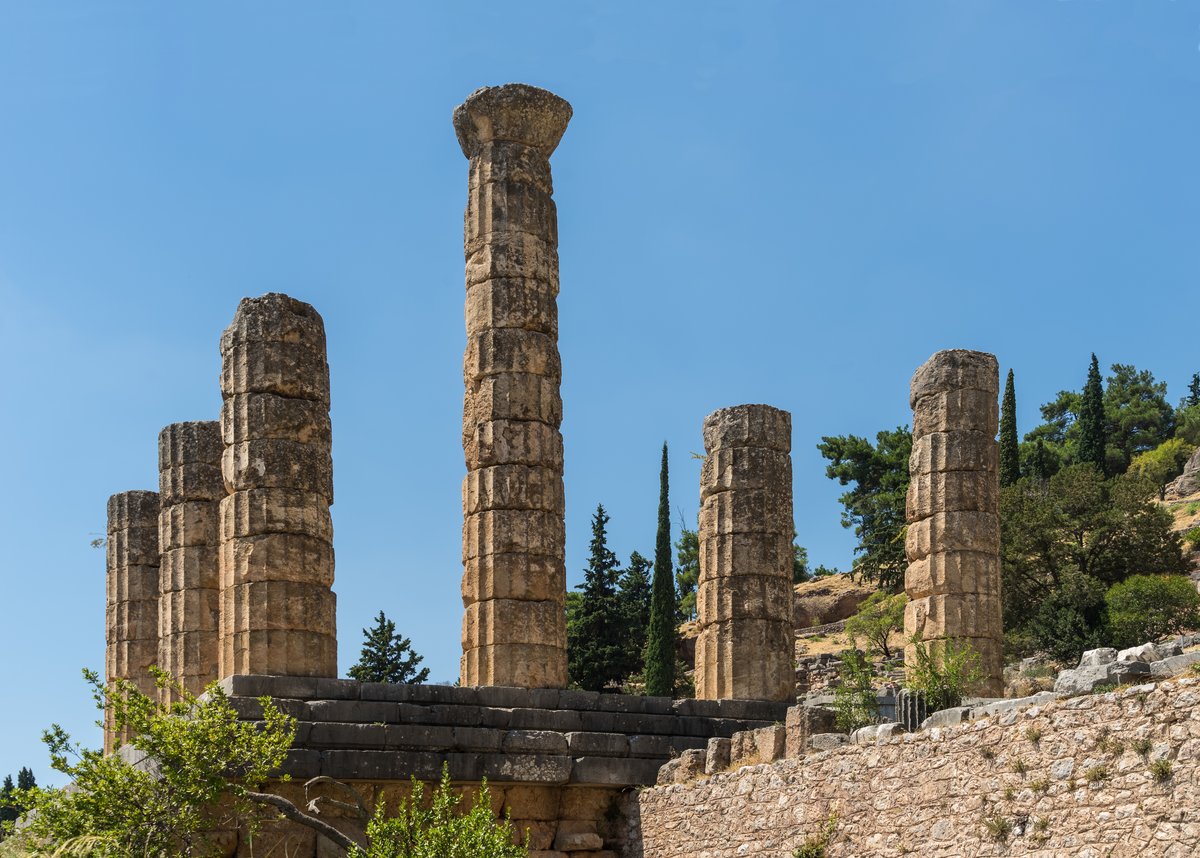
Delphi, once the revered spiritual center of the ancient Greek world, is home to a wealth of archaeological marvels. Among these, the Stoa of the Athenians stands out for its historical, political, and architectural significance. Built between 478 and 470 BCE, this elegant Ionic marble portico was commissioned by Athens to commemorate its naval victories during the Greco-Persian Wars—especially after the pivotal Battle of Salamis. Positioned along the Sacred Way within the Sanctuary of Apollo, the Stoa of the Athenians functioned both as a religious dedication and as a demonstration of Athenian power and prestige (Delphi Archaeological Site official page).
More than a relic of the past, the stoa offers a vivid window into ancient diplomacy, rivalry, and devotion. Visitors today can explore its remains and inscriptions, gaining insights into Classical Ionic architecture and the interplay of religion and politics in ancient Greece. This guide provides all essential details for your visit—hours, tickets, accessibility, travel tips—and contextualizes the Stoa’s role in Delphi’s storied landscape (athensdelphitour.com; Curious Sparrow Travel).
If you are planning a trip to Delphi, the Stoa of the Athenians is a must-see highlight. Erected in the aftermath of Athens’ victories in the Greco-Persian Wars, this graceful portico once displayed war spoils and dedications to Apollo, symbolizing Athenian piety and military prowess. Today, it stands as a testament to the city’s artistic and political legacy.
Historical Context & Significance
A Monument to Victory
Constructed in the early 5th century BCE, the Stoa of the Athenians was both a religious offering and a bold political statement. Its primary purpose was to house and display the spoils of Athens’ naval victories, particularly following the Battle of Salamis. The stoa also commemorated the Athenians who fought and fell in these wars, and its dedication inscriptions explicitly linked the city’s triumphs to divine favor (thedelphiguide.com; delphi.culture.gr).
The Pan-Hellenic Stage
Delphi held unique importance as a pan-Hellenic sanctuary—visited by representatives from across the Greek world. Here, Athens’ stoa stood in a visual dialogue with treasuries and monuments erected by other city-states, reinforcing the competitive and dynamic political atmosphere of Classical Greece (greekreporter.com). The stoa’s prominent placement along the Sacred Way guaranteed that every pilgrim and diplomat would witness the evidence of Athenian might.
Religion and Diplomacy
Delphi’s Oracle was central to ancient Greek decision-making. By dedicating war booty at Apollo’s sanctuary, Athens sought not only the god’s favor but also public recognition of its leadership in defending Hellenic freedom (thearchaeologist.org). The stoa thus embodied both piety and propaganda.
Artistic Innovation
Unlike the more common Doric stoas, the Stoa of the Athenians was built in the Ionic order, with slender columns of Pentelic marble—a material also used for the Parthenon (athensdelphitour.com). Inscriptions and reliefs celebrated Athenian achievements, and the stoa’s evolving displays reflected ongoing military victories.
Architectural Features
- General Structure: The stoa measures approximately 26.5 meters in length and 3.1 meters in width, oriented parallel to the Polygonal Wall for maximum visibility.
- Columns and Materials: Seven monolithic Ionic columns of Parian marble grace the façade, each with 24 flutes and ornate capitals.
- Construction: The rear wall incorporates the existing Polygonal Wall, while the floor was likely paved with stone slabs. The original timber roof with terracotta tiles is lost, but the structure’s form remains evident.
- Decorations and Inscriptions: Inscriptions on the architrave and stylobate record military dedications and donors, while bronze shields and ship figureheads were once prominently displayed (entrance-fee.com).
Visiting Information
Hours & Tickets
- Summer (April–October): 8:00 AM – 8:00 PM
- Winter (November–March): 8:30 AM – 3:00 PM
- Tickets: General admission is ~€12 for adults, with reduced rates for students, children, and seniors. Ticket covers the entire Delphi archaeological site, including the Stoa, Temple of Apollo, theater, stadium, and museum (Curious Sparrow Travel). Last entry is 30 minutes before closing.
Always check official updates before your visit.
Accessibility
The site features uneven, sloped terrain. While the lower Sacred Way is relatively accessible, reaching the stoa requires walking uphill on stone paths. Wheelchair access is limited, but the nearby Delphi Archaeological Museum is fully accessible.
Getting There
- By Car: Delphi is 2.5–3 hours northwest of Athens by car (via E65 and EO48).
- By Public Bus: KTEL buses depart daily from Athens’ Liosion Bus Station (approx. 3 hours).
- Parking: Available near the entrance; can fill up during peak season.
- Organized Tours: Many visitors choose guided day trips from Athens, which include transportation and site entry (Travel Addicts).
Guided Tours & Special Events
Guided tours provide expert insights into the history and significance of the stoa. Special events, such as cultural festivals, occasionally enliven the site—check local listings or the official Delphi site for schedules.
Nearby Attractions
- Athenian Treasury: Restored building that housed offerings.
- Temple of Apollo: The spiritual heart of Delphi.
- Omphalos of Delphi: The symbolic “navel of the world.”
- Siphnian Treasury: Renowned for sculptural decoration.
- Delphi Stadium: Venue of the ancient Pythian Games.
- Delphi Archaeological Museum: Artifacts and exhibits from the sanctuary (Trek Zone).
Visitor Tips & FAQs
Practical Tips
- Best Time to Visit: Early morning or late afternoon for cooler weather and fewer crowds.
- What to Bring: Sturdy shoes, sun protection, water, and a camera.
- Photography: The stoa’s columns and panoramic vistas are ideal for photos—visit during “golden hour” for the best light.
- Respect the Site: Do not climb on ruins or remove artifacts; Delphi is a UNESCO World Heritage Site.
Frequently Asked Questions
Q: What are the Stoa of the Athenians opening hours?
A: 8:00 AM – 8:00 PM (summer), 8:30 AM – 3:00 PM (winter). Last entry is 30 minutes before closing.
Q: How much are tickets?
A: About €12 for adults; discounts for students, children, and seniors.
Q: Is the Stoa wheelchair accessible?
A: Terrain is steep and uneven; access is limited, but the nearby museum is accessible.
Q: Can I join a guided tour?
A: Yes—local operators and day tours from Athens include the Stoa.
Q: Are facilities available?
A: Restrooms and a café are near the entrance; museum offers additional amenities.
Listen to the full story in the app
The whole Stoa Of The Athenians,
told well.
Audio guides for 1,100+ cities across 96 countries. History, stories, and local insight — offline ready.

Verified, and shown.
Researched and written by the Audiala editorial team from historical records, architectural archives, and local expertise.
Researched from Wikidata, Wikipedia & official sources · fact-checked · How we make our guides →