Plan and listen to Temple Of Aphrodite Urania with Audiala.
Audio guide in your pocket, itinerary in your browser. Built for the way you actually visit.
Introduction
The Temple of Aphrodite Urania is a captivating remnant of ancient Greek spiritual and architectural history, nestled in the northwest corner of the Ancient Agora of Athens. Honoring Aphrodite Urania—“Aphrodite of the Heavens”—the sanctuary is distinct in its focus on celestial love, spiritual beauty, and higher ideals, which set it apart from other Aphrodite cults dedicated to more earthly passions. Ascribed by ancient sources like Pausanias to Aegeus, the legendary king of Athens, the sanctuary has been a beacon of myth, religious practice, and artistic achievement for centuries (Perseus Digital Library; Theoi.com).
Today, the temple’s remains are accessible to visitors within the Ancient Agora archaeological site, amidst a vibrant constellation of historic sites. This guide provides an in-depth exploration of its history, architecture, rituals, and practical information for visitors, including hours, tickets, and accessibility.

Historical Background
Origins and Foundation
The Sanctuary of Aphrodite Urania was established in the northwest sector of the Ancient Agora, the civic and religious heart of Athens. Unlike other sanctuaries dedicated to Aphrodite Pandemos or other aspects of the goddess, this temple celebrated the celestial, spiritual nature of Aphrodite. According to Pausanias, its foundation was attributed to Aegeus, who sought Aphrodite Urania’s favor for personal and familial blessings (Perseus Digital Library).
The cult’s roots can also be traced to Near Eastern influences, particularly from the Assyrians and Phoenicians, who introduced traditions of Aphrodite worship to Cyprus and Kythera before reaching mainland Greece (Theoi.com). Mythologically, Aphrodite Urania was born from sea foam, embodying both the heavens and the sea, which influenced the sanctuary’s rituals and iconography (Greek Mythology Worldwide).
Architectural Evolution
Early Sanctuary and Altar
The earliest archaeological structure at the site is a marble altar dating to circa 500 BCE. Excavations have uncovered its foundations, which served as the focal point for sacrifices—especially doves, sacred to Aphrodite Urania (American School of Classical Studies at Athens).
Hellenistic and Roman Periods
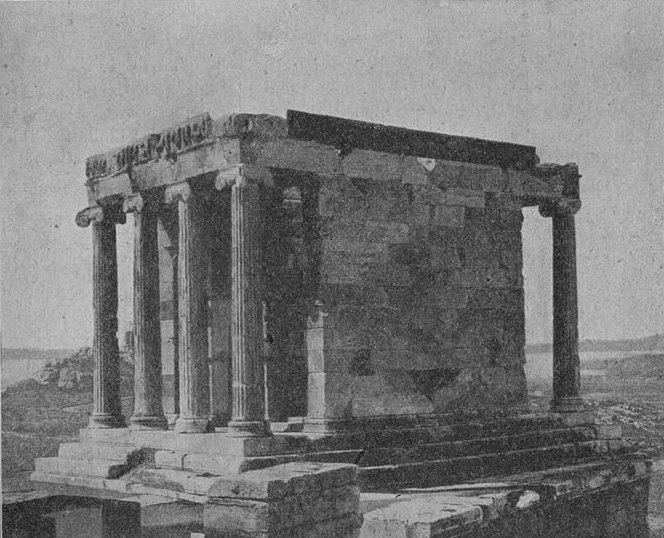
During the late Classical or Hellenistic era, a platform of poros blocks and marble steps was constructed, likely functioning as a fountain house. In the Roman period, the sanctuary underwent a significant transformation with the addition of a tetrastyle prostyle temple, modeled after the Erechtheion’s north porch. This Roman temple featured four Ionic columns at the front and stood atop a high podium, reflecting both local and imperial architectural traditions (madainproject.com). Remnants of these columns and decorative elements are still visible or preserved in the Museum of the Ancient Agora.
Religious Practices and Iconography
Distinct from other Aphrodite cults, the Urania sanctuary’s rituals emphasized spiritual purity and higher ideals. Priestly roles were reserved for women, and the main sacrificial animal was the dove, as confirmed by archaeological evidence. Offerings included incense, flowers, and grains, and the cult statue—reportedly sculpted by Phidias—was made of Parian marble (Theoi.com).
The goddess was depicted clothed, radiating serenity and celestial grace. Symbols like doves, myrtle, and roses adorned the sanctuary and its votive objects. The temple’s iconography reinforced Aphrodite Urania’s role as a patroness of harmony, fidelity, and social cohesion.
Social and Civic Significance
The sanctuary’s location near the Agora integrated it into Athens’ public life. Festivals and processions often coincided with civic celebrations, and the temple was a gathering place for both public worship and private devotion. Women, in particular, sought Aphrodite Urania’s blessings for marriage, childbirth, and transitions in life (Greek History Hub). The temple also stimulated local commerce through pilgrim traffic and charitable activities.
Decline and Transformation
By the early 5th century CE, the sanctuary fell into disuse as Christianity became dominant and pagan practices were suppressed. The Roman temple was incorporated into new structures, and eventually, Byzantine housing overtook the site (Journal of Late Antiquity).
Visiting Information
Location & Directions
- Address: Ancient Agora, 13 Hadrianou Street, Athens, Greece.
- Nearest Metro: Monastiraki Station (Lines 1 & 3), 10-minute walk (Athens Tourist Information).
Opening Hours & Tickets
- Ancient Agora (including the sanctuary):
- April–October: 8:00 AM – 8:00 PM
- November–March: 8:00 AM – 5:00 PM
- Hours may vary on holidays; check Ancient Agora official website.
- Tickets: €10 for adults; discounted rates for students, seniors, and EU citizens; children under 18 enter free.
- Combined tickets: Available for multiple archaeological sites.
- Purchase: Online or at site entrance.
Note: The sanctuary itself is an open-air site and can be viewed from the street at any time, though full access and interpretive materials are available only from within the Agora during opening hours (Evendo).
Accessibility
- Terrain: Uneven ground, loose stones, and steps; limited wheelchair access.
- Facilities: Accessible paths, restrooms, and seating are available in the Agora park; assistance may be requested (Athens Tourist Information).
- On-site signage: Limited at the sanctuary; mobile guides or apps recommended for in-depth interpretation.
Guided Tours & Special Events
- Guided tours: Available daily, focusing on the Ancient Agora and including the Temple of Aphrodite Urania (American School of Classical Studies at Athens).
- Audio guides & maps: Provided at site entrance.
- Special events: Cultural programs and festivals, such as the Athens Festival, occasionally feature performances inspired by Aphrodite Urania.
Nearby Attractions
- Ancient Agora: Civic and commercial heart of ancient Athens.
- Temple of Hephaestus: Best-preserved Doric temple in Greece.
- Stoa of Attalos: Agora Museum.
- Hadrian’s Library: Roman landmark near Monastiraki.
- Plaka neighborhood: Dining, shopping, and local culture (Trek Zone).
Practical Tips for Visitors
- Best time to visit: Early morning or late afternoon for pleasant weather and optimal lighting (The Invisible Tourist).
- Essentials: Comfortable shoes, water, sun protection.
- Photography: Allowed; golden hour is ideal for photos.
- Prepare in advance: Download mobile guides or read about the site before visiting due to limited on-site interpretation.
- Safety: The area is generally safe, but as in all cities, keep valuables secure.
Frequently Asked Questions (FAQ)
Q: What are the visiting hours for the Temple of Aphrodite Urania?
A: The site is accessible from the street at all times, but full access is during Ancient Agora hours: 8:00 AM–8:00 PM (summer), 8:00 AM–5:00 PM (winter).
Q: Are tickets required?
A: Viewing from the street is free. Full sanctuary access requires an Ancient Agora ticket (€10 for adults, with discounts).
Q: Is the site accessible for those with mobility issues?
A: The terrain is uneven and may be challenging; accessible areas are limited.
Q: Can I take photographs?
A: Yes, photography is encouraged; drones are not permitted.
Q: Are guided tours available?
A: Yes, both group and audio-guided tours are offered through the Ancient Agora.
Summary of Key Points and Visitor Recommendations
The Temple of Aphrodite Urania stands as a testament to Athens’ enduring spiritual and cultural heritage. Its archaeological remains—spanning from a 5th-century BCE altar to a Roman Ionic temple—narrate centuries of devotion, adaptation, and architectural evolution. The sanctuary’s focus on celestial love and harmony distinguishes it among ancient Greek temples (American School of Classical Studies at Athens; Theoi.com).
Modern visitors benefit from the temple’s location within the Ancient Agora, surrounded by Athens’ most iconic sites. With practical information on hours, tickets, accessibility, and nearby attractions, travelers can plan a rewarding visit. The tranquil, uncrowded atmosphere and proximity to vibrant city life make it ideal for a contemplative stop on any Athens itinerary.
Visitor Tip: Prepare by reading about the site in advance or using a travel app for on-site context, and combine your visit with a walk through the Agora and nearby historic neighborhoods.
Listen to the full story in the app
The whole Temple Of Aphrodite Urania,
told well.
Listen to sourced travel stories with local history and practical context — ready offline.
Verified, and shown.
Researched and written by the Audiala editorial team from historical records, architectural archives, and local expertise.
Built from cited sources · see the method · How we make our guides →