Plan and listen to Stoa Basileios with Audiala.
Audio guide in your pocket, itinerary in your browser. Built for the way you actually visit.
Introduction
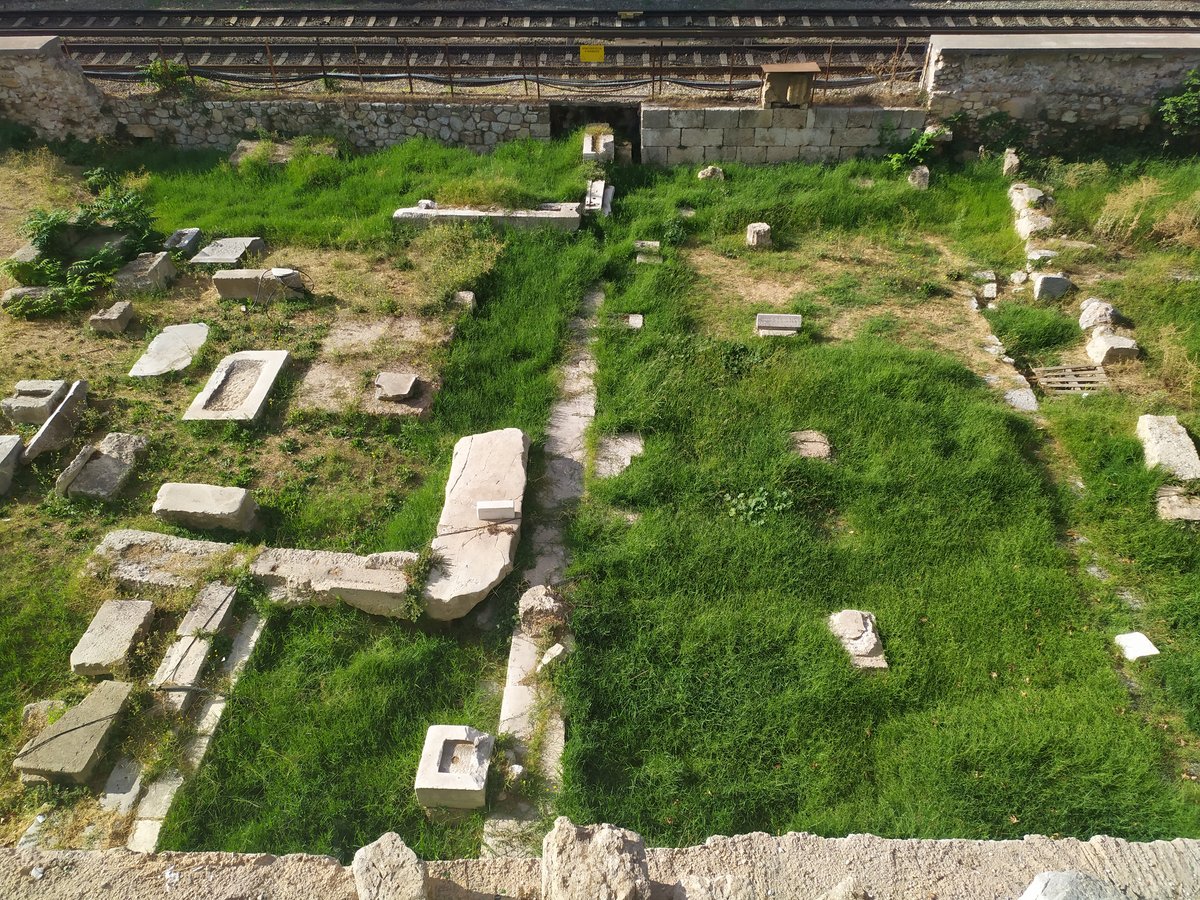
The Stoa Basileios (Royal Stoa) stands in the heart of Athens’ Ancient Agora as a monument embodying the city’s civic, religious, and philosophical heritage. Dating from the mid-6th century BCE and rebuilt after the Persian invasion, the Stoa Basileios was the official seat of the Archon Basileus, the magistrate responsible for overseeing sacred laws, religious festivals, and specific judicial proceedings. Its prominent position at the intersection of key Agora thoroughfares highlights its pivotal role in public life, symbolizing the city’s dedication to law, transparency, and order.
Today, visitors can explore its archaeological remains, including foundations, Doric columns, and significant finds such as the Lithos stone and terracotta roof ornaments. This guide offers practical information on visiting hours, ticketing, accessibility, and tours, while also delving into the stoa’s cultural and architectural significance. For the latest details, see the Greek Ministry of Culture, the Athens Archaeological Sites Official Website, and the American School of Classical Studies at Athens.

Historical Background
The Stoa Basileios, built in the mid-6th century BCE and restored after the Persian destruction, is one of the earliest civic buildings in the Agora (Athens Archaeological Sites Official Website). Its initial construction and later expansions underscored the growing complexity of Athenian civic and religious life. The stoa’s colonnaded portico provided a sheltered space for official business and legal proceedings. In the 4th century BCE, expansion wings were added to accommodate increasing civic needs (entrance-fee.com).
Cultural and Political Significance
As the seat of the Archon Basileus, the Stoa Basileios was the hub for religious rites, sacred laws, and judiciary matters. It was here that some of Athens’ most important public rituals and judicial proceedings took place, including the trial of Socrates in 399 BCE, a defining moment in Western philosophical history (Athens Archaeological Sites Official Website).
The stoa’s function extended beyond the judicial and religious; laws were inscribed and displayed here, and magistrates swore oaths, reinforcing the ideals of civic transparency and order (Nomadic Niko; Wikipedia).
Architectural Features and Archaeological Discoveries
Building Layout and Construction
The Stoa Basileios was a modest but significant structure, about 18 by 7 meters, with a single aisle and Doric columns supporting a tiled roof. Later expansions introduced additional wings (entrance-fee.com). Its placement at the intersection of the Panathenaic Way and the square’s western road made it a focal point of civic activity (Kurt from Canada).
Archaeological Discoveries
Early Excavations and Identification
The precise location of the Stoa Basileios was confirmed in 1970 by excavations led by Stella Grobel Miller, correlating archaeological evidence with ancient sources like Pausanias (Hesperia, 1970). Stratigraphic excavation, pottery analysis, and architectural fragments confirmed the building’s identification and dating.
Terracotta Akroteria
Remarkable fragments of terracotta akroteria (roof ornaments), dating to the 440s BCE, were found—some in 1936 and others in 1970, supporting Pausanias’ accounts of statues of baked clay atop the roof (Hesperia, 1970).
The Lithos (Sacred Stone)
A highly polished limestone slab known as the Lithos, discovered near the northern annex, measures nearly 3 meters in length and likely served as a focal point for legal and religious ceremonies (Hesperia, 1970).
Statue Base and Associated Sculpture
A central statue base and a large marble statue of a woman, dated to the late 4th century BCE, were uncovered between the stoa’s wings, indicating the presence of important civic monuments (Hesperia, 1970).
Visiting the Stoa Basileios: Practical Information
Location and Access
The Stoa Basileios is located at the northwest edge of the Ancient Agora, easily reached via the Monastiraki or Thissio Metro stations. The main entrance is on Adrianou Street. Major accessibility upgrades, including ramps and pathways, are scheduled for completion by the end of 2025 (news.gtp.gr).
Visiting Hours and Tickets
- April to October: 8:00 AM – 7:30 PM
- November to March: 8:00 AM – 3:00 PM
(Hours may vary on public holidays; always check official resources before visiting.)
Tickets:
- Standard admission: ~€8-10
- Reduced rates: EU citizens 18-25, seniors
- Free: Children under 18, EU citizens over 65
- Combo tickets available for major Athens sites
(santorinidave.com)
Tickets can be purchased online or at the site entrance.
Accessibility
The Agora terrain is uneven, but recent improvements have added ramps and paved paths to main areas. Some sections near the Stoa Basileios remain challenging for wheelchair users—consult official accessibility updates before your visit (Protothema).
Guided Tours and Special Events
Guided tours, available from local operators and the American School of Classical Studies at Athens, provide in-depth historical, architectural, and cultural context. Educational events and special programs may be scheduled during major festivals.
Travel Tips
- Visit early or late to avoid crowds and heat.
- Wear comfortable footwear for uneven ground.
- Combine your visit with the Stoa of Attalos Museum.
- Bring water and sun protection.
Nearby Attractions
- Temple of Hephaestus: One of the best-preserved Greek temples
- Bouleuterion: Ancient council house
- Metroon: City archives
- Prytaneion: Executive headquarters
- Plaka District: Nearby for cafés and shops
Frequently Asked Questions (FAQ)
Q: What are the Stoa Basileios opening hours?
A: The Ancient Agora, including the stoa, is open from 8:00 AM to 7:30 PM (summer) and 8:00 AM to 3:00 PM (winter). Check official sources for updates.
Q: How much are tickets?
A: Adult tickets are about €8-10, with discounts and combo options available.
Q: Is the site wheelchair accessible?
A: Improvements have been made, but some areas remain difficult. Check latest accessibility info before your visit.
Q: Are guided tours available?
A: Yes, through local operators and the American School of Classical Studies at Athens.
Q: Can I combine this visit with other sites?
A: Yes, combo tickets cover multiple major archaeological sites in Athens.
Listen to the full story in the app
The whole Stoa Basileios,
told well.
Listen to sourced travel stories with local history and practical context — ready offline.
Verified, and shown.
Researched and written by the Audiala editorial team from historical records, architectural archives, and local expertise.
Built from cited sources · see the method · How we make our guides →