Introduction
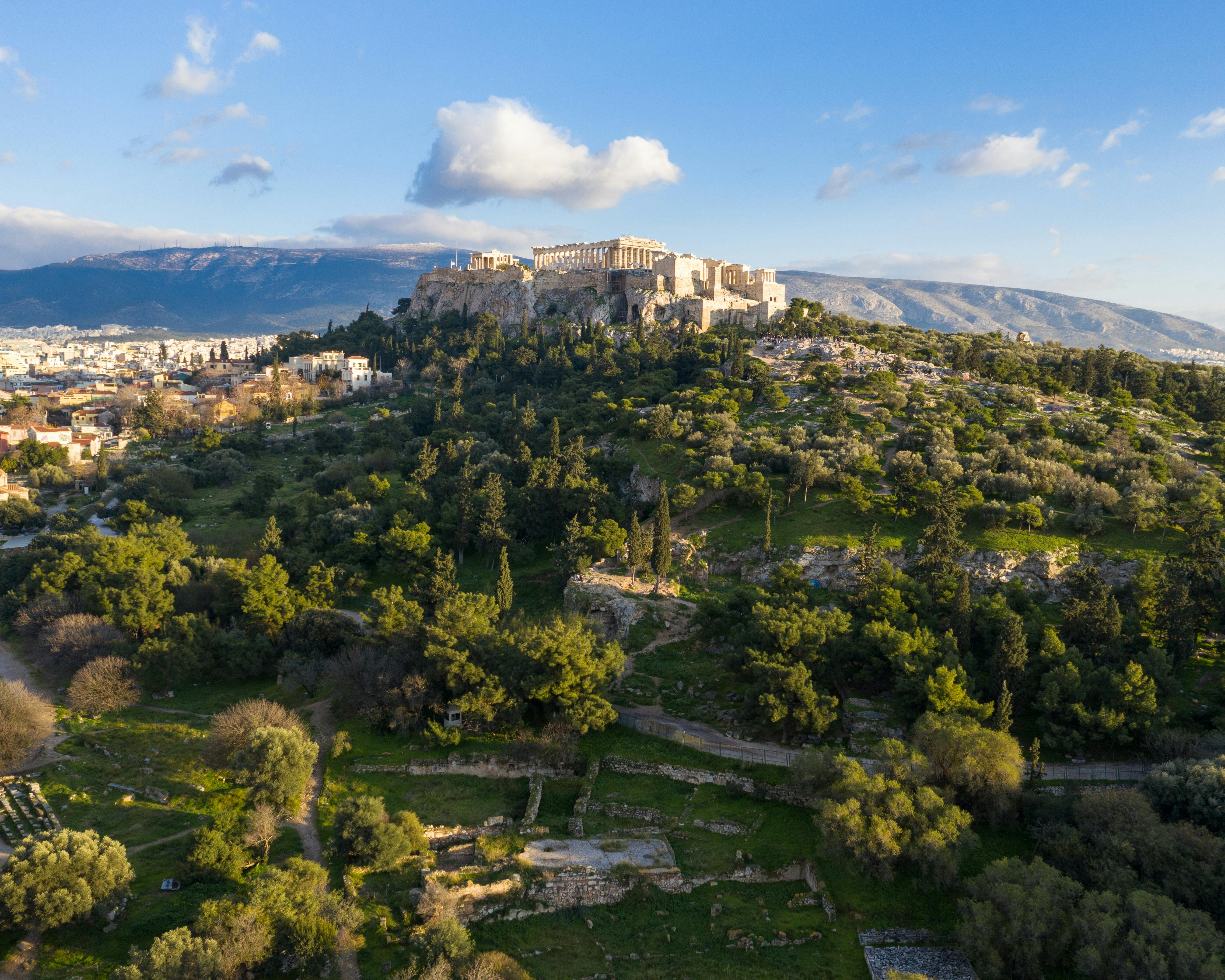
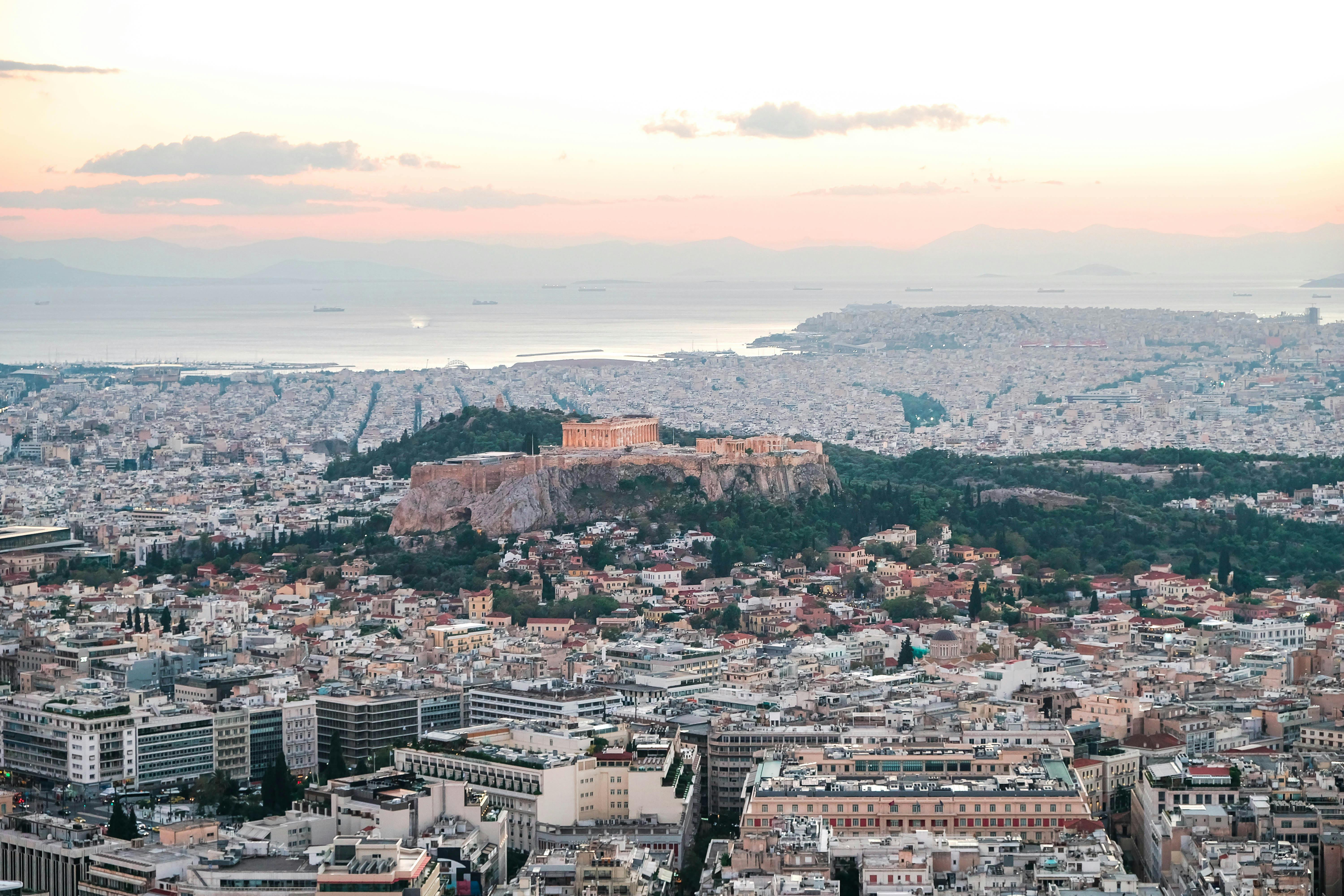
Why does the oldest inhabited neighborhood in Athens carry a Turkish-sounding name that nobody can agree on, sitting on streets older than the Parthenon yet rebuilt mostly after 1830? Plaka clings to the northern slopes of the Acropolis in the heart of Athens, Greece — a maze of marble paving, lemon trees, and bougainvillea where cats nap on doorsteps and church bells still mark feast days. Come for the layers. Three thousand years of footprints, an Albanian quarter hiding in plain sight, a Cycladic island smuggled in under cover of darkness — all packed into roughly half a square kilometre.
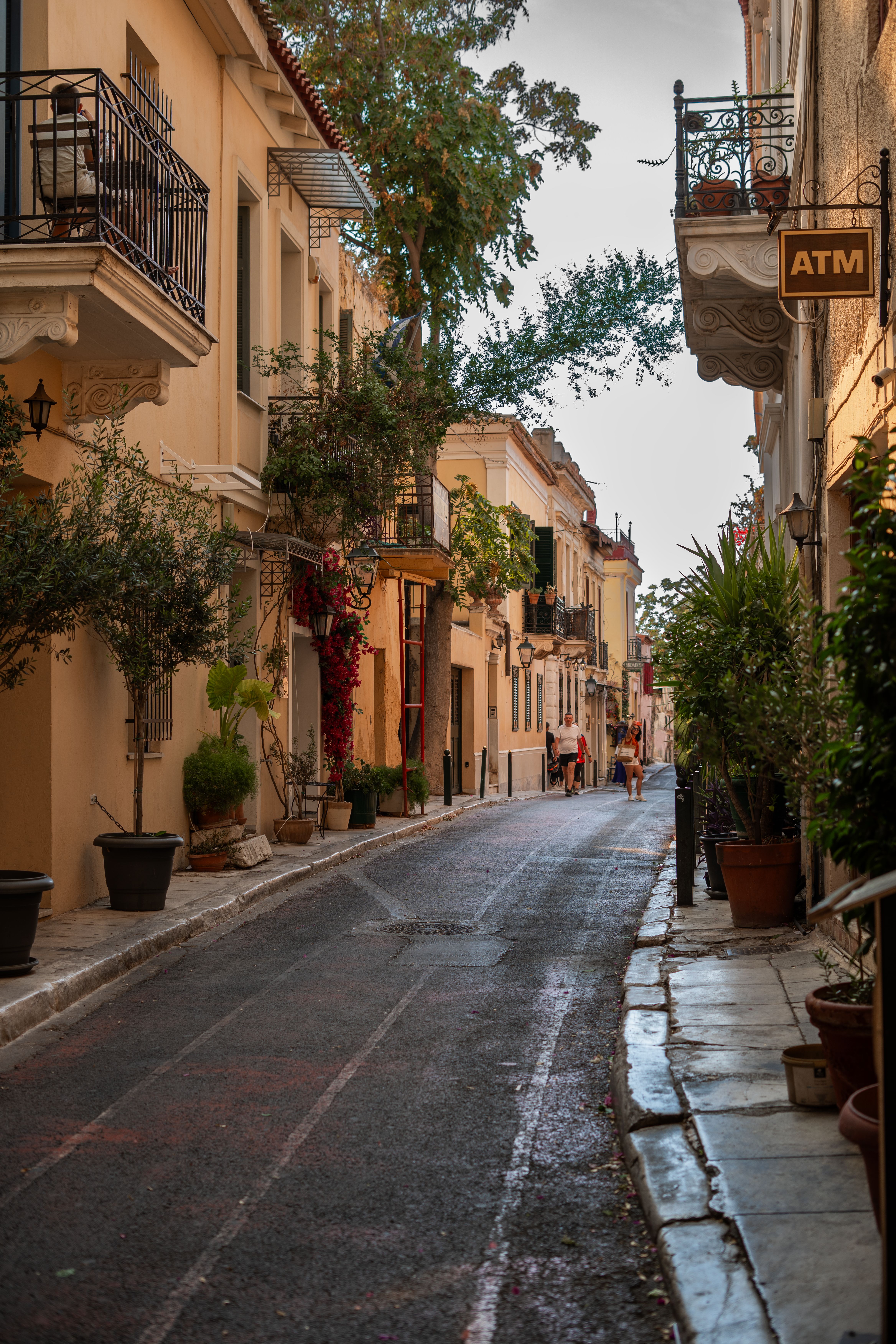
The lanes are narrow enough that two people with shopping bags have to turn sideways. Adrianou Street, the main spine, follows a line walked by classical Athenians, Roman senators, Byzantine monks, Frankish knights, and Ottoman tax collectors before you. Look up and the Parthenon hangs above the rooftops like a stone moon. Look down and you'll find the marble slabs that may — or may not — have given the neighborhood its name.
Plaka is also still a neighborhood. People live here. Parish priests serve liturgy at Agios Nikolaos Ragavas, grandmothers paint their shutters cobalt blue in Anafiotika, and on Good Friday the Epitaphios bier moves through these alleys carried on shoulders, not wheels. That's the part most visitors miss while photographing the souvenir shops. The shops are real. So are the residents fighting in 2026 to stop their streets from becoming a stage set.
The shorthand is the "Neighborhood of the Gods." The truth is more interesting: a quarter rebuilt from rubble after a ten-month siege, designed for demolition by men who ended up living here, layered with Albanian courts, Saxon architects, island stonemasons working at midnight, and a 16th-century nun who ran an underground railroad out of her family mansion.
What to See
Anafiotika — a Cycladic village smuggled onto the Acropolis
In the 1840s, King Otto I shipped stonemasons from the island of Anafi to build his Royal Palace, and they exploited a legal loophole that turned any structure raised between sunset and sunrise into the builder's property. The land had been declared an archaeological zone in 1834, so every whitewashed cube went up illegally, by lamplight, against the law. About 45 of those houses survive.
Walk up the stepped lanes off Stratonos Street and the city falls away. Bougainvillea spills magenta over limewashed walls, cats stretch on warm stone, and the alleys narrow until only one person passes at a time. The wooden shutters use island-style latches identical to those on Anafi 200 km south — a fishing village transplanted whole onto the slope of the Parthenon.
Go at 7 AM or after 5 PM. Midday it bakes, and the residents — real people, with mail and laundry — deserve quiet. Streets here have no names. Houses are simply numbered Anafiotika 1, Anafiotika 2, and they can never be sold on the open market, only inherited or returned to the state.

The [Choragic Monument of Lysicrates](https://audiala.com/en/greece/athens/choragic-monument-of-lysicrates) — a 334 BC first nobody notices
In a sleepy square one block off Adrianou, ringed by orange trees and benches where locals read the morning paper, stands a small cylindrical marble drum most visitors stride past on their way to a souvlaki. It is the oldest surviving Corinthian capital on the exterior of any building, anywhere. Lysicrates put it up in 334 BC to display the bronze tripod his choir won at the festival of Dionysus.
The acanthus-leaf capitals you see here became, eventually, the templates for half the bank facades in Europe and most of Washington DC. Touch the marble. This is the prototype.
Byron stayed in a Capuchin monastery built around the monument in 1810, and wrote part of Childe Harold here before the monastery burned in 1821. The square stays peaceful even in August because nobody knows what they're looking at.
A slow loop from Kydathineon to the Plaka Stairs
Start at the corner of Nikis and Kydathineon, where the Jewish Museum sits in a neoclassical mansion, and walk south. The marble slabs underfoot — flat plakes worn into shallow grooves by 3,000 years of footfall — are what gave the neighborhood its name. They're treacherous after rain. Wear flat soles.
Kydathineon opens into Platia Filomousou Eterias, where on Good Friday three local churches process their Epitaphios biers through the square at midnight, candles in every hand. Cut west on Adrianou to find Archontiko Mpenizelou at number 96, the oldest preserved house in Athens — 17th century, restored in 2017, and almost always empty. Then climb Mnisikleous Street, the Plaka Stairs, where tavernas spread tables across the steps themselves and you eat with strangers' knees at your shoulder.
Finish at Brettos on Kydathineon 41, a distillery since 1909, and order an ouzo at the bar. Behind the bartender, a wall of backlit liqueur bottles glows in a rainbow gradient — house-made mastiha, kumquat, rose. It is the most photographed bar in Athens for a reason.
On the whitewashed houses of Anafiotika, look for the hand-painted street numbers — there are no street names, just 'Anafiotika 1, 2, 3...' Many doorframes still carry Cycladic blue shutters and tiny painted ship motifs left by the original Anafi stonemasons.
Visitor Logistics
Getting There
Take Metro Line 2 or 3 to Syntagma, then walk 5–10 minutes down Nikis Street and turn right onto pedestrian Kydathineon, the main spine of Plaka. Monastiraki (Lines 1 & 3) puts you 3 minutes from the northwest edge via Adrianou; Akropoli (Line 2) is the right call if you're heading straight for Anafiotika. Skip the car — the historic core is pedestrianized, with underground garages at Syntagma or Monastiraki for anyone driving in.
Opening Hours
As of 2026, Plaka itself is a living neighborhood with no gates and no closing time — streets stay open 24/7 year-round. Shops, cafés and tavernas generally run 09:00–23:00, stretching to 01:00 from May through September. Museums inside the district (Acropolis Museum, Jewish Museum, Folk Art) follow Greek Ministry of Culture hours: roughly 08:00–20:00 in summer, 08:00–15:00/17:00 in winter, closed Dec 25, Jan 1, and Easter Sunday.
Time Needed
Two hours covers the highlights loop: Adrianou to Kydathineon, a pause at the Choragic Monument of Lysicrates, exit through Monastiraki. Give it a half-day (4–6 hours) to climb up to Anafiotika, slip into a kafeneio, eat a proper lunch, and watch the light change from the Mnisikleous steps at sunset.
Accessibility
The main pedestrian arteries — Adrianou, Kydathineon, Tripodon — are flat-ish but paved with marble slabs that turn glassy when wet or dusty; walk on the grout lines, not the polished centers. Anafiotika and Ano Plaka are off-limits for wheelchairs and scooters: narrow stairs, no curb cuts, steep gradients. Manual chairs with large wheels manage the lower spine; museums and larger hotels have elevators.
Cost & Tickets
Wandering Plaka costs nothing. The Acropolis Museum on the southern edge runs €15 standard adult entry as of 2026, with free admission on the August full-moon nights until midnight. State-run sites nearby (Roman Agora, Tower of the Winds, Folk Art Museum) range €4–€10 and waive fees on the first Sunday of each month from November through March — book Acropolis combined tickets through hhticket.gr to skip the queue.
Tips for Visitors
Come Early Or Late
Walk Plaka before 10:00 or after 17:00 — midday is mostly Acropolis overflow and selfie sticks on Adrianou. Early morning gives you cool shade and empty marble; late afternoon hands you golden light on whitewashed Anafiotika walls.
Where Athenians Actually Eat
Skip anything with a tout, laminated menu, or photos of food at the door. Aim for Glykis kafeneio (€) for old-school coffee, Klepsidra (€) for yoghurt with Roman Agora views, Platanos taverna (€€, in Plaka since 1932), or Brettos (€€) for house-distilled spirits in a 1909 bar lined with backlit bottles.
Scam Watch
The classic Plaka trap is a friendly stranger near the Acropolis exits inviting you to a "nice bar" — keep walking. Pickpockets work the Syntagma and Monastiraki metro funnels, so zip pockets, check your bill before paying, and pay in euros rather than your home currency.
Anafiotika Etiquette
Those ~45 surviving Cycladic cottages tucked under the Acropolis are private homes, not a film set. Photograph the lanes and whitewashed walls freely, but don't shoot through doorways or into courtyards, and keep your voice down — residents are right there behind the shutters.
Holy Week Is The Real Show
If you're in Athens at Orthodox Easter, Plaka turns from postcard to pilgrimage: the Holy Fire from Jerusalem first arrives at Agioi Anargyroi on Erechtheos Street on Holy Saturday, and Good Friday Epitaphios processions wind through the lanes by candlelight. Dress modestly, silence your phone, and follow the candles when you hear bells.
Drones Stay Grounded
Greece's HCAA lists archaeological zones — including the entire Acropolis–Plaka envelope — as restricted airspace, and after the 2025 Adidas drone-over-Acropolis backlash enforcement is sharp. Inside the Acropolis Museum, personal photos are fine without flash but tripods, selfie sticks and the Archaic Gallery are off-limits.
Wear Real Shoes
Plaka's marble pavers are gorgeous and treacherous, especially the steps up to Anafiotika and Mnisikleous. Leave the leather soles and platform sandals at the hotel — grippy rubber is the difference between a sunset photo and a trip to the clinic.
Pair It With The Acropolis
Plaka sits directly below the Acropolis and a short walk from the National Archaeological Museum up in Exarcheia. Do the Acropolis at opening (08:00), descend through Anafiotika for breakfast, then save the museum for a cooler late afternoon — see the Athens city guide for the full loop.
Where to Eat
Don't Leave Without Trying
Aerides Plaka Restaurant
local favoriteOrder: The moussaka is sublime, but the giouvetsi is their true specialty — slow-cooked and deeply comforting. Start with the fried squid if you’re sharing.
A Plaka institution serving classic Greek comfort food in a charming, authentic setting. The welcoming staff and soulful cooking make you feel like family, even on your first visit.
To Kafeneio
local favoriteOrder: The smoky aubergine dip and the giant beans with caramelised onion are pure comfort; don't skip the house-made dolmades and a glass of retsina.
A warm, family-run taverna tucked away from the crowds, loved by locals for its honest meze and regional dishes. The caramelised-onion gigantes are the stuff of Athenian legend.
Nonnas Athens
fine diningOrder: The Shrimp Saganaki with a modern twist is a standout — creamy, spicy, and unforgettable. Ask what Chef Elias is creating that day, because every dish shows passion.
Chef Elias reimagines Greek recipes with skill and passion, delivering a refined yet unpretentious dining experience. It's where tradition meets 2026 without losing its soul.
Plakaki Cafe
cafeOrder: The pork gyro is juicy and perfectly seasoned; for breakfast, the Plakaki Brunch with omelette, orange juice, and coffee is a steal — generous and delicious.
This bustling cafe is where Plaka starts its day — surrounded by locals, excellent coffee, and generous breakfast plates. Evenings bring a relaxed buzz with wine and gyros under the trees.
Dining Tips
- check Dinner is late: locals eat around 9–10pm, and kitchens stay open well past midnight in Plaka.
- check Lunch is the main meal, typically enjoyed around 2pm; it's a great time for a leisurely taverna experience.
- check Breakfast is light—grab a tyropita or spanakopita and a Greek coffee to start your day like a true Athenian.
- check Meze dishes are built for sharing and lingering; order a few plates and take your time.
- check Explore the Varvakios Central Market (Mon-Sat 8am-6pm) for an immersion in Athens' food culture.
- check Check out a laiki street market for seasonal produce; the Exarchia market on Saturday (Kallidromiou St) is particularly vibrant.
Restaurant data powered by Google
Historical Context
Three Thousand Years on the Same Streets
Plaka's continuity isn't its buildings — most of those are post-1830 neoclassical replacements for an Ottoman town smashed in the 1826–27 siege. The continuity is the street grid itself. Adrianou, Tripodon, the lane up to the Erechtheion: these lines were already old when Pericles commissioned the Parthenon. Records show Tripodon Street still follows the ancient route where victorious choragoi erected monuments to dramatic competitions in the 4th century BCE.
What endures is also the function. The churches are still churches. The houses are still houses. Anafiotika's stonemason descendants still inherit them — by law, you cannot sell an Anafiotika house on the open market, only pass it to a descendant or sell it back to the state. The neighborhood's heartbeat is annual: Holy Week processions in April, the feast of Agios Symeon on 3 February in Anafiotika, the bell of Agios Nikolaos Ragavas rung every 25 March. Touch any wall in Plaka and you're touching a living calendar.
Revoula Benizelou and the House That Defied an Empire
On Adrianou Street stands the oldest surviving house in Athens — the Benizelos Mansion, the only authentic late-Ottoman noble residence still standing in the city. The marketing line calls it a charming example of 17th-century Athenian domestic architecture. Walk in, admire the wooden balcony, take a photo, leave. That's the surface story.
The detail that doesn't fit: why does the Greek Orthodox Church canonize the daughter of this house as a saint? Records show Revoula Benizelou was born here around 1522, forced into marriage at fourteen to a violent older man, widowed at seventeen, and refused every Ottoman pressure to remarry. The official tour mentions her piety. It tends not to mention what she actually did.
She used the family fortune to ransom Greek women being trafficked into Ottoman harems. From this mansion, as the nun Philothei, she ran what was effectively a 16th-century underground railroad — sheltering enslaved women who had escaped, smuggling them out, paying off Ottoman officials. In 1588, soldiers raided her convent during a vigil and beat her so badly she died of her wounds on 19 February 1589. What was at stake for her was her life. She knew it. She did it anyway.
Stand at the Benizelos Mansion now and the cobblestones look different. This isn't a charming old house. It's the headquarters of a one-woman resistance movement that operated for decades under the noses of an empire — and her feast day is still walked through these streets every February, icon and relics carried from the Metropolitan Cathedral back to where she lived.
What Changed
Almost everything you'd recognize as Ottoman is gone. Plaka was the center of Ottoman Athens — a town of roughly 10,000 with mosques, hammams, and bazaars — and after 1830 most of it was deliberately erased to clear room for a neoclassical capital. In 1832 the German-trained architects Stamatios Kleanthis and Eduard Schaubert drew up a master plan that called for demolishing Plaka entirely to expose the ancient city. The state ran out of money before they could finish. Ironically, both men bought Ottoman-era houses in the same neighborhood they had proposed to bulldoze. The 1884 fire wiped out another swath, and archaeologists used the cleared ground to excavate the Roman Agora and Hadrian's Library — Roman monuments buried under residential Plaka for centuries.
What Endured
The street lines. The parish system. The rhythm of the Orthodox calendar. Agios Nikolaos Ragavas, the church remembered as the first to ring its bell in liberated Athens at Easter 1833, still rings that bell every 25 March. St Catherine's is still an active parish with current clergy. The Anafiotika settlement, built in the 1840s by Cycladic stonemasons King Otto brought in to construct the Royal Palace, still stands — about forty whitewashed houses, streets without names, addresses that just say "Anafiotika 1, Anafiotika 2." According to tradition the builders exploited a legal loophole that any structure completed between sunset and sunrise became theirs; scholars treat that detail as folklore, but the houses are real and the families who own them still trace their descent to Anafi.
The pre-Ottoman name of the area, Alikokkou, derives from a Frankish family surname — meaning a Crusader-era household once held this ground — but no genealogy of the Alikokkou survives, and scholars cannot say who they were or when they arrived. Excavations under the inhabited houses have continued since the 19th century and remain unfinished; many Plaka homes sit on undocumented ancient remains that modern conservation rules make impossible to fully investigate.
If you were standing on this exact spot in August 1826, you would hear Ottoman cannons hammering the rock above as Reşid Mehmed Pasha's troops pour through the lower town. The streets are empty — every Plaka resident has fled or been evacuated, doors hanging open, ovens cold. For ten months no one will live here; the Acropolis defenders will hold out until June 1827, and when families finally return much of what you see around you will be rubble, waiting to be rebuilt as the neoclassical neighborhood you walk through today.
Listen to the full story in the app
Your Personal Curator, in Your Pocket.
Audio guides for 1,100+ cities across 96 countries. History, stories, and local insight — offline ready.
Audiala App
Available on iOS & Android
Join 50k+ Curators
Frequently Asked
Is Plaka worth visiting? add
Yes, but with a caveat: walk it early or late, and stay off the main tourist drags. Plaka is Athens' oldest continuously inhabited quarter, with 3,000 years of footfall on the same street lines, but in April 2026 Athens mayor Haris Doukas publicly called the district 'over-saturated' with tourism. The reward is in the side streets, the Anafiotika lanes, and the small Byzantine churches still in active use.
How long do you need at Plaka? add
Plan 3 to 4 hours for a proper wander, or just 1 to 2 hours if you only want the highlights. A half-day lets you walk Adrianou and Kydathineon, climb into Anafiotika, see the Choragic Monument of Lysicrates, drop into one museum, and have a long lunch. Add another hour or two if you want to catch sunset from the upper steps.
How do I get to Plaka from Syntagma? add
Walk. It's 5 to 10 minutes downhill from Syntagma Metro (Lines 2 & 3) — head down Nikis Street, then turn right onto pedestrianised Kydathineon. Monastiraki and Akropoli stations are equally close on the other sides, and the whole core is car-free, so don't bother driving.
What is the best time to visit Plaka? add
Early morning between 7 and 10 a.m., or late afternoon from about 5 p.m. onward. Midday in summer is brutal — full sun on white marble, tour groups stacked nose-to-tail in Anafiotika. Holy Week (Orthodox Good Friday fell on 10 April in 2026) is the single most extraordinary time, when Epitaphios processions wind through the lanes by candlelight.
Can you visit Plaka for free? add
Yes — the neighbourhood itself has no gates, no tickets, and no opening hours. You only pay if you enter specific museums inside it, like the Acropolis Museum (€15), the Frissiras, or the Museum of Greek Folk Musical Instruments. The streets, churches, Anafiotika, and the Lysicrates Monument are all free to walk around 24/7.
What should I not miss at Plaka? add
The Choragic Monument of Lysicrates (334 BC, the world's first exterior Corinthian columns), the Benizelos Mansion on Adrianou (Athens' oldest surviving house and home of Saint Philothei), and the climb up into Anafiotika at golden hour. Add the Museum of Greek Folk Musical Instruments for its listening stations covering 1,200+ instruments, and Brettos on Kydathineon for the rainbow wall of house-distilled liqueurs since 1909.
Is Plaka safe at night? add
Generally yes — it's busy, well-lit, and heavily trafficked until late. The risks are pickpocketing on the metro routes in and out, and the old 'friendly stranger wants to show you a nice bar' scam near Acropolis exits, which Athenians call out repeatedly on local forums. Ignore touts, refuse unsolicited drinks invitations, and check your bill carefully at tourist-strip tavernas.
What's the difference between Plaka and Anafiotika? add
Anafiotika is a tiny Cycladic-island enclave tucked inside Plaka, on the northeast slope of the Acropolis. Stonemasons from the island of Anafi built it in the 1840s while working on King Otto's Royal Palace, using a sunset-to-sunrise legal loophole — around 45 of the original whitewashed cube houses survive, with no street names, just numbered doors. Plaka is the wider neoclassical neighbourhood that surrounds it.
Sources
-
verified
Wikipedia — Plaka
Etymology debates, Albanian settlement history, 1826 siege, 1884 fire, and 1980s preservation plan.
-
verified
This is Athens — Plaka neighbourhood
Official Athens city guide overview of Plaka, its character and crowds.
-
verified
This is Athens — Plaka restaurants and cafés
Vetted local-favourite tavernas, kafeneia, and price tiers including Platanos, Brettos, Glykis.
-
verified
This is Athens — Easter in Athens
Holy Week and Easter rituals, Epitaphios processions through Plaka, food specialties.
-
verified
This is Athens — Kafenio traditional café guide
Living kafeneio culture in Plaka including To Kafeneio (in same building since 1836).
-
verified
This is Athens — Klepsidra café
Café near Roman Agora known for yoghurt and Greek coffee.
-
verified
This is Athens — Safety tips
Official guidance on pickpocketing and petty theft on transit.
-
verified
This is Athens — Architecture, neoclassical Plaka
Civic pride and renewed Athenian interest in restoring old Plaka houses.
-
verified
This is Athens — Museum of Greek Folk Musical Instruments
Living transmission of regional sound traditions in Plaka.
-
verified
This is Athens — Acropolis & Koukaki area
Distinguishing Plaka from neighbouring Acropolis-Koukaki district.
-
verified
This is Athens — Koukaki locals' guide
Adjacent neighbourhood comparison and access points.
-
verified
This is Athens — Sense restaurant
Splurge dining with Acropolis view at AthensWas hotel.
-
verified
This is Athens — Dionysos Zonar's
Formal Acropolis-view restaurant near Plaka.
-
verified
This is Athens — Ziller Roof Garden
Contemporary rooftop dining in the Historic Centre.
-
verified
This is Athens — Attikos Greek House
Tourist-friendly Koukaki taverna below the Acropolis.
-
verified
Athens by Locals — Plaka neighborhood
Local-perspective navigation tips, terrain warnings, and how to edit the tourist strips.
-
verified
Athens Guide — Plaka
Detailed walking routes from Syntagma and Monastiraki, kafeneia history, Easter Epitaphios.
-
verified
Athens Key — Plaka
Civic nickname 'Neighbourhood of the Gods' and overview.
-
verified
Athens Key — Agios Symeon
Anafiotika feast day on 3 February.
-
verified
Athens Key — Metochi Panagiou Tafou
Layered religious heritage in Plaka.
-
verified
Visit Plaka — Local festivals
Annual feast calendar including Agios Symeon and Ragavas bell on 25 March.
-
verified
Visit Plaka — Saint Catherine's Church
Local feast date for active parish church.
-
verified
Visit Plaka — Agios Nikolaos Ragavas
Memory of first church bell ringing in liberated Athens, 1833.
-
verified
Visit Plaka — Festivals overview
Apokries, New Year's, August Full Moon openings.
-
verified
Aspects of Style — Plaka, Athens
Kleanthis and Schaubert master plan and accidental preservation.
-
verified
It's All Greek to Anna — Anafiotika
Anafiotika construction history and Cycladic vernacular.
-
verified
Athens Social Atlas — Anafiotika
Resident memory politics and the right to remain visible inside heritage zones.
-
verified
Istorima — Oldest resident of Anafiotika
Oral history of long-term Anafiotika residents.
-
verified
Britannica — Greek War of Independence
1826–27 Ottoman siege of Athens and capture of the Acropolis.
-
verified
Greek Reporter — Greek War of Independence
1821 revolution context.
-
verified
Greek Reporter — Athens Medrese restoration
March 2026 restoration of the Medrese and Late Roman fortifications near Roman Agora.
-
verified
Wikipedia — Greek War of Independence
Death of Karaiskakis 23 April 1827, fall of Acropolis June 1827.
-
verified
eKathimerini — Athens mayor pushes curbs on tourism
April 2026 reporting on overtourism and 'over-saturated' Plaka.
-
verified
eKathimerini — Short-term rentals rise in central Athens
February 2026 reporting on STR pressure in Syntagma-Monastiraki-Plaka triangle.
-
verified
eKathimerini — Short-term rentals declared legal
November 2025 court ruling on Airbnb-style rentals in Plaka.
-
verified
eKathimerini — U-turn eases Plaka access
February 2026 traffic change easing resident car access.
-
verified
eKathimerini — Demolition of old Athens buildings
July 2025 count of 62 abandoned protected buildings in Plaka.
-
verified
The Guardian — Athens vows to rescue capital from overtourism
April 2026 mayoral statement on tourism saturation.
-
verified
The Guardian — Athens curbs tourist rentals
April 2026 reporting on STR backlash and resident pressure.
-
verified
The Guardian — Adidas drone Acropolis controversy
May 2025 drone controversy sharpening sensitivity around aerial imaging.
-
verified
To Vima — Athens mayor on Plaka
April 2026 mayoral coverage.
-
verified
To Vima — Overcrowded tourism
Cultural identity pressure under tourism.
-
verified
Why Athens — Greek Orthodox Easter
Hymn of Kassiani at St Nicholas Rangavas, Holy Fire at Agioi Anargyroi, Easter Sunday feast.
-
verified
Athens-Times — 2026 Greek Easter survival guide
Confirms Orthodox Good Friday 10 April 2026.
-
verified
Fora Travel — Athens Easter experience
Candlelit Epitaphios processions through Plaka.
-
verified
Greek Travel Tellers — Easter in Greece
Holy Week ritual context.
-
verified
Orthodox Times — Saint Philothei commemoration
Annual 19 February procession of relics from Cathedral to Plaka sites.
-
verified
Saint Philothea — biographical site
Life of Revoula Benizelou and her resistance to Ottoman trafficking.
-
verified
Iaath — Agios Nikolaos Ragavas parish
Active parish status; 1833 first liberated bell.
-
verified
Iaath — St Catherine parish
Active parish status of St Catherine's, Plaka.
-
verified
Prosvasimo — Agios Nikolaos Ragavas
Heritage and accessibility info for the church.
-
verified
Byzantine Museum — Benizelos Mansion
Athens' oldest surviving house, home of Saint Philothei.
-
verified
City Festival Athens — Serenades in Plaka
5 May 2025 revival of Athenian serenade tradition.
-
verified
City Festival Athens — Musical Walk through Plaka
19 May 2025 narrated music walk.
-
verified
City Festival Athens — Plaka, Neighborhood of the Gods
13 May 2024 serenade and costume programming.
-
verified
Athens Attica — Folk Musical Instruments Museum
Listening stations and 1,200+ instrument collection.
-
verified
Athens Guide — Folk Musical Instruments Museum
Visitor info for the Diogenous St museum.
-
verified
Culture is Athens — Folk Art Museum
Angeliki Hatzimichali Folk Art Museum and craft transmission.
-
verified
Athens Attica — Hatzimichali Folk Art Museum
Embroidery, costume, weaving, vernacular design.
-
verified
City of Athens — Hatzimichali Museum
Official municipal museum listing.
-
verified
Greek Ministry of Culture — Photography permits
Permit process for photography/filming at archaeological sites.
-
verified
Greek Ministry of Culture — Heritage policy
Cultural heritage policy framework.
-
verified
Acropolis Museum — Photography & filming
Personal photography rules; Archaic Gallery restriction; flash and tripod ban.
-
verified
HCAA — Where you can fly drones in Greece
DAGR airspace platform; archaeological-site restrictions.
-
verified
HCAA — Drone FAQ (general)
General drone permission rules.
-
verified
HCAA — Drones over uninvolved people
Open-category restrictions over crowds.
-
verified
Lithoscrete — Greece tourist scams 2026
Bill-padding, unpriced specials, taxi and bar scams.
-
verified
Reddit r/athina — What to see in Athens
Local warnings about Plaka tourist-trap tavernas.
-
verified
Reddit r/athina — Scam alert
Friendly-stranger bar lure and Plaka-area scams; slang κωλόμπαρο.
-
verified
TripAdvisor — Plaka user reviews
Visitor scam and crowd reports.
-
verified
Chasing the Donkey — Is Athens safe
Practical safety overview for central Athens.
-
verified
More Greece — Plaka listing
'Neighbourhood of the Gods' nickname and overview.
-
verified
Elxis — Athens architecture explained
Architectural strata from ancient through neoclassical.
-
verified
Dormition of the Theotokos — FAQ
Orthodox visitor etiquette in churches.
-
verified
Alkis Raftis — Greek dance and culture
Greek dance traditions and their connection to saints' days.
-
verified
Facebook travel group — Plaka tips
Traveler-community scam and access tips.
Last reviewed: