Introduction to Philopappos Monument
The Philopappos Monument, also known as the Monument of Philopappos, stands as a prominent historical landmark atop Philopappos Hill in Athens, Greece. Erected between 114 and 116 AD, this impressive structure honors Gaius Julius Antiochus Epiphanes Philopappos, a prince from the Kingdom of Commagene and a celebrated benefactor of Athens. The monument not only serves as a testament to the deep cultural exchange between Greece and Rome but also offers breathtaking panoramic views of the city, including the iconic Acropolis. Visitors to the Philopappos Monument can marvel at its architectural grandeur, which seamlessly blends Roman and Greek elements. The monument's strategic location on Philopappos Hill underscores its significance, symbolizing Philopappos's elevated status and his lasting legacy in Athenian history (Athens Guide).
Photo Gallery
Explore Philopappos Monument in Pictures
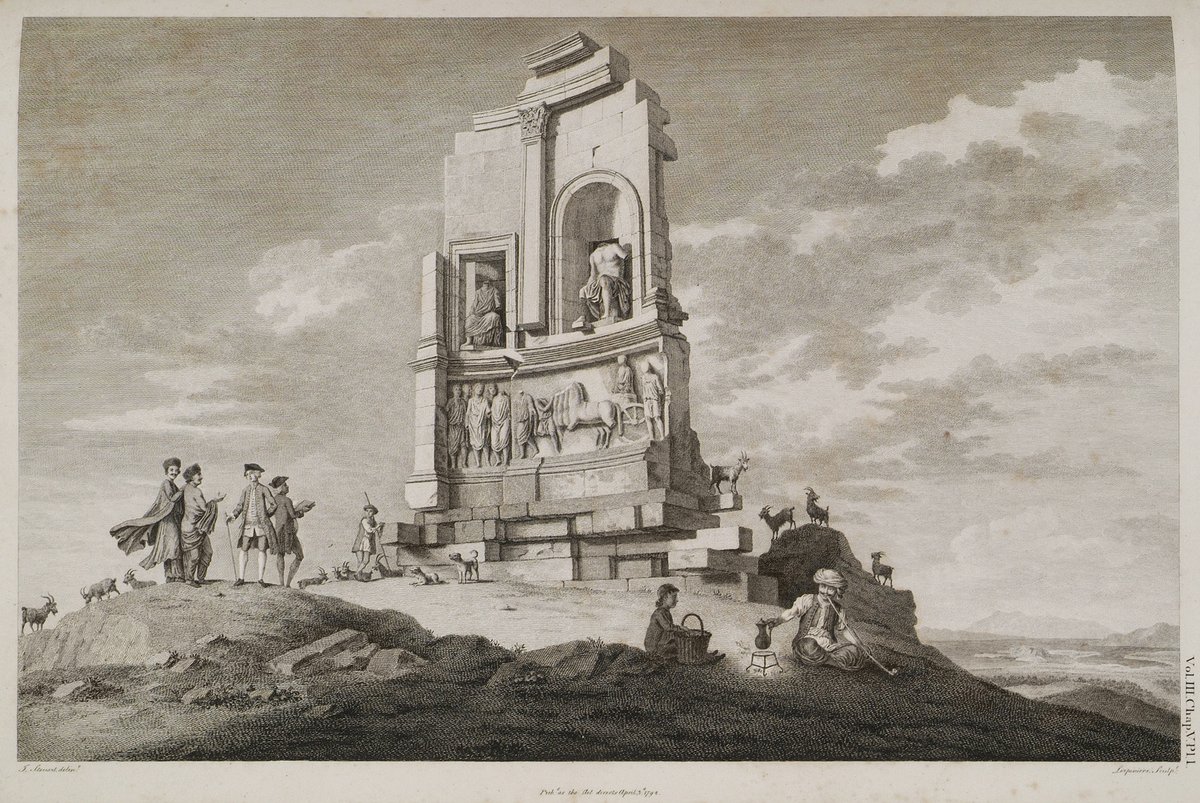
Historic illustration from The Antiquities of Athens by James Stuart and Nicholas Revett, published in 1794, showing measured and delineated ancient monuments.
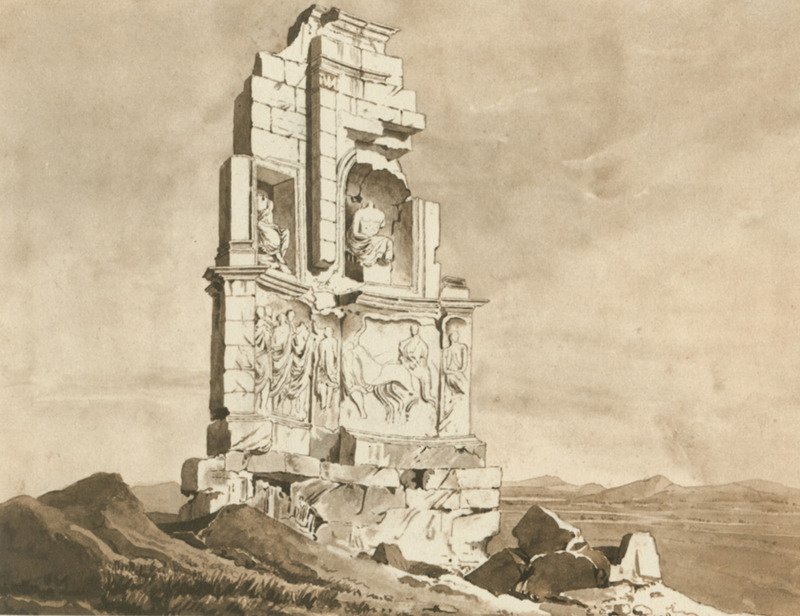
Historical monument of Philopappos situated on Moussion Hill in Athens, depicted from the north-east angle in a painting by Peytier Eugène dated 1828-1836
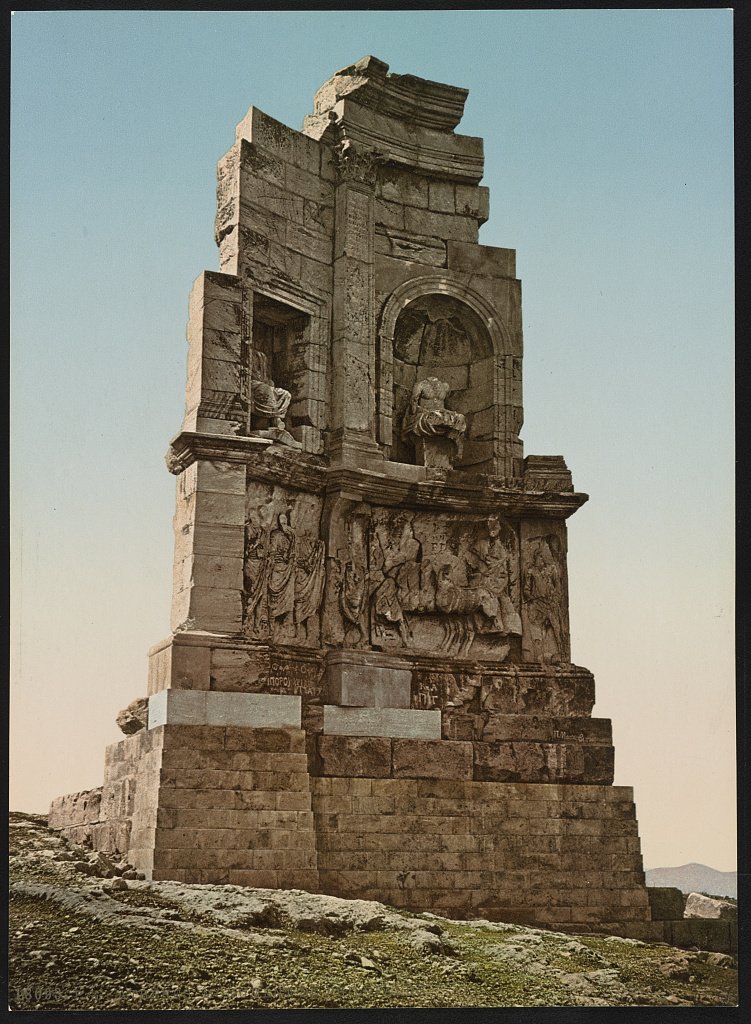
Color photochrom image of Philopappos Monument in Athens, showcasing the historic structure under clear sky, 17 x 23 cm print
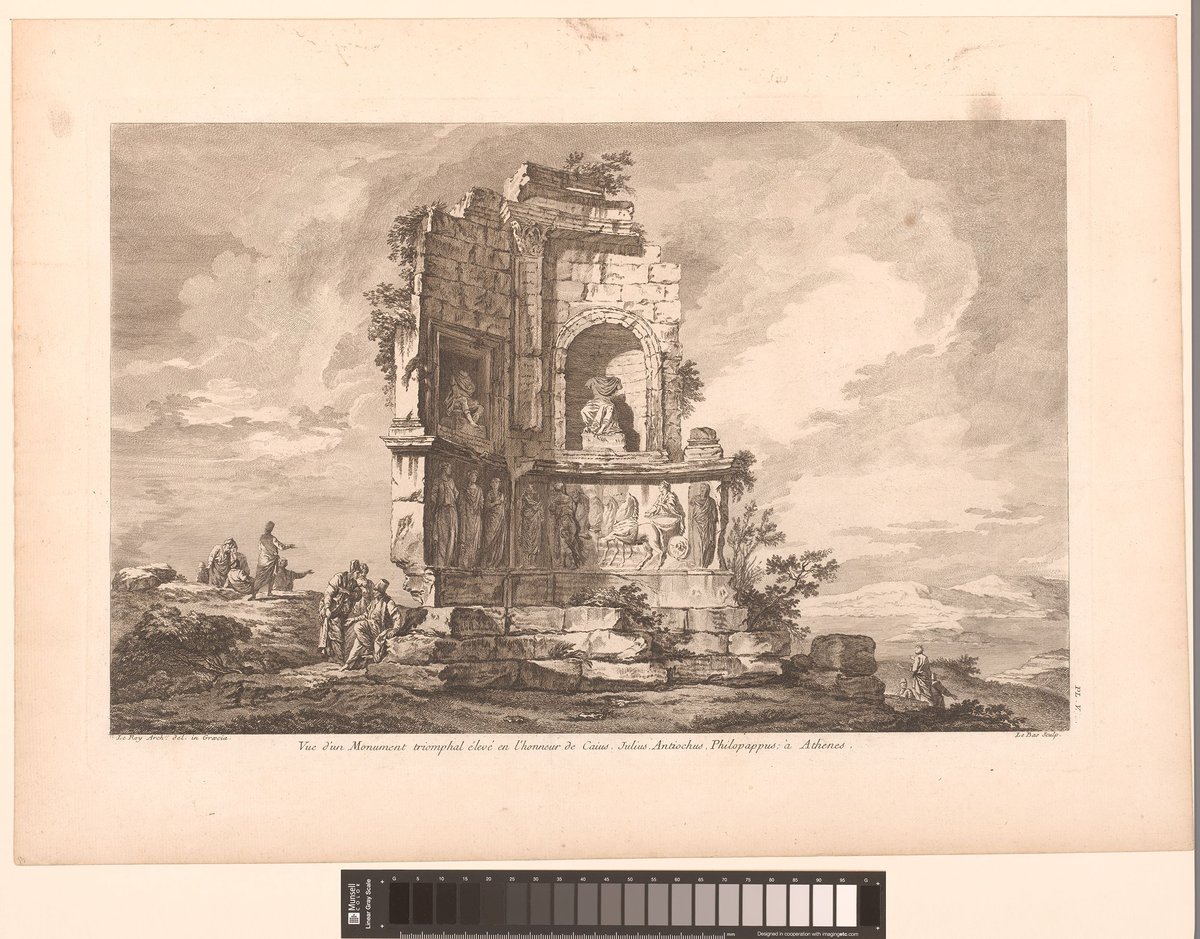
1758 etching of the Philopappos Monument in Athens by Jacques-Philippe Le Bas after Julien Le Roy, depicting monumental adornments and ruins in the cityscape.
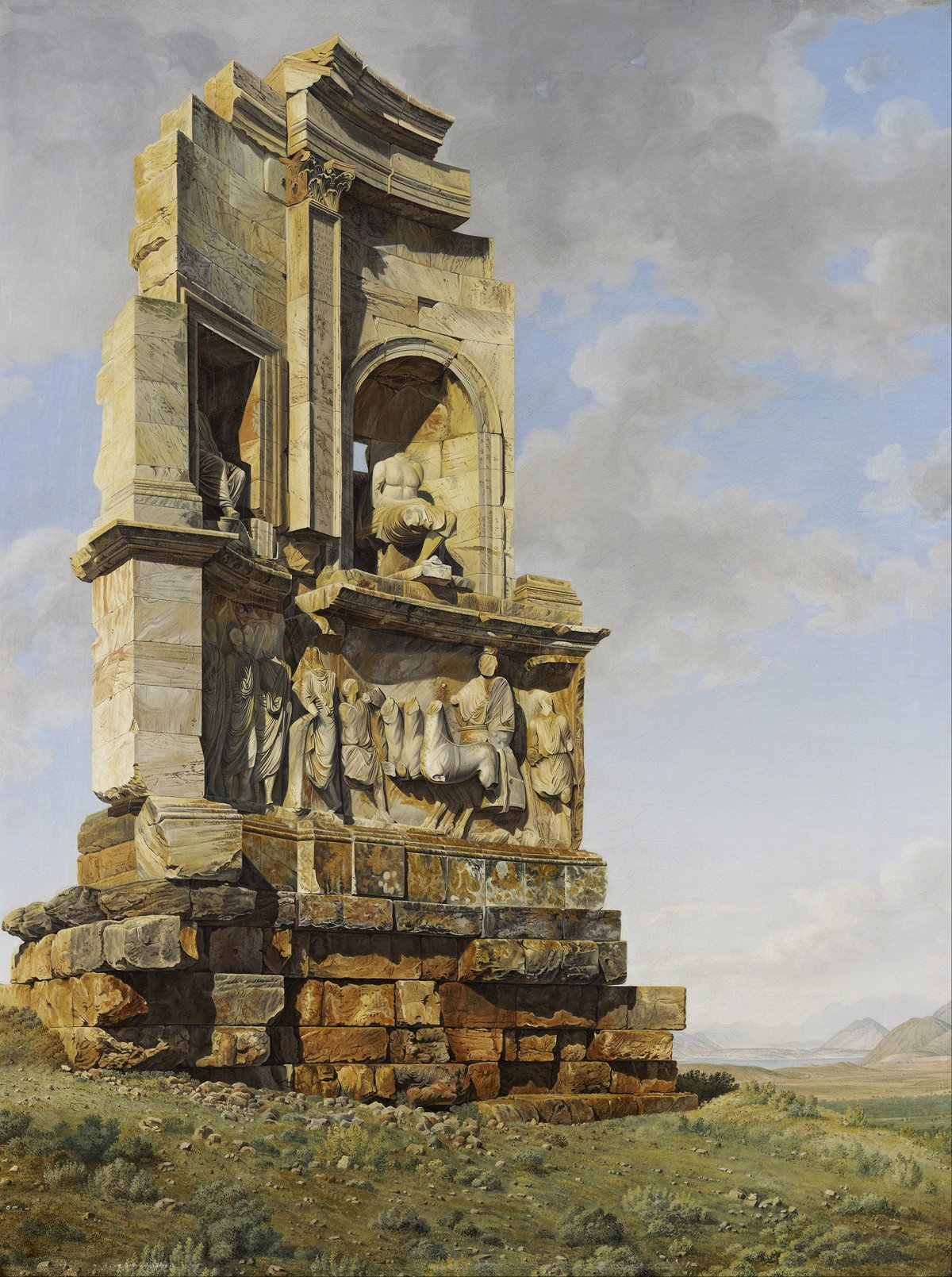
Photograph of the Monument to Philopappos in Athens depicting the ancient architectural style with clear blue sky backdrop
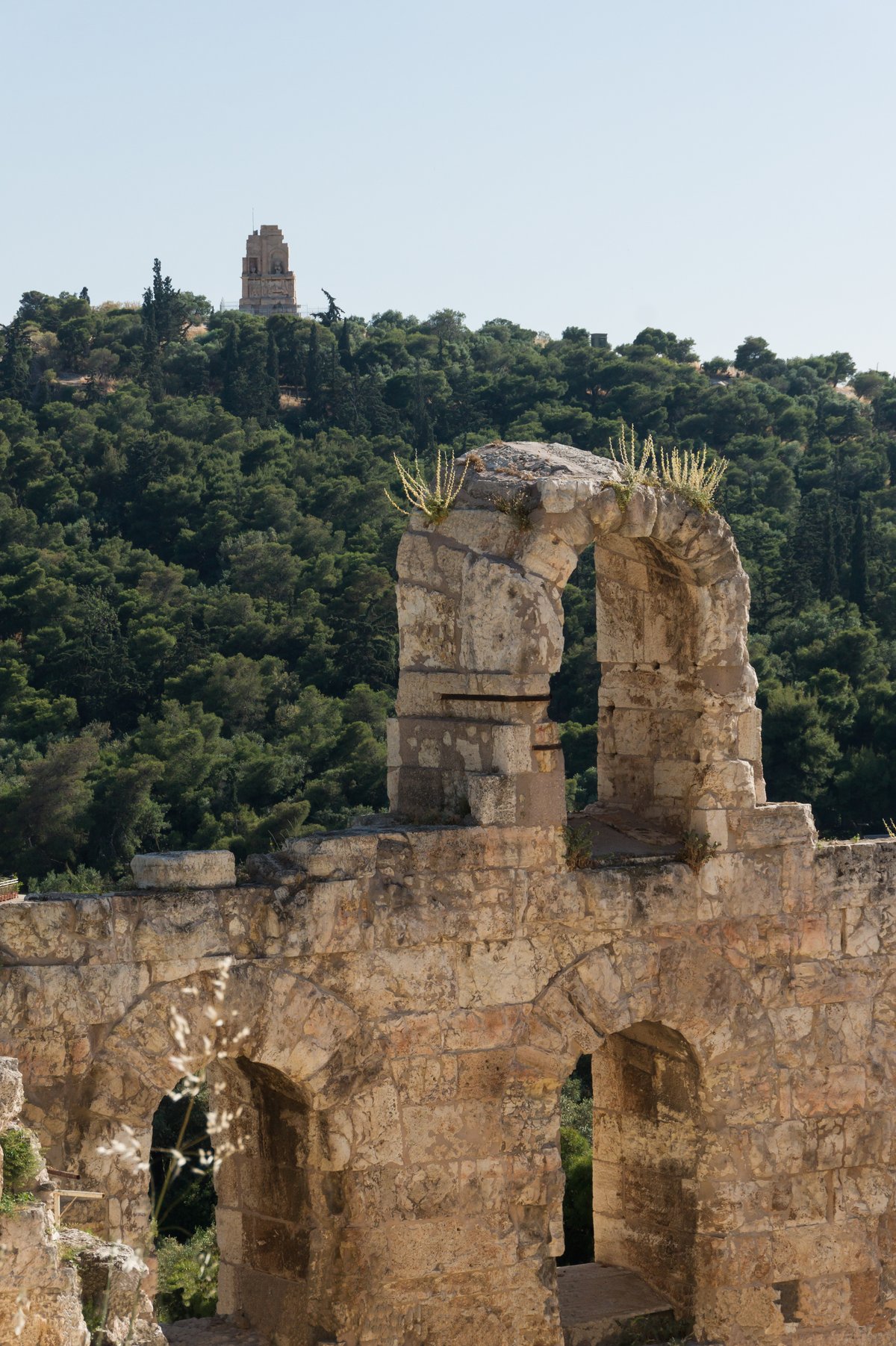
Photograph showing part of the wall of the theatre of Herodes Atticus with the Philopappos monument visible in the background in Athens, Greece.
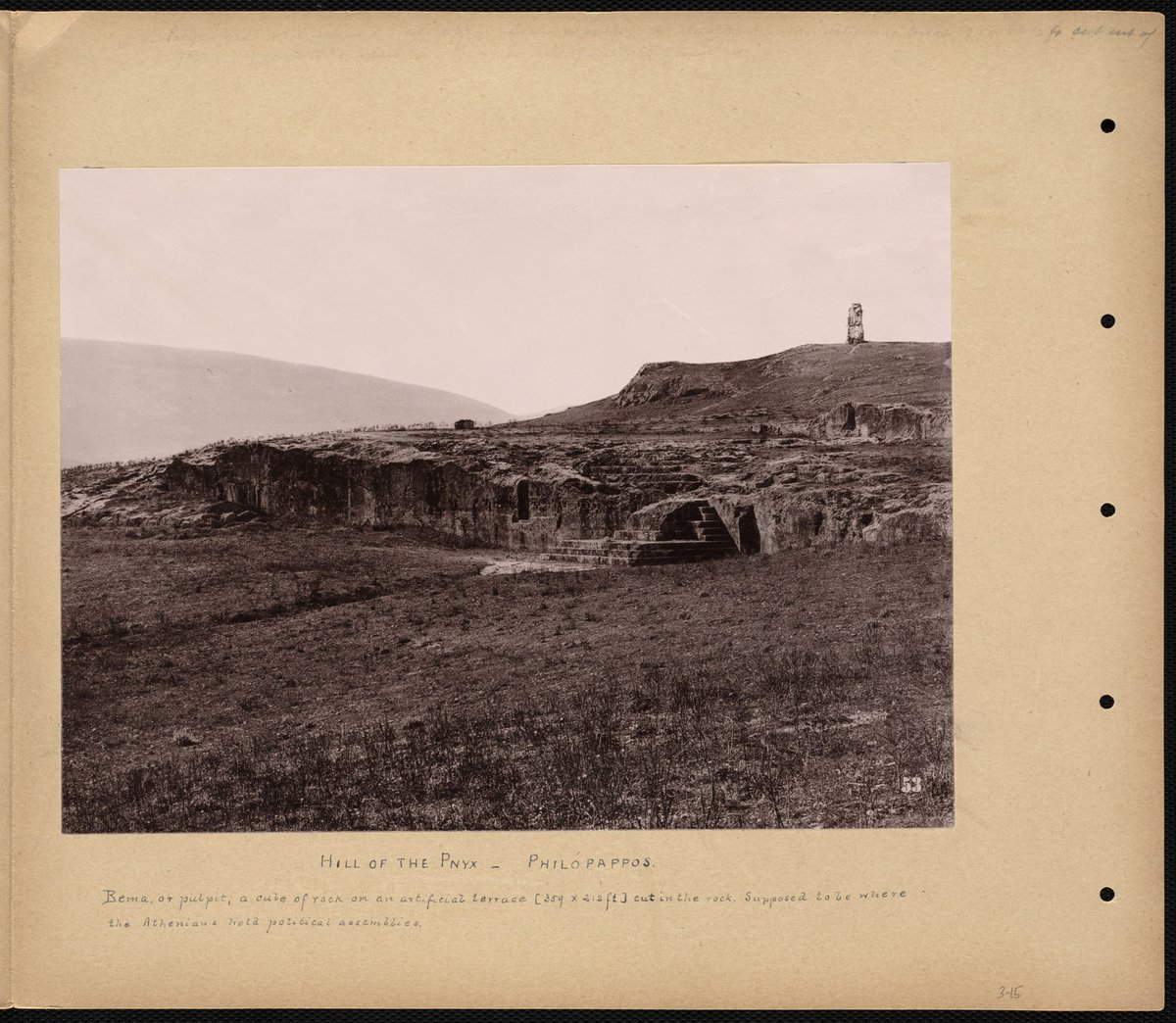
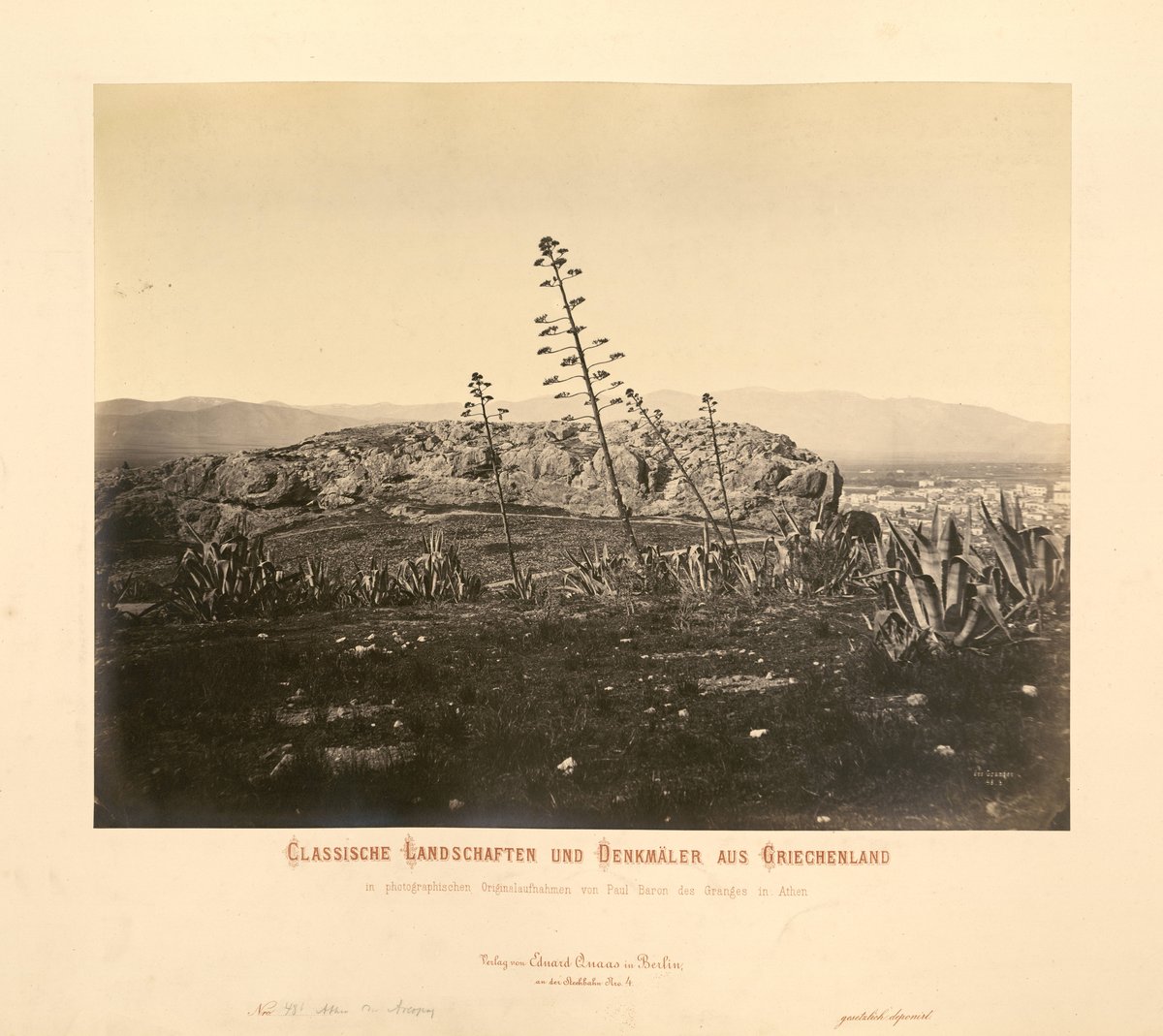
Photograph of the Hill of the Pnyx in Athens showing the Bema, a cubic rock pulpit on an artificial terrace where Athenians held political assemblies, from the Tupper Scrapbooks Collection.
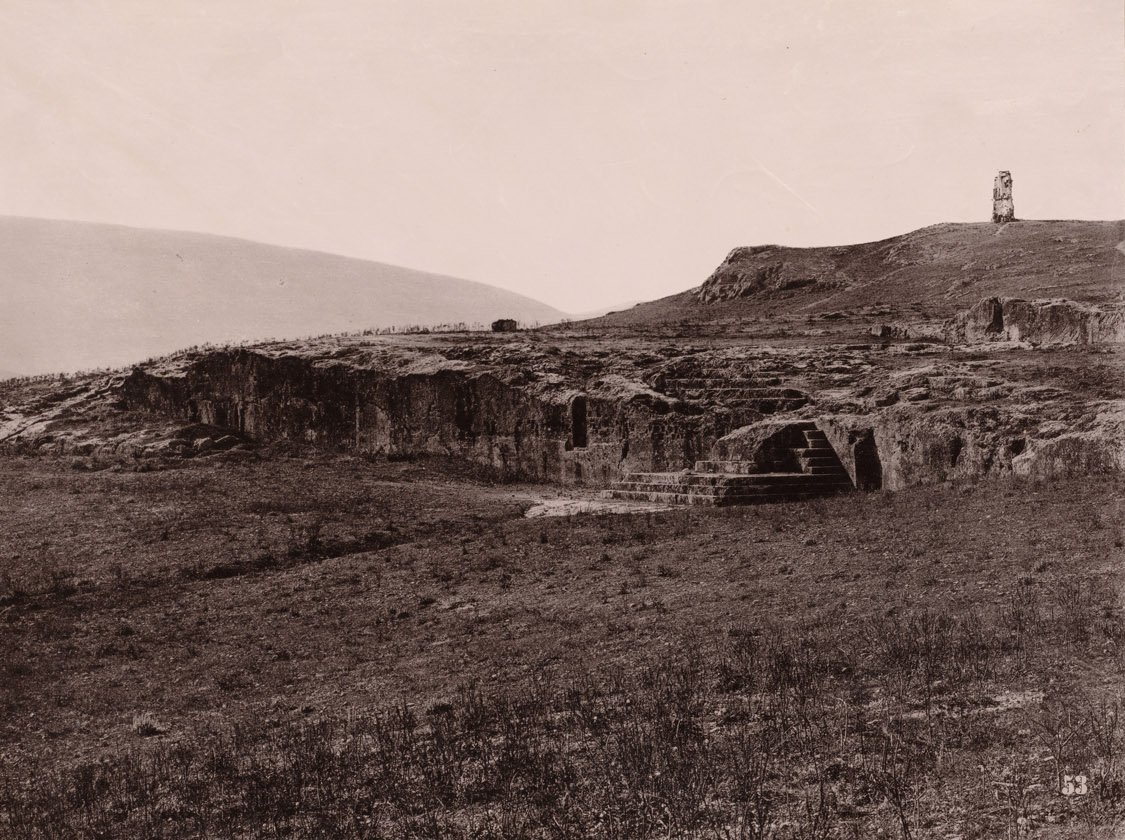
Photograph of the Hill of the Pnyx in Athens showing the historical site where Athenian political assemblies were held, featuring the Philópappos Monument in the background. Image from the Tupper Scrapbooks Collection, Volume 3: Athens, capturing important architectural and historical details.
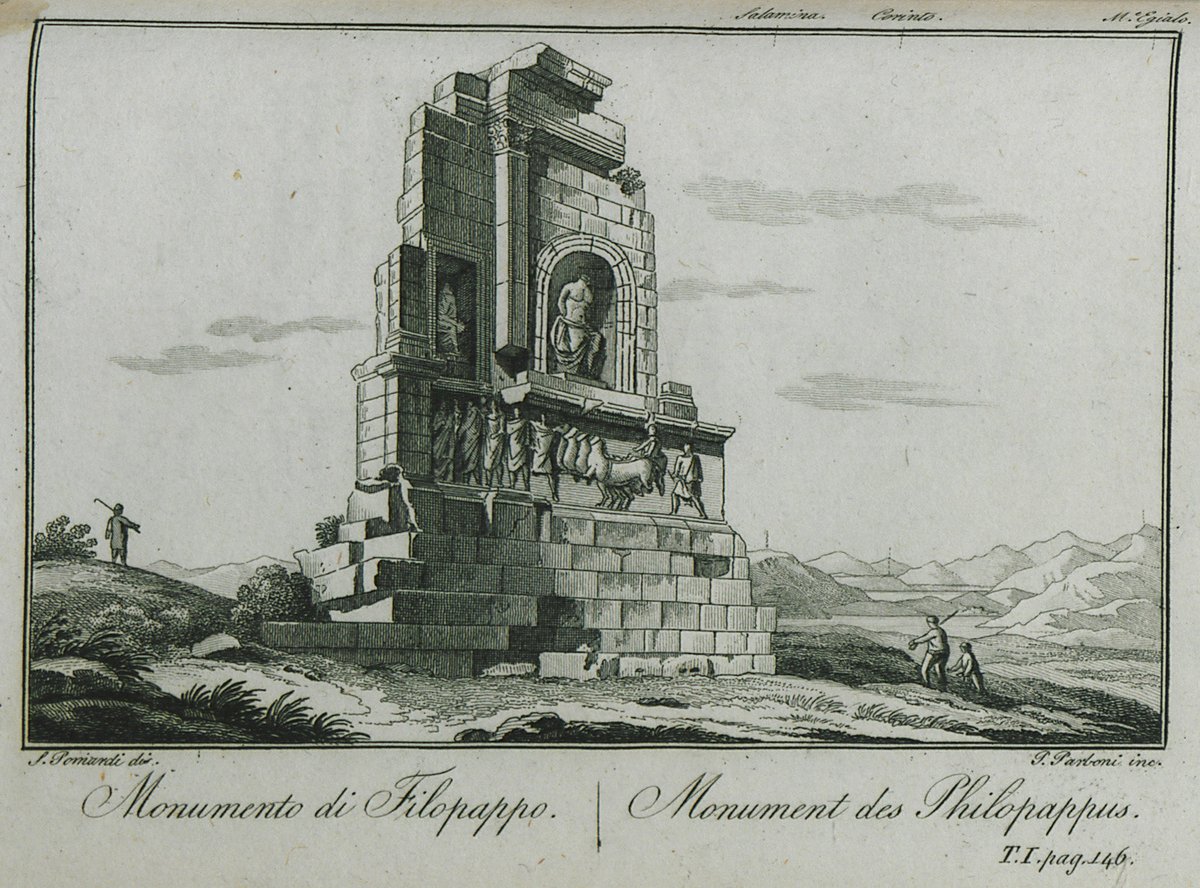
Illustration of the Monument of Philopappos in Athens from the book 'A classical and topographical tour through Greece' by Simone Pomardi, published in 1820, depicting a historical view during the early 1800s.
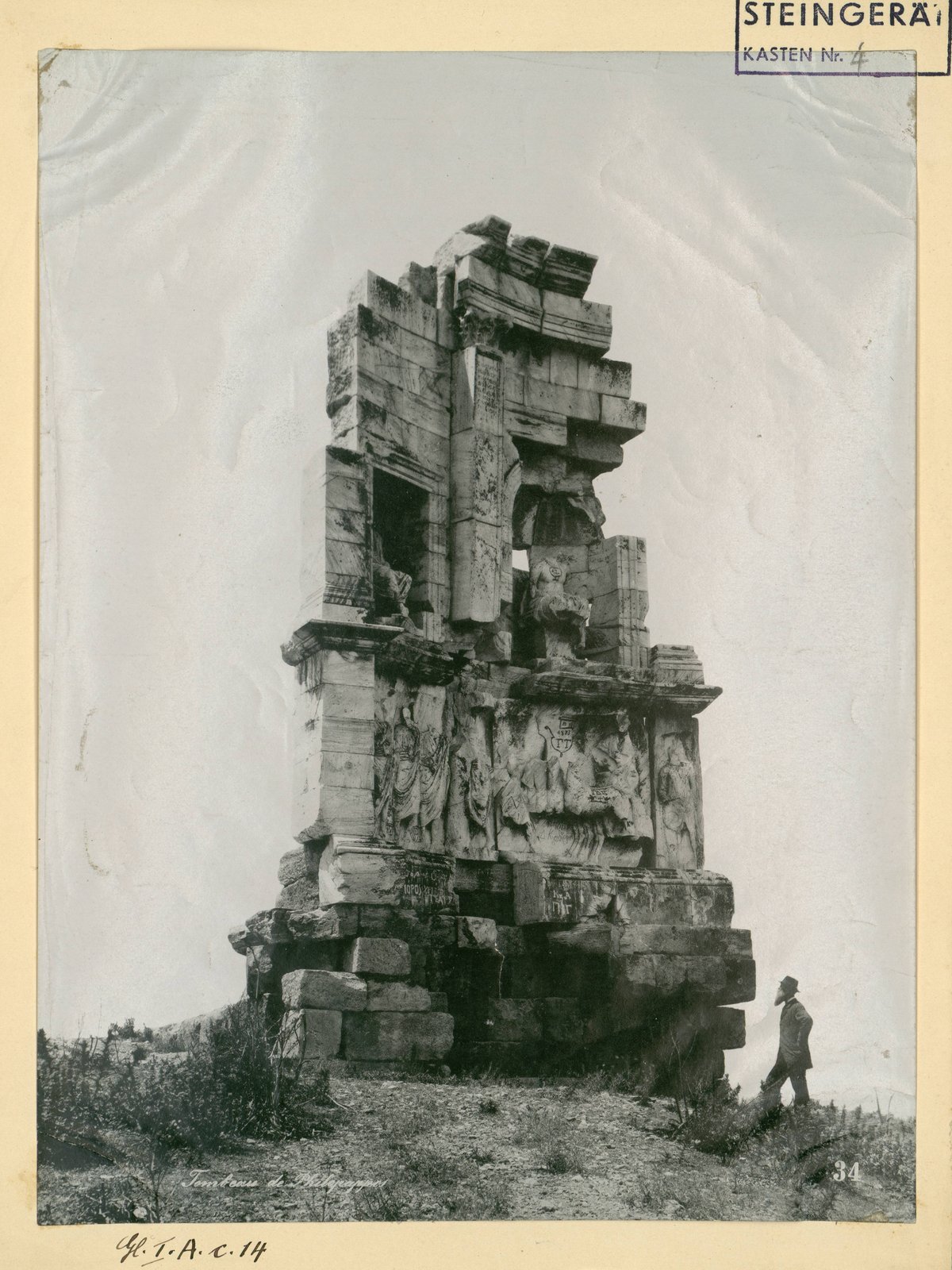
The Monument of Philopappos stands atop the Hill of the Muses, southwest of the Acropolis. The slightly angled framing highlights the detailed reliefs and monumental volumes, with a person at the base providing scale and adding a contemplative, romantic aspect to the ancient ruins.
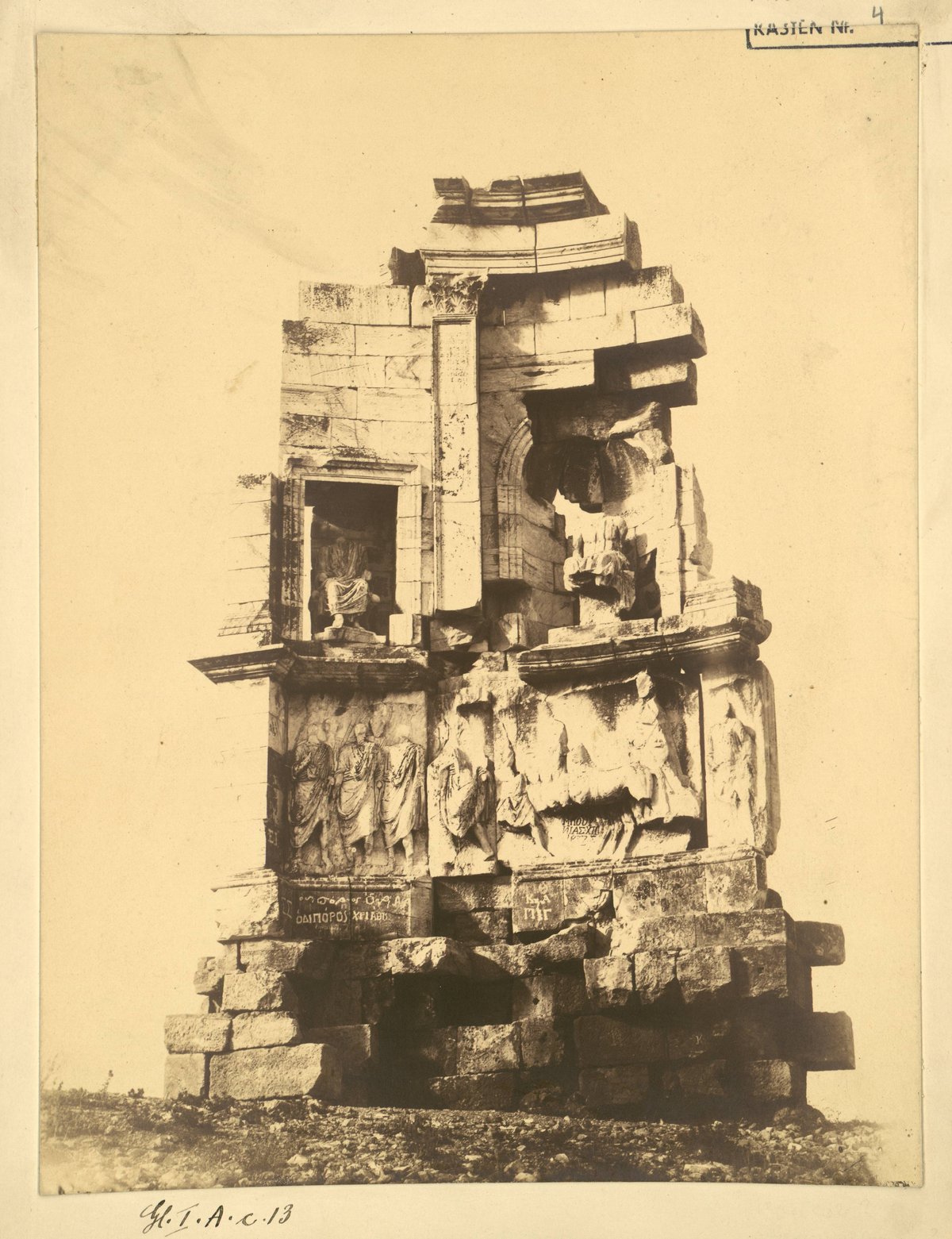
The Monument of Philopappos, a funerary monument located at the summit of Musaeus Hill, southwest of the Acropolis, showcasing monumental classical architecture and historical reliefs.
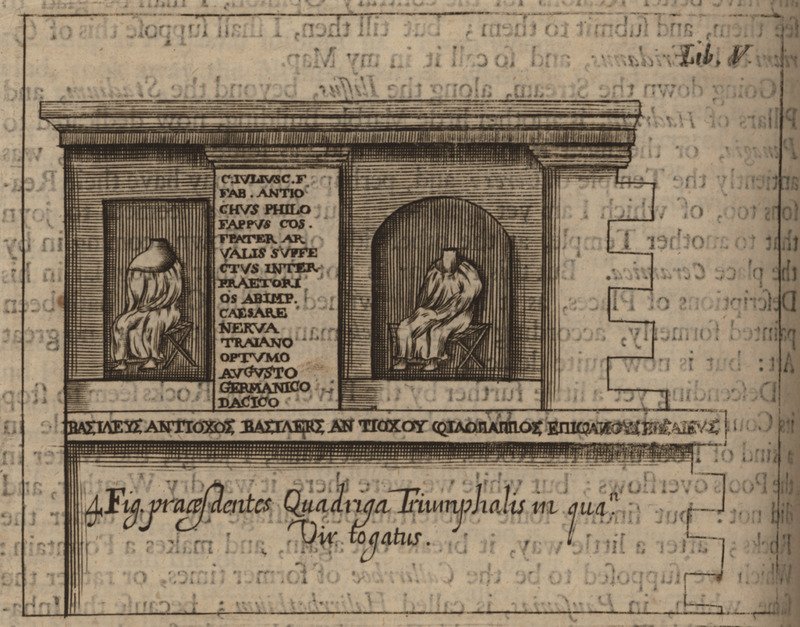
Historic engraving of the Monument in honour of Philopappus by George Wheler from the 1682 publication 'A Journey into Greece In Company of Dr Spon of Lyons'
History and Significance
Construction and Dedication
The monument was erected between 114 and 116 AD to honor Gaius Julius Antiochus Epiphanes Philopappos, a prince from the Kingdom of Commagene (Athens Guide). Philopappos was a renowned benefactor and a popular figure in Athens. After his death in 116 AD, the Athenian people, along with his sister Julia Balbilla, commissioned this grand monument in his memory.
Historical Context
The Philopappos Monument stands as a testament to the complex relationship between Athens and Rome during the Roman Empire. While under Roman rule, Athens retained a degree of autonomy and was admired for its cultural heritage. The monument's design, incorporating both Greek and Roman elements, reflects this dynamic. The use of Pentelic marble, a material synonymous with Athenian architecture, alongside Roman funerary traditions, showcases the blending of these two distinct cultures.
Significance and Symbolism
The monument's prominent location on Philopappos Hill, overlooking the ancient city, underscores its significance. It served as a constant reminder of Philopappos' generosity and his close ties to Athens. The monument's grandeur and elaborate design also symbolize the wealth and influence of Roman-era Athens.
Later History
Over the centuries, the monument has withstood the test of time, enduring natural elements and historical upheavals. During the Ottoman period, the monument was mistakenly attributed to a mythical Athenian woman named "Philopappa," who was said to have mourned her lover, Pausanias, from the hilltop. This misattribution led to the hill being named "Philopappos Hill."
Architectural Design and Features
Structure and Materials
The monument is a two-story structure built with Pentelic marble and follows the form of a funerary monument common during the Roman period. The foundation and core of the structure are composed of solid concrete, a material the Romans revolutionized and employed extensively in their monumental architecture.
Architectural Elements
- The Lower Section: This section features a frieze depicting Philopappos as a Roman magistrate, riding in a chariot as part of a triumphal procession. This imagery highlights his high status within the Roman Empire.
- The Upper Section: This section houses the statues of three men seated in niches:
- Philopappos: He is depicted on the left, larger than the other two figures, emphasizing his importance. He is dressed as a Roman consul, further signifying his position and power.
- King Antiochus I: The figure on the right is believed to be Philopappos' grandfather, King Antiochus I of Commagene.
- The Central Figure: The identity of the central figure remains a subject of debate among historians. Some believe it to be Seleucus I Nicator, the founder of the Seleucid Empire, from whom Philopappos claimed descent.
- The Inscription: A prominent inscription in Greek adorns the monument, praising Philopappos for his generosity and contributions to Athens. It reads: "To Philopappos, son of Epiphanes, of the deme of Besa."
Design Elements and Symbolism
Beyond its structural components, the Philopappos Monument is replete with design elements that offer insights into its historical context and the life of the man it honors. The monument's inscription, prominently displayed on the facade, provides valuable information about Philopappos, his lineage, and his political career. The sculptures that once adorned the monument's niches and pediment served as visual narratives, conveying messages about Philopappos's life, achievements, and status.
Visitor Information
Visiting Hours
The Philopappos Monument is generally open to visitors from early morning until sunset. It's advisable to check the official website for the most accurate visiting hours.
Tickets
There is no entrance fee to visit the Philopappos Monument, making it a great free attraction in Athens.
Guided Tours
Various guided tours are available that include the Philopappos Monument as part of a broader exploration of Athens' historical sites.
Travel Tips
Best Time to Visit
Early morning or late afternoon are ideal times to visit, as the temperatures are cooler and the lighting is perfect for photography.
What to Bring
Comfortable walking shoes, water, and sun protection are recommended, especially during the hotter months.
Safety Tips
Stay on marked paths and be cautious of the uneven terrain to avoid accidents.
Nearby Attractions
Acropolis
Just a short walk from the Philopappos Monument, the Acropolis is a must-visit historical site in Athens.
Parthenon
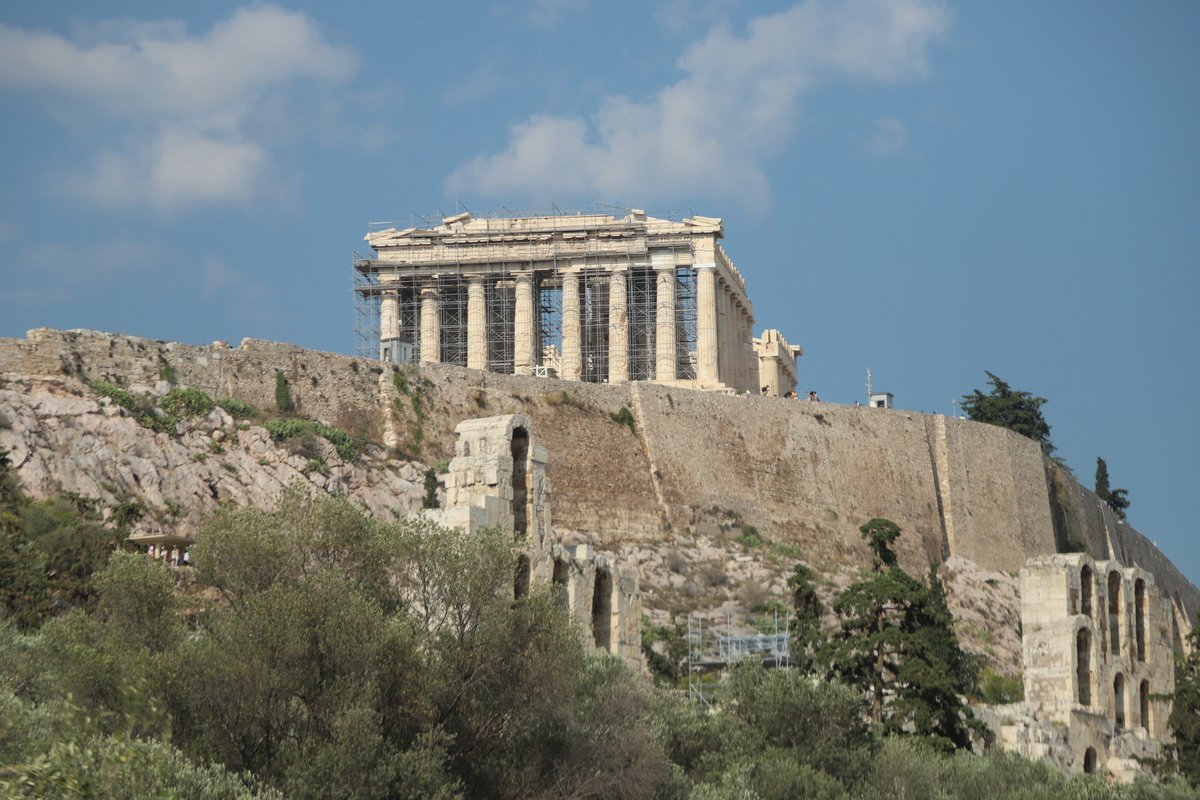
Located on the Acropolis, the Parthenon is an iconic symbol of ancient Greece.
Ancient Agora
Another nearby attraction, the Ancient Agora offers a glimpse into the daily life of ancient Athenians.
Accessibility
Access
The path to the Philopappos Monument includes some uneven terrain and steps, which may be challenging for visitors with mobility issues.
Parking
Limited parking is available near the entrance to Philopappos Hill.
FAQs
- What are the visiting hours for the Philopappos Monument? The monument is generally open from early morning until sunset.
- Is there an entrance fee for the Philopappos Monument? No, visiting the Philopappos Monument is free of charge.
- Can I take a guided tour of the Philopappos Monument? Yes, guided tours are available and often include other historical sites in Athens.
Listen to the full story in the app
Your Personal Curator, in Your Pocket.
Audio guides for 1,100+ cities across 96 countries. History, stories, and local insight — offline ready.
Audiala App
Available on iOS & Android
Join 50k+ Curators
Sources
- verified
- verified
- verified
- verified
Last reviewed: