Plan and listen to Pelasgic Wall with Audiala.
Audio guide in your pocket, itinerary in your browser. Built for the way you actually visit.
Introduction: The Pelasgic Wall and Its Significance
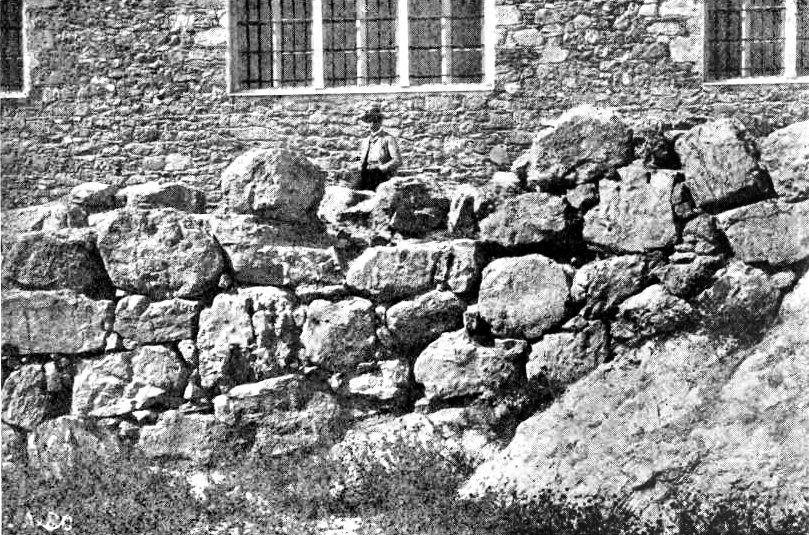
The Pelasgic Wall, an ancient fortification on the Acropolis of Athens, stands as a monumental testament to the city’s prehistoric and early historic past. Also referred to as the Pelasgian or Cyclopean Wall, it is distinguished by its massive, unworked limestone boulders—a hallmark of Cyclopean masonry that predates Athens’ Classical landmarks like the Parthenon. Traditionally attributed to the Pelasgians, a pre-Hellenic people, this fortification embodies Athens’ evolution from a Bronze Age citadel to its emergence as a leading city-state. Its enigmatic origins, strategic function, and integration into the Acropolis’ broader archaeological landscape make it an essential site for history enthusiasts and travelers alike.
This guide explores the Pelasgic Wall’s historical context, architectural features, and cultural relevance, while providing practical information on visiting hours, ticketing, accessibility, and travel tips. Whether you’re an archaeology aficionado or a casual visitor, use this resource to enrich your understanding and experience of one of Athens’ oldest surviving structures.
For detailed planning, consult resources such as the Acropolis Museum, Athens Tour Greece, and Acropolis-Greece.com.

Origins and Construction of the Pelasgic Wall
The Pelasgic Wall is among the earliest monumental fortifications of the Acropolis. Its construction is typically credited to the Pelasgians, with the wall’s massive, unworked stones lending it the moniker "Cyclopean"—a nod to the mythical Cyclopes, said to be the only beings capable of moving such enormous boulders (site.unibo.it).
Archaeological excavations have identified several segments, particularly on the Acropolis’s southern slope. Early segments, classified by L. M. Ugolini, are built from large, irregular boulders filled with smaller stones, with some sections measuring up to 3 meters in length and 2 meters in width. Another segment, uncovered in 2006, is about 10 meters long and 2.6 meters high, featuring distinctive architectural returns. These features are consistent with early Archaic fortification techniques that prioritized mass and durability (site.unibo.it).
Chronology and Scholarly Debate
The dating of the Pelasgic Wall is subject to ongoing scholarly debate. Early ceramic finds suggested a late 7th or early 6th century BCE construction date, while more recent stratigraphic analyses propose a terminus post quem around 500 BCE. Some scholars, like N. Ceka, argue for an earlier period—between the 8th and 6th centuries BCE—aligning with the rise of Greek urban society (site.unibo.it).
Other researchers, referencing Mycenaean parallels and mythological sources, date the wall as far back as the late Bronze Age (13th–12th centuries BCE), making it several centuries older than the Classical monuments that define today’s Acropolis (athenstourgreece.com).
Architectural Features and Function
The Pelasgic Wall is a prime example of Cyclopean masonry, using massive, unshaped stones set without mortar. Some sections reach up to 6 meters in thickness and up to 8 meters in preserved height. Originally, the wall encircled the Acropolis summit, forming a continuous defensive barrier approximately 760 meters long (athenstourgreece.com). Remnants are visible primarily on the northern and western slopes, with the most prominent section near the Propylaea entrance.
While its primary role was defensive, acting as a formidable barrier against potential invaders, some scholars suggest it may have also functioned as a retaining wall to support the Acropolis plateau (site.unibo.it).
Historical Significance in Athens’ Development
The Pelasgic Wall marks an early chapter in Athens’ urban and military history. Its construction reflects both the religious sanctity and the defensive needs of the Acropolis as the city’s spiritual and political center. The fortified Acropolis provided sanctuary during crises and safeguarded sacred relics. As Athens expanded, later fortifications such as the Themistoclean Wall (5th century BCE) were built, continuing the tradition of defensive architecture begun by the Pelasgic Wall (acropolis-greece.com).
Integration with Later Fortifications
Over the centuries, the Pelasgic Wall was incorporated into subsequent defensive structures. The Themistoclean Wall, constructed after the Persian sack of 480 BCE, reused stones from earlier phases—a practice known as spolia (acropolis-greece.com). Later, during the medieval period (10th–11th centuries CE), these ancient walls were further integrated into new fortifications, highlighting the Acropolis’ ongoing strategic importance (site.unibo.it).
Visiting the Pelasgic Wall: Hours, Tickets, and Practical Tips
Location and Access
The Pelasgic Wall is located within the Acropolis archaeological site, accessible via the main entrance on Dionysiou Areopagitou Street. The closest metro station is Acropoli (Line 2), and buses and city trams also serve the area. Walking from nearby neighborhoods like Plaka or Monastiraki is a scenic and convenient option (Wikipedia).
Visiting Hours
- April 1 – October 31: 8:00 am to 8:00 pm (last entry at 7:30 pm)
- November 1 – March 31: 8:00 am to 5:00 pm
The Acropolis may close on major public holidays or during extreme weather (e.g., heatwaves may prompt midday closure). Always verify up-to-date hours on the official Acropolis website (PromptGuides, p. 5).
Tickets and Admission
- Standard ticket: €20 (summer), €10 (winter)
- Combined ticket: €30 (includes multiple sites over five days)
- Reduced rates are available for EU students, seniors, and children under 18.
- Advance online booking is strongly recommended to avoid queues, especially during peak season (Nomadic Matt).
Accessibility
While the Acropolis offers partial accessibility (including an elevator at the main entrance), the terrain near the Pelasgic Wall is uneven and challenging for wheelchair users. Visitors should wear sturdy, non-slip footwear and plan accordingly (Lonely Planet).
Facilities
Restrooms and a café are available near the main entrance. The Acropolis Museum nearby provides additional amenities, exhibits, and refreshments (PromptGuides, p. 15).
Guided Tours and Photography
Guided tours of the Acropolis often include the Pelasgic Wall, offering historical insights that enhance your visit. Specialized tours focusing on lesser-known monuments or fortifications are also available (The Tour Guy). For a self-guided experience, consider using an audio guide or mobile app.
Photography is permitted for personal use. Early morning and late afternoon offer the best light for capturing the wall’s textures. Drones and commercial photography require special permission.
Frequently Asked Questions (FAQ)
Q: What are the Pelasgic Wall visiting hours?
A: The Acropolis (and the Pelasgic Wall) is open from 8:00 am to 8:00 pm (summer) and 8:00 am to 5:00 pm (winter). Always check the official website for real-time updates.
Q: How much are tickets?
A: Standard adult tickets are €20 in summer and €10 in winter; a combined ticket is €30. Discounts are available.
Q: Is the Pelasgic Wall wheelchair accessible?
A: Access is limited due to uneven terrain. The main entrance has an elevator, but paths to the wall may be challenging.
Q: Are guided tours available?
A: Yes, guided tours and audio guides are widely available and recommended for historical context.
Q: Can I take photos at the Pelasgic Wall?
A: Yes, personal photography is allowed. Drones and commercial shoots require permission.
Summary Table: Key Facts About the Pelasgic Wall
| Feature | Details |
|---|---|
| Location | Southern slope of the Acropolis, Athens |
| Construction Technique | Cyclopean masonry (large, unworked boulders) |
| Dimensions | Segments up to 6 m thick; preserved heights up to 8 m |
| Date | Late Bronze Age to early Archaic period (13th–6th century BCE) |
| Function | Defensive fortification, possible terrace wall |
| Later Integration | Incorporated into Classical and Medieval fortifications |
| Accessibility | Limited due to terrain; partial access via Acropolis entrance |
| Visiting Hours | 8:00 am – 8:00 pm (summer); 8:00 am – 5:00 pm (winter) |
| Tickets | Included with Acropolis ticket; online purchase recommended |
Visitor Recommendations and Final Tips
- Best times to visit: Early morning or late afternoon for fewer crowds and optimal lighting.
- What to bring: Water, sun protection, sturdy shoes, camera, and a guidebook or app.
- Facilities: Restrooms and a café are near the entrance; more amenities at the Acropolis Museum.
- Safety: Watch for slippery marble and stay hydrated during summer heatwaves.
- Local context: Combine your visit with the Acropolis Museum and nearby sites for a deeper historical perspective.
- Responsible tourism: Respect site boundaries and support local guides for authentic experiences.
To further enhance your visit, the Audiala app offers audio guides, interactive maps, and up-to-date visitor information. For special events, free entry days, and the latest updates, consult the official Acropolis Museum website.
Listen to the full story in the app
The whole Pelasgic Wall,
told well.
Listen to sourced travel stories with local history and practical context — ready offline.
Verified, and shown.
Researched and written by the Audiala editorial team from historical records, architectural archives, and local expertise.
Built from cited sources · see the method · How we make our guides →