
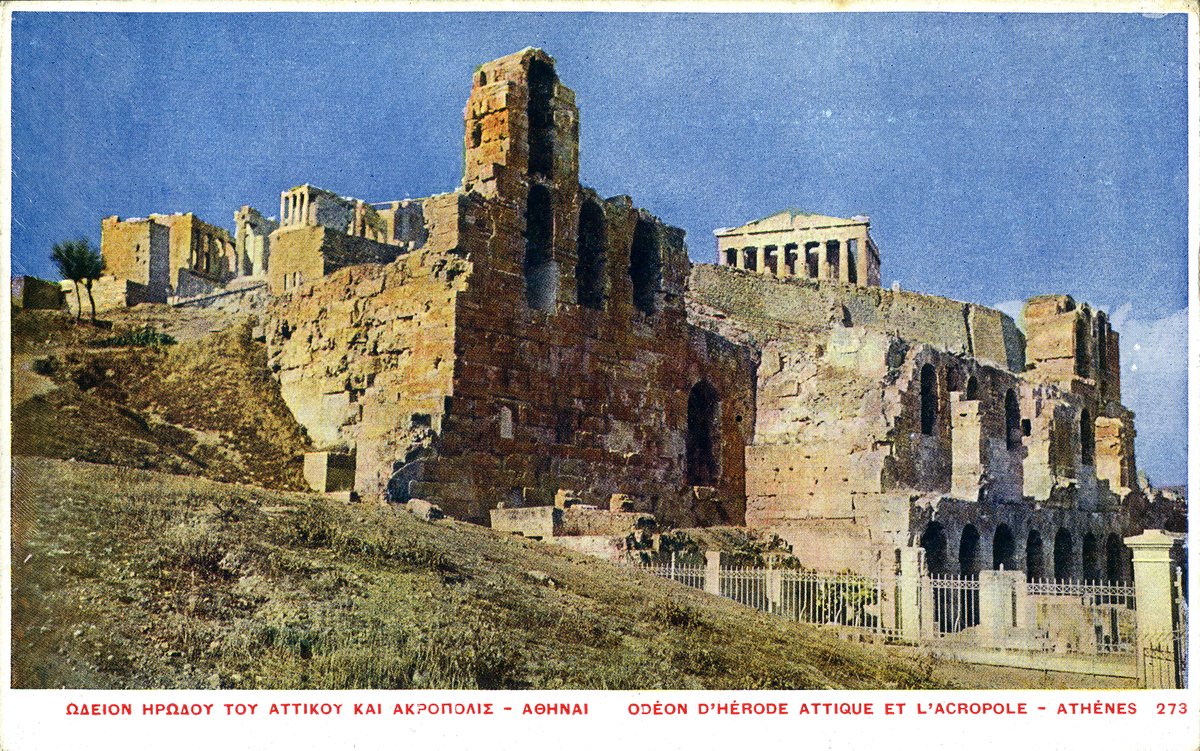
The Odeon of Herodes Atticus
Located on the southwest slope of the Acropolis in Athens, Greece, the Odeon of Herodes Atticus is an ancient monument and a continuing cultural venue. Originally built for musical performances, poetry readings and other cultural events, it remains a cultural hub and hosts the annual Athens Festival and other events.
History
The wealthy Roman senator Herodes Atticus gave the Odeon to Athens in memory of his Athenian wife, Aspasia Annia Regilla, who died in 160 AD. Completed in 174 AD, it reflects Roman interest in Greek art and intellectualism.
What to see
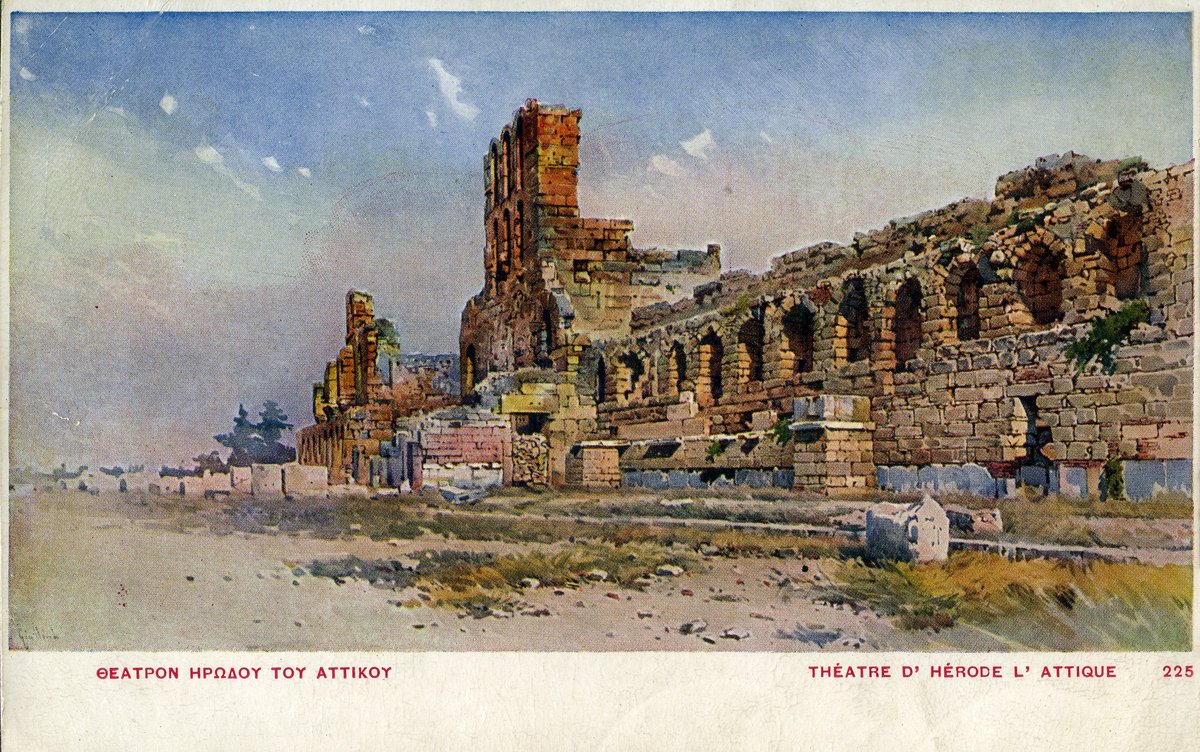
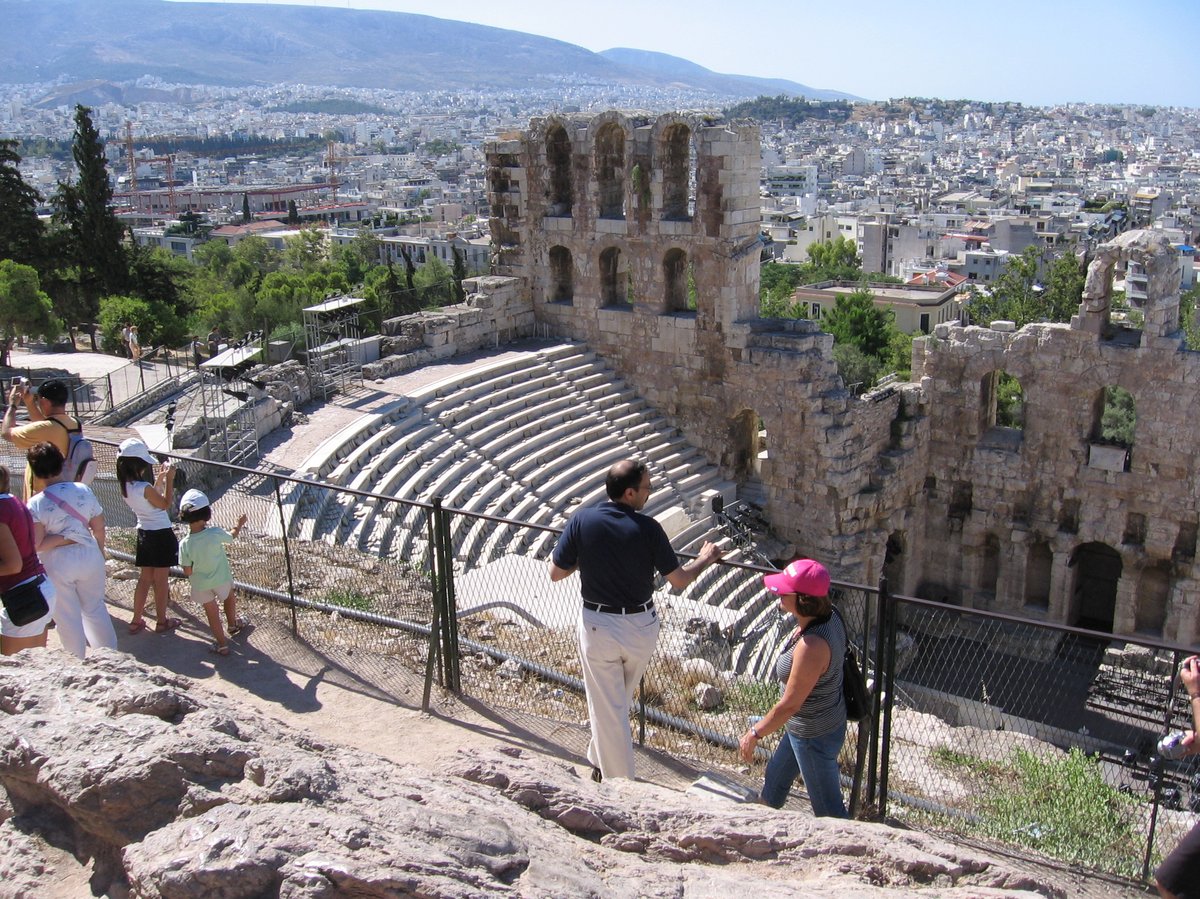
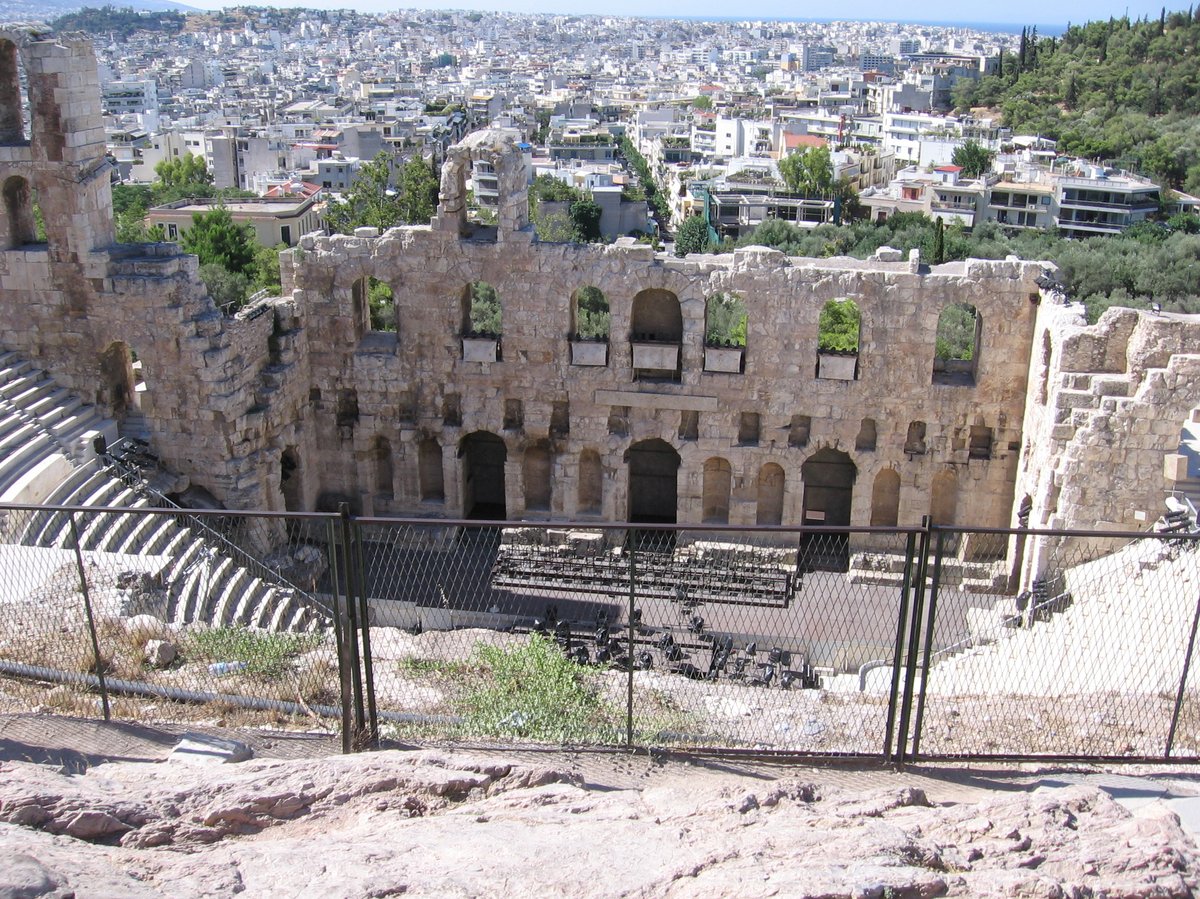
The Odeon blends Roman design with its Greek setting. Its original three-story facade was built from Pentelic marble, a material associated with Athenian architecture. The auditorium, or cavea, was carved into the natural slope of the Acropolis and could accommodate an estimated 5,000 spectators. It was divided into the lower ima cavea and upper summa cavea, a seating arrangement that reflected the social stratification of the time.
The semi-circular orchestra, paved with marble slabs, likely hosted musicians and performers during the Roman period. Behind it, the stage, or proscenium, was adorned with carvings and statues. The original stage has been lost, but its foundations and fragments of decorative elements survive.
The scaenae frons, the elaborate multi-storied facade behind the stage, served as a backdrop for performances. Only its lower portion remains. Historical accounts and archaeological evidence suggest it had columns, niches housing statues and elaborate ornamentation.
Unlike many ancient Greek theaters, the Odeon originally had a massive wooden roof spanning the auditorium. This Roman engineering feature provided shade and protection from the elements, allowing for year-round performances.
Practical visiting information
Visiting hours
The Odeon is open to visitors year-round. Visiting hours may vary by season and special events, so check the official websites for current information.
Tickets
Admission is included with the Acropolis ticket, which also provides access to several other historical sites in the area. Advance purchase is recommended, especially during peak tourist season.
Accessibility
The Odeon’s slope may present challenges for visitors with mobility issues. Efforts have been made to improve accessibility; check accessibility options before visiting.
Events and tours
The Odeon is one of the main venues for the annual Athens Festival, a celebration of music, dance and drama that attracts performers and audiences from around the world.
Several guided tours offer information about the Odeon’s history, architecture and cultural significance, as well as expert insights and anecdotes.
For more information, see the official Hellenic Festival and Greek Ministry of Culture websites.
Tips
Spring and fall are described as the best times to visit, when the weather is pleasant and crowds are smaller. Early morning or late afternoon visits can offer a more serene experience.
The Odeon is accessible by public transportation. The closest metro station is Acropoli on Line 2, a short walk from the site.
Nearby places
Acropolis
The Odeon is near the Acropolis, home to the Parthenon and other significant ancient structures. A visit to the Odeon can be combined with a tour of the Acropolis.
Acropolis Museum
The Acropolis Museum is a short walk from the Odeon. It houses a large collection of artifacts from the Acropolis, offering further context about the area’s history and cultural significance.
FAQ
What are the Odeon of Herodes Atticus visiting hours?
Hours vary by season and event schedule. Check the official websites for the most up-to-date information.
How much are tickets for the Odeon of Herodes Atticus?
Admission is included with the Acropolis ticket, which also grants access to several other historical sites in the area.
Is the Odeon of Herodes Atticus accessible to visitors with disabilities?
Efforts have been made to improve accessibility, but the slope may still pose challenges. Check accessibility options before visiting.