Plan and listen to Maximos Mansion with Audiala.
Audio guide in your pocket, itinerary in your browser. Built for the way you actually visit.
Introduction
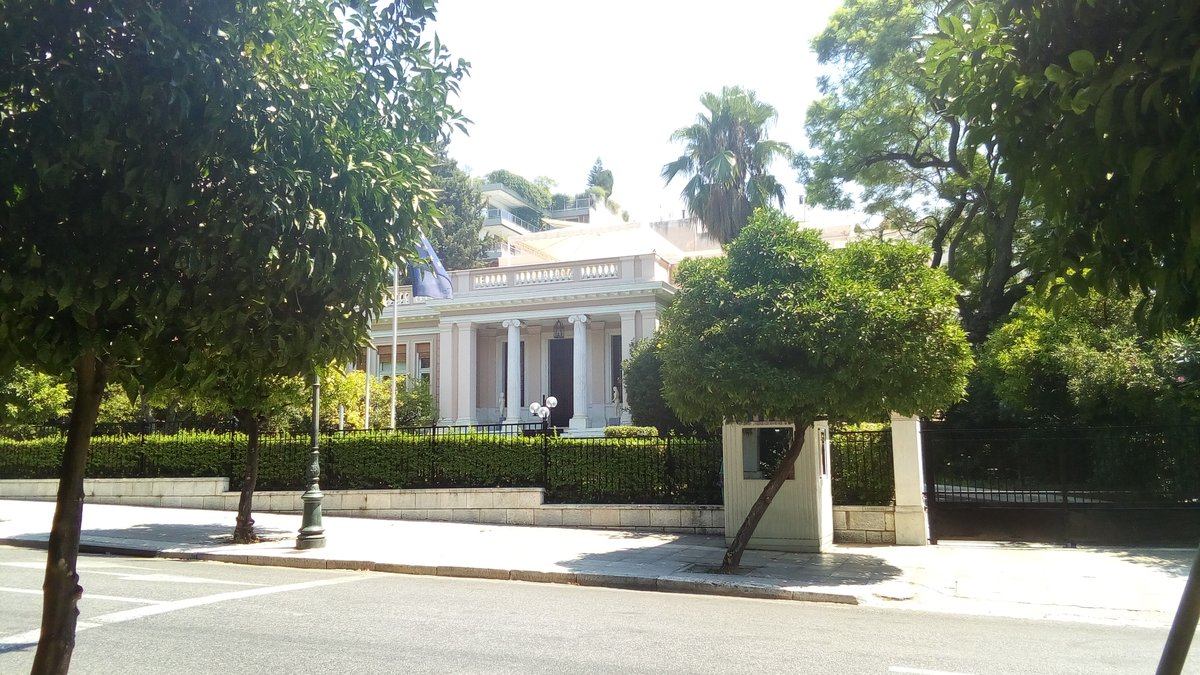
Maximos Mansion (Greek: Μέγαρο Μαξίμου) stands at the heart of Athens, close to bustling Syntagma Square, and serves as a monumental symbol of Greece’s political history, architectural heritage, and cultural identity. Since 1982, it has been the official seat of the Greek Prime Minister, playing a pivotal role in the country’s governance and public life. While not open to public tours due to its governmental function, the mansion’s striking neoclassical exterior, proximity to major landmarks, and storied past make it a must-see for visitors interested in Athens’ political and architectural legacy (Greek Government Official Site; Wikipedia).

Origins and Historical Background
Originally constructed in the early 20th century as a private residence for banker Dimitrios Maximos, the mansion was acquired by the Greek state in 1952 and has held significant national roles since then. Its location—adjacent to the Hellenic Parliament, National Garden, and the Presidential Mansion—underscores its central place in Greece’s political landscape (Greek City Times; Why Athens).
Evolution of the Prime Minister’s Office
From Revolution to Modern Democracy
The institution of the Greek prime minister has its roots in the early 19th century, beginning with the Greek War of Independence and evolving through periods of monarchy, dictatorship, and, ultimately, parliamentary democracy. The Prime Minister’s office as a stable institution emerged during the constitutional era, reflecting Greece’s gradual shift toward representative governance (Wikipedia).
Maximos Mansion’s Political Role
Since 1982, Maximos Mansion has served as the official office of the Prime Minister, hosting critical cabinet meetings, diplomatic receptions, and press conferences. It frequently appears in national and international media as a backdrop for government announcements and political milestones (Greek Ministry of Foreign Affairs; Greek City Times).
Political Role and Institutional Significance
The Maximos Mansion is the nerve center of Greece’s executive branch. It acts as the physical and symbolic seat of governmental power, where the Prime Minister coordinates policy, receives foreign dignitaries, and consults with ministers. Its proximity to the Hellenic Parliament and the Presidential Mansion facilitates seamless interaction among Greece’s core political institutions (Why Athens).
The mansion has also been the site of critical political events—from inaugural cabinet meetings to crisis management sessions—solidifying its status as a fixture of Greek modern statecraft. Its history also includes moments of controversy and debate, reflecting the dynamic nature of Greek political life (Orthodox Times).
Architectural Heritage and Restoration
Neoclassical Design
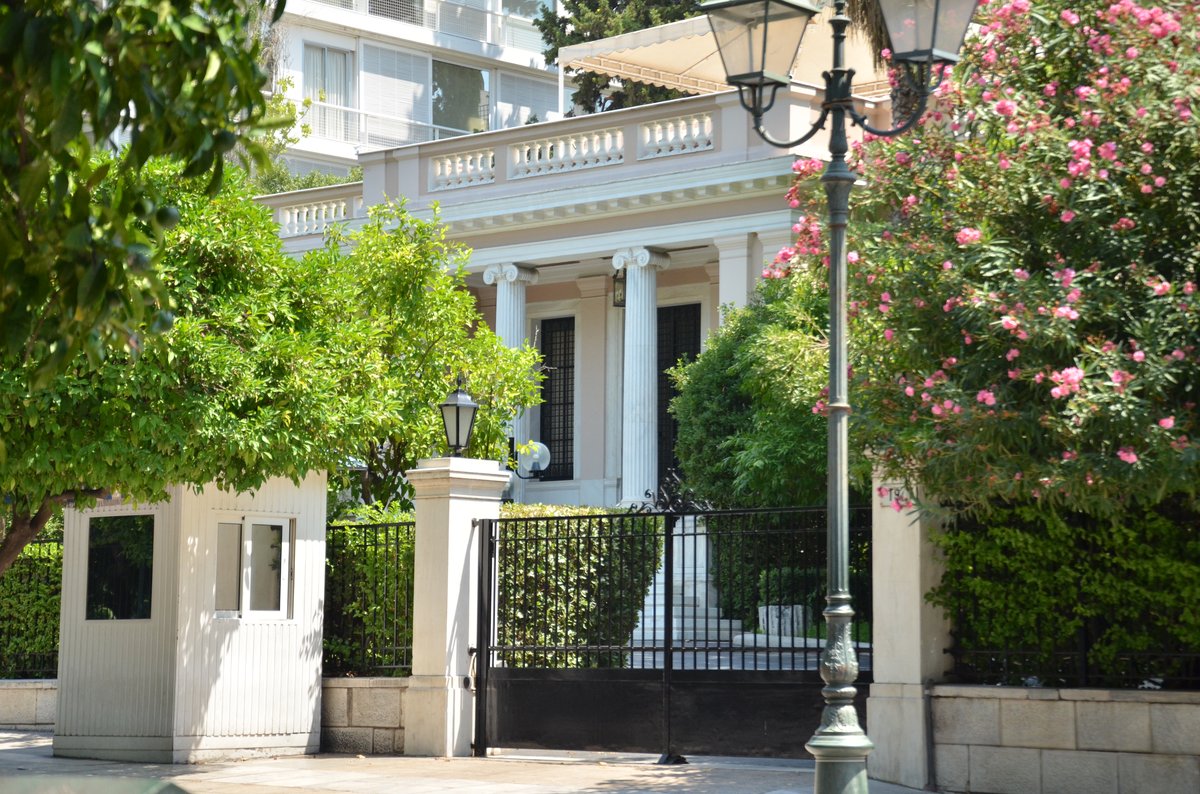
Maximos Mansion is a prime example of early 20th-century neoclassical architecture. Its elegant façade features ionic columns, marble, and stucco, blending harmoniously with the historic district of central Athens. The interiors, though closed to the public, are known for their high ceilings, spacious rooms, and formal reception areas (Architectural Digest).
Restoration and Modernization
Recent restoration efforts—guided by First Lady Mareva Grabowski-Mitsotakis—have emphasized sustainability, fiscal responsibility, and the integration of contemporary Greek art. The project relied on volunteer expertise, locally sourced materials, and rotating art collections from Greek artists, ensuring the mansion remains a vibrant symbol of national identity (Greek City Times; Architectural Digest).
Courtyard and Outdoor Spaces
Ongoing enhancements to the courtyard aim to blend classical landscaping with modern amenities, suitable for official events and receptions.
Visitor Information
Visiting Hours and Tickets
Maximos Mansion is not open for public tours, and there is no ticketing system. Visitors can view and photograph the exterior from Herodes Attikou Street at any time (Wikipedia; Athens24).
Accessibility
The mansion is located near Syntagma Square, easily accessible by metro (Syntagma Station), bus, or taxi. The surrounding public spaces—including the National Garden and Syntagma Square—are generally accessible for visitors with mobility challenges, though some sidewalks may be uneven (Sage Traveling; Keep Talking Greece).
Security and Etiquette
Due to its governmental function, the mansion is under constant security. Visitors should not approach the gates, take intrusive photographs, or linger near the entrance—especially during official events. Always comply with security personnel instructions.
Nearby Attractions
The area around Maximos Mansion is rich with historical and cultural landmarks:
- Presidential Mansion: The official residence of the President of Greece, located adjacent to Maximos Mansion.
- National Garden: A lush park ideal for walks and relaxation.
- Hellenic Parliament and Syntagma Square: The center of Greek political life, famous for the Changing of the Guard.
- Acropolis Museum and Ancient Agora: Accessible by foot or public transport, offering deeper insight into Athens’ history (GPSmyCity; Dave’s Travel Pages).
Practical Tips for Visitors
- Best Time to Visit: Spring (April–June) and autumn (September–November) offer ideal weather for walking tours (Dave’s Travel Pages).
- Dress Code: Modest attire is recommended out of respect.
- Facilities: There are no public restrooms or cafés at the mansion, but Syntagma Square and the National Garden offer amenities.
- Photography: Exterior photography is permitted from public spaces—avoid photographing security features.
Frequently Asked Questions (FAQ)
Q: Can I tour the interior of Maximos Mansion?
A: No, the mansion is not open to the public due to its official governmental role.
Q: What are the visiting hours?
A: There are no set visiting hours; the exterior is viewable from the street at any time.
Q: Are tickets required?
A: No tickets are needed for viewing the exterior.
Q: Is the area accessible for people with disabilities?
A: The surrounding streets and public transport are generally accessible, though some sidewalks may be uneven.
Q: What other attractions are nearby?
A: The National Garden, Presidential Mansion, Hellenic Parliament, Syntagma Square, Acropolis Museum, and Ancient Agora.
Listen to the full story in the app
The whole Maximos Mansion,
told well.
Listen to sourced travel stories with local history and practical context — ready offline.
Verified, and shown.
Researched and written by the Audiala editorial team from historical records, architectural archives, and local expertise.
Built from cited sources · see the method · How we make our guides →