Plan and listen to Karaiskaki Square (Athens) with Audiala.
Audio guide in your pocket, itinerary in your browser. Built for the way you actually visit.
Introduction
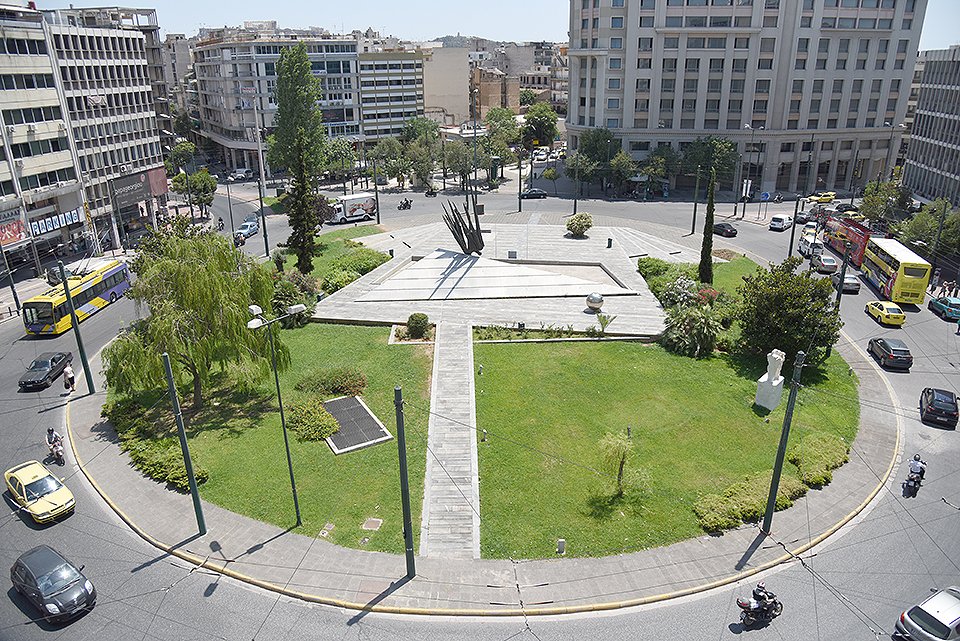
Located in the historic city of Athens, Greece, the Fallen Aviators Monument stands as a solemn tribute to the brave aviators who lost their lives in service to their country. Situated in Karaiskakis Square, the monument is easily accessible and offers a profound connection between ancient mythology and contemporary history. Designed by sculptors Evangelos Moustakas and Ioannis Moustakas, it was established in 2000 as part of the renovations following the completion of the Metaxurgio metro station. Its design draws inspiration from the myth of Icarus, encapsulating the duality of flight—its potential for freedom and the inherent risks involved (Secret World). This guide aims to provide visitors with detailed insights into the history, artistic elements, and practical information needed to make the most of their visit to this significant landmark.

History and Significance
Origins and Construction
The Fallen Aviators Monument in Athens was conceived as a tribute to aviators who lost their lives in the line of duty. The initiative for its construction began in 2000, coinciding with the renovation of Karaiskakis Square following the completion of the Metaxurgio metro station. The project was spearheaded by the All-Greek Association of Aviation Veterans and the Association of Aviation Officers. The competition for the monument's design was won by sculptor Evangelos Moustakas and architect Ioannis Moustakas, who created a seven-meter sculpture of Icarus.
Mythological Inspiration
The monument's design draws heavily from the myth of Icarus, a figure from Greek mythology who attempted to escape from the island of Crete using wings made of feathers and wax. Despite his father Daedalus's warnings, Icarus flew too close to the sun, causing the wax to melt and leading to his fall into the sea. This myth serves as a powerful allegory for the ambitions and risks associated with aviation. The sculpture depicts Icarus in a downward plunge, wings outstretched, colliding with a pyramid symbolizing the earth. This imagery encapsulates the duality of flight—its potential for freedom and exploration, along with the inherent risks involved.
Artistic and Symbolic Elements
The monument is crafted from metal and stands in the middle of Karaiskakis Square. The abstract shape of the statue is meant to pay tribute to all the lost pilots. The metal spikes circling Icarus express his descent from the heavens and commemorate his heroic deeds. The sculptors intended for water to be directed into the pyramid, but this feature never became operational. The plinth, made of granite and marble, takes up the whole of Karaiskakis Square and is composed of tiers that are lit up when darkness falls.
Visitor Information
Tickets and Visiting Hours
Visiting the Fallen Aviators Monument is free of charge and open to the public 24/7. However, for the best experience, it is recommended to visit early in the morning to enjoy a serene and intimate atmosphere. The plinth's tiers are lit up at night, offering a different perspective of the monument's grandeur.
Travel Tips
Located in Karaiskakis Square, the monument is easily accessible via the Metaxurgio metro station. Visitors should exercise caution as the monument is situated in the middle of a traffic circle. Nearby attractions include the National Archaeological Museum and the Acropolis, making it a convenient stop on a broader tour of Athens's historical sites.
Emotional and Cultural Impact
Visitors to the Fallen Aviators Monument are often moved by its emotional depth and its eloquent linkage of ancient mythology to contemporary sacrifice. The names of the fallen aviators are inscribed on the monument, serving as a somber reminder of the very real sacrifices made in the pursuit of the age-old human dream to fly. The monument stands not only as a memorial but also as an inspiration for future generations to weigh the balance between ambition and caution.
Controversies and Interpretations
The monument has stirred up a lot of emotion and ignited some passionate debates. Some speculate that the sculpture symbolizes a fallen angel or even Lucifer himself. However, it is, in fact, based on the myth of Icarus, who refused to heed warnings and flew too close to the sun, leading to his untimely demise. This modern take on an ancient Greek figure serves a somber purpose, dedicated to the aviators who lost their lives while on duty.
Significance in Modern Greece
The Fallen Aviators Monument is a significant landmark in modern Greece, blending mythology with contemporary history. It serves as an essential stop for anyone interested in understanding the complexities of Greece's modern and ancient heritage, especially in the realm of flight and exploration. The monument's location in Karaiskakis Square, a hot spot for travelers, makes it easily accessible and a must-visit for those exploring Athens.
Visitor Experience
Visitors are encouraged to contemplate the powerful artistic representation, read the heartfelt tributes, and explore the surrounding area. The monument is in the middle of a traffic circle, so take caution if walking to it. The best time to visit is early in the morning to enjoy the serene and intimate atmosphere. The plinth's tiers are lit up at night, offering a different perspective of the monument's grandeur.
Nearby Attractions
While visiting the Fallen Aviators Monument, consider exploring nearby attractions such as the National Archaeological Museum and the iconic Acropolis. These sites offer a deeper understanding of Greece's rich historical and cultural heritage.
Frequently Asked Questions
Q: What are the visiting hours for the Fallen Aviators Monument?
A: The monument is open to the public 24/7.
Q: Is there an admission fee for the Fallen Aviators Monument?
A: No, visiting the monument is free of charge.
Q: How do I get to the Fallen Aviators Monument?
A: The monument is located in Karaiskakis Square, easily accessible via the Metaxurgio metro station.
Listen to the full story in the app
The whole Karaiskaki Square (Athens),
told well.
Listen to sourced travel stories with local history and practical context — ready offline.
Verified, and shown.
Researched and written by the Audiala editorial team from historical records, architectural archives, and local expertise.
Fallen Aviators Monument Athens Greece
Best monuments and landmarks in Athens
Icarus Monument of Fallen Aviators
Fallen Aviators Monument
Fallen Aviators Monument in Greece: Overview, Prominent Features, History, Interesting Facts
Built from cited sources · see the method · How we make our guides →