Plan and listen to Eleusinion with Audiala.
Audio guide in your pocket, itinerary in your browser. Built for the way you actually visit.
Introduction
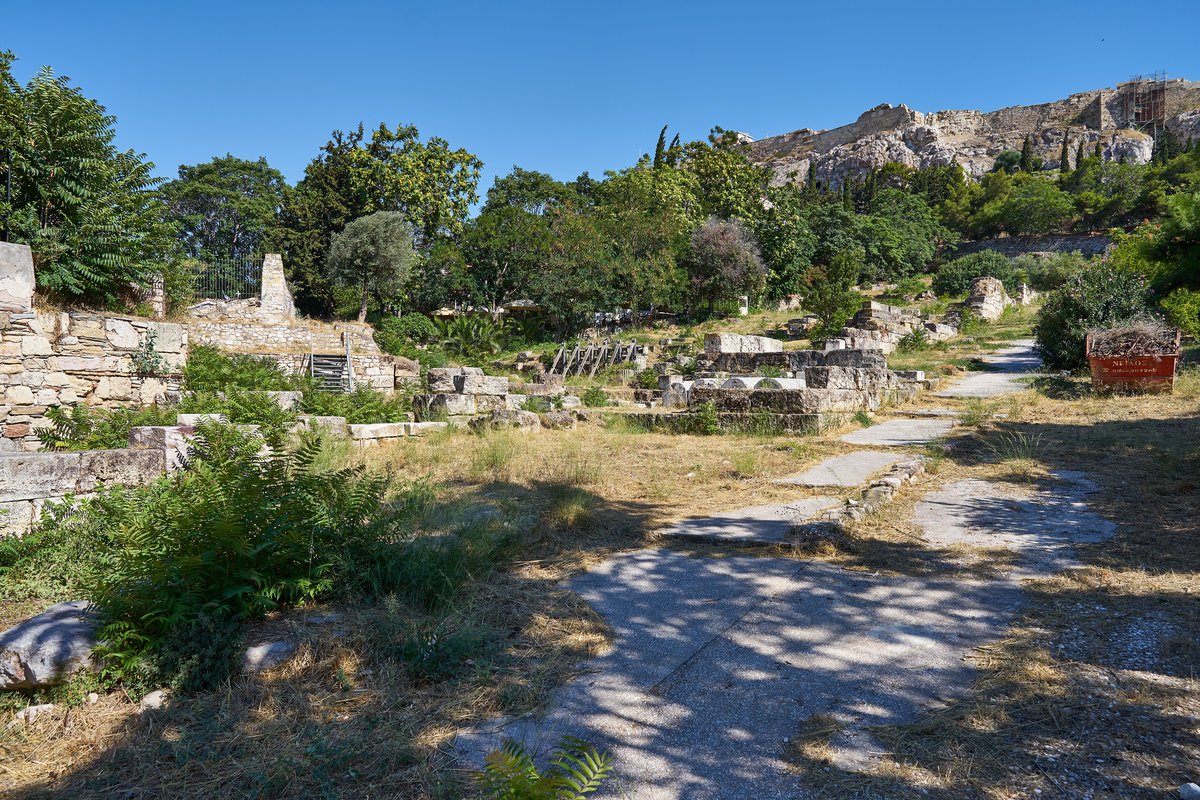
Nestled on the northern slope of the Acropolis, the Eleusinion sanctuary is a profound testament to ancient Greek religious and civic life. Dedicated to Demeter and Persephone, this sacred urban sanctuary served as Athens’ focal point for the Eleusinian Mysteries—one of antiquity’s most significant and secretive religious rites. Established as early as the 6th century BCE, the Eleusinion was both a temple complex and the starting point for the sacred procession to Eleusis, where initiates participated in rituals symbolizing death and rebirth. Today, visitors can explore evocative ruins, archaeological remains spanning from the Archaic to Roman periods, and the recently reopened archaeological museum. The sanctuary's location near the Ancient Agora and the Acropolis Museum offers a unique window into Athens’ religious landscape and panhellenic traditions. This guide provides essential historical context and practical information—visiting hours, ticketing, accessibility, and nearby attractions—to help travelers fully experience this hidden gem of Athens’ archaeological heritage. For further guidance, consult reputable sources such as Spotting History, the Acropolis Museum, and the Greek Ministry of Culture official ticketing site.

Historical Background
Origins and Early Development
The Eleusinion was closely linked to the Eleusinian Mysteries, religious rites dating back to the Mycenaean period (c. 1600–1100 BCE) and centered on the cult of Demeter and Persephone. The sanctuary’s mythological foundation is recounted in the Homeric Hymn to Demeter, symbolizing death, rebirth, and the agricultural cycle (Spotting History).
Establishment in Athens
Founded in the 6th century BCE, the Eleusinion became Athens’ primary sanctuary for the worship of Demeter and Persephone. Strategically located along the Panathenaic Way, it linked the Acropolis, Agora, and Dipylon Gate, reflecting its central role in both civic and religious life (Crossroads Witch).
Visiting the Eleusinion
Visiting Hours
- April to October: 8:00 AM – 8:00 PM
- November to March: 8:00 AM – 5:00 PM
- Closed: January 1, March 25, May 1, Easter Sunday, December 25 & 26
- Last Entry: 30 minutes before closing
Hours may vary seasonally and during holidays; always confirm with official sources before visiting (Greek Ministry of Culture).
Tickets and Admission
- Standard (April–October): €20 (multi-site ticket covering the Acropolis, Ancient Agora, and more)
- Reduced (November–March): €10
- Free Admission: Under 18s, EU students with valid ID, select national holidays, and first Sunday of each month (November–March)
- Purchase: Online (recommended) or on-site
Accessibility
- The sanctuary has uneven terrain, loose stones, and steps; some accessible routes exist but wheelchair access is limited.
- The nearby Acropolis Museum and Ancient Agora offer better accessibility.
- Comfortable shoes are highly recommended.
Getting There
- By Metro: Monastiraki (Lines 1 & 3) and Acropolis (Line 2) stations, 10–15 min walk
- By Foot: Easily reachable from the Acropolis, Ancient Agora, and Plaka district
- By Bus/Car: Public transport is recommended due to limited parking in central Athens
Nearby Attractions
- Acropolis: Parthenon, Erechtheion, Temple of Athena Nike
- Ancient Agora: Temple of Hephaestus, Stoa of Attalos
- Roman Agora & Hadrian’s Library
- Acropolis Museum: Exhibits related to the Eleusinian cult
- Plaka District: Shopping, dining, and neoclassical architecture
The Eleusinian Mysteries and the Role of the Eleusinion
Religious Significance
The Eleusinion was more than a temple; it stored the sacred objects (hiera) of the Mysteries and was the starting point for the grand procession (pompe) to Eleusis. The rituals, rooted in the myth of Demeter and Persephone, symbolized the cycle of life and promised initiates hope for the afterlife (Acropolis Museum).
Festival and Secrecy
Annual rites began at the Eleusinion, where initiates assembled before the 12-mile procession to Eleusis. The Mysteries’ secrecy added to their allure, with details closely guarded by participants (Femmina Classica).
Architectural Highlights and Archaeological Discoveries
- Sanctuary Walls: Peisistratean Wall fragments (6th c. BCE) and Roman-era Propylaea mark the sanctuary’s boundaries (Travel the Greek Way).
- Telesterion: Smaller initiation hall for preliminary rites and safeguarding of sacred objects (Greek Reporter).
- Altars and Votive Offerings: Bases, inscriptions, and fragments dedicated to Demeter and Persephone.
- Roman Renovations: New porticoes and priestly residences illustrate the cult’s longevity.
- Archaeological Museum: Recently reopened, it displays reliefs, statues, ritual vessels, and inscriptions from the site (Travel the Greek Way).
Practical Visitor Tips
- Duration: Allow 1 hour for the Eleusinion itself; combine with nearby sites for a half-day experience.
- Facilities: Restrooms, shaded seating, café, and gift shop are nearby (mostly in the Ancient Agora and Acropolis areas).
- Dress Code: Comfortable, weather-appropriate clothing and sturdy shoes recommended.
- Photography: Personal photography allowed (no flash or drones); permission may be needed for tripods.
- Timing: Visit early morning or late afternoon to avoid crowds and heat.
Special Events
While the ancient Mysteries are no longer celebrated, Eleusis hosts the Aeschylia Festival (late summer) with theater, concerts, and exhibitions near the site (Greek Reporter).
Frequently Asked Questions (FAQ)
Q: What are the Eleusinion visiting hours?
A: Open 8:00 AM–8:00 PM (summer), 8:00 AM–5:00 PM (winter); closed on major holidays.
Q: How much do tickets cost?
A: €20 (summer) or €10 (winter) as part of a multi-site ticket; free for certain groups and dates.
Q: Is the Eleusinion accessible for wheelchair users?
A: Limited accessibility due to uneven terrain; nearby sites and the museum are more accessible.
Q: Are guided tours available?
A: Yes, through local operators and official programs. Audio guides and virtual tours are also offered.
Q: Can I take photos?
A: Yes, personal photography is allowed; drones are prohibited.


Listen to the full story in the app
The whole Eleusinion,
told well.
Listen to sourced travel stories with local history and practical context — ready offline.
Verified, and shown.
Researched and written by the Audiala editorial team from historical records, architectural archives, and local expertise.
Built from cited sources · see the method · How we make our guides →