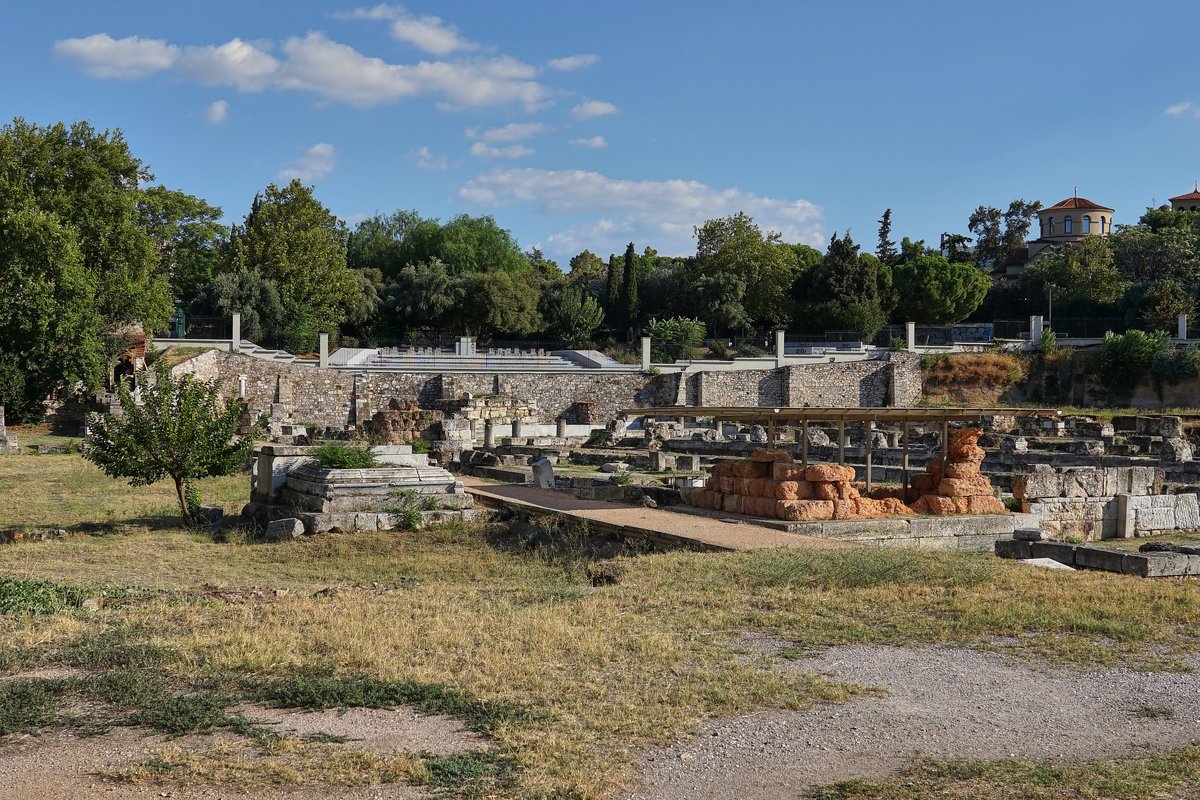
Plan and listen to Dipylon with Audiala.
Audio guide in your pocket, itinerary in your browser. Built for the way you actually visit.
Introduction
Situated in the heart of the historic Kerameikos district, the Dipylon Gate stands as one of the most iconic and significant monuments of ancient Athens. Constructed in 478 BCE as part of the Themistoclean Wall after the Persian Wars, the Dipylon—meaning “double gate”—was not only the largest and principal entrance to the city but also served as a central hub for social, ceremonial, and military activities. Its imposing four-tower structure and expansive courtyard reflect both the architectural prowess and the civic spirit of classical Athens. Today, the Dipylon invites visitors to retrace the steps of ancient Athenians and experience a gateway that played a pivotal role in the city’s history.
This comprehensive guide explores the Dipylon’s historical and cultural importance, architectural features, and its enduring legacy. It also provides essential visitor information, including opening hours, ticketing, accessibility, and nearby attractions, ensuring that travelers can make the most of their visit to this remarkable Athens historical site. For the latest updates, refer to resources such as the Hellenic Ministry of Culture, Lonely Planet, and the Dipylon Society’s Mapping Ancient Athens.
The Dipylon Gate was built in 478 BCE as part of Athens’ extensive defensive walls under Themistocles. The wall itself spanned roughly 6,500 meters and stood 8–10 meters high, with the Dipylon as its most prominent and strategically significant entrance (madainproject.com; ancientathens3d.com). Its construction followed the devastation of the Persian Wars, symbolizing both Athens’ resilience and its renewed focus on civic protection and urban planning.
The name “Dipylon” refers to its double-gated design, which featured two parallel gateways separated by a large rectangular courtyard, measuring approximately 20 by 25 meters (Pleiades). This innovative corridor gate allowed for controlled access and provided a defensive “kill zone” for attackers who breached the outer doors.

Architectural Design and Defensive Features
Structural Highlights
- Four Corner Towers: The Dipylon’s four robust towers—initially built from mud brick and later reinforced with limestone—provided elevated vantage points for archers and defenders, allowing overlapping fields of fire and formidable resistance to attacks (Pleiades).
- Corridor Gate System: Attackers entering through the outer gate were funneled into a courtyard “kill zone,” making them vulnerable to defenders before reaching the inner gate.
- Materials: The early Hellenistic refurbishment replaced mud brick with limestone, increasing the gate’s durability and resistance to siege tactics, including fire and battering.
- Integration with City Walls: Located at the northwest corner of the city, the Dipylon controlled access to the Sacred Way (leading to Eleusis) and the Panathenaic Way (leading to the Acropolis), underscoring its importance in both defense and civic life.
Civic, Ceremonial, and Social Functions
Ceremonial Importance
The Dipylon was the ceremonial starting point for the Panathenaic Procession, which honored Athena and brought together all levels of Athenian society (Britannica). The adjacent Pompeion served as a staging area for sacrificial rituals and festival preparations (Greeka; Greece Is). The Sacred Way, beginning at the nearby Sacred Gate, connected the city to the Eleusinian Mysteries, further enhancing the Dipylon’s religious and cultural significance.
Funerary and Civic Activities
Just outside the Dipylon stood the Demosion Sema, the state burial ground for Athens’ most honored citizens (Travel.gr). Pericles’ renowned Funeral Oration took place here, reinforcing the gate’s role as a bridge between civic life and commemoration.
Daily Life
The area around the Dipylon was a bustling neighborhood, home to potters, artisans, and traders. A public fountain house just inside the gate was a focal point for daily activity, especially for women and servants collecting water (Greece Is; Athens by Locals).
Archaeological Discoveries and Museum Highlights
Excavations and Finds
Systematic excavations began in the 19th century and have revealed the Dipylon’s foundations, fortification towers, and courtyard (Wikipedia). The site’s proximity to the Kerameikos cemetery has yielded remarkable funerary artifacts, including the famous Dipylon Amphora—a monumental Geometric-period vase depicting mourning scenes (smarthistory.org).
Kerameikos Museum
The on-site Kerameikos Museum houses many significant discoveries:
- Archaic kouroi: Marble statues that marked ancient graves.
- Original grave markers: Notably the Bull of Dionysios of Kollytos.
- Ceramic vessels: Illuminating funerary customs and daily life.
- Personal items: Offering glimpses into ancient Athenian households (greece-is.com).
Visiting the Dipylon: Hours, Tickets, and Accessibility
Location and Access
- Address: 148 Ermou Street, Athens, Greece.
- Metro Stations: Monastiraki and Thiseio are a short walk away (realgreekexperiences.com).
Visiting Hours
- April to October: 8:00 AM – 7:00 PM (last entry 6:30 PM)
- November to March: 8:00 AM – 3:00 PM (last entry 2:30 PM)
- Closed on major Greek holidays. Always check the official website for updates.
Tickets and Admission
- Regular Ticket: €8–€10
- Reduced Ticket: €4–€5 (students, seniors, etc.)
- Free Admission: EU residents under 25, children under 5, visitors with disabilities (plus a companion).
- Combined Ticket: €30, includes access to the Acropolis, Ancient Agora, Kerameikos, and other sites (acropolis-athens-tickets.com).
Tickets can be purchased onsite or online via the Hellenic Ministry of Culture.
Accessibility
- Site: Wheelchair accessible via the main entrance; pathways can be uneven but main routes are manageable.
- Museum: Fully accessible, with braille boards, tactile maps, and autism-friendly guides.
- Contact site management in advance for specific accommodations.
Guided Tours and Audio Guides
Guided tours are available through local operators and can be booked in advance. The Audiala app provides immersive audio guides with expert commentary, enhancing your visit with historical and cultural insights.
Nearby Attractions
- Kerameikos Museum: Showcases funerary art, pottery, and artifacts from the site.
- Ancient Agora: Included in the combined ticket; key site for understanding ancient Athenian democracy.
- Acropolis and Acropolis Museum: Essential visits for any Athens itinerary.
- Plato’s Academy: Accessible via the Dromos, the ancient road beginning at the Dipylon.
- Pnyx Hill: Historic assembly place of the Athenian democratic assembly.
Visitor Experience and Practical Tips
- Best Time to Visit: Early morning or late afternoon to avoid crowds and heat.
- Amenities: Restrooms and a small shop on site; museum provides respite from the sun.
- Photography: Permitted throughout the site; excellent views combine ancient ruins with modern Athens.
- Special Events: Occasional cultural events and reenactments take place in the Kerameikos area—check local listings.
Frequently Asked Questions (FAQ)
Q: What are the Dipylon visiting hours?
A: April–October: 8:00 AM–7:00 PM; November–March: 8:00 AM–3:00 PM. Last entry is 30 minutes before closing. Always check official sources for updates.
Q: How much do Dipylon tickets cost?
A: Regular tickets are €8–€10; reduced tickets for eligible groups. Free entry for EU citizens under 25 and other categories.
Q: Is the Dipylon accessible for wheelchair users?
A: Yes, the main entrance and museum are accessible, with additional aids available for visitors with visual or sensory impairments.
Q: Are guided tours available?
A: Yes, offered by local operators. Audio guides via the Audiala app are also recommended.
Q: Can I take photos at the Dipylon?
A: Yes, photography is permitted.
Q: What other sites are nearby?
A: Ancient Agora, Acropolis, Kerameikos Museum, and more.
Listen to the full story in the app
The whole Dipylon,
told well.
Listen to sourced travel stories with local history and practical context — ready offline.
Verified, and shown.
Researched and written by the Audiala editorial team from historical records, architectural archives, and local expertise.
Built from cited sources · see the method · How we make our guides →