Plan and listen to Arrephorion with Audiala.
Audio guide in your pocket, itinerary in your browser. Built for the way you actually visit.
Introduction
Nestled on the northwestern edge of the Acropolis, the Arrephorion stands as one of ancient Athens’ most enigmatic and culturally significant structures. Often overshadowed by the Parthenon and Erechtheion, this modest building was central to the sacred rites of the Arrephoroi—young girls from noble families who served Athena through secret rituals. Built in the late 5th century BCE as part of Pericles’ building program, the Arrephorion’s remnants offer a unique window into the religious, social, and civic life of classical Athens. For visitors, understanding its historical context, practical details, and cultural significance can greatly enrich the Acropolis experience (Athens Guide; Acropolis Athens Tickets; Archaeology Magazine).

Historical Background of the Arrephorion
Origins, Function, and Rituals
The Arrephorion, or "House of the Arrephoroi," was constructed to house two or four young girls, aged 7–11, chosen from Athens’ aristocratic families to serve as Arrephoroi. Their service lasted one year, marked by participation in the secretive Arrephoria ritual, which involved a nocturnal procession from the Acropolis to the sanctuary of Aphrodite in the Gardens. The girls carried concealed objects—possibly tied to fertility or civic renewal—and returned before dawn. This rite symbolized purity, the city’s spiritual rebirth, and the integration of religious and civic duties (Athens Guide; Welcome Greece).
Timeline and Cultural Significance
Built during the Periclean program in the late 5th century BCE, the Arrephorion was part of Athens’ golden age, reflecting both the city’s artistic achievement and its complex religious traditions. Ancient sources, including Pausanias, describe the secretive role of the Arrephoroi and their importance in the cult of Athena Polias. The building’s proximity to the sacred olive tree and Poseidon’s marks further connects it to Athens’ founding myths (Acropolis Athens Tickets).
Archaeological Investigations
Over time, the Arrephorion suffered neglect, especially during the Roman, Byzantine, and Ottoman occupations. Modern excavations in the 19th and 20th centuries identified its foundations north of the Erechtheion. Today, only the limestone foundations and terrace are visible, having been reburied in 2006 for protection (The Chaos Diaries; Archaeology Magazine).
Architectural Features
Site Layout and Structure
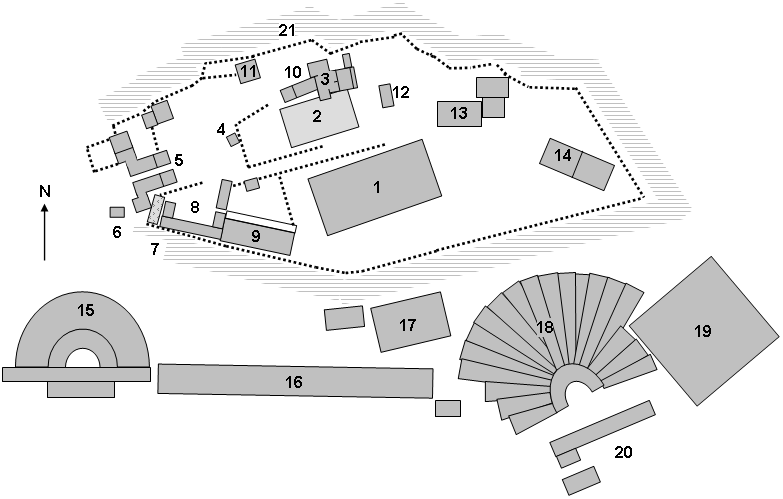
The Arrephorion was a rectangular building, roughly 12.2 by 7.8 meters, oriented east-west with an entrance on the eastern side. It stood on a terrace supported by a retaining wall along the Acropolis’ northern slope (Athens Guide).
Materials and Interior
Constructed from local Pentelic marble and limestone, the building featured ashlar walls, a timber roof, and terracotta tiles. Inside, two main rooms provided living and ritual preparation space. Archaeological finds such as loom weights point to the weaving of Athena’s sacred peplos, an integral part of the Panathenaic festival (Acropolis Athens Tickets).
Relationship with Surroundings
The Arrephorion’s setting, close to the Erechtheion, sacred olive tree, and the ancient pathway down to the sanctuary of Aphrodite, highlights its centrality to Athenians’ spiritual and mythological geography (Athens Guide).
Visiting the Arrephorion: Practical Information
Hours and Tickets
- Opening Hours: The Acropolis is typically open from 8:00 AM to 7:30 PM (April–October) and 8:00 AM to 5:00 PM (November–March). Hours may vary for holidays and maintenance (Acropolis Tickets).
- Tickets: Entry to the Arrephorion is included in the Acropolis archaeological site ticket (€20 standard, €10 reduced). Purchase tickets online for timed entry and to avoid queues (Acropolis Ticketing; Athens by Locals).
Accessibility
The Acropolis terrain is uneven and includes steps and slopes. Wheelchair access is available via an elevator at the main entrance, but paths to the Arrephorion area remain challenging. Visitors with mobility needs should plan ahead and check the latest updates (Athens by Locals).
Tours and Travel Tips
- Guided Tours: Specialized tours offer in-depth interpretation of the Arrephorion and lesser-known Acropolis sites (Nomadic Matt).
- Best Times to Visit: Early mornings or late afternoons are recommended to avoid crowds and heat.
- Preparation: Wear comfortable shoes, bring water, and use sun protection.
Nearby Attractions
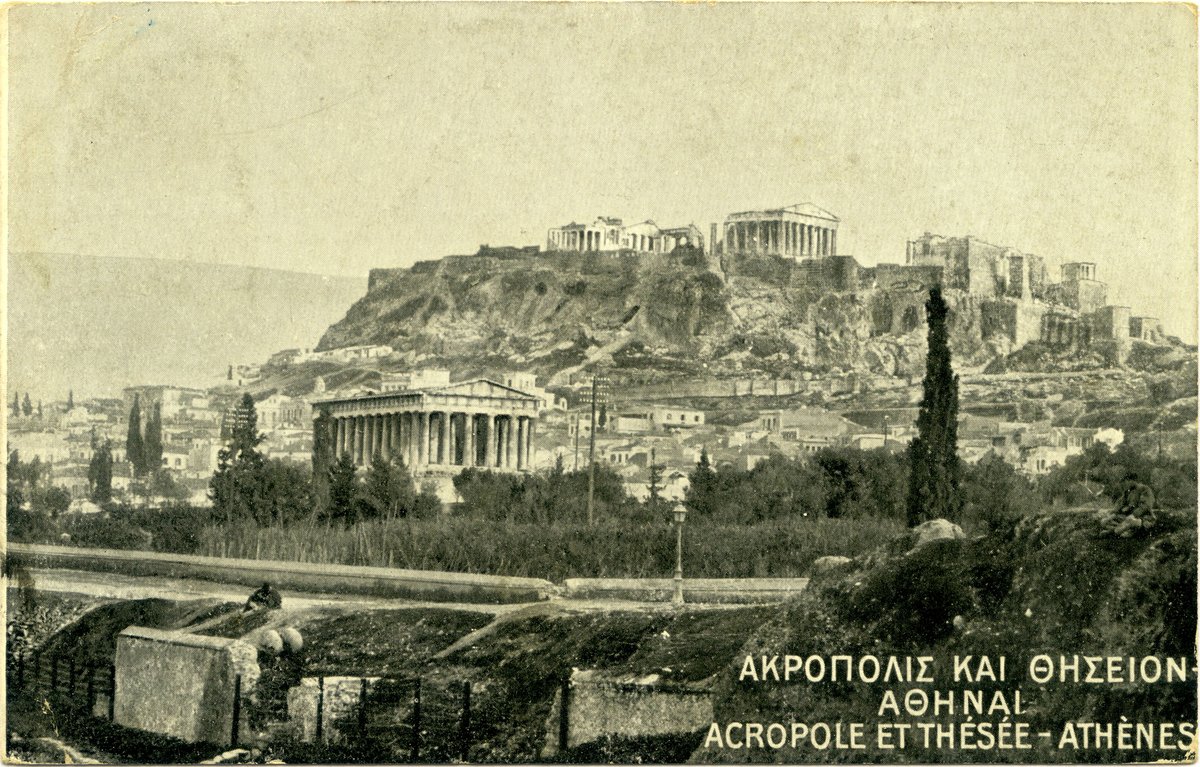
In addition to the Arrephorion, the Acropolis features the Parthenon, Erechtheion, Propylaea, and the Acropolis Museum. The Plaka district and Ancient Agora are within walking distance, offering broader insight into Athens’ history (Trek Zone).
Preservation and Modern Interpretation
Only the Arrephorion’s foundations remain, protected by reburial and marked with interpretive signage. On-site information and exhibits in the nearby Acropolis Museum provide context on the rituals, architecture, and daily life of the Arrephoroi (Archaeology Magazine; Acropolis Museum).
Frequently Asked Questions (FAQs)
Q: What are the Arrephorion opening hours?
A: The Acropolis, including the Arrephorion site, is open from 8:00 AM to 7:30 PM in summer and 8:00 AM to 5:00 PM in winter. Closed on select holidays.
Q: Is a separate ticket required for the Arrephorion?
A: No. Entry is included with the standard Acropolis ticket.
Q: Is the Arrephorion accessible for wheelchairs?
A: The Acropolis has an elevator, but the Arrephorion area has uneven terrain. Advance arrangements are recommended for visitors with mobility needs.
Q: Can I see the Arrephorion above ground?
A: Only the foundations remain, which are marked with signage.
Q: Are specialized tours available?
A: Yes. Many guided tours include the Arrephorion, and audio guides often provide additional context.
Summary Table: Key Visitor Information
| Aspect | Details |
|---|---|
| Location | Northwest edge of the Acropolis, Athens |
| Site Condition | Foundations only; marked with interpretive signage, reburied for protection |
| Opening Hours | 8:00 AM – 7:30 PM (summer); 8:00 AM – 5:00 PM (winter); closed on select holidays |
| Ticket Price (2025) | €20 standard, €10 reduced; combination tickets available |
| Accessibility | Uneven terrain; elevator at main entrance for wheelchairs |
| Nearby Attractions | Parthenon, Erechtheion, Propylaea, Acropolis Museum, Pedestal of Agrippa, Klepsydra |
| Best Time to Visit | Early morning or late afternoon |
| Guided Tours | Recommended for in-depth interpretation |
Listen to the full story in the app
The whole Arrephorion,
told well.
Listen to sourced travel stories with local history and practical context — ready offline.
Verified, and shown.
Researched and written by the Audiala editorial team from historical records, architectural archives, and local expertise.
Built from cited sources · see the method · How we make our guides →