Accra

Ghana

Accra

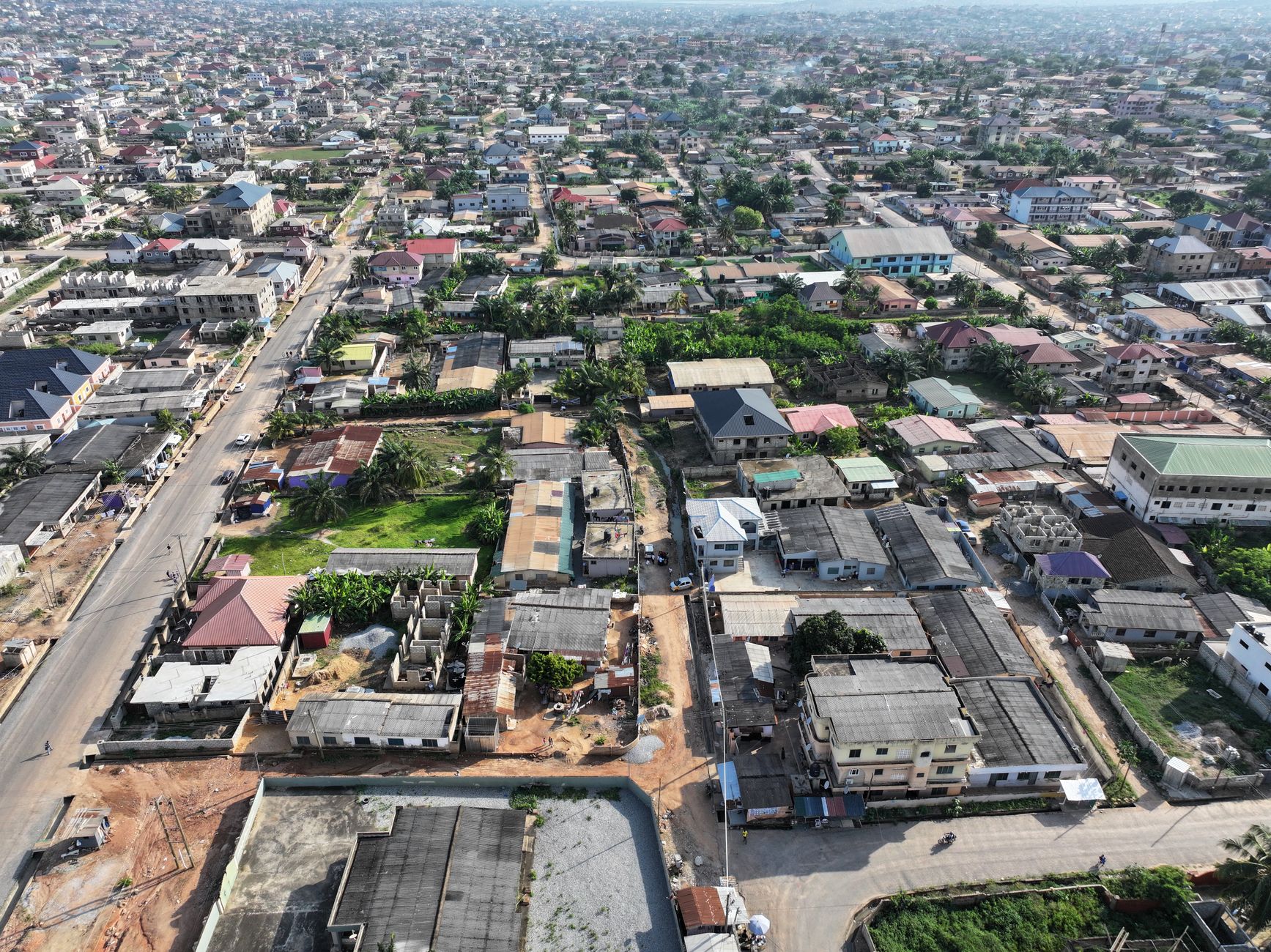
Accra packs Black-Star independence monuments, 17th-century slave dungeons and Sunday beach-club afrobeats into one loud, salty, open-air city.

location_on 15 attractions
calendar_month August–March (dry, less humid)
schedule 3–4 days

Introduction

The smell hits first—grilled tilapia and sharp pepper smoke curling above car bonnets on Oxford Street at 2 p.m. By nightfall, bass from Rehab Beach Club rattles the sand fifteen kilometres south, yet the Black Star Gate still stands empty, its lone guard nodding to Afrobeats he pretends not to hear. Between the noise and the hush, Accra, Ghana’s Atlantic-cradled capital, keeps its story moving fast enough to trip first-time visitors.

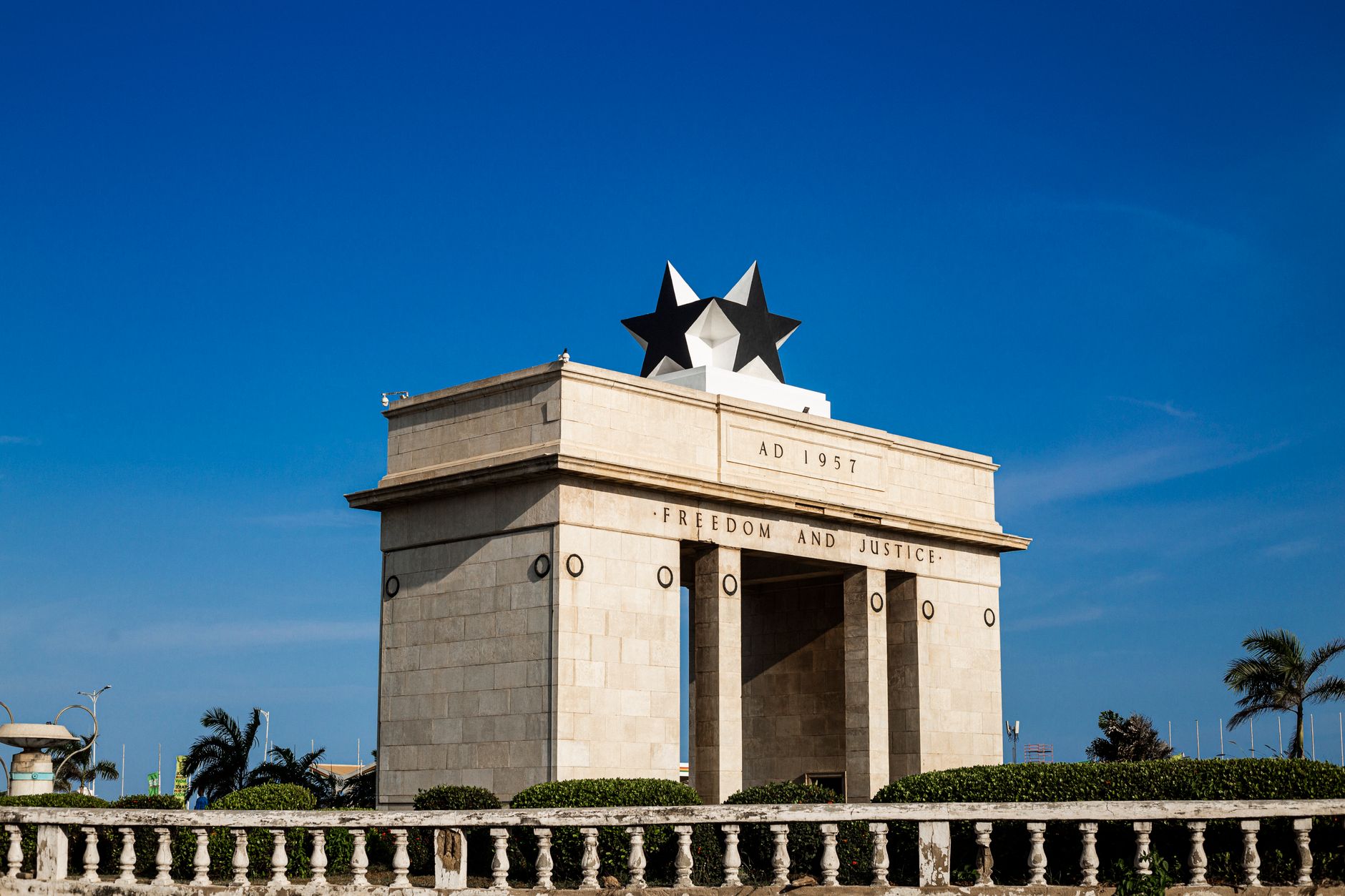
This is a city where a 1961 independence arch shares its skyline with a half-finished 30-storey tower, where boxing gyms in Jamestown turn fishermen into champions before dawn, and where the best waakye sells out before most travellers finish breakfast. Walk the colonial seafront and you’ll step from a Danish-built slave castle—now a UNESCO museum—straight into a Sunday beach club where tables are booked by WhatsApp and the dress code is swimwear plus gold jewellery.

Accra’s pace is set by two rhythms: the Atlantic tides that sweep Labadi Beach and the traffic that stalls on the Tetteh Quarshie interchange. Allow both. You’ll arrive late. You’ll eat well. And you’ll leave understanding why locals greet strangers with a handshake that lasts three counts—long enough to ask after family, health, and whether you’ve tried the kelewele yet.

What Makes This City Special

Independence Arch Climb

The 42-step ascent up the right pillar of Independence Square reveals Accra in its entirety—Osu Castle, the sports stadium, and fishing canoes threading the Atlantic. Most visitors miss this, which is why the stairkeeper still gets tipped in folded cedis.

Jamestown Boxing Gyms

Before the sun cracks over the lighthouse, national champions spar in open-air rings while kids chase footballs between discarded gloves. Watching costs nothing but the price of a fresh coconut from the woman outside.

Sunday Beach Ritual

Sandbox, Rehab, Afrikana and Ozzies turn the coast into one long house party every Sunday afternoon. The ocean is merely background noise to the real sport: catching up on Accra gossip over kelewele and champagne.

Osu Night Market

When the sun drops, Oxford Street sprouts charcoal fires selling kenkey, grilled tilapia, and sachet gin until after midnight. The same vendors who sell iPhone cables by day become master grillers by night.

Historical Timeline

Where the Coastline Dictated Everything

From Ga fishing villages to the heartbeat of West Africa

swords
1471

Portuguese Sailors Arrive

The first caravels drop anchor off the Accra coast. Portuguese traders barter brass manillas for gold dust with Ga fishermen who've lived here for centuries. No one records the moment when the village name 'nkran'—meaning 'black ants' after the anthills covering the plains—starts appearing on European maps.

castle
1649

Dutch Build Fort Crèvecœur

Rising from the sand at Ussher Town, the Dutch West India Company's new fort commands the lagoon with 12-pound cannons. The stone walls enclose warehouses for gold and, increasingly, human cargo. Local Ga chiefs watch from the beach as their territory becomes a bargaining chip between European powers.

castle
1661

Christiansborg Rises at Osu

Danes construct their masterpiece on the rocky peninsula, three stories of whitewashed stone that will change hands between Danes, Portuguese, Akwamu warriors, and eventually Ghanaians. The castle's dungeon cells, built to hold 200 enslaved Africans, still smell faintly of sea salt and desperation.

swords
1677

Akwamu Conquest

King Okai Koi falls defending Accra's inland capital Ayawaso. Akwamu warriors sweep through Ga settlements, forcing survivors toward the European forts for protection. The victors control trade routes for 54 years, turning Accra from six independent towns into a single province.

gavel
1807

Slave Trade Outlawed

British Parliament's ban transforms Accra's economy overnight. Fort dungeons empty. European traders pivot to palm oil and gold. The stone corridors that once echoed with chains now house colonial administrators, but the human cost of 160 years lingers in family genealogies.

gavel
1877

Accra Becomes British Capital

Governor Rowe relocates the Gold Coast government from malaria-ridden Cape Coast. British officials praise Accra's 'salubrious climate' while building bungalows on stilts. The town swells with 15,000 residents—Ga fishermen, Hausa traders, Lebanese merchants, and British clerks who hate the heat.

person
1909

Hearts of Oak Founded

In a tin-roofed meeting hall, 12 young men form Accra Hearts of Oak Sporting Club. Their red-and-yellow striped shirts become the city's unofficial colors. Match days transform Jamestown streets into rivers of singing supporters, a tradition that continues 115 years later.

person
1909

Kwame Nkrumah

Born in Nkroful but imprisoned in James Fort, he transformed Accra into independence's headquarters. His voice carried from Old Polo Grounds to Black Star Square, where he built monuments to African liberation. Buried in marble at the memorial park bearing his name, surrounded by peacocks that refuse to leave.

science
1923

Korle Bu Hospital Opens

The first teaching hospital in British West Africa rises from marshland, its Victorian wards built on foundations of laterite and ambition. Dr. Benjamin Quartey-Papafio performs the colony's first appendectomy here. Local mothers still whisper 'I'm taking you to Korle Bu' to frighten stubborn children.

school
1927

Achimota College Founded

Sir Gordon Guggisberg's 'dream school' opens its gates to 150 boys and girls. The motto 'Ut Omnes Unum Sint'—That All May Be One—becomes Accra's educational north star. Alumni include Ghana's first president, three supreme court justices, and the woman who designed the national flag.

local_fire_department
1939

The Earthquake That Rebuilt the City

June 22, 6:42 PM. The ground shudders for 30 seconds. Colonial buildings collapse like paper. 22 dead, 1,500 homes destroyed. When rebuilding begins, Accra adopts modern building codes that create the city's current low-rise silhouette—no structure over four stories without earthquake-proofing.

public
1948

The Riots That Sparked Independence

World War II veterans march peacefully for promised pensions. British police fire into the crowd at Christianborg Crossroads. Three veterans fall. The next day's riots spread across Accra like wildfire, burning colonial offices and birthing Ghana's independence movement in the ashes.

public
1957

Ghana Wins Independence

March 6. Kwame Nkrumah declares 'Ghana, your beloved country, is free forever!' from the Old Polo Grounds. Tens of thousands surge toward the speakers. Women throw their headscarves in the air. The Union Jack comes down, the red-gold-green flag rises. Accra becomes capital of Africa's first sub-Saharan independent nation.

public
1961

Black Star Square Completed

Nkrumah's Independence Day gift to the nation: 30,000 seats facing the Atlantic, flanked by the Black Star Gate. Built to impress Queen Elizabeth II during her 1961 visit. The Eternal Flame still burns, though these days you're more likely to find joggers than revolutionaries.

person
1963

W.E.B. Du Bois Dies in Accra

The 95-year-old Pan-Africanist passes away in his Accra bungalow, the day before the March on Washington. Nkrumah gave him citizenship when America took his passport. His house on First Circular Road becomes a research center where scholars still debate whether he found the peace he sought for 30 million Black Americans.

person
1968

Marcel Desailly Born

In Mamprobi Hospital, a future World Cup winner takes his first breath. Though raised in France, Desailly returns annually to the beach where he learned to walk. 'Accra gave me my first heartbeat,' he says. His foundation funds football pitches across the city, including one where kids play barefoot beneath posters of his 1998 triumph.

person
1982

Michael Essien's First Kick

Born in the working-class suburb of Awutu Breku, the boy who'd become Chelsea's midfield engine starts kicking rolled-up plastic bags. Scouts from Liberty Professionals spot him at age 12. By 19, he's earning £100 a week—enough to buy his mother a concrete house in Dansoman.

local_fire_department
2001

Sports Stadium Disaster

May 9. Hearts of Oak scores in the 89th minute. Fans rush for exits. 127 people die in the crush. The tragedy changes everything—new stadium regulations, better crowd control, but mostly it changes how Accra grieves. Every May 9th, supporters still leave scarves and flowers at the gates.

public
2009

Obama Visits Osu Castle

The first African-American U.S. president walks the same halls where enslaved Africans awaited ships. Ghanaian drummers play welcome rhythms that echo off 350-year-old walls. His daughters trace their fingers over the castle's original cannon mounts. The visit triples tourism numbers overnight.

factory
2010

Population Hits 2 Million

Accra's official count: 2,070,463 souls. The city sprawls 20 kilometers east to Tema, swallowing fishing villages into concrete suburbs. Traffic crawls past 19th-century forts while teenagers stream Afrobeats from smartphones older than Ghana's democracy. The coastline that dictated everything for 500 years now bends beneath shopping malls and beach resorts.
schedule
Present Day

Notable Figures

Kwame Nkrumah

1909–1972 · Pan-Africanist President
Led independence from Accra; buried here

He declared Ghana free in Black Star Square, then planted the eternal flame that still burns beside his marble tomb. Return at sunrise and you’ll hear the same trumpets he ordered to wake the nation—only now they echo over Uber horns and surf-casting kids.

W. E. B. Du Bois

1868–1963 · Civil-rights scholar
Died in Accra

Invited by Nkrumah, the American sociologist spent his last sunsets writing on a porch in Cantonments, convinced Ghana was the future of Black liberation. His house is now a library; the bougainvillea he planted still drops purple petals onto first editions of The Souls of Black Folk.

Michael Essien

born 1982 · Footballer
Born in Accra

He learnt the game on the pitted field behind Accra Sports Stadium, the same patch visible from the top of Independence Arch. On Champions-League nights, bars in Osu replay his Chelsea tackles while kids outside mimic his midfield runs under floodlights that flicker like the ones he once chased moths through.

Ama Ata Aidoo

1942–2023 · Novelist & playwright
Lived and died in Accra

She wrote Our Sister Killjoy in a quiet Ridge house, scribbling lines about African returnees while kelewele smoke drifted through her window. Today her plays are staged at the National Theatre, where university actors still pause the same way she did—waiting for the sea breeze to turn a page.

Azumah Nelson

born 1958 · Boxer
Born in Accra; trained in Jamestown

The Professor shadow-boxed against the red-and-white lighthouse wall, ducking fishing nets hung to dry. World titles later, he still funds the gritty Jamestown gym where barefoot kids spar at dawn, chasing the same rhythm of salt air and diesel he credits for footwork no opponent could time.

Practical Information

flight

Getting There

Kotoka International Airport (ACC) sits 10 km northeast of downtown. No trains serve the city; arrival is via airport taxi (GHS 70–120 fixed zone) or Uber/Bolt (GHS 50–90). The N1 highway connects directly to the coast road.

directions_transit

Getting Around

Accra has no metro. Trotros—shared minibuses—cost GHS 2–10 and use Kwame Nkrumah Circle as the main hub. Uber and Bolt work everywhere; cash payment prevents driver cancellations. Walking is possible only in small pockets like Osu or Labone.

thermostat

Climate & Best Time

Hot year-round: 27–32 °C highs. November–February brings dry harmattan winds and the clearest skies. May–June drowns the city in afternoon storms. Visit during the winter window for breathable nights and zero rain delays.

translate

Language & Currency

English handles every transaction. The cedi (GHS) trades around 12–13 to the USD in early 2026. Cards work at malls and hotels; markets and street food remain cash-only. Carry small bills—trotro mates and kebab stalls hate change.

shield

Safety

Pickpocketing concentrates in Makola Market and crowded trotros. Use Uber after dark; walking alone is fine in Cantonments and Airport Residential but risky in Jamestown after sunset. Beware fake police asking to 'inspect' your phone.

Tips for Visitors

train
Use Bolt Cash

Pay Bolt drivers in cash to avoid ride cancellations—credit-card trips get dumped for easier fares. Keep small cedi notes; drivers rarely carry change.

restaurant
Eat Waakye Early

The best waakye stalls sell out by 10 a.m.; join the queue before 8 for a full portion with spaghetti, egg and shito. Ask for ‘full everything’ and eat with your right hand only.

photo_camera
Climb the Arch

Most visitors miss the 42-step climb inside Independence Arch—tip the caretaker 5 GHS for sunrise views over the gulf and the stadium. Go at 6 a.m. before security gets strict.

attach_money
Tip Light

Tipping isn’t expected; leave 5–10 % at upscale spots and nothing at chop bars. Giving coins is seen as insulting—round up to the nearest 5 GHS note.

volume_off
Sunday Beach Rush

Beach clubs (Sandbox, Rehab) fill by 2 p.m. on Sunday—reserve a daybed online or arrive before noon to avoid the DJ-fuelled crowd surge.

Explore the city with a personal guide in your pocket

Your Personal Curator, in Your Pocket.

Audio guides for 1,100+ cities across 96 countries. History, stories, and local insight — offline ready.

smartphone

Audiala App

Available on iOS & Android

download Download Now

Join 50k+ Curators

Frequently Asked

Is Accra worth visiting? add

Yes—Accra layers 400-year-old slave forts against a 2020s afrobeats nightlife, all within 20 minutes of each other. You can watch dawn net-mending in Jamestown, eat smoky jollof at a rooftop in Labone, and dance to 3 a.m. afrobeats on Oxford Street the same day.

How many days do I need in Accra? add

Three full days cover the forts, markets, beaches and a night out without rushing. Add two more if you want day-trips to Cape Coast castles or Boti Falls.

Is Accra safe for solo travellers? add

Generally safe during daylight; use ride-hailing after dark and keep phones out of sight in traffic. Aggressive hawkers and snatch-theft happen, but violent crime against visitors is rare.

What does a meal cost in Accra? add

Street waakye or kenkey costs 5–10 GHS (under $1). A sit-down Ghanaian dinner runs 60–120 GHS ($5–10); sushi or steak at a hotel restaurant hits 250–400 GHS ($20–35).

Can I drink tap water? add

No—stick to factory-sealed sachet ‘pure water’ or bottled brands. Even locals avoid the tap; ice in bars is usually made from filtered water, but ask if unsure.

How do I get from Kotoka Airport to Osu? add

Airport taxis charge a fixed $15–20; Bolt is half that and picks up upstairs at Departures to avoid the arrivals cab cartel. Ride to Osu takes 20–40 minutes depending on traffic.

Sources

Last reviewed: