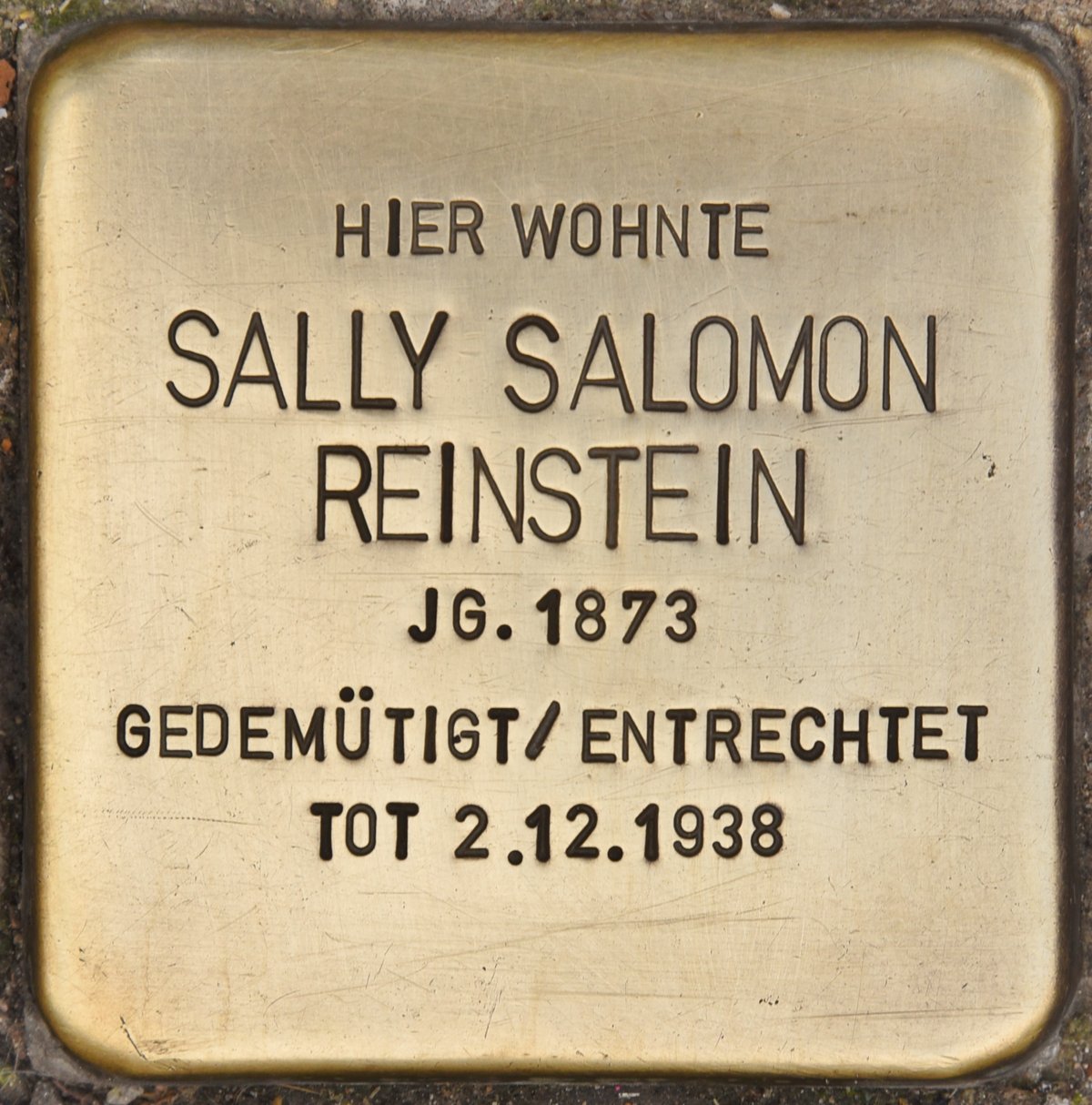
Plan and listen to Stolperstein Dedicated To Sally Salomon Reinstein with Audiala.
Audio guide in your pocket, itinerary in your browser. Built for the way you actually visit.
Introduction
The Stolpersteine project, initiated by German artist Gunter Demnig in the early 1990s, stands as the world’s largest decentralized memorial to the victims of Nazi persecution. Across Europe, these small brass plaques, or “stumbling stones,” are set into sidewalks at the last freely chosen residences or workplaces of individuals persecuted by the Nazis. Wiesbaden, the capital of Hesse, is deeply invested in this form of remembrance, with 784 Stolpersteine installed at 427 locations as of June 2025, making the city’s streets a living memorial (Visiting the Stolpersteine in Wiesbaden, 2025).
Among these, the Stolperstein dedicated to Sally Salomon Reinstein at Bruderturmgasse 6 offers a direct and personal link to Wiesbaden’s Jewish heritage and the devastating impact of National Socialism. This guide provides a comprehensive overview for visitors, including historical context, practical information on visiting, guided and self-guided tour options, accessibility tips, and notable nearby attractions. The aim is to ensure a meaningful and respectful experience that honors both Wiesbaden’s past and its ongoing commitment to remembrance and tolerance (Cultural and Educational Significance, 2023; Visiting the Sally Salomon Reinstein Memorial, 2025).

Stolpersteine in Wiesbaden: History and Impact
The Stolpersteine Project: Concept and Growth
The Stolpersteine project began in 1992, with the first stone laid in Cologne in 1996. Each Stolperstein commemorates a victim of Nazi persecution—mainly Jews, but also Sinti and Roma, political prisoners, people with disabilities, and others. The engraved stones record the victim’s name, date of birth, fate, and (when known) date and place of death, embedding remembrance directly into daily urban life (Cultural and Educational Significance, 2023).
By June 2025, over 116,000 Stolpersteine are in place across 31 countries, making this the largest decentralized Holocaust memorial worldwide (Stolpersteine Konstanz: Sally Salomon).
Stolpersteine in Wiesbaden: Local Engagement
Wiesbaden’s Stolpersteine initiative began in 2008, coordinated by the Aktives Museum Spiegelgasse für Deutsch-Jüdische Geschichte in collaboration with city authorities. The project honors not only Jewish victims but also other persecuted groups, weaving their stories into the city's public spaces (Visiting Stolpersteine in Wiesbaden, 2025).
Community Participation
Local schools, youth organizations, and descendants of victims play an active role in researching biographies, organizing ceremonies, and developing educational resources, including the Stolpersteine Guide app (wiesbaden-lebt.de). Funding for new Stolpersteine comes from private sponsorships, with each stone costing approximately €120. The city’s public works department oversees the proper installation of new stones.
Integration into Education
Stolpersteine research and tours are integrated into school curricula and local educational initiatives. Students and teachers contribute to maintaining the memorials and ensuring ongoing public engagement (wiesbaden-lebt.de).
Visiting the Sally Salomon Reinstein Stolperstein
Personal History
Sally Salomon Reinstein was a Jewish entrepreneur born in Horchheim in 1876. He and his family ran a men’s clothing store in Wiesbaden until the Nazi regime’s anti-Semitic policies led to its destruction during Kristallnacht in 1938. Sally, his wife Rosa, and their son were later deported to the Gurs internment camp in France. Sally ultimately survived, emigrating to Chicago, where he died in 1959 (Stolpersteine Konstanz: Sally Salomon). His Stolperstein at Bruderturmgasse 6 stands as a testament to his life and resilience.
Location and Accessibility
- Address: Bruderturmgasse 6, Wiesbaden, Germany
- Accessibility: The Stolperstein is embedded in a public sidewalk, accessible 24/7 without tickets or permits required. The area is generally wheelchair accessible, but visitors should be mindful of potential uneven pavement in older parts of the city (Mapcarta: Stolperstein für Sally Salomon Reinstein).
- Getting There: Easily accessible via public transit, with nearby bus stops and parking facilities.
Visiting Hours and Tickets
- Hours: Open at all times, as the Stolperstein is outdoors.
- Tickets: No entry fee or ticket required.
Enhancing Your Visit: Tours, Apps, and Recommendations
Guided and Self-Guided Tours
- Guided Tours: Offered by organizations such as the Aktives Museum Spiegelgasse. These tours provide valuable historical context and personal stories behind selected Stolpersteine. Advance booking is recommended, especially for tours in English (Wiesbaden Tourism).
- Self-Guided Tours: The Stolpersteine Guide app offers interactive maps, biographies, and curated walking routes for exploring memorials individually.
Travel Tips and Respectful Practices
- Best Time to Visit: Spring through early autumn offers comfortable weather for walking tours.
- What to Bring: Comfortable shoes, a camera (for personal reflection—please be respectful), and the Stolpersteine Guide app.
- Etiquette: Pause and reflect at each Stolperstein. Avoid stepping directly on the brass plaque. Support local initiatives by volunteering or sponsoring new stones.
Nearby Attractions
When visiting the Sally Salomon Reinstein Stolperstein, consider exploring these nearby sites to enrich your understanding of Wiesbaden’s cultural and historical landscape:
- Kurhaus Wiesbaden: Historic spa house and event venue.
- Nerobergbahn: Funicular railway with panoramic city views.
- Jewish Museum Wiesbaden: In-depth exhibitions on Jewish heritage in Wiesbaden.
- Stadtmuseum am Markt: Local history museum, often featuring related exhibitions.
For regional context, the Jewish Museum Frankfurt (about 40 minutes away by train) provides broader insights into Jewish history in Hesse (Jewish Museum Frankfurt).
Frequently Asked Questions (FAQ)
Q: Is there an entry fee for visiting Stolpersteine?
A: No, Stolpersteine are public memorials accessible free of charge at all times.
Q: Are guided tours available in English?
A: Yes, arrange in advance through Wiesbaden’s official tourism office.
Q: Can I sponsor a Stolperstein?
A: Yes, individuals and organizations can sponsor stones; contact the Aktives Museum Spiegelgasse for more information.
Q: Is the site accessible for visitors with limited mobility?
A: Most Stolpersteine are on wheelchair-accessible sidewalks, but check local guides for specific routes.
Q: How do I find other Stolpersteine in Wiesbaden?
A: Use the Stolpersteine Guide app or consult the AMS website for maps and information.
Discover More
Engage deeply with Wiesbaden’s past and present by visiting the Sally Salomon Reinstein Stolperstein and other memorials throughout the city. Use digital tools for self-guided exploration or join a guided tour for expert insight. Support ongoing remembrance efforts by sponsoring a Stolperstein or volunteering with local organizations. Your visit not only honors individual memory but also affirms values of tolerance, remembrance, and community.
For further information and event updates, follow Wiesbaden’s heritage organizations on social media, and explore related articles on Jewish and historical sites in the region.
Listen to the full story in the app
The whole Stolperstein Dedicated To Sally Salomon Reinstein,
told well.
Audio guides for 1,100+ cities across 96 countries. History, stories, and local insight — offline ready.
Verified, and shown.
Researched and written by the Audiala editorial team from historical records, architectural archives, and local expertise.
Researched from Wikidata, Wikipedia & official sources · fact-checked · How we make our guides →