Plan and listen to Stolperstein Dedicated To Rebecka Wolff with Audiala.
Audio guide in your pocket, itinerary in your browser. Built for the way you actually visit.
Introduction: The Power of Stolpersteine and Wiesbaden’s Memorial Landscape
Wiesbaden, the capital of Hesse, Germany, is home to one of the most moving tributes to the victims of Nazi persecution: the Stolpersteine, or "stumbling stones." These small brass plaques, designed by German artist Gunter Demnig, are embedded across the city’s sidewalks at the last freely chosen residences of Holocaust victims. Among them, the Stolperstein dedicated to Rebecka Wolff stands as a poignant reminder of individual lives disrupted by history, inviting residents and visitors alike to pause and reflect (stolpersteine.eu, am-spiegelgasse.de, tourismus.wiesbaden.de).
This comprehensive guide provides essential information for visiting the Stolperstein for Rebecka Wolff in Wiesbaden, including its location, accessibility, visiting hours, and practical tips. It also explores the historical and cultural significance of Stolpersteine, community involvement, and how to enrich your experience with local resources.

The Stolpersteine Project: Origins and Purpose
The Stolpersteine project began in 1992, conceived by artist Gunter Demnig as a decentralized memorial to victims of National Socialism. Each Stolperstein—a brass-plated cobblestone, typically inscribed with the words "Here lived," followed by the individual's name, birth year, fate, and, if known, death details—is installed in front of the victim’s last freely chosen residence (stolpersteine.eu). The aim is to bring remembrance into the everyday public sphere, fostering a personal connection to history and honoring those who were once part of the community.
By June 2025, more than 107,000 Stolpersteine have been installed across 27 countries, making it the world’s largest decentralized Holocaust memorial (stolpersteine.eu). The project’s grassroots nature allows for widespread community engagement, with local residents, schools, and organizations researching and sponsoring stones and participating in installation ceremonies (am-spiegelgasse.de).
Stolpersteine in Wiesbaden: Scope and Community Involvement
Wiesbaden has actively participated in the Stolpersteine project since 2006. As of June 2025, 784 Stolpersteine honor victims in front of 427 houses across the city and its districts (am-spiegelgasse.de). The Aktives Museum Spiegelgasse für Deutsch-Jüdische Geschichte (AMS) coordinates the project locally, with support from city authorities and the Committee for Citizen Participation.
Importantly, Wiesbaden’s Stolpersteine commemorate not only Jewish victims but also Sinti and Roma, political dissidents, and members of other persecuted groups (am-spiegelgasse.de). Community involvement is central: residents, school groups, and organizations help research biographies, sponsor stones, and maintain their appearance. This engagement transforms remembrance into an active, educational process (folklife.si.edu).
Rebecka Wolff’s Stolperstein: Location and Access
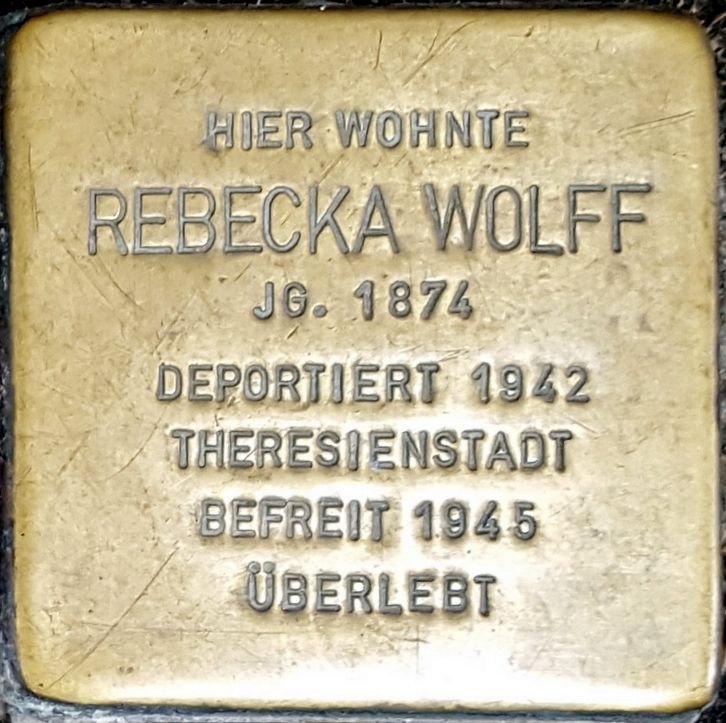
The Stolperstein dedicated to Rebecka Wolff is located at Mauergasse 19 in Wiesbaden (sometimes also referenced at Alwinenstraße 25 in other sources), marking her last freely chosen residence (tracesofwar.com). The coordinates are approximately 50.081171, 8.240489.
This site is within easy reach of the city center and other historical landmarks. The Stolperstein is embedded in the pavement, adjacent to stones for Mathilde and Wilhelm Simon, forming a humble yet deeply personal memorial cluster.
How to Find It:
- Consult the official Wiesbaden city map, the Stolpersteine project database, or use map apps with the address.
- The Stolpersteine-App and guides such as wiesbaden-lebt.de offer interactive maps, walking routes, and biographies.
Getting There:
- Wiesbaden Hauptbahnhof (main train station) is centrally located. From there, buses, trams, or a short walk will bring you near Mauergasse 19.
- The area is pedestrian-friendly and suitable for cycling or walking.
Visiting Hours, Tickets, and Accessibility
Visiting Hours:
Stolpersteine are installed in public sidewalks and are accessible 24 hours a day, 7 days a week. There are no visiting restrictions.
Tickets and Fees:
No tickets or admission fees are required to view Stolpersteine. The memorials are open to all, free of charge.
Accessibility:
- Most Stolpersteine are at sidewalk level and generally accessible to wheelchair users, though some older streets may have uneven pavements.
- For specific accessibility advice, contact the Tourist Information Office Wiesbaden.
Visitor Etiquette and On-Site Experience
When visiting the Stolperstein for Rebecka Wolff:
- Pause and read the inscription: the stone typically begins with “Hier wohnte…” (“Here lived…”), followed by Rebecka Wolff’s name, birth year, and details of her fate.
- Reflect quietly on the life commemorated.
- It is traditional and respectful to leave a small stone or flower on the Stolperstein, echoing Jewish mourning customs.
- Photography is permitted, but do so discreetly and avoid standing directly on the plaque.
- Be mindful of residents and the surrounding neighborhood.
Nearby Historical Attractions in Wiesbaden
While visiting the Stolperstein for Rebecka Wolff, explore other significant sites:
- Aktives Museum Spiegelgasse – Offers exhibitions on Jewish history and the Stolpersteine project.
- Wiesbaden City Museum – Chronicles the broader history of Wiesbaden.
- Jewish Cemetery – A site of remembrance.
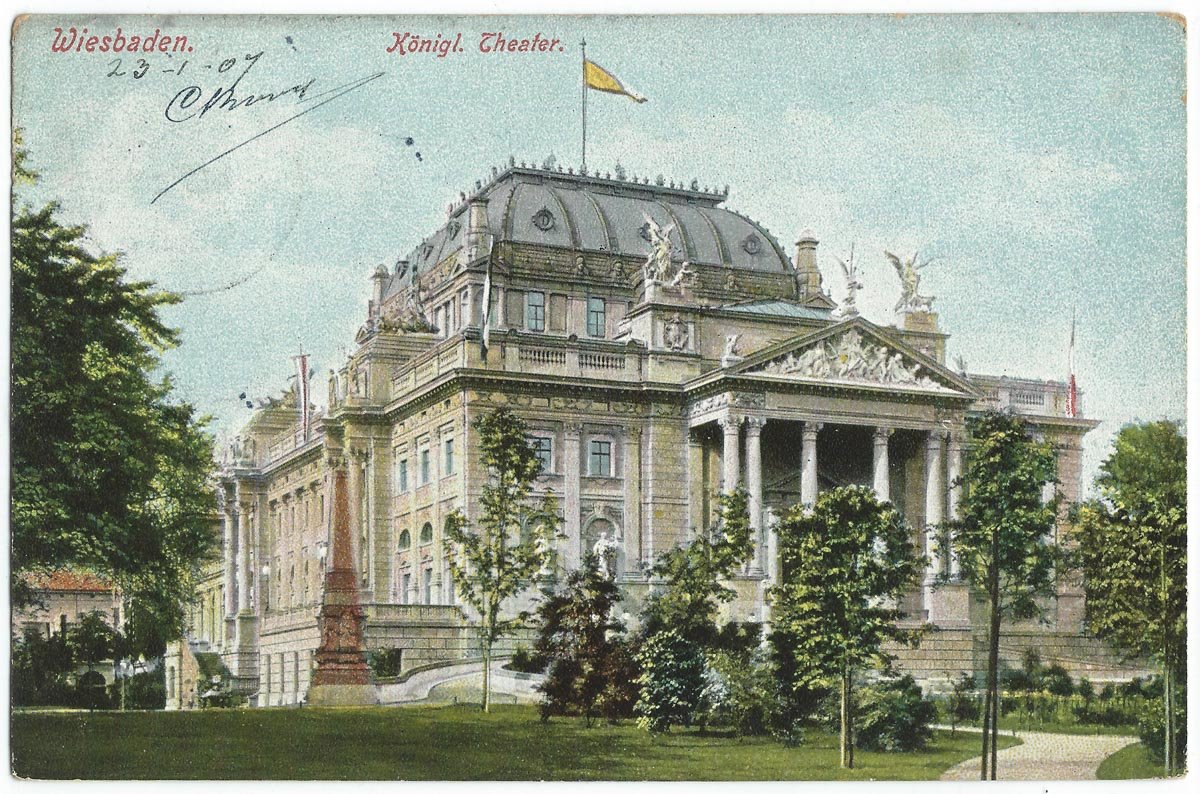
- Kurhaus, Wiesbaden State Theatre, Nerobergbahn – Cultural and architectural landmarks easily accessible from the city center.
Frequently Asked Questions (FAQ)
Q: Do I need tickets to visit Stolpersteine in Wiesbaden?
A: No, they are public memorials accessible 24/7 and free of charge.
Q: Are Stolpersteine accessible for wheelchair users?
A: Generally yes, as they are set into sidewalks, but some urban pavements may be uneven.
Q: Can I take photos of the Stolperstein?
A: Yes, but please do so respectfully, especially in residential areas.
Q: How can I find other Stolpersteine in Wiesbaden?
A: Use the Stolpersteine-App, official city maps, or join a guided tour.
Q: Are there special events or tours?
A: Yes, check with the Aktives Museum Spiegelgasse and Wiesbaden Tourist Office for event schedules.
Listen to the full story in the app
The whole Stolperstein Dedicated To Rebecka Wolff,
told well.
Audio guides for 1,100+ cities across 96 countries. History, stories, and local insight — offline ready.
Verified, and shown.
Researched and written by the Audiala editorial team from historical records, architectural archives, and local expertise.
Researched from Wikidata, Wikipedia & official sources · fact-checked · How we make our guides →