Plan and listen to Stolperstein Dedicated To Peter Hück with Audiala.
Audio guide in your pocket, itinerary in your browser. Built for the way you actually visit.
Introduction: Stolperstein Peter Hück and Its Significance
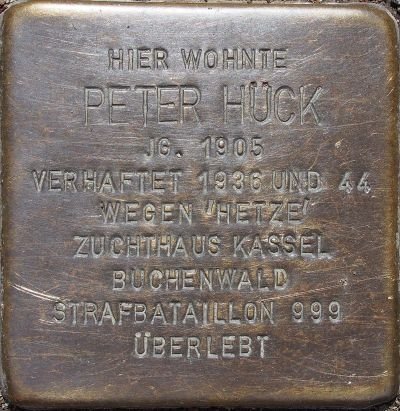
The Stolperstein project, initiated in 1992 by German artist Gunter Demnig, is the world’s largest decentralized memorial to the victims of Nazi persecution. These “stumbling stones” are small, brass-plated cobblestones set into sidewalks in front of the last freely chosen residences or workplaces of those who were deported, exiled, or murdered during the Holocaust. The Stolperstein for Peter Hück in Wiesbaden’s Mainz-Kastel district is one of more than 780 such memorials in the city, each serving as a poignant and personal reminder of lives disrupted and destroyed (Stolpersteine Project; Arts & Culture).
This guide offers comprehensive information on the Stolperstein dedicated to Peter Hück, including its historical context, location, accessibility, visitor etiquette, and ways to deepen your engagement through tours, community events, and digital resources. Whether you are a history enthusiast, a student, or a traveler seeking meaningful cultural experiences in Wiesbaden, this article will help you plan a respectful and insightful visit.

Historical Context of the Stolperstein Project
The Stolperstein (“stumbling stone”) project is a decentralized memorial concept by Gunter Demnig that brings remembrance directly into public spaces. Each 10 x 10 cm brass plaque, inscribed with the victim’s name, birthdate, date of deportation, and fate, is placed at the site of the last freely chosen address. The project began in 1992 and, as of 2024, includes over 116,000 stones across 31 European countries, commemorating Jews, Roma, disabled individuals, political dissidents, and others targeted by the Nazi regime (Stolpersteine Project; Arts & Culture).
In Wiesbaden, installation of Stolpersteine started in 2008, led by the Aktives Museum Spiegelgasse and local supporters. The city’s Jewish community, which numbered over 3,000 before the Nazi era, was almost entirely destroyed. Today, Stolpersteine serve both as personal memorials and as reminders of the broader history of persecution in Wiesbaden (Aktives Museum Spiegelgasse; Wikipedia Wiesbaden Stolpersteine).
The Story of Peter Hück
While the full biography of Peter Hück is not widely documented, his Stolperstein in Mainz-Kastel signifies his victimization by the Nazi regime—most likely due to his Jewish heritage or another persecuted identity. The stone’s inscription provides basic information: his name, birth year, and fate. For those interested in further details, the Aktives Museum Spiegelgasse and the Stolpersteine in Wiesbaden app offer biographical records and historical documentation (Stolpersteine Guide).
Location and Description of the Stolperstein
- District: Mainz-Kastel, Wiesbaden
- Nearby Landmarks: Mainz-Kastel station, St. Georg, Mainz Reduit
- Accessibility: Public sidewalk, open 24/7, no admission required
Each Stolperstein consists of a concrete block topped with a hand-engraved brass plate. The inscription follows the standard format: “Here lived [Name], [Year of Birth], [Fate—deported/murdered/etc.], [Date and Place of Death if known]” (Arts & Culture).

To locate the Stolperstein, visitors can use the “Stolpersteine in Wiesbaden” app or consult the map available from the Aktives Museum Spiegelgasse (Stolpersteine Guide).
Visitor Information: Hours, Accessibility, and Etiquette
Visiting Hours and Tickets
- Open 24/7: Stolpersteine are installed in public spaces and can be visited at any time of day or night.
- No Ticket Required: There are no entrance fees or ticket requirements.
Accessibility
- Wheelchair Accessible: The stones are flush with the pavement, allowing access for those with mobility aids.
- Note: Some older streets in Wiesbaden may have cobblestones, which could present minor challenges.
Visitor Etiquette
- Pause and Reflect: Take a moment to read the inscription and remember the individual commemorated.
- Respectful Conduct: Avoid standing directly on the stone; instead, pause beside it.
- Commemorative Gestures: Placing a white rose or small stone on the brass plate is a traditional sign of respect.
- Photographs: Photos are permitted and encouraged to raise awareness, but please be discreet and mindful of local residents.
Nearby Attractions and Travel Tips
Wiesbaden boasts a rich array of historical and cultural sights:
- Jewish Cemetery: A testament to the city’s Jewish heritage (Jewish Cemetery).
- Holocaust Memorial at Michelsberg: Central site for public remembrance (Holocaust Memorial).
- Wiesbaden Museum and Marktkirche: For broader historical context.
- Travel Tips: Wiesbaden Hauptbahnhof is well connected, and the city center is accessible via bus or a short walk. Local amenities, tourist information, and public restrooms are nearby.
Controversies and Perspectives
Although widely respected, the Stolperstein project has faced criticism. Some believe that placing names in pavements is disrespectful, as people may inadvertently walk over them. This has led cities like Munich to ban Stolpersteine on public property, though alternatives have been developed. In Wiesbaden, the project paused briefly due to debates over inscription language but has since resumed with strong community support (Arts & Culture; Wikipedia Wiesbaden Stolpersteine).
Frequently Asked Questions (FAQ)
Q: Where can I find the Stolperstein for Peter Hück?
A: Use the Stolpersteine in Wiesbaden app or the Aktives Museum Spiegelgasse’s map to locate the stone in Mainz-Kastel.
Q: Are there visiting hours or an entry fee?
A: No. Stolpersteine are accessible 24/7 and free of charge.
Q: Are guided tours available?
A: Yes, both guided and self-guided tours are available. Check with the Wiesbaden Tourist Information Office or download the Stolpersteine app.
Q: Can I participate in cleaning or commemorative events?
A: Yes, these are community-driven and open to the public on significant remembrance dates.
Discover More
Visiting the Stolperstein for Peter Hück in Wiesbaden is a powerful way to honor the memory of Holocaust victims and engage with the city’s living history. The memorial’s public placement encourages ongoing reflection, community involvement, and educational outreach. Download the “Stolpersteine in Wiesbaden” app for interactive maps and background information, and consider participating in local remembrance events. Share your experience on social media with the hashtag #Stolpersteine to help keep memory alive.
For further information, maps, and tour schedules, visit the Wiesbaden Tourist Information Office or the Stolpersteine Wiesbaden website.
Listen to the full story in the app
The whole Stolperstein Dedicated To Peter Hück,
told well.
Audio guides for 1,100+ cities across 96 countries. History, stories, and local insight — offline ready.
Verified, and shown.
Researched and written by the Audiala editorial team from historical records, architectural archives, and local expertise.
Researched from Wikidata, Wikipedia & official sources · fact-checked · How we make our guides →