Plan and listen to Stolperstein Dedicated To Karolina Berney Geb. Löser with Audiala.
Audio guide in your pocket, itinerary in your browser. Built for the way you actually visit.
Introduction
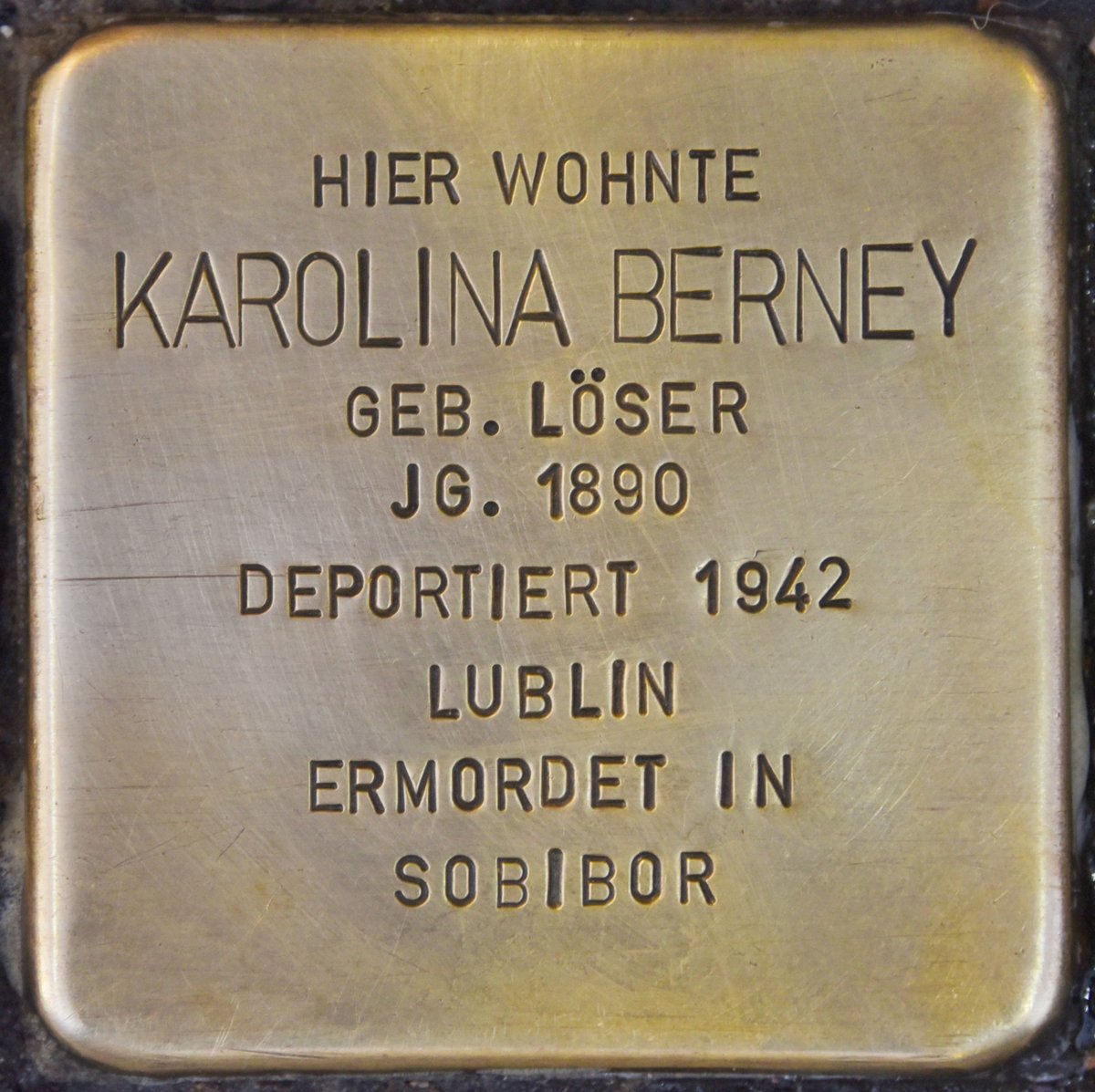
The Stolpersteine (“stumbling stones”) project, conceived by German artist Gunter Demnig in the 1990s, is the world’s largest decentralized Holocaust memorial. These small brass plaques embedded in sidewalks across Europe restore the names and dignity of those persecuted and murdered by the Nazi regime—transforming everyday city streets into sites of remembrance. In Wiesbaden, the Stolperstein dedicated to Karolina Berney (née Löser) at Luisenstraße 17 invites visitors to reflect on the city’s Jewish history and engage in personal remembrance. This detailed guide explores the historical and cultural significance of the Stolpersteine, shares Karolina Berney’s story, and provides all the practical information you need for a respectful and meaningful visit (Holocaust Educational Trust; Aktives Museum Spiegelgasse; Stolpersteine.eu).

Origins and Concept of Stolpersteine
The Stolpersteine project began in the mid-1990s, inspired by Gunter Demnig’s commitment to surfacing the stories of Holocaust victims within the very neighborhoods they once called home. Each Stolperstein is a 10x10 cm brass-plated cobblestone set into the pavement outside the last freely chosen residence of a victim of Nazi persecution. The stone is engraved with the victim’s name, birth year, fate, and, when known, the date and place of death, ensuring that their individuality is restored (Stolpersteine.eu).
The project’s guiding philosophy is encapsulated by the Talmudic principle: “A person is only forgotten when his or her name is forgotten.” As of 2024, more than 784 Stolpersteine have been installed in Wiesbaden alone, with thousands more across Europe, each inviting passersby to “stumble upon” memory and history (Aktives Museum Spiegelgasse).
The Story of Karolina Berney and Family
Karolina Berney, née Löser, was born on May 30, 1890, in Laufersweiler (Kreis Simmern). She and her husband, Heinrich Berney (b. April 22, 1888, Wörrstadt), lived at Luisenstraße 17, Wiesbaden, with their children Alfred (b. 1915) and Beate (Bettina, b. 1923) (Erinnerungsblatt Berney). Heinrich ran a tailoring business from their home, which the family lost due to anti-Semitic laws and persecution in 1939. Forced into increasingly dire circumstances, the Berneys rented out rooms to survive and endured forced labor. Like thousands of others in Wiesbaden, their fate was shaped by the escalating policies of exclusion, dispossession, and violence enacted by the Nazi regime.
The Stolperstein set before their former residence is a quiet but powerful testament to the family’s life, dignity, and the tragedy they endured.
Visiting the Stolperstein in Wiesbaden
Location and Access
- Address: Luisenstraße 17, Wiesbaden, Westend district.
- How to Get There: Easily reached via Wiesbaden’s efficient public transportation. The main train station (Hauptbahnhof) is nearby, and local buses serve the Westend district. For drivers, limited street parking is available.
Visiting Hours and Tickets
- Hours: Stolpersteine are accessible 24 hours a day, 7 days a week. There are no visiting hours restrictions.
- Tickets: No admission fee or ticket is required. The memorial is freely accessible to all.
Accessibility
- The Stolperstein is embedded flush with the sidewalk, making it accessible to most visitors, including those with mobility challenges. Some adjacent sidewalks may be uneven due to cobblestone paving; suitable footwear is recommended.
- For visually impaired visitors, tactile maps and audio guides may be available through local tourism services.
Nearby Historical Sites
Combine your visit with other key sites in Wiesbaden to deepen your understanding of the city’s past:
- Jewish Museum Wiesbaden: Offers exhibits on Jewish life and history in the region.
- Stadtschloss Wiesbaden (City Palace): Home to the Hessian State Parliament (Mapcarta).
- Luisenplatz: A lively square surrounded by historic architecture and cafés.
- Sankt Bonifatius: A neo-Gothic church within walking distance.
Community Engagement and Events
Local schools, organizations, and residents regularly participate in events such as:
- Commemorative Ceremonies: Especially on Holocaust Remembrance Day (January 27) and the anniversary of Kristallnacht (November 9).
- Cleaning and Polishing Stones: Ensures the names remain visible and the memory is honored.
- Workshops and Educational Walks: Encourage reflection and active remembrance.
Visitor Etiquette and Practical Tips
- Respectful Conduct: Approach the stone thoughtfully; pause to read the inscription and reflect. Avoid standing directly on the stone. Leaving flowers or small stones is a meaningful gesture of remembrance.
- Photography: Allowed, but please be discreet and respect the privacy of local residents.
- Best Times to Visit: Daylight hours are ideal for visibility and safety.
- Safety: Wiesbaden is generally safe; remain aware of your surroundings and secure valuables.
- Language: Most on-site information is in German, but many locals speak English. Translation apps can help with inscriptions.
Frequently Asked Questions (FAQ)
Q: Are there specific visiting hours or tickets required?
A: No. Stolpersteine are public memorials accessible 24/7, free of charge.
Q: Is the Stolperstein site wheelchair accessible?
A: Yes, the stone is set flush with the sidewalk, although nearby pavements may be uneven.
Q: How do I find this and other Stolpersteine?
A: Use the AMS Stolperstein lists, the Stolpersteine app, or ask at the Aktives Museum Spiegelgasse.
Q: Are guided tours available?
A: Yes, guided tours can be booked via local museums and tourist offices.
Q: Can I participate in commemorative events?
A: Yes, such events are open to the public and often advertised through local cultural institutions.
Listen to the full story in the app
The whole Stolperstein Dedicated To Karolina Berney Geb. Löser,
told well.
Audio guides for 1,100+ cities across 96 countries. History, stories, and local insight — offline ready.
Verified, and shown.
Researched and written by the Audiala editorial team from historical records, architectural archives, and local expertise.
Stolpersteine: Stumbling Blocks of Memory
Stolpersteine Wiesbaden
Frequently Asked Questions
Stumbling Stones: Holocaust Memorials
Researched from Wikidata, Wikipedia & official sources · fact-checked · How we make our guides →