Plan and listen to Stolperstein Dedicated To Frieda Löwenstein Geb. Schwarzschild with Audiala.
Audio guide in your pocket, itinerary in your browser. Built for the way you actually visit.
Introduction
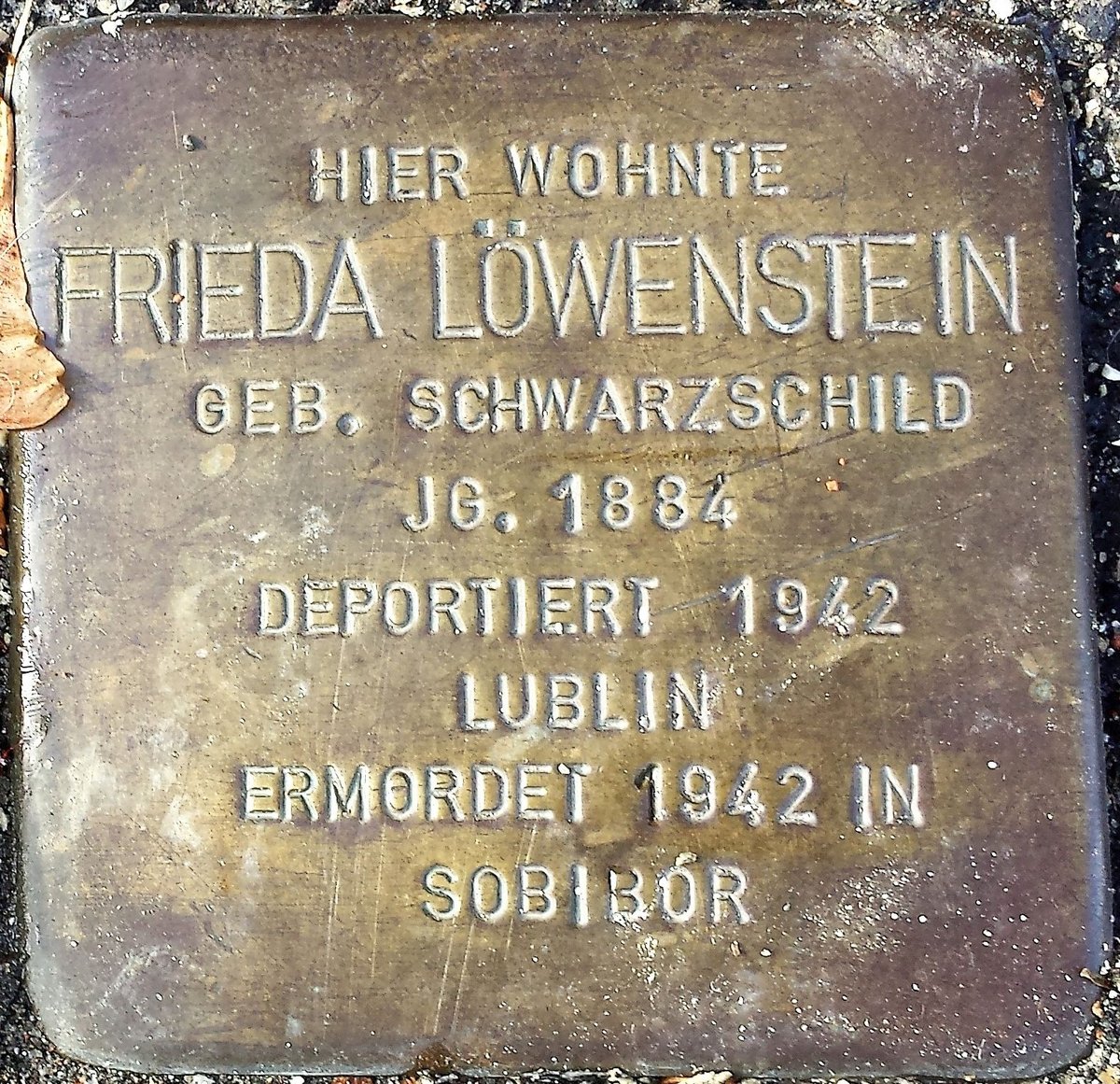
The Stolperstein for Frieda Löwenstein (geb. Schwarzschild) in Wiesbaden stands as a powerful testament to the lives disrupted and destroyed during the Holocaust. As part of the world’s largest decentralized memorial project—initiated by artist Gunter Demnig—Stolpersteine, or "stumbling stones," are small brass plaques embedded in city sidewalks at the last freely chosen residences of those persecuted by the Nazi regime. These unique memorials personalize history, inviting passersby to pause, reflect, and remember each victim as an individual. Since joining the initiative in 2008, Wiesbaden has installed over 784 Stolpersteine, preserving the memory of Holocaust victims like Frieda Löwenstein throughout the city (Stolpersteine Facts and Figures; Aktives Museum Spiegelgasse).
This guide provides visitors with essential information about the Stolperstein for Frieda Löwenstein: its history and significance, practical visiting details, accessibility, etiquette, and the broader cultural context within Wiesbaden’s commitment to remembrance. Whether you are a first-time visitor, a student, or a history enthusiast, this resource supports a respectful and meaningful encounter with one of Wiesbaden’s most profound Holocaust memorials.

What Are Stolpersteine?
Stolpersteine (German for "stumbling stones") are small, square brass plaques set into concrete, each inscribed with the name, birth year, fate, and, if known, the date and place of death of a victim of Nazi persecution. Conceived in 1992/93 by artist Gunter Demnig, the project commemorates Jews, Sinti and Roma, political prisoners, LGBTQ+ individuals, people with disabilities, and others targeted by the Nazi regime. Each stone marks the last freely chosen residence or workplace of the victim (Stolpersteine Foundation).
As of late 2024, more than 116,000 Stolpersteine have been installed in over 1,860 municipalities across 31 countries, making it the world’s largest decentralized Holocaust memorial (Stolpersteine Facts and Figures; folklife.si.edu).
The Stolperstein Project in Wiesbaden
Location and Accessibility
Wiesbaden, the capital of Hesse, has actively participated in the Stolpersteine project since 2008. Coordinated by the Aktives Museum Spiegelgasse, over 784 Stolpersteine have been laid at 427 locations throughout the city and its suburbs as of December 2024 (Stolpersteinliste Wiesbaden). The stones are embedded in sidewalks and public spaces, freely accessible at any time and without admission fees or tickets.
Visiting Hours and Tickets
All Stolpersteine in Wiesbaden, including Frieda Löwenstein’s, are accessible 24/7, year-round, as they are part of public sidewalks. There are no admission fees or tickets required.
Nearby Attractions
While exploring Stolpersteine, you can also visit Wiesbaden’s other historical landmarks, such as the Kurhaus, Nerobergbahn, and the historical district. Many Stolpersteine are located in picturesque neighborhoods, offering meaningful photographic opportunities.
The Story of Frieda Löwenstein (geb. Schwarzschild)
Frieda Löwenstein, née Schwarzschild (born 1884), lived at Stolberger Straße 26 in the Nordenstadt district of Wiesbaden (Stolpersteinliste Wiesbaden, p.16). She and her husband, Sali Löwenstein, were among the last Jewish residents of Nordenstadt during the Holocaust. In July 1941, only 16 Jews remained in the district. On June 10, 1942, Frieda and others were deported from the former town hall to Nazi concentration camps—a tragic chapter in Wiesbaden’s history.
Cultural and Educational Significance
Personalizing History
Unlike centralized monuments, Stolpersteine are installed in the everyday urban landscape, directly in front of former homes or workplaces. This approach personalizes remembrance, compelling passersby to reflect on individuals like Frieda Löwenstein in their daily routines (Stolpersteine Facts and Figures).
Educational Value and Community Involvement
Stolpersteine serve as powerful educational tools. Wiesbaden schools often sponsor stones, research victim biographies, and participate in ceremonies. The installation and maintenance of Stolpersteine involve collaboration between local residents, historians, and sometimes descendants (Wiesbaden Stolpersteine).
Digital platforms such as the Stolpersteine Guide offer biographies, historical context, and interactive maps for educators and visitors.
Wiesbaden’s Commitment to Remembrance
The city supports ongoing installations and educational outreach, ensuring that the memory of local Holocaust victims continues to be honored (Wiesbaden Stolpersteine).
The Role of Stolpersteine in Public Memory
Stolpersteine embody the principle “Gegen das Vergessen” (“Against forgetting”). Their presence in public spaces fosters ongoing reflection, dialogue, and responsibility to combat intolerance.
Visiting the Stolperstein for Frieda Löwenstein
Directions and Travel Tips
- Location: Rüsselgasse 3, Nordenstadt district, Wiesbaden (Stolpersteinliste Wiesbaden, p.10)
- Public Transport: From Wiesbaden Hauptbahnhof, take a bus towards Nordenstadt and alight near Rüsselgasse. The walk from the bus stop is short and accessible.
- By Car: Limited street parking is available near Rüsselgasse 3. Please observe local regulations.
- On Foot/Bicycle: The area is pedestrian- and bicycle-friendly.
Accessibility and Etiquette
- Stolpersteine are installed flush with the pavement, making them generally accessible to visitors with mobility aids.
- As memorials, treat them with the same respect as a grave marker: observe moments of silence, avoid blocking the sidewalk, and clean the brass only with a soft cloth and water if desired (pragueviews.com).
- Placing flowers or small stones is a traditional gesture of remembrance.
Photographic Spots
Discreet photography is welcome. Capture the Stolperstein in its urban context or as part of a walking tour of Wiesbaden’s historical sites.
Frequently Asked Questions (FAQ)
Do I need tickets to visit Stolpersteine?
No, they are public memorials accessible free of charge at any time.
Are guided tours available?
Yes, via institutions like the Aktives Museum Spiegelgasse. The Stolpersteine-App also offers self-guided tours.
Are the memorials wheelchair accessible?
Generally, yes, though some sidewalks may be uneven.
Can I take photographs?
Yes, respectfully and without disturbing residents.
How can I learn more about Frieda Löwenstein?
Research through the Aktives Museum Spiegelgasse or the Stolpersteine database.
Related Historical Sites in Wiesbaden
- Heimatmuseum Nordenstadt
- Other Stolpersteine in Wiesbaden and Nordenstadt
- Nordenstadt Holocaust Memorial (Gedenkstätte Nordenstadt)
Discover More
Visiting the Stolperstein for Frieda Löwenstein is a meaningful way to honor her memory and deepen your understanding of Wiesbaden’s Jewish heritage. As part of an extensive memorial network, this Stolperstein transforms public space into a site of remembrance, reflection, and learning.
Plan your visit today and consider participating in guided tours, community events, or educational programs. For an enhanced experience, download the Audiala app for guided audio tours and follow Wiesbaden’s cultural organizations for updates on new memorials and events. By engaging with these living memorials, you help ensure that the stories of Wiesbaden’s Holocaust victims are not forgotten.
Listen to the full story in the app
The whole Stolperstein Dedicated To Frieda Löwenstein Geb. Schwarzschild,
told well.
Audio guides for 1,100+ cities across 96 countries. History, stories, and local insight — offline ready.
Verified, and shown.
Researched and written by the Audiala editorial team from historical records, architectural archives, and local expertise.
Researched from Wikidata, Wikipedia & official sources · fact-checked · How we make our guides →