Plan and listen to Stolperstein Dedicated To Dr. Albert Stahl with Audiala.
Audio guide in your pocket, itinerary in your browser. Built for the way you actually visit.
Introduction: The Stolperstein Dedicated to Dr. Albert Stahl
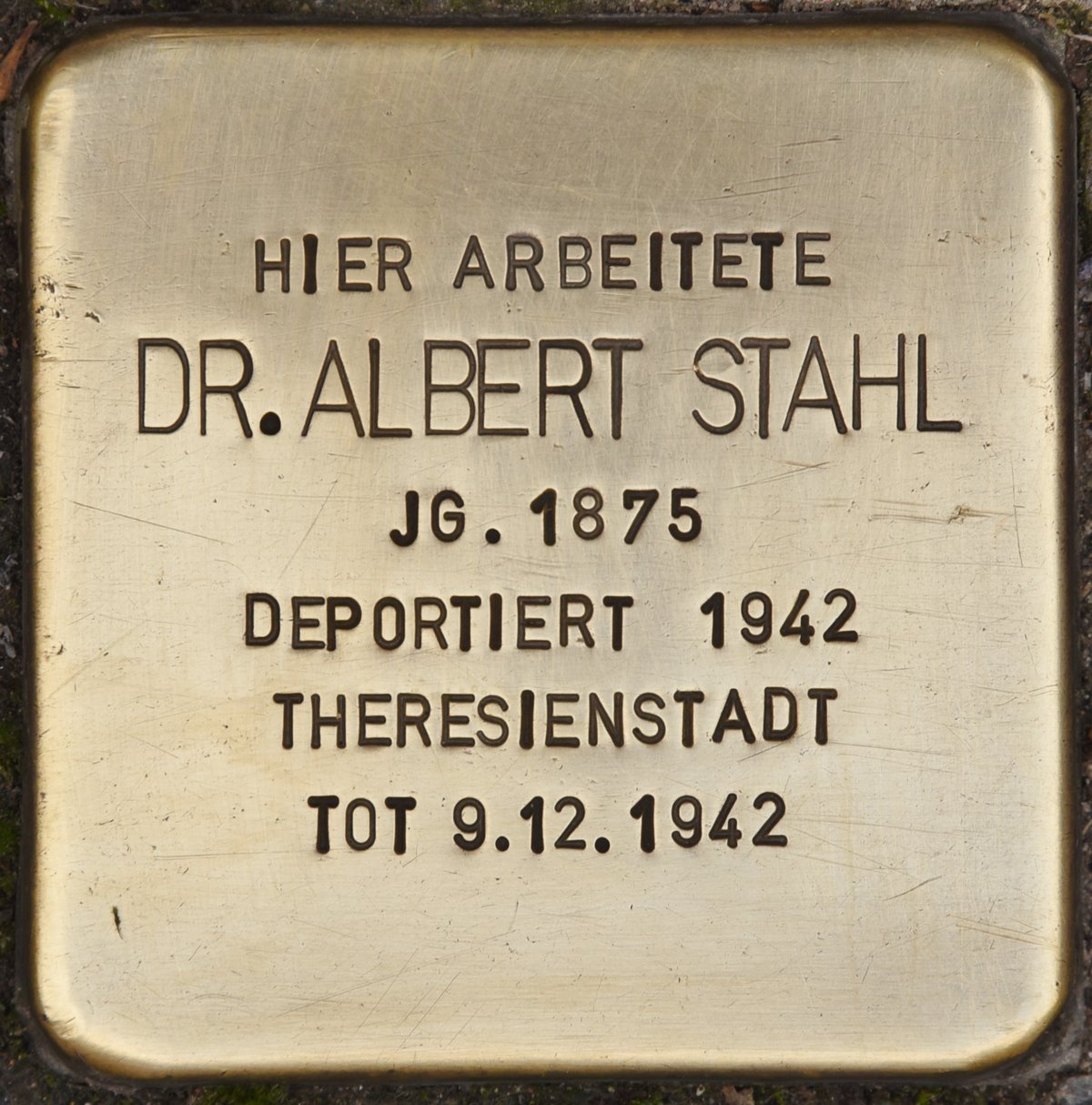
The Stolperstein dedicated to Dr. Albert Stahl in Wiesbaden, Germany, provides a profound, personal connection to Holocaust history by commemorating the life of a local Jewish physician lost to Nazi persecution. Stolpersteine—literally "stumbling stones"—are small brass plaques embedded in sidewalks throughout Europe, marking the last freely chosen residences or workplaces of victims. Initiated by artist Gunter Demnig in 1992, this grassroots memorial project is now the world’s largest decentralized Holocaust remembrance initiative, with over 100,000 stones installed—including 784 in Wiesbaden as of 2024 (Stolpersteine.eu; am-spiegelgasse.de).
Dr. Stahl’s Stolperstein is not only a tribute to his memory but also a symbol of Wiesbaden’s commitment to remembrance and education. Located in a publicly accessible area in Wiesbaden’s city center, the memorial invites reflection on the fate of the city’s Jewish community and the ongoing importance of memory culture (Wiesbaden.de; Germany.info).

The Stolperstein Project: Origins and Purpose
The Stolperstein project began in 1992 as a decentralized approach to Holocaust remembrance. Each Stolperstein is a 10 x 10 cm concrete cube with a hand-engraved brass plate, set at ground level in front of victims’ last freely chosen homes or workplaces. These stones are inspired by the Talmudic principle: “A person is only forgotten when his name is forgotten,” inviting passersby to pause and reflect (Stolpersteine.eu; folklife.si.edu).
As of 2024, Stolpersteine have been installed in over 26 countries, transforming public spaces into sites of memory and education (en.wikipedia.org; pragueviews.com).
Stolpersteine in Wiesbaden: Local Significance
Wiesbaden’s Stolperstein project, launched in 2008, is coordinated by the Arbeitsgemeinschaft Michelsberg-Spiegelgasse (AMS). With 784 stones marking 427 locations as of 2024, the project memorializes Jews and other groups targeted by the Nazis—restoring names and stories to the city’s landscape (am-spiegelgasse.de; wiesbaden-lebt.de).
Each Stolperstein is installed after thorough research, ensuring historical accuracy. Installation ceremonies are community events, often attended by relatives, residents, and city officials, reinforcing the city’s ongoing commitment to remembrance.
Visiting the Stolperstein: Hours, Access, and Tickets
Visiting Hours
Stolpersteine are public memorials embedded in city sidewalks, accessible 24 hours a day, year-round. There are no entrance fees or tickets required to visit any Stolperstein in Wiesbaden (Stolpersteine.eu). For best visibility, visit during daylight hours.
Accessibility
Most Stolpersteine are located on level, paved sidewalks and are generally accessible for wheelchair users and strollers. Some areas may have uneven surfaces, so exercise care while exploring.
Guided Tours
For deeper historical context, guided tours are available through local organizations such as the Aktives Museum Spiegelgasse (Aktives Museum Spiegelgasse). Tour schedules and bookings can be arranged through the museum or the Wiesbaden Tourist Information office.
Digital Tools
The Stolpersteine Wiesbaden app provides interactive maps and biographies, making self-guided exploration easy and informative.
Location and Navigation Tips
The Stolperstein for Dr. Albert Stahl is embedded in a sidewalk in Wiesbaden’s city center, typically at his last freely chosen address. The exact location can be found using:
- Stolpersteine Wiesbaden app
- Official Stolperstein map
- Assistance from the Wiesbaden Tourist Information Center at Marktplatz 1
Public transportation is efficient, with the “Dern’sches Gelände” stop serving the city center and main attractions.
On-Site Experience and Etiquette
- Approach Respectfully: Pause at the stone, read the inscription, and reflect on Dr. Stahl’s life.
- Customs: It is common to gently polish the stone with a cloth or leave small stones or flowers as a sign of remembrance.
- Photography: Allowed, but please be discreet and respectful of the solemn nature of the memorial.
- Behavior: Maintain a quiet, contemplative demeanor; avoid blocking sidewalks or disturbing local residents.
Community Involvement and Remembrance
Stolpersteine are funded by private sponsors—families, schools, and organizations—who contribute to research, production, and installation costs (about €120 per stone) (am-spiegelgasse.de). Regular community cleaning events, especially on International Holocaust Remembrance Day (January 27) and the anniversary of Kristallnacht (November 9), ensure the stones remain legible and honored (folklife.si.edu).
Educational outreach, including school projects and public lectures, is central to keeping the memory alive and fostering civic responsibility.
Nearby Historical Sites in Wiesbaden
Enhance your visit by exploring:
- Jewish Museum of Wiesbaden: Explores the city’s Jewish heritage (Jewish Museum Wiesbaden)
- Kurhaus Wiesbaden: Renowned for its architecture and cultural events
- Gedenkstätte am Michelsberg: Memorial listing over 1,500 Wiesbaden Jews murdered during the Nazi era
- Spa gardens and Wilhelmstrasse: Ideal for leisure and reflection
Wiesbaden Tourism offers more information on local attractions.
Practical Visitor Tips
- Plan Ahead: Use the Stolpersteine app or download maps before your visit.
- Dress Comfortably: Wear suitable shoes for walking.
- Combine Visits: Pair your Stolperstein visit with other historical or cultural sites for a richer experience.
- Accessibility: City center and most attractions are wheelchair accessible; check local conditions for specific routes.
- Weather: Wiesbaden has a temperate climate; dress accordingly.
Frequently Asked Questions (FAQ)
Are there visiting hours or entrance fees for Stolpersteine?
No, they are public memorials accessible 24/7, free of charge.
How can I find specific Stolpersteine?
Use the Stolpersteine Wiesbaden app or consult local maps and tourist information centers.
Are guided tours available?
Yes, through the Aktives Museum Spiegelgasse and other local organizations.
Can I sponsor a Stolperstein?
Yes, sponsorships are coordinated by local organizations and cost approximately €120.
Is the memorial accessible for people with disabilities?
Most sites are accessible, but check sidewalk conditions in advance.
What other attractions are nearby?
The Kurhaus, Jewish Museum, spa gardens, and Wilhelmstrasse are all within walking distance.
Listen to the full story in the app
The whole Stolperstein Dedicated To Dr. Albert Stahl,
told well.
Audio guides for 1,100+ cities across 96 countries. History, stories, and local insight — offline ready.
Verified, and shown.
Researched and written by the Audiala editorial team from historical records, architectural archives, and local expertise.
Albert Stahl in Wiesbaden: History, Visitor Information, and Nearby Attractions (2024)
Researched from Wikidata, Wikipedia & official sources · fact-checked · How we make our guides →