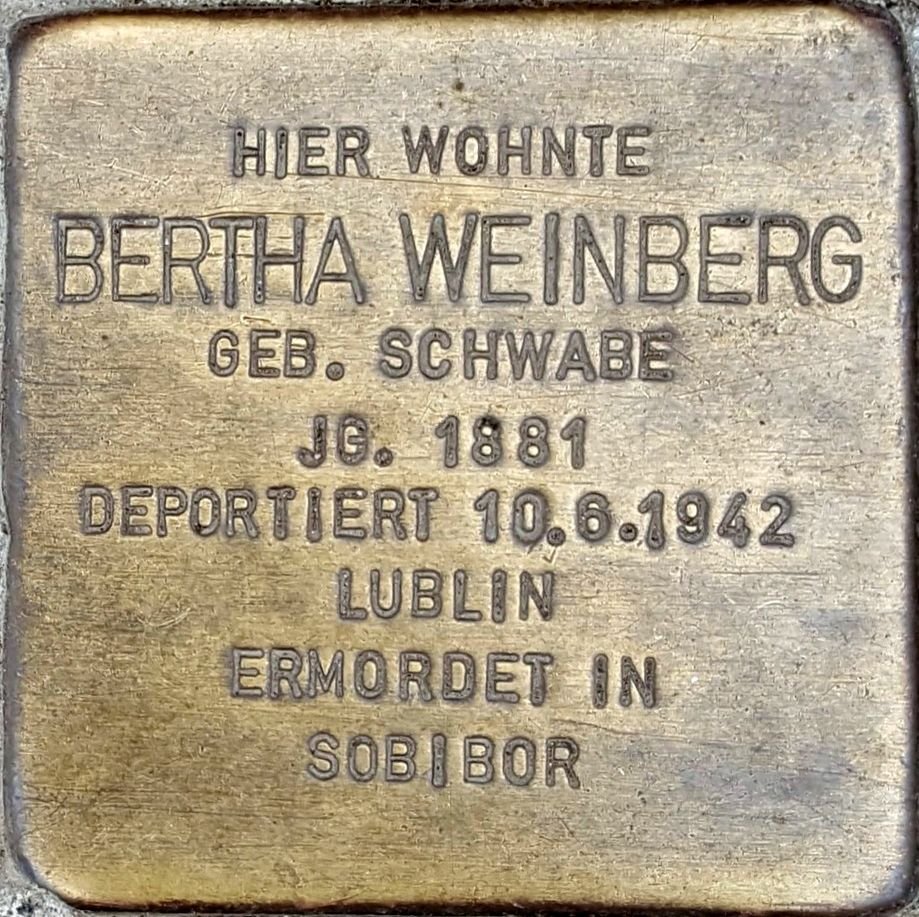
Plan and listen to Stolperstein Dedicated To Bertha Weinberg Geb. Schwabe with Audiala.
Audio guide in your pocket, itinerary in your browser. Built for the way you actually visit.
Introduction
The Stolperstein dedicated to Bertha Weinberg (geb. Schwabe) in Wiesbaden offers a powerful, personal encounter with the memory of Holocaust victims. Part of Gunter Demnig’s Stolpersteine project, these small brass plaques embedded in European sidewalks commemorate individuals at their last freely chosen residences before their persecution. In Wiesbaden—a city once home to a vibrant Jewish community—Bertha Weinberg’s Stolperstein transforms the city’s abstract historical tragedy into a tangible, personal memorial, inviting reflection and remembrance (Stolpersteine.eu; Jewiki Wiesbaden Stolpersteine).
This guide delivers all essential visitor information, including visiting hours, ticketing (none required), accessibility, cultural context, and nearby historical sites. It highlights digital tools—interactive maps, mobile apps, and photographic archives—to help you plan your visit or explore virtually. Whether you’re in Wiesbaden or connecting from afar, this resource supports a meaningful engagement with Bertha Weinberg’s legacy and the city’s Jewish heritage (Wiesbaden Stolpersteine portal; Stolpersteine-App).

History of the Stolperstein Project
Initiated by artist Gunter Demnig in 1992, the Stolpersteine (“stumbling stones”) project commemorates victims of National Socialism. Small brass plaques mark sidewalks in front of former homes, listing each victim’s name and fate. As of June 2025, over 100,000 Stolpersteine have been installed across Europe, making this the world’s largest decentralized memorial (Stolpersteine.eu). The project’s core belief is that “a person is only forgotten when his or her name is forgotten,” and each stone is a personal act of remembrance and resistance.
Bertha Weinberg: Personal and Local Significance
Bertha Weinberg was among the many Jewish residents of Wiesbaden persecuted during the Holocaust. While detailed biographical information may be limited, her Stolperstein marks her deportation or murder, offering a poignant and individual reminder of the city’s lost Jewish population (Mapcarta). Her memorial personalizes the Holocaust, bringing history to street level for residents and visitors alike.
Location, Accessibility, and Directions
- Location: The Stolperstein for Bertha Weinberg is embedded at Adelheidstraße 70, Wiesbaden.
- Accessibility: The memorial is at street level, accessible to pedestrians and wheelchair users. The area is served by Wiesbaden’s public transport, including accessible trams and buses. Wear comfortable shoes and be mindful of traffic.
To locate this and other Stolpersteine, use the Stolpersteine Wiesbaden map or the Stolpersteine-App.
Visiting Hours and Ticketing
- Hours: The Stolperstein is outdoors and accessible 24/7, year-round.
- Tickets: No tickets or permits are required. Visits are always free.
For a deeper experience, consider visiting during the hours of nearby museums, such as the sam – Stadtmuseum am Markt, open Tuesday to Sunday, 11:00–17:00.
Wiesbaden’s Jewish Heritage & Nearby Sites
Wiesbaden offers many sites that complement your Stolperstein visit:
- Jewish Museum Wiesbaden: Explore local Jewish history and culture.
- Synagogue Wiesbaden: A historical and active place of worship.
- Heinrich-Heine-Anlage: Memorial on the former synagogue grounds for over 1,500 Jewish victims (Wiesbaden.de).
- Clusters of Stolpersteine: Particularly in neighborhoods like Dichterviertel, Rheingauviertel, and Westend.
Nearby, the Stolpersteine for Kurt Weinberg, Manfred Sulzberger, and Anna Sulzberger (geb. Lieber) also provide opportunities for reflection (mapcarta.com).
Memorial Practices and Cultural Etiquette
- Respect: Avoid standing directly on the stones; approach thoughtfully and do not block sidewalks.
- Acts of Remembrance: Placing small stones or flowers is customary, as is gently cleaning the brass as a sign of respect (folklife.si.edu).
- Commemorative Dates: Special ceremonies are often held on Holocaust Remembrance Day (January 27) and the anniversary of Kristallnacht (November 9).
Visual Experience and Photography
- Photography: Allowed, but please be sensitive to the memorial’s solemnity and the privacy of local residents.
- Visual Archives: For those unable to visit, high-resolution images are available online (Wikimedia Commons).
Community Engagement and Preservation
- Volunteering: Locals and visitors can participate in cleaning events or support new Stolperstein installations.
- Reporting Issues: Use digital tools to report maintenance needs.
- Donations: The Stolpersteine project accepts donations and invites the public to sponsor new stones (Stolpersteine.eu).
Frequently Asked Questions (FAQ)
Q: Are tickets required?
A: No, visiting Stolpersteine is always free and requires no ticket.
Q: What are the best times to visit?
A: Any time (24/7); commemorative days or during museum hours offer deeper experiences.
Q: Is the site wheelchair accessible?
A: Yes, though some pavement may be uneven.
Q: Can I take photographs?
A: Yes, but please be respectful.
Q: How can I participate in remembrance?
A: Join local events, help clean the stones, or share your experience online.
Discover More
The Stolperstein for Bertha Weinberg stands as a powerful reminder that history lives in our streets—and in our everyday acts of remembrance. By visiting, sharing, and engaging—whether on foot or online—you help keep these stories alive for future generations.
Enhance your visit:
- Download the Stolpersteine-App for guided tours and interactive maps.
- Visit Stolpersteine.eu for official project information.
- Follow our social media for updates on events and additional resources.
- Share your visit, support local remembrance, and help ensure that no name is forgotten.
Listen to the full story in the app
The whole Stolperstein Dedicated To Bertha Weinberg Geb. Schwabe,
told well.
Audio guides for 1,100+ cities across 96 countries. History, stories, and local insight — offline ready.
Verified, and shown.
Researched and written by the Audiala editorial team from historical records, architectural archives, and local expertise.
Researched from Wikidata, Wikipedia & official sources · fact-checked · How we make our guides →


.jpg)