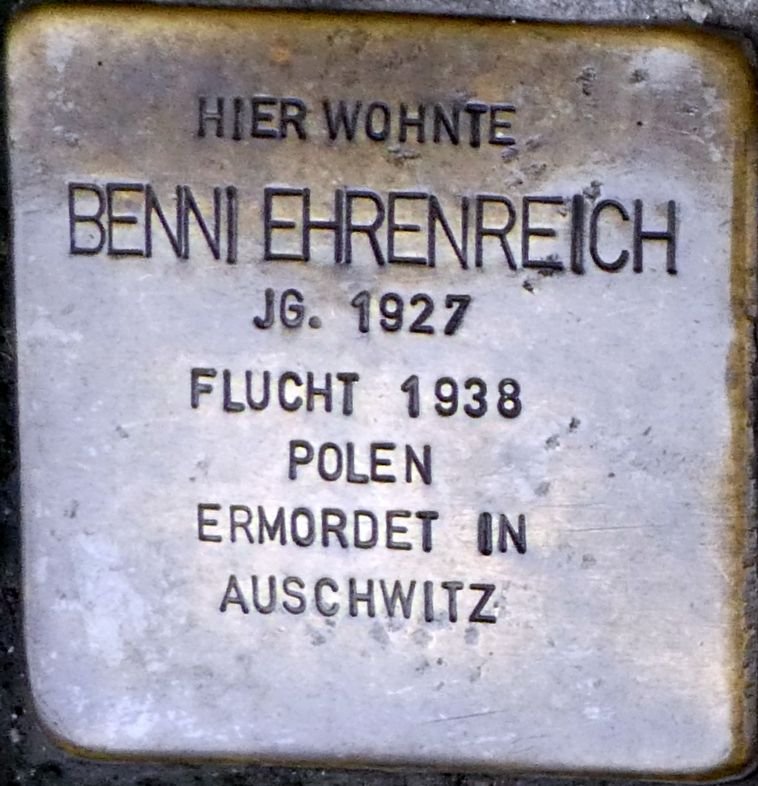
Plan and listen to Stolperstein Dedicated To Benni Ehrenreich with Audiala.
Audio guide in your pocket, itinerary in your browser. Built for the way you actually visit.
Introduction
The Stolpersteine project is one of Europe’s most significant and widespread memorials honoring the victims of National Socialism. Launched in 1992 by German artist Gunter Demnig, it places small, brass-plated stones—“stumbling stones”—into sidewalks outside victims’ last freely chosen residences or workplaces. By 2025, over 100,000 Stolpersteine have been installed across Europe, keeping alive the memory of those persecuted by the Nazis.
Wiesbaden, the capital of Hesse, has embraced this form of remembrance with hundreds of Stolpersteine, including a poignant memorial for Benni Ehrenreich at Neugasse 3. This guide offers detailed information about visiting the Benni Ehrenreich Stolperstein, including practical travel advice, historical insights, accessibility, guided tours, and cultural etiquette. Whether you’re a local resident, educator, or traveler, this resource will help you engage meaningfully with Wiesbaden’s living memorials.
(Stolpersteine Guide, Aktives Museum Spiegelgasse, Wikimedia Commons: Benni Ehrenreich Stolperstein)

Origins and Philosophy of the Stolpersteine Project
The Stolpersteine project, initiated by Gunter Demnig, is the world’s largest decentralized memorial to the victims of National Socialism. Each stone is inscribed with a victim’s name, date of birth, fate, and, if known, date and place of death. Placed in front of the last freely chosen residence or place of work, these stones return names and stories to public consciousness.
Demnig’s philosophy is best captured by the phrase: “A person is only forgotten when their name is forgotten.” The project invites passersby to literally “stumble” upon these reminders, making commemoration an active, everyday engagement instead of a distant, static monument. The grassroots nature of the initiative allows local communities, schools, and families to participate in research, funding, and installation, fostering collective responsibility for memory. (Stolpersteine Guide)
Stolpersteine in Wiesbaden: The Story of Benni Ehrenreich
Wiesbaden has played a prominent role in the Stolpersteine movement, with hundreds of stones installed across the city. The Stolperstein for Benni Ehrenreich at Neugasse 3 commemorates not only his individual fate, but also the broader tragedy experienced by the Ehrenreich family and the Jewish community in Wiesbaden.
Archival records and testimonies, such as those from Therese Gullich in 1950, document the devastation faced by the Ehrenreich family—the loss of their business, their home, and ultimately their lives. The stones for Benni, Mary, and Rosi Ehrenreich, as well as Leon Golomb, signal the destruction of family units and the erasure of community. These memorials transform abstract statistics into tangible stories, restoring individuality and humanity to history’s victims. (Wikipedia: Liste der Stolpersteine in Wiesbaden-Schierstein, Wissensrouten: Ehrenreich Family)
Visiting Hours, Tickets, and Accessibility
Visiting Hours
Stolpersteine, including Benni Ehrenreich’s, are embedded in public sidewalks and accessible 24 hours a day, year-round.
Tickets and Admission
There is no fee or ticket required—Stolpersteine are public memorials open to all.
Accessibility
Stolpersteine are installed flush with the pavement, making them generally accessible for visitors with mobility aids. Be mindful, however, of pedestrian traffic and occasional uneven surfaces. The city center is well-connected by public transportation, with street parking available but limited at peak times.
Directions and Parking
Address: Neugasse 3, 65183 Wiesbaden, Germany
Coordinates: 50.0826° N, 8.2416° E
- By foot: Easily accessible from Wiesbaden’s city center and major sights.
- By public transport: Buses and regional trains serve the area, with stops like “Luisenplatz” and “Rathaus” nearby.
- By car: Street parking is available, but public transport is recommended for convenience.
(Mapcarta)
Nearby Attractions in Wiesbaden
Combine your Stolperstein visit with other local highlights:
- Museum Wiesbaden: Art and natural history exhibitions.
- Kurhaus Wiesbaden: Historic spa house and casino.
- Gedenkstätte am Michelsberg: Holocaust memorial at the site of the destroyed synagogue.
- Nerobergbahn: Historic funicular railway with panoramic city views.
Visitor Etiquette
- Respect: Stolpersteine are sites of mourning and remembrance. Do not stand or sit on the stones.
- Remembrance: Pause to read inscriptions. Placing a small stone or flower is a sign of respect, reflecting Jewish customs.
- Photography: Allowed, but should be discreet and respectful.
- Community Engagement: Join local commemorative events, especially on memorial days.
- Documentation: Share your visit on dedicated platforms to support public memory.
Frequently Asked Questions (FAQ)
Q: Where is the Benni Ehrenreich Stolperstein located?
A: Neugasse 3, 65183 Wiesbaden, Germany. (Wikimedia Commons: Stolpersteine Benni, Mary und Rosi Ehrenreich sowie Leon Golomb, Neugasse 3 (Wiesbaden))
Q: Do I need tickets or an appointment?
A: No. Stolpersteine are public and free to visit at any time.
Q: Are guided tours available?
A: Yes. Check with the Aktives Museum Spiegelgasse or VHS Wiesbaden for schedules and languages.
Q: Is the site accessible for those with mobility challenges?
A: Yes, though some city streets may be uneven.
Q: Can I take photographs?
A: Yes, but please be respectful and avoid blocking the sidewalk.
Discover More
Visiting the Stolperstein for Benni Ehrenreich is more than a historical outing—it is an act of remembrance and engagement. These stones transform the city’s everyday landscape into a living memorial, inviting us to pause, reflect, and honor the lives lost.
Enhance your visit using digital resources like the Stolpersteine Guide App, explore Wiesbaden’s broader historical landscape, and participate in community remembrance events. By remembering names like Benni Ehrenreich, we fulfill the project’s guiding principle: that no one is forgotten so long as their name is spoken.
Plan your visit today, download the Stolpersteine Guide App, and join the community in honoring Wiesbaden’s history.
Listen to the full story in the app
The whole Stolperstein Dedicated To Benni Ehrenreich,
told well.
Audio guides for 1,100+ cities across 96 countries. History, stories, and local insight — offline ready.
Verified, and shown.
Researched and written by the Audiala editorial team from historical records, architectural archives, and local expertise.
Researched from Wikidata, Wikipedia & official sources · fact-checked · How we make our guides →



.jpg)