
Ulm Minster
UlmGermany 48° N · 9° E Updated Jul 2026
The world's tallest church tower rises from a citizens-funded Protestant minster, where Ulm's pride shows in lace-like stone and 768 steep steps.
 Photo: Bernd Dittrich / Unsplash
- Time needed
- 1-2 hours
- Entry
- Free nave entry; tower climb requires a paid ticket
Why does the tallest church tower on earth belong not to a bishop's cathedral, but to a parish church built by townspeople who had something to prove? Ulm Minster in Ulm, Germany, answers that question in stone, brick, and nerve: you step onto Münsterplatz, the spire pulls your eyes 161.5 meters upward, and the whole building seems to rise like a wager the city refused to lose. Visit for the tower climb, yes, but also for the stranger story underneath it: this is a church that tells you how a medieval trading city saw itself.
The first surprise is scale. The west tower stands 161.5 meters high, roughly the height of a 50-storey modern office block, yet the square below still feels human: market stalls, bicycle bells, the scrape of chairs from nearby cafes, then the cool dimness inside and the sound of footsteps thinning across the nave.
Look closely and the building stops behaving like a postcard. Records show the project began on 30 June 1377 as a citizens' church, financed by Ulm's own people rather than by a prince-bishop, and that civic pride still clings to the walls more strongly than piety alone. You feel it in the audacity of the tower, and also in the exposed brick on parts of the exterior, where ambition met budget and kept building anyway.
And the Minster is not finished in the neat way tourists like history to be finished. Construction halted in 1543, resumed in 1844, and reached completion in 1890, so what you see is half medieval conviction, half 19th-century rescue act. That's exactly why it's worth your time: few churches show so plainly how cities revise their dreams without giving them up.
What to see
-
The West Tower and Münsterplatz
Ulm Minster still hits you first as a piece of civic nerve: citizens began it in 1377 because their old parish church sat outside the walls, and this new one rose from merchant money and municipal pride rather than a bishop's command. Stand on Münsterplatz and look up at the west tower, 161.53 meters high, a stone needle taller than a 50-story office block, then step inside where the air cools, footsteps soften, and the light turns honey-colored through glass instead of the usual Gothic gloom. -
The Choir Stalls and Besserer Chapel
The choir changes the mood from sheer scale to close looking. Jörg Syrlin the Elder carved the choir stalls between 1469 and 1474, packing them with sibyls, philosophers, saints, and biblical figures, and the wood still catches the light like dark silk; then slip into the Besserer Chapel, where medieval glass glows in jewel tones and a tiny bespectacled St. Peter, smaller than a thumbnail, waits for the patient visitor who bothers to look properly. -
Climb, Listen, and Read the Building
Give yourself one slow circuit instead of a rushed lap: enter from the west porch, pause for the 26-meter sacrament house, then follow the south side where postwar windows from 1948 to 2018 sit inside a 15th-century shell like fresh thoughts in an old argument. Finish with the tower ascent, currently open to 102 meters, where wind slips through the tracery and the Danube, Neu-Ulm, and the flat Swabian land spread out below; on a clear day the Alps appear on the horizon like a rumor that turned out to be true.
Plan your visit
- Getting There
- Ulm Minster stands at Munsterplatz 1, right in the Altstadt. From Ulm Hauptbahnhof, walk about 1 km through Hirschstrasse to Munsterplatz in roughly 12-15 minutes, or take tram 1 or 2 to Theater and walk a few minutes; if you're driving, Parkhaus am Rathaus sits about 150 m away, while the Stockmahd/Donauhalle P+R gives you 600 spaces and an 8-minute tram ride on line 1 to Theater.
- Opening Hours
- As of 2026, the church opens 9:00-18:00 from April 1 to October 14, with Sundays usually about 10:30-17:00, then 10:00-17:00 from October 15 to March 31; during the Christmas market it shifts to 10:00-18:00, and on December 31 it closes at noon. The tower runs 9:00-17:00 in summer and 10:00-16:00 in winter, but visitors currently reach only the 102 m level, and ice can shut that section without much warning.
- Time Needed
- Give the nave 20-30 minutes if you only want the first hit of scale: stone ribs rising like a forest frozen mid-growth. Plan 60-90 minutes for the interior plus the tower climb to 102 m, and closer to 2 hours if you want the square, a coffee stop, and time to absorb the place instead of just ticking it off.
- Accessibility
- The tower has no elevator and demands 560 steps to the 102 m platform, a climb that feels closer to a 30-storey building than a church errand. For a barrier-free fallback, Stadthaus on the square offers an elevator, accessible toilet, and a live view feed from the platform; because restoration work blocks parts of the interior in 2026, call the Munstershop ahead if access details matter.
- Cost and Tickets
- As of 2026, the church interior is free, while tower tickets cost EUR 9 for adults, EUR 6 reduced, EUR 23 for families, and nothing for children under 7. Buy online or at the on-site terminal, which is card only; the UlmCard includes one free tower climb, and that saves real money if you're also using local transport and museums.
Photo Gallery

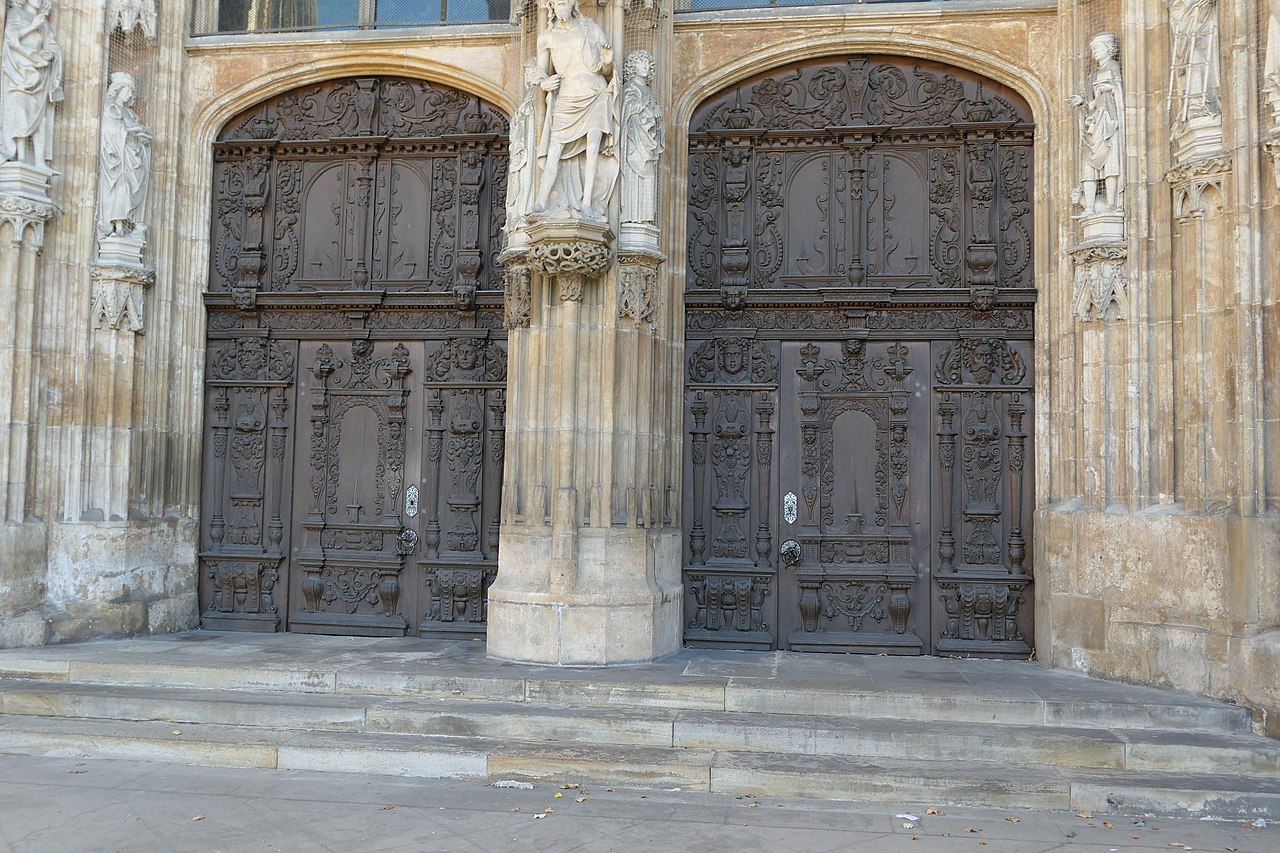


History
A City Builds the Church It Thinks It Deserves
Records show Ulm chose to build its great church for practical reasons before it became a symbol. The older parish church lay outside the city walls, and the imperial siege of 1376 exposed how dangerous that was; a church you cannot reach safely in wartime stops being a comfort and starts being a liability.
So the new Minster, begun in 1377, was an act of devotion with its sleeves rolled up. Citizens paid for it themselves, master builders from the Parler and Ensinger circles reshaped it over generations, and the result became a public statement in masonry: Ulm was wealthy, self-governing, and unwilling to pray on someone else's terms.
The turning point
The Tower That Nearly Proved Too Much
At first glance, Ulm Minster looks like a medieval masterpiece that rose according to one clear plan, aiming from the start to become the tallest church tower in the world. Most visitors accept the surface story: a Gothic church, built by devout craftsmen, completed as intended, and still standing as proof that ambition and faith marched neatly together.
But one detail doesn't fit. Records and building history show the earliest design was more modest, and local accounts describe a frightening turning point during a Sunday sermon in 1492, when stones reportedly fell from the tower vaulting into the church below; the exact year remains unconfirmed, but the memory of a structural scare is deeply rooted in Ulm. For master builder Matthäus Böblinger, what was at stake was not abstract reputation but public trust, his career, and possibly his safety in a world where a failed builder could pay dearly for overreaching.
The hidden truth is that the Minster we see now is the product of correction, compromise, and a very long second act. Böblinger pushed the project hard, Burkhard Engelberg then stepped in to stabilize the structure, and construction later halted altogether in 1543 when money ran dry, the Reformation changed priorities, and Gothic no longer felt like the style of the future. When work resumed in 1844, 19th-century builders were not simply finishing a medieval project; they were reviving it, reshaping it into a national monument and carrying it through to the completed spire in 1890.
Knowing that changes your gaze. The tower stops looking like one age speaking with one voice, and starts reading as an argument across five centuries: medieval daring below, 19th-century confidence above, and in between the memory of a city learning that pride needs engineering.
The Reformation Leaves Its Mark
Ulm adopted the Reformation by civic decision in the early 1530s, according to city and church sources, and the Minster became Protestant while still unfinished. That shift mattered physically, not just theologically: images disappeared, worship changed, and the church that had begun as a late-Gothic urban statement entered a plainer Lutheran life before its grand design had been carried through.
An Unfinished Building That Refused to Die
Construction stopped in 1543 and the half-finished Minster stood for about three centuries with its ambition exposed. Then the 19th century returned to it with Gothic Revival zeal, reopening the workshop in 1844 and completing the west tower in 1890; what many people read as pure Middle Ages is also a Romantic-era act of historical editing, executed with extraordinary skill.
Tips for visitors
Quiet Rules
This is still a working Protestant church, not a stone stage set. Keep hats off, phones silent, and your voice low; during services or concerts, sightseeing stops and Sunday entry usually opens through the side portals about 30 minutes before worship.Photo Limits
Personal photos are fine, but skip the flash; old glass and carved wood have already survived enough centuries. Tripods, monopods, commercial filming, and drones need prior permission, and the narrow spiral stair is no place to block traffic while chasing the perfect tower shot.Square Scams
Ulm feels very safe, even after dark around Munsterplatz and the walk into Fischerviertel. Trouble is small-scale: watch for fake petition collectors near busy tram stops and Christmas market crowds, and buy tower tickets only from the official shop, the on-site terminal, or the Munstershop.Where To Eat
Café Restaurant Stadthaus on Munsterplatz is the easiest mid-range stop, about EUR 15-30, with terrace seats facing the church and a good recovery point after the stairs. For coffee or a lighter break, IM Cult at Hafengasse 2 runs about EUR 10-22, while Fischerviertel Stube, 7 minutes away, is the better bet for a longer Swabian meal with fish and richer plates in the EUR 20-35 range.Best Timing
Early morning on a weekday gives you the best version of the nave: cooler air, softer light, and fewer people scraping chairs across the stone. Clear days matter more than warm ones for the tower, but in 2026 the top level stays closed and even the 102 m platform can shut in icy weather, so winter plans need backup.Pair It Well
Use Stadthaus as your second act: free exhibitions, roof terraces, toilets, and the barrier-free tower view all sit right beside the church. Then walk 5-10 minutes into Fischerviertel and along the Blau; the shift from Gothic height to leaning half-timbered houses changes the whole city from monument to lived-in place.
Watch & Explore Ulm Minster.


Frequently asked
Is Ulm Minster worth visiting?
Yes, especially if you like buildings that show a city's ego in stone. Ulm's citizens began it in 1377 as their own church, not a bishop's seat, and that civic stubbornness still reads in the five aisles, the carved choir stalls, and the tower that once ruled the skyline. Even with parts of the nave under scaffolding in 2026, the interior still gives you colored light, long echoes, and a scale that feels closer to a shipyard turned sacred than a parish church.
How long do you need at Ulm Minster?
Give it 60 to 90 minutes for a satisfying visit. That covers the free church interior and the current tower climb to 102 meters via 560 steps, a height roughly equal to a 30-story building. If you want to linger over Jorg Syrlin's choir stalls, the 26-meter sacrament house, or a midday organ pause, stretch it to two hours.
How do I get to Ulm Minster from Ulm?
From Ulm Hauptbahnhof, walk about 1 kilometer through the center to Munsterplatz, or take tram 1 or 2 to Theater and walk the last few minutes. The walk is easy: station to Hirschstrasse, then into the old center until the spire appears above the roofs. If you're driving, Parkhaus am Rathaus sits about 150 meters away, which is less than two minutes on foot.
What is the best time to visit Ulm Minster?
Early morning on a weekday is the best bet. You'll get softer light through the stained glass, fewer people on the floor, and a better chance of hearing your own footsteps rather than a tour group's. April 1 to October 14 also brings the longer opening hours, while winter can shut the 102-meter level in icy weather and Advent packs Munsterplatz with the Christmas market.
Can you visit Ulm Minster for free?
Yes, the church interior is free to enter. You only pay for the tower: 9 euros for adults in 2026, while children under 7 go free. If you have an UlmCard, the tower climb is included, which is the neatest way to dodge the extra ticket.
What should I not miss at Ulm Minster?
Don't leave without seeing the choir stalls, the Besserer Chapel glass, and the tower if your knees agree. The choir stalls, carved between 1469 and 1474, are the sort of woodwork that makes oak look almost soft, and the chapel hides a tiny St. Peter wearing glasses, a detail smaller than a matchbox that changes the whole mood of the room. Outside, step back into Munsterplatz for the full west facade, where the tracery looks so dense locals nicknamed the church a Spatzlesieb, a spatzle sieve.
Sources & attribution 12
- Ulmer Munster Official Visitor Information — Current opening hours, tower access limits, ticket prices, address, and practical visitor details.
- Ulmer Munster Official FAQ — Current restrictions, ticket buying options, toilets, luggage rules, pet policy, and accessibility fallback via the Stadthaus.
- Ulmer Munster Opening Hours — Seasonal church and tower hours, current 102 m access, and weather-related closure notes.
- Tourismus Ulm: Ulm Minster — Historic overview, citizens' church identity, tower views, and core visitor appeal.
- Deutsche Stiftung Denkmalschutz: Ulmer Muenster — Authoritative architectural classification, construction timeline, and restoration context.
- Ulmer Munster Building History — Construction phases from 1377 to 1890 and the master builders associated with the church.
- Ulmer Munster Tour of the Church — Interior highlights including the choir stalls, Besserer Chapel, sacrament house, and stained glass.
- Tourismus Ulm: UlmCard — Confirmation that the UlmCard includes the Minster tower climb.
- Ulm City: Ulmer Muenster — Civic framing of the Minster, tower atmosphere, and local historical details.
- Evangelisch.de: Medieval Glasses Detail in Ulm Minster — Source for the tiny bespectacled St. Peter detail in the Besserer Chapel glass.
- Ulm City: Theater Ulm Workshops — Transit confirmation for nearby Theater stop with tram and bus connections.
- Ulm Minster Tower Climb — 560-step climb information and practical advice for the tower ascent.
Built from cited sources · see the method · How we make our guides →
Pick up where you left off
Saved and recently read places — kept on this device only.
Photo credits (12)
- Bernd Dittrich — Unsplash License (https://unsplash.com/license) — Source: https://images.unsplash.com/photo-1717397326226-d710badeb95d
- Matea Gvozdenović — Pexels License (https://www.pexels.com/license/) — Source: https://www.pexels.com/photo/16928005/
- Stephan Waldeis — Unsplash License (https://unsplash.com/license) — Source: https://images.unsplash.com/photo-1581151114676-273bee36a5c1
- Nenia Anip — Pexels License (https://www.pexels.com/license/) — Source: https://www.pexels.com/photo/18071542/
- Bodensee und Oberschwaben - LABW - Hauptstaatsarchiv Stuttgart J 317 Nr 3 -16 — Christoph Siegfried Langbein — CC BY 4.0 (https://creativecommons.org/licenses/by/4.0/) — Source: https://commons.wikimedia.org/wiki/File:Bodensee_und_Oberschwaben_-_LABW_-_Hauptstaatsarchiv_Stuttgart_J_317_Nr_3_-16.jpeg
- Blattmasken Ulm Münster Tür 4 — Moleskine — CC BY-SA 4.0 (https://creativecommons.org/licenses/by-sa/4.0/) — Source: https://commons.wikimedia.org/wiki/File:Blattmasken_Ulm_Münster_Tür_4.jpg
- Blattmasken Ulm Münster Tür 3 — Moleskine — CC BY-SA 4.0 (https://creativecommons.org/licenses/by-sa/4.0/) — Source: https://commons.wikimedia.org/wiki/File:Blattmasken_Ulm_Münster_Tür_3.jpg
- Bodensee und Oberschwaben - LABW - Hauptstaatsarchiv Stuttgart J 317 Nr 3 -14 — Christoph Siegfried Langbein — CC BY 4.0 (https://creativecommons.org/licenses/by/4.0/) — Source: https://commons.wikimedia.org/wiki/File:Bodensee_und_Oberschwaben_-_LABW_-_Hauptstaatsarchiv_Stuttgart_J_317_Nr_3_-14.jpeg
- Blattmasken Ulm Münster Türgriff 1617 — Moleskine — CC BY-SA 4.0 (https://creativecommons.org/licenses/by-sa/4.0/) — Source: https://commons.wikimedia.org/wiki/File:Blattmasken_Ulm_Münster_Türgriff_1617.jpg
- Bodensee und Oberschwaben - LABW - Hauptstaatsarchiv Stuttgart J 317 Nr 3 -15 — Christoph Siegfried Langbein — CC BY 4.0 (https://creativecommons.org/licenses/by/4.0/) — Source: https://commons.wikimedia.org/wiki/File:Bodensee_und_Oberschwaben_-_LABW_-_Hauptstaatsarchiv_Stuttgart_J_317_Nr_3_-15.jpeg
- GER — BW — Ulm — Mattes 2022-03-12 Batch (8) — Mateus2019 — CC BY-SA 4.0 (https://creativecommons.org/licenses/by-sa/4.0/) — Source: https://commons.wikimedia.org/wiki/File:GER_—_BW_—_Ulm_—_Mattes_2022-03-12_Batch_(8).jpg
- Interior of the Ulm Minster spire with central staircase pillar (2020) — Paul Colin Hennig firstdorsal.eu — CC BY-SA 4.0 (https://creativecommons.org/licenses/by-sa/4.0/) — Source: https://commons.wikimedia.org/wiki/File:Interior_of_the_Ulm_Minster_spire_with_central_staircase_pillar_(2020).jpg
Photos may have been resized or cropped.