Plan and listen to Stolperstein Dedicated To Max Mayer with Audiala.
Audio guide in your pocket, itinerary in your browser. Built for the way you actually visit.
Introduction to the Stolperstein Dedicated to Max Mayer in Stuttgart
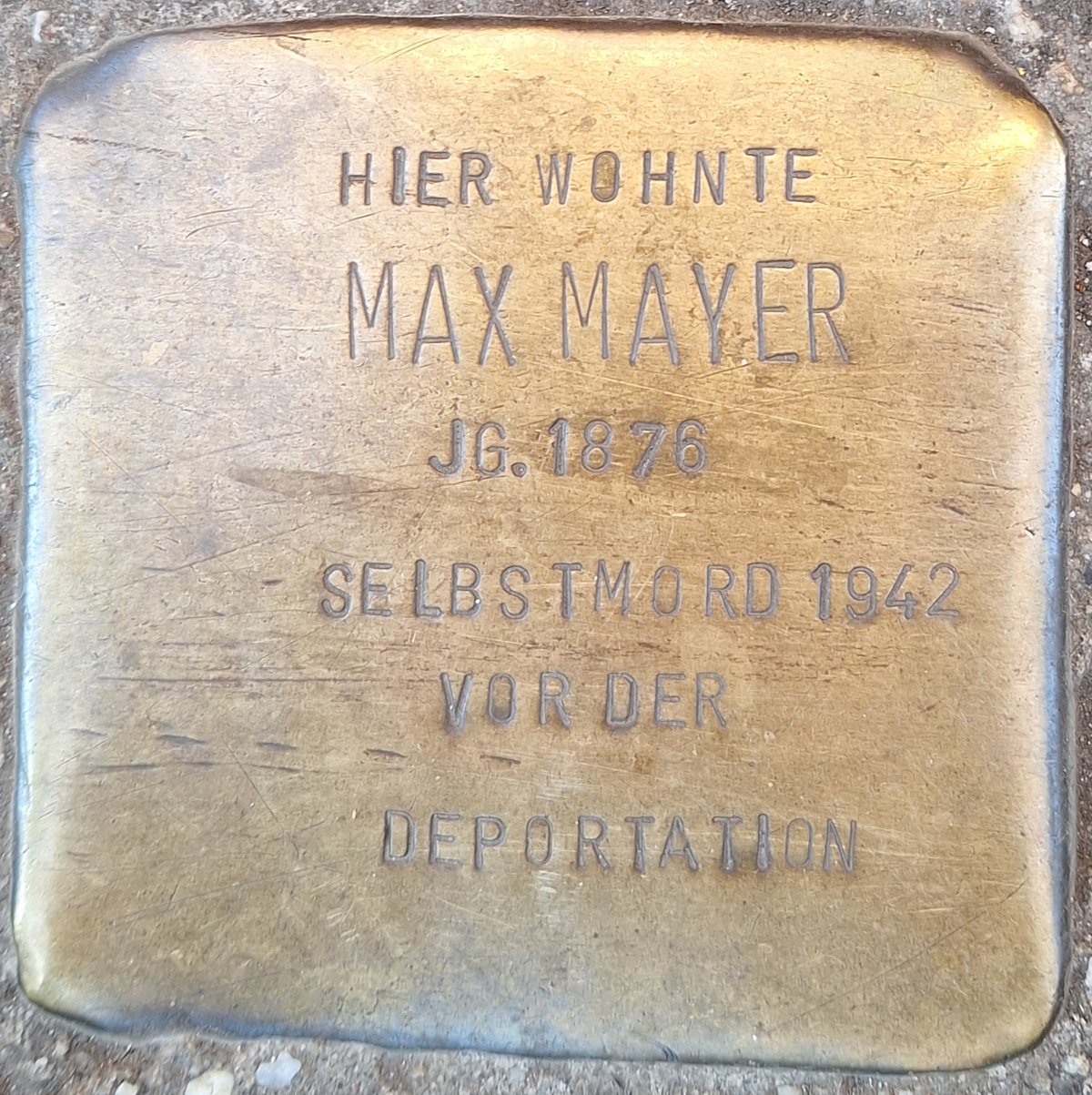
The Stolpersteine project, initiated by German artist Gunter Demnig in the early 1990s, is a unique and deeply moving form of Holocaust remembrance. These "stumbling stones"—small brass plaques embedded into sidewalks—commemorate victims of National Socialism at the places where they last lived freely. Stuttgart alone is home to over 1,000 Stolpersteine, including a stone dedicated to Max Mayer at Tübinger Straße 70 in Stuttgart-Süd. Each Stolperstein personalizes history, restoring names and stories to public spaces and fostering ongoing reflection about the Nazi era.
Visiting Stolpersteine is a powerful, accessible way to engage with history. The stones are installed in public areas, available around the clock, and require no tickets or fees. Stuttgart’s Stolpersteine initiatives involve local communities, schools, and cultural institutions in ongoing educational and commemorative efforts. This guide provides detailed historical context, comprehensive visitor information, and recommendations for enhancing your remembrance journey in Stuttgart (stolpersteine.eu, stolpersteine-stuttgart.de, stolpersteine-guide.de).

Origins and Development of the Stolpersteine Project
The Stolpersteine (stumbling stones) project began as a decentralized memorial concept by Gunter Demnig in 1992/93. Beginning in Cologne, Demnig marked the routes of deported Sinti and Roma, highlighting the absence of public memory for Nazi victims. He responded by creating brass-plated cobblestones engraved with each victim’s name and fate, set in front of their last freely chosen residence. Since its inception, more than 107,000 Stolpersteine have been installed in nearly 1,900 European municipalities, making it the world’s largest decentralized Holocaust memorial (stolpersteine.eu, stolpersteine.eu).
Artistic and Social Purpose
Each Stolperstein is a 10 x 10 cm brass plaque engraved with "Hier wohnte" ("Here lived"), followed by the victim’s name, birth date, fate, and, if known, date and place of death (stolpersteine.eu). They are installed flush with the pavement, inviting pedestrians to "stumble" across history and reflect on individual lives lost to the Nazi regime (germany.info). The project is considered a "social sculpture," actively involving artists, historians, survivors, and local communities.
Scope and Inclusion
Stolpersteine commemorate all victims of National Socialism: Jews, Sinti and Roma, political prisoners, homosexuals, Jehovah’s Witnesses, people with disabilities, and others. The stones serve as memorials rather than gravestones, uniting families and communities in remembrance, including those who survived persecution (stolpersteine.eu).
Stolpersteine in Stuttgart: Locations and Significance
Stuttgart hosts a vibrant Stolpersteine initiative, with over 1,050 stones installed citywide as of 2025 (stolpersteine-stuttgart.de). Local historians and volunteers research individual biographies and maintain a weekly portrait series in the Stuttgarter Zeitung.
A notable example is the Stolperstein for Max Mayer and his wife Sofie at Tübinger Straße 70, documented by the Stolperstein-Initiative Stuttgart-Süd (stolpersteine-stuttgart.de; tracesofwar.com).
Visiting Information: Hours, Access, and Tickets
Visiting Hours: Stolpersteine are located in public areas and can be visited at any time, free of charge. Daylight hours are recommended for visibility and safety.
Access and Tickets: No tickets or entrance fees are required; all Stolpersteine in Stuttgart are freely accessible.
Getting There: Stuttgart’s efficient public transport system connects most Stolpersteine locations. Popular sites, including the Max Mayer stone, are accessible by tram, bus, or on foot.
Guided Tours and Walking Routes
Several organizations offer guided and self-guided walking tours, including the Stolpersteine Guide app, which provides interactive maps, biographies, and audio guides. Tours enrich your understanding of both the project and individual stories.
Accessibility and Nearby Attractions
Stolpersteine are generally accessible to wheelchair users, as they are embedded in sidewalks. However, some areas may have uneven surfaces. Nearby, explore sites such as the Stuttgart State Museum, the Old Castle, and the Jewish Museum Stuttgart to complement your remembrance journey.
Educational and Cultural Impact
Stolpersteine are integrated into Germany’s culture of remembrance and widely used in educational programs (stolpersteine.eu). In Stuttgart, initiatives like "Erinnerung aufpolieren" encourage citizens to care for the stones, with schools and teachers actively participating (stolpersteine-stuttgart.de). Digital resources, including podcasts and the artistic "StolperKunst" project, further expand the project’s reach (stolpersteine-stuttgart.de).
Installation Process and Community Role
Local relatives, historians, and community groups research and apply for Stolpersteine. Stones are installed by Demnig or his team during public ceremonies, fostering collective remembrance (stolpersteine.eu). Collaborations with schools and cultural institutions ensure meaningful installations (stolpersteine-stuttgart.de).
Ongoing Challenges and Relevance
Despite its success, the Stolpersteine project faces vandalism and debate, especially regarding memorializing victims at ground level. For example, stones in Cologne were defaced in 2025, highlighting the ongoing fight against antisemitism (stolpersteine-stuttgart.de). Nevertheless, the project remains a resilient model for participatory remembrance.
Frequently Asked Questions (FAQ)
Where can I find Stolpersteine in Stuttgart?
Use the Stolpersteine Guide app or the interactive map for precise locations.
Do I need tickets to visit Stolpersteine?
No, Stolpersteine are public memorials accessible free of charge.
Are Stolpersteine accessible for wheelchair users?
Generally yes, though be mindful of local sidewalk conditions.
When is the best time to visit?
Daylight hours are preferred for visibility and safety.
Are there guided tours available?
Yes, both live and app-based tours are available.
Further Exploration and Updates
To stay informed about events, installations, and educational programs, follow the Stolperstein-Initiative Stuttgart on social media and download the Stolpersteine Guide app. For a broader understanding, combine your visit with other historical sites, such as the Jewish Museum Stuttgart and Lern- und Gedenkort Hotel Silber.
Summary and Visitor Recommendations
Exploring the Stolperstein dedicated to Max Mayer in Stuttgart is more than a historical visit—it is a deeply personal engagement with the memory of Holocaust victims and the broader narrative of persecution under National Socialism. The stones’ unrestricted accessibility and abundance of resources, including guided tours and digital maps, ensure a meaningful experience. Participation in local events and respectful acts of remembrance help keep these stories alive for future generations.
For up-to-date information, visit the Stolpersteine Stuttgart website.
Listen to the full story in the app
The whole Stolperstein Dedicated To Max Mayer,
told well.
Audio guides for 1,100+ cities across 96 countries. History, stories, and local insight — offline ready.
Verified, and shown.
Researched and written by the Audiala editorial team from historical records, architectural archives, and local expertise.
Researched from Wikidata, Wikipedia & official sources · fact-checked · How we make our guides →