Plan and listen to Stolperstein Dedicated To Julius Baumann with Audiala.
Audio guide in your pocket, itinerary in your browser. Built for the way you actually visit.
Introduction
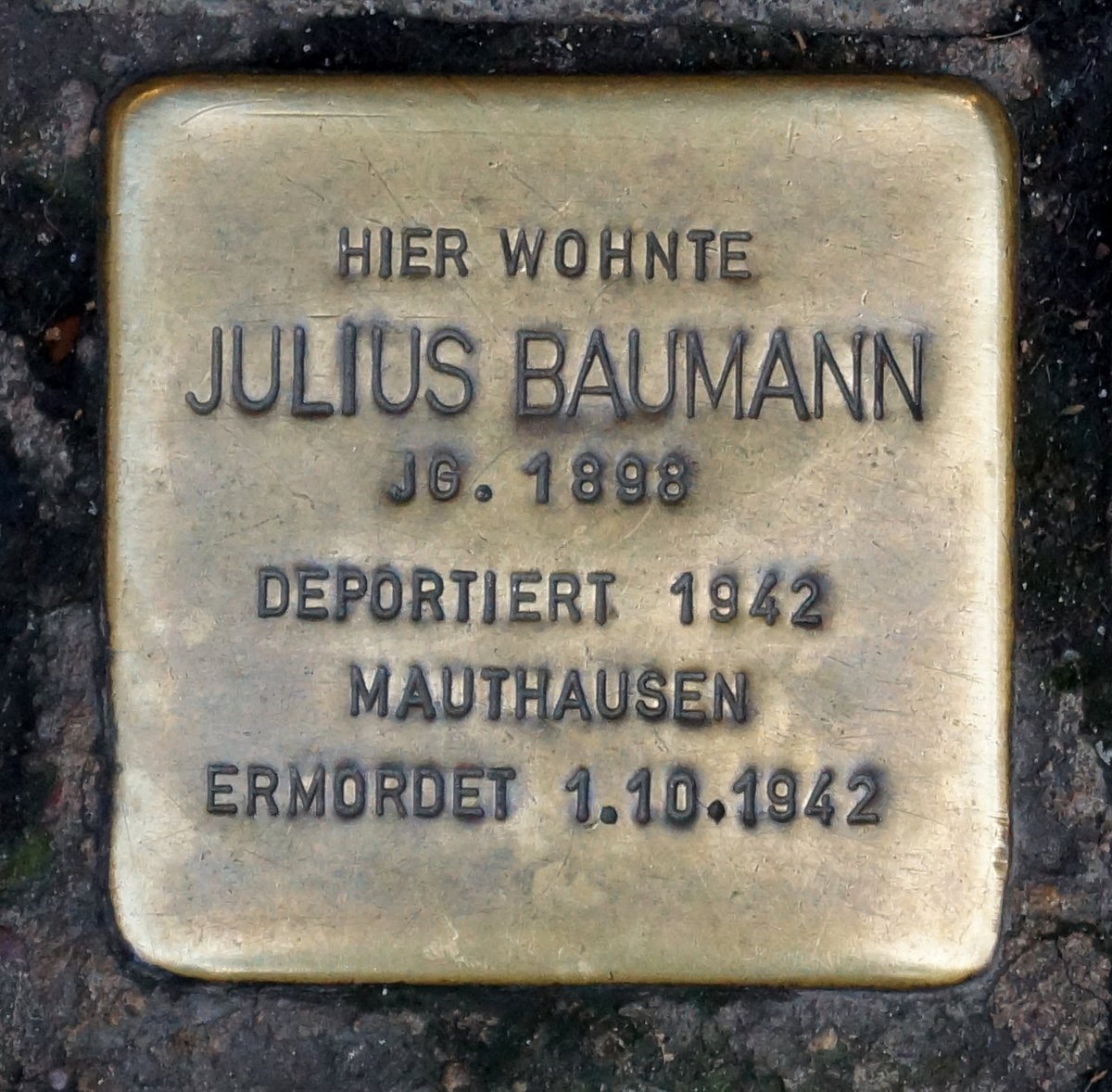
The Stolperstein dedicated to Julius Baumann in Stuttgart stands as a powerful symbol within the world’s largest decentralized memorial project honoring the victims of National Socialism. Initiated in the 1990s by artist Gunter Demnig, the Stolperstein (or “stumbling stone”) project integrates memory into everyday life by embedding brass plaques at the last chosen residences of individuals persecuted or murdered by the Nazi regime. Julius Baumann’s Stolperstein, located at Eberhardstraße 35, invites visitors to remember not only a respected Jewish athlete and community leader but also the broader histories of courage, loss, and resilience that define this historic city (Stolpersteine.eu; Germany.info).
This guide provides a detailed overview of the Stolperstein for Julius Baumann, including its historical and cultural context, location, visitor information, and resources for meaningful engagement.
- The Stolperstein Project: Origins and Philosophy
- Julius Baumann: Life, Legacy, and Persecution
- Location and Physical Description
- Visiting Information: Hours, Accessibility, and Etiquette
- Enhancing Your Visit: Resources and Nearby Sites
- Frequently Asked Questions (FAQ)
- Summary and Recommendations
- References and Further Reading

1. The Stolperstein Project: Origins and Philosophy
The Stolperstein Project, launched by Gunter Demnig in the early 1990s, aims to counter the erasure of memory inflicted by the Nazi regime. The term “Stolperstein,” meaning “stumbling stone,” refers metaphorically to the emotional and intellectual act of encountering the story of a victim in the course of daily life.
Each Stolperstein is a brass plaque inscribed with the name and fate of an individual, installed at their last freely chosen residence. The project commemorates all victims of National Socialism—Jews, Sinti and Roma, political prisoners, homosexuals, Jehovah’s Witnesses, people with disabilities, and others—restoring their names and stories to public consciousness (Stolpersteine.eu; Stolpersteine.eu FAQ).
As of 2024, over 107,000 Stolpersteine have been installed in nearly 1,900 municipalities across more than 30 European countries, making it the largest Holocaust memorial in the world (Germany.info).
2. Julius Baumann: Life, Legacy, and Persecution
Julius Baumann, born in 1898 in Stuttgart, was a respected football referee, educator, and leader in the Jewish community. Rather than escape the growing threat of Nazi rule, Baumann chose to remain in Stuttgart, supporting Jewish children and families during the years of increasing persecution. In 1942, he was deported to the Mauthausen concentration camp, where he was murdered (Fussballmuseum.de).
His Stolperstein, installed on 30 September 2008 at Eberhardstraße 35 in Stuttgart-Mitte, marks the site of his last home—a deliberate act of remembrance reconnecting his story with the present-day city (Stolpersteine-Stuttgart.de).
3. Location and Physical Description
Address: Eberhardstraße 35, 70173 Stuttgart, Germany
Coordinates: Approx. 48.7750° N, 9.1770° E
Situated in Stuttgart’s central district, the Stolperstein is embedded flush in the sidewalk outside the building that now houses the Office for Public Order. The area is easily reachable on foot and served by the “Rotebühlplatz/Stadtmitte” and “Charlottenplatz” Stadtbahn stations, as well as multiple bus lines. Public parking is available nearby (Mapcarta - Eberhardstraße 35).
Physical Description:
- Size: 10 x 10 centimeters (approx. 3.9 x 3.9 inches)
- Material: Brass plate atop a concrete block
- Inscription:
HIER WOHNTE
JULIUS BAUMANN
JG. 1898
DEPORTIERT 1942
MAUTHAUSEN
ERMORDET 1942
The brass surface is regularly cleaned by local volunteers, especially on remembrance days (Pragueviews.com).
4. Visiting Information: Hours, Accessibility, and Etiquette
Visiting Hours and Admission
- Open 24/7: The Stolperstein is a public memorial accessible year-round, at any hour.
- No Admission Fees or Tickets: Visits are always free and do not require reservations (Stolpersteine Stuttgart website).
Accessibility
- Pedestrian-friendly: Wide sidewalks, mostly level surfaces.
- Wheelchair Access: The stone is flush with the pavement; the surrounding area is accessible, but some unevenness may occur.
- Public Transport: Short walk from major Stadtbahn and bus lines.
- Parking: Several nearby public garages; parking may be limited at peak times.
Visitor Etiquette
- Pause and Reflect: Take a moment to read the inscription and remember Julius Baumann’s life and fate.
- Respect the Site: Avoid standing directly on the stone; place a small stone or flower nearby as a sign of respect in Jewish tradition.
- Photography: Discreet, non-intrusive photography is permitted for personal use.
- Cleaning: Gently clean the brass with a soft cloth if needed; this is an honored practice among visitors and locals (Stolpersteine Stuttgart – Reinigungstipps).
Preparation
- Read Julius Baumann’s Biography: Official biography page.
- Bring Supplies: Flowers, a small stone, or a soft cloth for cleaning.
- Check Event Calendars: Special commemorations, such as cleaning days or remembrance walks, are often held around Holocaust Remembrance Day (27 January) or the anniversary of installation.
Guided Tours and Digital Tools
- Guided City Walks: Offered by the Stolpersteine Stuttgart Initiative, often including the Julius Baumann Stolperstein.
- Digital Guides: Use the Audiala app or access podcasts, audio guides, and biographies via Stolpersteine Stuttgart’s website.
- Interactive Content: The “Stuttgart Heritage” app and QR codes at some sites provide further historical context.
Nearby Memorials and Attractions
- Other Stolpersteine in Stuttgart-Mitte
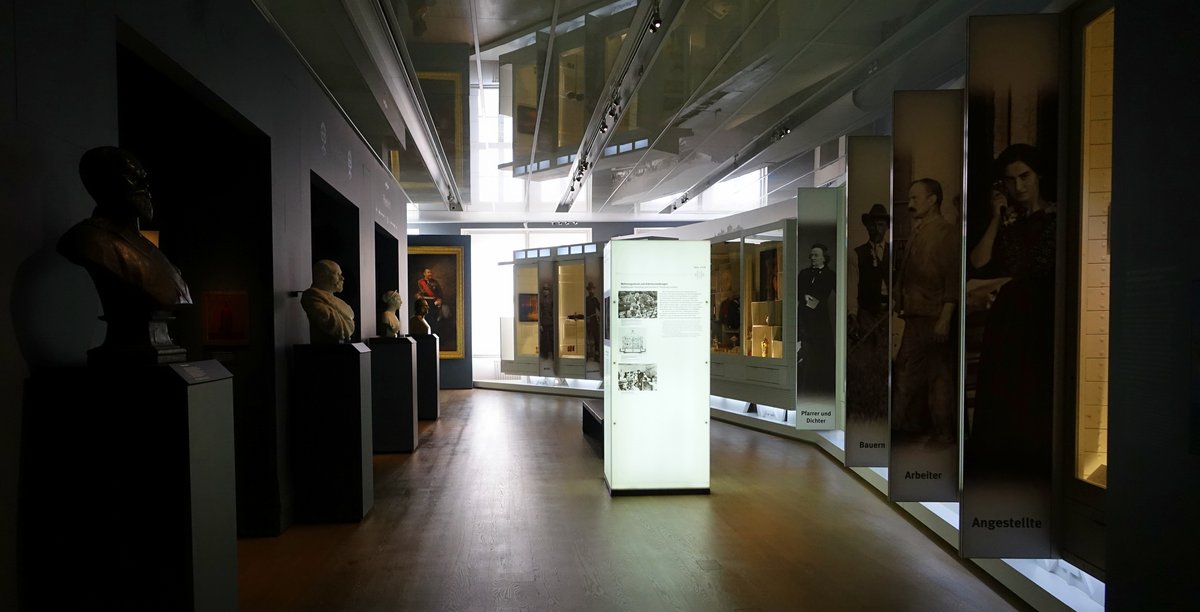
- Hotel Silber Memorial and Exhibition Center (focus on Stuttgart’s Nazi-era history)
- Merkurbrunnen Fountain, Hans-im-Glück-Brunnen
- Stuttgart Synagogue and Jewish Museum
6. Frequently Asked Questions (FAQ)
Q: What are the visiting hours for the Stolperstein for Julius Baumann?
A: The Stolperstein is accessible at all hours, every day of the year.
Q: Is there an admission fee or need for tickets?
A: No, the site is free and does not require tickets or reservations.
Q: How do I get there using public transport?
A: Take the Stadtbahn to “Rotebühlplatz/Stadtmitte” or “Charlottenplatz”; both are a short walk from Eberhardstraße 35.
Q: Are guided tours available?
A: Yes, guided walks are available through local organizations and the Stolpersteine Stuttgart Initiative.
Q: Is the location accessible to people with disabilities?
A: The area is generally accessible, though some uneven pavement may be present.
Q: Can I take photos?
A: Yes, photography for personal use is permitted. Please be discreet and respectful.
Q: How can I learn more about Julius Baumann?
A: Visit the official biography page and related resources for detailed information.
7. Summary and Recommendations
The Stolperstein for Julius Baumann in Stuttgart embodies the transformative power of individualized remembrance. By marking his last freely chosen residence, the memorial restores agency and humanity to a victim of the Holocaust, counteracting anonymity and collective forgetting (Stolpersteine.eu FAQ; Pragueviews.com).
Visitors are encouraged to prepare by learning about Baumann’s life, approach the site with quiet reflection, and utilize available digital or guided resources to enrich their understanding. Participation in this act of remembrance connects the present with history and honors not only Julius Baumann but all who suffered under National Socialism.
For further engagement, explore additional Stolpersteine in Stuttgart, visit the Hotel Silber Memorial, and stay informed about commemorative events through the Stolpersteine Stuttgart website.
Listen to the full story in the app
The whole Stolperstein Dedicated To Julius Baumann,
told well.
Audio guides for 1,100+ cities across 96 countries. History, stories, and local insight — offline ready.
Verified, and shown.
Researched and written by the Audiala editorial team from historical records, architectural archives, and local expertise.
Researched from Wikidata, Wikipedia & official sources · fact-checked · How we make our guides →