Plan and listen to Stolperstein Dedicated To Ida Rothschild with Audiala.
Audio guide in your pocket, itinerary in your browser. Built for the way you actually visit.
Introduction
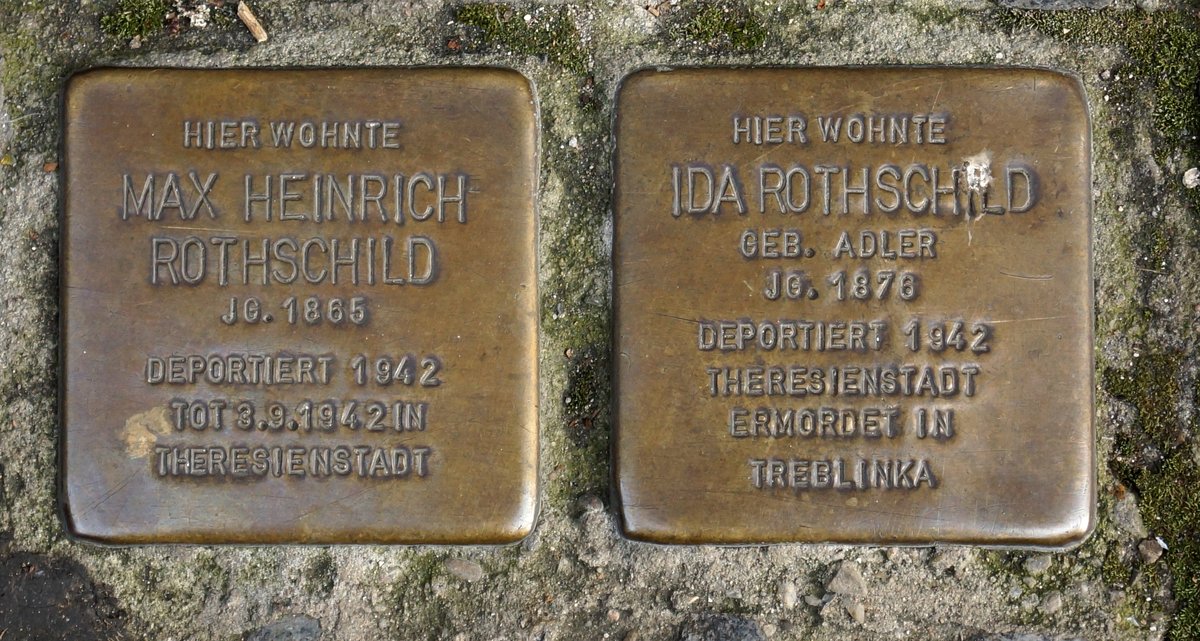
The Stolperstein dedicated to Ida Rothschild in Stuttgart is a powerful symbol of remembrance for the countless victims of Nazi persecution. These small, brass-plated stones—embedded in sidewalks throughout Europe—are part of the largest decentralized Holocaust memorial. Initiated by artist Gunter Demnig, Stolpersteine (“stumbling stones”) commemorate individuals at their last freely chosen residences, inviting passersby to pause and reflect. Ida Rothschild’s Stolperstein in Stuttgart not only tells the story of her resilience and forced migration but also connects visitors to the broader narrative of the Jewish community in the city and across Germany.
This comprehensive guide provides essential information for visiting the Ida Rothschild Stolperstein, including location, accessibility, visitor etiquette, event participation, and nearby historical sites. It also explores the historical and cultural significance of the Stolpersteine project and Ida Rothschild’s life, helping visitors engage meaningfully with this unique memorial (Stolpersteine.eu, Stolpersteine Stuttgart, Wikipedia: Stolperstein).

Ida Rothschild: Life and Family Background
Ida Rothschild, born Ida Auguste Puschke in 1894 to Hermann and Henriette Auguste (Schmidt) Puschke, was part of a prominent Jewish family in southern Germany (WikiTree). She married Herbert Rothschild, with whom she had a daughter, Margaret (Grethe). The Rothschild family was well integrated into German society, running the department store Gebrüder Rothschild in Heidelberg. Following Herbert’s death in 1924, Ida managed the store herself (CRT-II Report, p.2).
After the Nazi rise to power in 1933, Ida faced escalating persecution. Anti-Jewish laws and economic boycotts culminated in the forced sale of her business by 1938 (CRT-II Report, p.1). In the same year, she managed to flee to England, joining her daughter. Ida was officially recognized as a “refugee from Nazi oppression” in Britain and lived in Letchworth, Hertfordshire, until her death in 1947. Her story is one of courage and resilience amid great loss.
The Stolperstein Project: Origins and Philosophy
Conceived in 1992 by artist Gunter Demnig, the Stolpersteine project aims to restore memory to victims of the Nazi regime by marking their former homes, workplaces, or schools with small memorial stones (Stolpersteine.eu). Each Stolperstein is a 10 cm x 10 cm concrete cube topped with a brass plate, engraved with the name, birth year, fate, and, if known, death date and place of the victim. The project’s philosophy is to bring remembrance into everyday life, prompting spontaneous reflection.
Stolpersteine are installed across more than 1,800 cities in 28 countries, with over 100,000 stones laid to date (Wikipedia: Stolperstein). The project is sustained by local initiatives, volunteers, schools, and descendants who research, fund, and maintain the stones.
Location and Practical Information
How to Find the Ida Rothschild Stolperstein
The Stolperstein for Ida Rothschild is located in Stuttgart’s Bad Cannstatt district—home to over 130 Stolpersteine at 88 locations (Wikipedia: Stolpersteine in Bad Cannstatt). For the exact address, consult the Stolpersteine Stuttgart street directory or mapping platforms such as Mapcarta.
Visiting Hours and Tickets
Stolpersteine are public memorials embedded in sidewalks. They are accessible 24/7, free of charge, and no tickets or reservations are required.
Accessibility and Transportation
Most Stolpersteine, including Ida Rothschild’s, are at ground level on public sidewalks and generally wheelchair accessible. Stuttgart’s public transportation system—S-Bahn, U-Bahn, buses, and trams—offers convenient routes to Bad Cannstatt and other districts with Stolpersteine. Plan your journey using the city’s transit website or local apps.
Visitor Etiquette
- Approach with respect and pause to read the inscription.
- Placing a small stone or flower is a traditional gesture of remembrance.
- Photography is allowed but should be discreet and respectful.
- Avoid loud conversations, littering, or stepping directly on the stone.
Guided Tours and Special Events
Local organizations, such as the Stolperstein-Initiative Stuttgart-Ost, organize guided tours and educational events that deepen understanding of the individuals commemorated. Community remembrance events, including cleaning days and ceremonies, are held throughout the year—check the official website for schedules.
Cultural and Historical Significance
The Stolperstein for Ida Rothschild is a gateway to Stuttgart’s broader memory culture. It stands as a testament to the lives erased by Nazi persecution and the importance of public remembrance. The Stolpersteine project’s decentralized approach integrates memory into daily life, countering the erasure of history and fostering dialogue across generations (PragueViews.com, Germany.info).
Stuttgart’s Stolperstein initiatives have been recognized for their educational value and sustainability, winning awards like the Stuttgarter Bürgerpreis (Stolperstein-Initiative Stuttgart-Ost). Projects such as “StolperKunst” and “Frage-Zeichen” engage youth and foster intergenerational learning.
Ethical Guidelines for Visitors
Understanding the Memorial: Stolpersteine are not tourist attractions but sites of remembrance. Each stone marks a life lost to Nazi persecution (Cannstatter Stolperstein-Initiative).
Respectful Conduct:
- Avoid selfies or inappropriate poses.
- Do not use images for commercial purposes without permission.
- Refrain from making unrelated political statements.
Privacy and Local Sensitivities:
- Stolpersteine are often in front of private residences—respect privacy and minimize noise.
- Obtain consent before photographing identifiable individuals (Photography Rules in Germany).
Supporting Local Memory Culture:
- Participate in volunteer events or make a donation (Stolpersteine Stuttgart).
- Learn about the stories behind the names via biographies on the Stuttgart site.
Legal and Cultural Norms:
- Modest attire is recommended, especially during formal events.
- Do not damage or move Stolpersteine; this is a criminal offense (UNWTO Global Code of Ethics for Tourism).
Nearby Historical Attractions
While visiting the Ida Rothschild Stolperstein, consider exploring:
- Hotel Silber: Former Gestapo headquarters, now a memorial and documentation center (Hotel Silber).
- Stuttgart State Museum of Natural History: Offers insight into the region’s complex past.
- Other Stolpersteine: Many are clustered in Bad Cannstatt and neighboring districts.
- Killesberg Park: A tranquil spot for reflection.
Stuttgart’s robust public transport connects these sites conveniently.
Frequently Asked Questions (FAQ)
Q: Are there visiting hours for the Stolperstein Ida Rothschild?
A: No, Stolpersteine are public memorials accessible at any time.
Q: Do I need tickets to visit?
A: No tickets or reservations are required to visit Stolpersteine.
Q: Is the Stolperstein accessible for people with disabilities?
A: Yes, they are generally flush with the pavement and accessible.
Q: Is photography allowed?
A: Yes, but please be discreet and respectful of privacy.
Q: How can I participate in remembrance activities?
A: Check event listings on the Stolpersteine Stuttgart website for cleaning days, guided tours, and talks.
Listen to the full story in the app
The whole Stolperstein Dedicated To Ida Rothschild,
told well.
Audio guides for 1,100+ cities across 96 countries. History, stories, and local insight — offline ready.
Verified, and shown.
Researched and written by the Audiala editorial team from historical records, architectural archives, and local expertise.
Researched from Wikidata, Wikipedia & official sources · fact-checked · How we make our guides →