Plan and listen to Stolperstein Dedicated To Alice Haarburger with Audiala.
Audio guide in your pocket, itinerary in your browser. Built for the way you actually visit.
Introduction
The Stolperstein (or "stumbling stone") for Alice Haarburger in Stuttgart-Ost stands as a moving tribute to the countless lives disrupted by Nazi persecution. Part of Gunter Demnig’s renowned decentralized memorial project, this brass plaque embedded in the pavement at Sandbergerstraße 26 transforms an ordinary sidewalk into a site of remembrance. By honoring Alice Haarburger—a Jewish painter and prominent member of Stuttgart’s early 20th-century Jewish community—the memorial brings personal history and the broader narrative of the Holocaust into the city’s daily life (Stolpersteine.eu; Wikipedia).
This guide offers comprehensive information for visitors, including historical context, visiting hours, accessibility, and travel tips. Whether you are a local resident, a tourist, or a student of history, this resource will help you plan a meaningful and respectful visit to one of Stuttgart’s most significant sites of remembrance (Stolpersteine Stuttgart; Stuttgarter Zeitung).

Alice Haarburger: Early Life and Family Background
Alice Haarburger was born in 1891 into a Jewish family in Stuttgart. She grew up in a vibrant, assimilated community, living with her mother, Fanny Haarburger, at Sandbergerstraße 26. Alice became one of the first women to attend the Kunstakademie Stuttgart, leaving a legacy of over 150 works of art, including landscapes, still lifes, and portraits. The Haarburgers’ life in Stuttgart reflected the integration and cultural richness of the local Jewish community before the rise of National Socialism (TracesOfWar.com).
The Impact of National Socialism
With the Nazi rise to power in 1933, Jewish families like the Haarburgers faced escalating persecution: exclusion from public life, professional bans, and dispossession. The Nuremberg Laws institutionalized anti-Semitic discrimination, leading to forced property seizures and increasing threats of violence. Alice and her mother remained in Stuttgart, witnessing the disintegration of their community and enduring the daily consequences of Nazi rule (Stuttgarter Zeitung).
The Stolperstein Project: Origins and Philosophy
Gunter Demnig’s Stolpersteine project began in 1992 with the aim of creating decentralized, participatory memorials. Each Stolperstein is a 10 x 10 cm brass-capped concrete cube, inscribed with the victim’s name, birth date, fate, and—if known—date and place of death. By installing these stones at victims’ last freely chosen residences, the project brings remembrance into daily urban life, inviting passersby to pause and reflect (Stolpersteine.eu; Wikipedia; Folklife Magazine).
The Stolpersteine project commemorates all victims of Nazi persecution, not only Jews but also Roma and Sinti, political dissidents, LGBTQ+ individuals, and others. Its participatory approach—inviting sponsorship and ongoing care from local communities—helps ensure the memory of each individual remains active and present (Stolpersteine Stuttgart; Folklife Magazine).
Stolpersteine in Stuttgart: Local Engagement
Stuttgart is home to hundreds of Stolpersteine, each marking the last address of a victim. Local initiatives, such as Initiative Lern- und Gedenkort Hotel Silber e.V., and educational projects like "StolperKunst" and the "Podcast Gedenkworte," infuse the stones with ongoing meaning. The city’s official directory and interactive map make it easy for visitors to locate Stolpersteine and learn about the lives they commemorate (Stolpersteine Stuttgart; StolperKunst).
Visiting the Stolperstein for Alice Haarburger
Location and Accessibility
- Address: Sandbergerstraße 26, 70184 Stuttgart-Ost, Germany
- Public Transport: Reachable via S-Bahn and U-Bahn; stops “Stöckach” (U1, U2, U14) and “Bergfriedhof” (bus 42, 45) are nearby.
- On Foot/Bike: The area is pedestrian- and bike-friendly.
- By Car: Limited street parking available; public transport is recommended.
Physical Description
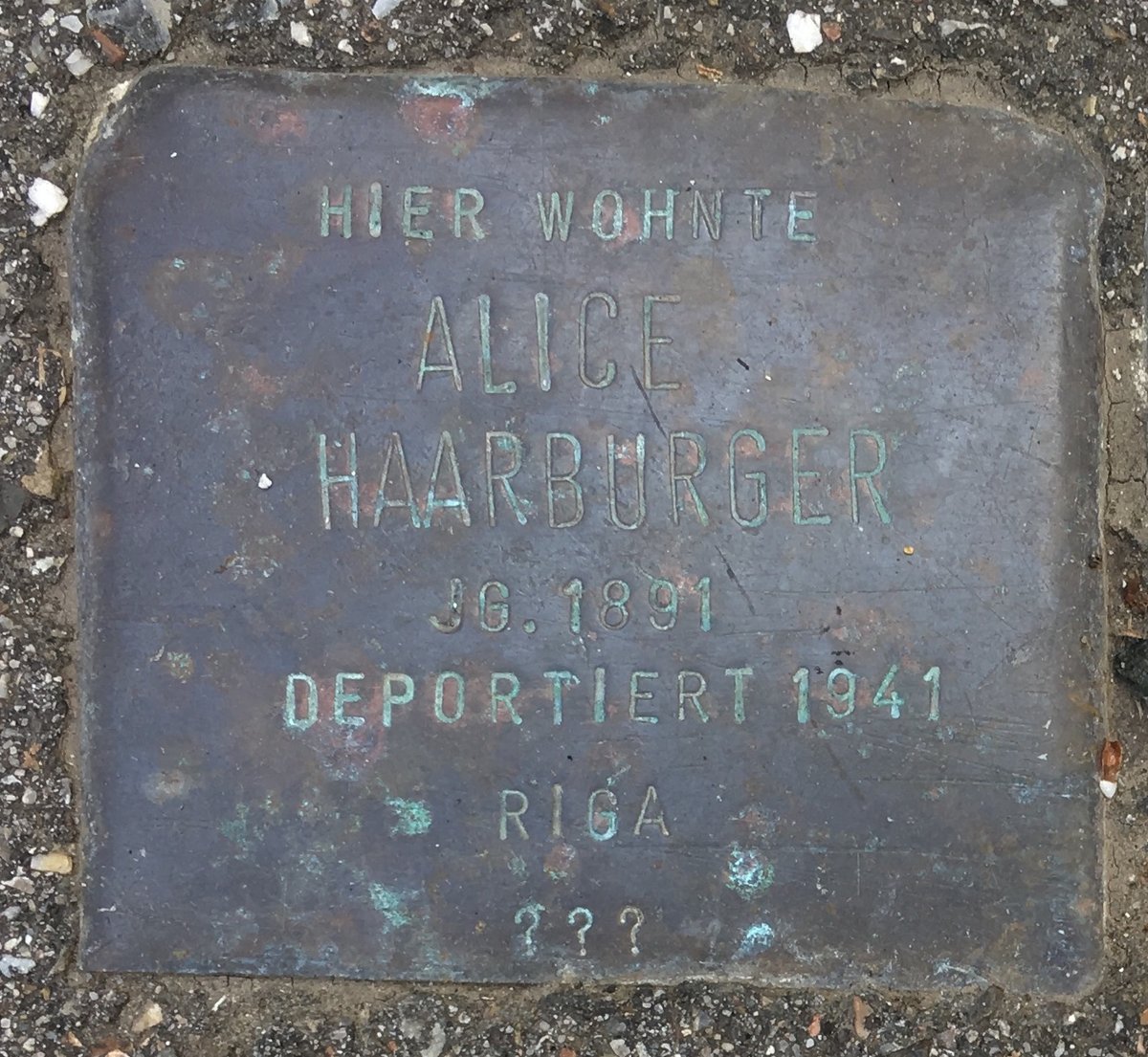
The Stolperstein for Alice Haarburger is a square, brass-plated plaque inscribed as follows (translated):
HIER WOHNTE
ALICE HAARBURGER
JG. 1891
DEPORTIERT 1941
RIGA
ERMORDET 26.3.1942
The stone lies flush with the pavement at the entrance of her last residence, inviting both spontaneous and intentional acts of remembrance (Stolpersteine Stuttgart).
Visiting Hours and Tickets
- Open 24/7: As a public memorial, the Stolperstein is accessible at all times.
- No Tickets Required: Visiting is free of charge.
Best Time to Visit
Daylight hours are best for reading the inscription. Weekdays are generally quieter, allowing for a more reflective visit.
Accessibility Notes
The stone is ground-level and accessible, but the pavement may be uneven. Visitors with mobility concerns should take appropriate care.
Enhancing Your Visit
- Guided Tours: The Stolperstein-Initiative Stuttgart-Ost and other local groups offer tours and educational events (Stolpersteine Stuttgart-Ost).
- Self-Guided Exploration: Use the Stolpersteine Stuttgart map and biographies for context.
- Commemorative Acts: Polishing the brass or leaving stones or flowers are respectful traditions (Stolpersteine Stuttgart – Erinnerung aufpolieren).
Nearby Memorials and Points of Interest
- Other Stolpersteine: Commemorating Fanny Haarburger and Emma Hess at the same address.
- Alice-Haarburger-Staffel: A memorial stairway honoring Alice Haarburger since 1987, located nearby.
- Art Exhibitions: Alice Haarburger’s works are displayed at the Kunstmuseum Böblingen, Stadtarchiv Stuttgart, and Atelierhaus Bund Bildender Künstlerinnen Württemberg e.V. (Stolpersteine Stuttgart).
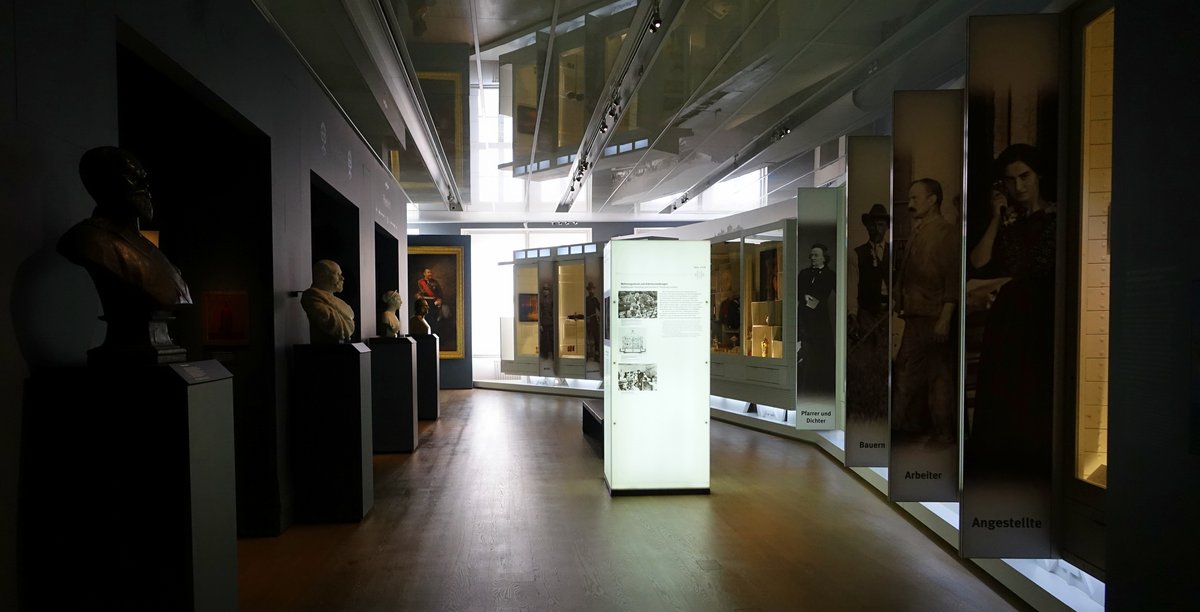
- Jewish Museum Stuttgart: Offers broader context on the city’s Jewish heritage.
- Hotel Silber Memorial: Focuses on Nazi-era history and remembrance.
Educational and Cultural Significance
The Stolperstein for Alice Haarburger is part of a powerful tradition of personalized, decentralized Holocaust remembrance. It not only commemorates a single life but stands as a testament to the resilience of memory and the importance of confronting history in everyday spaces.
Educational initiatives use the Stolperstein as a starting point for workshops, research, and dialogue—sometimes with participation from relatives like survivor Eva Weyl. Digital resources, including museum-digital, and high-quality images of the stone and Alice Haarburger’s artwork, further enrich the visitor experience.
Frequently Asked Questions (FAQ)
Where is the Stolperstein for Alice Haarburger located?
At Sandbergerstraße 26, 70184 Stuttgart-Ost, Germany.
When can I visit?
Anytime—24 hours a day, free of charge.
Is it accessible for people with disabilities?
Generally yes, but the pavement may be uneven.
Are guided tours available?
Yes, local groups offer tours; check the Stolperstein-Initiative Stuttgart-Ost website for schedules.
Can I take photographs?
Yes, discreet photography is encouraged to support awareness and remembrance.
Key Facts Table
| Detail | Information |
|---|---|
| Name | Alice Haarburger |
| Year of Birth | 1891 |
| Date of Deportation | 1 December 1941 |
| Place of Deportation | Riga Ghetto |
| Date of Death | 26 March 1942 |
| Stolperstein Location | Sandbergerstraße 26, 70184 Stuttgart-Ost |
| Nearby Memorials | Alice-Haarburger-Staffel; Stolpersteine for Fanny Haarburger & Emma Hess |
| Accessibility | Public transport, on foot, by bike; ground-level installation |
| Further Information | Stolpersteine Stuttgart |
Ongoing Impact and Challenges
The Stolpersteine project continues to expand, with active community involvement and new stones added each year. Challenges remain—including incidents of vandalism and debates over memorialization—but the stones’ presence in everyday spaces ensures that remembrance of victims like Alice Haarburger remains a living, evolving commitment (Wikipedia; Stolpersteine Stuttgart).
Discover More
Plan your visit to the Stolperstein for Alice Haarburger at Sandbergerstraße 26 today. For more information on guided tours, biographies, and remembrance events, visit the Stolperstein-Initiative Stuttgart-Ost website. Enhance your experience by downloading the Audiala app for audio guides and exploring related historical sites across Stuttgart. Stay connected with us on social media for the latest news and stories about the Stolpersteine and other memorial projects.
Listen to the full story in the app
The whole Stolperstein Dedicated To Alice Haarburger,
told well.
Audio guides for 1,100+ cities across 96 countries. History, stories, and local insight — offline ready.
Verified, and shown.
Researched and written by the Audiala editorial team from historical records, architectural archives, and local expertise.
Researched from Wikidata, Wikipedia & official sources · fact-checked · How we make our guides →