Plan and listen to Pragfriedhof Stuttgart with Audiala.
Audio guide in your pocket, itinerary in your browser. Built for the way you actually visit.
Introduction to Pragfriedhof Stuttgart and Its Importance
Pragfriedhof Stuttgart is one of the city’s largest and most historically significant cemeteries, offering a harmonious blend of cultural heritage, striking architecture, and peaceful green space. Established in the early 19th century, it serves both as a final resting place for notable figures and as a living museum of architectural and artistic styles. Winding paths, tree-lined avenues, and artistic monuments reflect the ideals of the 19th-century garden cemetery movement, making it a place for reflection, learning, and serenity. The cemetery also honors Stuttgart’s multicultural and interfaith history, with sections dedicated to Jewish heritage—including a Holocaust memorial—and the Russian Orthodox Church of St. Alexander Nevsky. Besides its historical and cultural value, Pragfriedhof functions as an urban oasis, supporting biodiversity and offering a tranquil retreat amid the city’s bustle.
Visitors enjoy free entry, generous opening hours from early morning to sunset, and easy accessibility via public transport (notably U-Bahn line U15, "Pragfriedhof" station). Guided tours are available, providing deeper insights into the site’s history, art, and notable burials. Whether you are drawn by history, architecture, or the peaceful atmosphere, Pragfriedhof Stuttgart invites exploration and contemplation. For comprehensive visitor information and historical background, see bestattung-information.de, stuttgart.de, and stuttgart-tourist.de.


Willkommen am Pragfriedhof Stuttgart – Ein historischer Ort zum Entdecken
Der Pragfriedhof in Stuttgart ist nicht nur eine bedeutende Begräbnisstätte, sondern auch ein faszinierendes historisches und kulturelles Denkmal. In diesem Artikel finden Sie die wichtigsten Informationen zu Öffnungszeiten, Eintritt, besonderen Sehenswürdigkeiten und praktischen Tipps für Ihren Besuch.
Besucherinformationen: Öffnungszeiten, Tickets und Anfahrt
Der Pragfriedhof ist täglich geöffnet. Die regulären Besuchszeiten sind von 7:00 bis 19:00 Uhr (im Winterhalbjahr bis 17:00 Uhr). Der Eintritt ist kostenfrei. Besucher können den Friedhof barrierefrei erreichen, mit ausreichend Parkmöglichkeiten und einer guten Anbindung an den öffentlichen Nahverkehr (U-Bahn-Station "Pragfriedhof" [U15], sowie mehrere Buslinien in der Nähe des Haupteingangs).
Geschichte und Entwicklung des Pragfriedhofs
Gründung und frühe Entwicklung (1823–1876)
Der Pragfriedhof wurde 1823 außerhalb der damaligen Stadtgrenzen gegründet, um den gestiegenen Bedarf an Begräbnisstätten zu decken und den hygienischen Anforderungen jener Zeit Rechnung zu tragen (bestattung-information.de). Zu Beginn war er klein, wurde jedoch mehrfach erweitert. Zwischen 1873 und 1876 wurden durch Architekt August Beyer wesentliche Erweiterungen und neue Gebäude, wie ein Verwaltungsgebäude und ein Leichenhaus, realisiert.
Architektonische Meilensteine und Modernisierung (1877–1907)
1877 entstand der israelitische Friedhofsteil, der heute unter Denkmalschutz steht und ein Mahnmal für die Opfer der NS-Zeit enthält (bestattung-information.de; iajgscemetery.org). Zwischen 1905 und 1907 wurde die Jugendstil-Feierhalle mit dem städtischen Krematorium von Wilhelm Scholter erbaut – bis heute das einzige städtische Krematorium in Stuttgart (stuttgart.de).
Erweiterungen und heutige Struktur
1922 wurde der Pragfriedhof Teil des Stadtbezirks Stuttgart-Nord. Nach dem Zweiten Weltkrieg kamen weitere Bereiche hinzu, darunter 1952 ein anonymes Urnengrabfeld sowie 2003 das Feld für fehlgeborene Kinder ("Kleinste der Kleinen") (stuttgart.de). Heute umfasst der Friedhof etwa 21 Hektar, beherbergt ca. 29.000 Grabstellen und ein Kolumbarium. Die orthodoxe Kirche Alexander Nevskyj ist ein weiteres architektonisches Highlight.
Der jüdische Friedhofsteil und Gedenkkultur
Der israelitische Teil, ab 1874 angelegt, ist ein bedeutendes Zeugnis jüdischer Geschichte in Stuttgart. Über 2.300 dokumentierte Grabsteine (Stand 1991) und das Holocaust-Mahnmal machen ihn zu einem zentralen Erinnerungsort (iajgscemetery.org).
Grabstätten bedeutender Persönlichkeiten
Der Pragfriedhof ist die letzte Ruhestätte vieler bekannter Persönlichkeiten, darunter:
- Eduard Mörike (Dichter)
- Ferdinand Graf von Zeppelin (Luftschiffpionier)
- Anna Sutter (Opernsängerin)
- Claire Waldoff (Kabarettistin und Sängerin der 1920er Jahre)
Diese Gräber sind beliebte Anlaufstellen und Teil der lebendigen Stadtgeschichte (stuttgart.de).
Tipps für Besucher: Sehenswertes und besondere Fotospots
Die parkähnliche Gestaltung mit schönen Alleen, die Jugendstil-Feierhalle, die orthodoxe Kirche Alexander Nevskyj und der israelitische Friedhofsteil bieten zahlreiche Fotomotive und laden zu Spaziergängen ein.
Veranstaltungen und Führungen
Regelmäßige thematische Führungen vermitteln Geschichte und Architektur des Friedhofs. Aktuelle Termine finden Sie auf der offiziellen Website der Friedhöfe Stuttgart.
FAQ – Häufig gestellte Fragen zum Pragfriedhof
Wann ist der Pragfriedhof geöffnet?
Täglich von 7:00 bis 19:00 Uhr (im Winter bis 17:00 Uhr).
Gibt es Eintrittskosten?
Der Eintritt ist frei.
Ist der Pragfriedhof barrierefrei?
Ja, die Anlage ist weitgehend barrierefrei.
Sind Führungen möglich?
Ja, regelmäßig nach Voranmeldung.
Wie komme ich mit öffentlichen Verkehrsmitteln hin?
U-Bahn-Linie U15 (Haltestelle "Pragfriedhof") und mehrere Buslinien.
Verwandte Sehenswürdigkeiten in Stuttgart
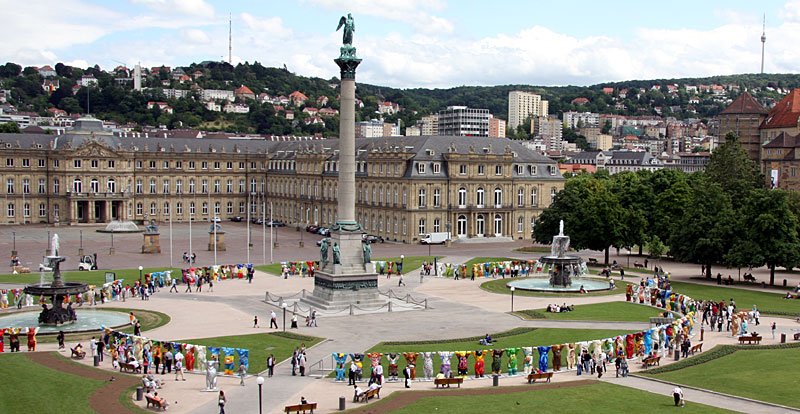
Weitere Empfehlungen: Schlossplatz, Altes Schloss und der Waldfriedhof für einen umfassenden Einblick in die Stadtgeschichte.
Fazit: Ein lohnender Besuch für Geschichts- und Kulturinteressierte
Pragfriedhof Stuttgart vereint Geschichte, Architektur, Kultur und Natur zu einem einzigartigen Erlebnis – sei es beim ruhigen Spaziergang oder einer informativen Führung.
Quellen und weiterführende Links:
- bestattung-information.de – Pragfriedhof
- stuttgart.de – Friedhöfe in Stuttgart
- iajgscemetery.org – Israelitischer Friedhof Pragfriedhof
Discover Pragfriedhof Stuttgart: Architectural and Artistic Highlights with Visitor Information
Pragfriedhof Stuttgart is not only a major cemetery but also an open-air museum of architecture and art. Established in 1873, its 20-hectare grounds invite exploration of historic monuments, natural beauty, and cultural heritage.
Architectural Layout and Cemetery Design
The layout exemplifies the 19th-century garden cemetery movement, with winding paths and tree-lined avenues, blending monumental architecture with a park-like atmosphere (Wanderlog). The ornate main entrance and semi-circular pathways encourage exploration.
The Central Chapel: A Neo-Romanesque Gem
The central chapel, built in 1876, features rounded arches, robust stonework, a prominent bell tower, and vibrant stained glass. It remains central to funeral services and commemorations.
Mausoleums and Family Tombs
A variety of mausoleums and tombs display styles from Art Nouveau to Neo-Gothic and Neo-Classical, reflecting Stuttgart’s architectural evolution.
Sculptural Art and Memorials
The cemetery is noted for its marble and bronze statues—angels, mourning figures, and allegories—highlighting changing attitudes toward remembrance.
Jewish Section and Memorials
The Jewish section, established in 1873, contains gravestones with Hebrew inscriptions and traditional symbols, as well as a Holocaust memorial (Wanderlog).
Artistic Highlights: Notable Graves
Noteworthy graves include those of Theodor Heuss and other prominent figures, often marked by personalized artistic elements.
Landscape Architecture and Botanical Features
Mature trees, seasonal flowers, benches, and water features provide a tranquil, reflective setting.
Visiting Pragfriedhof Stuttgart: Practical Information
- Hours: Daily, typically 8:00 AM to 6:00 PM (seasonal variations possible).
- Tickets: Free entry.
- Accessibility: Mostly paved paths; some older areas may be uneven.
- Guided Tours: Available seasonally via Stuttgart tourism office.
- Photography: Permitted; respect ongoing services.
- Nearby Attractions: Close to Feuersee and the city center.
Accessibility and Visitor Tips
Most main paths are wheelchair accessible. Comfortable shoes are recommended. Please follow cemetery etiquette and maintain a respectful demeanor.
Frequently Asked Questions (FAQ)
Is there an entrance fee?
No, entry is free.
Best times to visit?
Spring and autumn for beautiful foliage; mornings for quiet reflection.
Are guided tours offered?
Yes, seasonally via Stuttgart tourism.
Is it accessible for wheelchair users?
Main paths are accessible, some areas may be uneven.
Are pets allowed?
Generally discouraged to maintain solemnity.
Discover More
Download the Audiala app for guided tours and follow our channels for updates.
Cultural, Social, and Ecological Significance
Architectural Heritage and Artistic Value
The cemetery’s 21 hectares make it Stuttgart’s third largest by area and the largest by number of graves (approx. 29,000) (Stuttgart Tourist). Architecturally, it features cross-shaped axes, the Jugendstil crematorium by Wilhelm Scholter (1907), and the Russian Orthodox Church of St. Alexander Nevsky (Wikipedia). Historicist buildings and the Brutalist celebration hall below the crematorium show the evolution of funerary architecture (Travel Tomorrow).
Resting Place of Notable Figures
Notable burials include:
- Willi Baumeister (Modernist painter)
- Eduard Mörike (Poet)
- Anna Sutter (Opera singer)
- Eduard Otto Moser (Industrialist)
(Stuttgart Tourist)
Multicultural and Interfaith Dimensions
The Israelite section and the Russian Orthodox chapel reflect Stuttgart’s diversity (Wikipedia; Malkas Arthistory).
Evolving Role in Urban Life
Pragfriedhof is now integrated into Stuttgart’s urban fabric, valued as a green space and for its proximity to attractions like Stuttgart Library and Killesberg Park (Travel Tomorrow).
Memorialization and Social Memory
Memorials, such as the burial site for miscarried children (2003), show changing social attitudes (Stuttgart Tourist).
Educational and Cultural Engagement
Guided tours, school visits, and exhibitions promote ongoing learning (Wikipedia).
Urban Green Space and Biodiversity
The cemetery’s mature trees and plant life support biodiversity and a stable microclimate (Malkas Arthistory).
Environmental Stewardship
Sustainable management and integration into city planning highlight Pragfriedhof’s ecological value (Stuttgart Tourist).
Quiet Recreation and Well-being
The tranquil setting offers a refuge for walking, contemplation, and mental well-being (Travel Tomorrow).
Practical Visitor Information
- Visiting Hours: Weekdays from 07:15, Sundays/holidays from 08:00 (Stuttgart City).
- Tickets: Free entry.
- Guided Tours: Bookable via Stuttgart Tourist (Stuttgart Tourist).
- Accessibility: Accessible by U5, U7, U15; most paths are flat, some uneven.
- Etiquette: Maintain respect and low noise.
- Photography: Allowed for personal use, with discretion.
Nearby Attractions and Travel Tips
Combine your visit with the Stuttgart Library or Killesberg Park. Public transport makes these sites easy to reach.
Frequently Asked Questions (FAQ)
Q: What are the visiting hours?
A: Weekdays from 07:15, Sundays/holidays from 08:00.
Q: Is there an entry fee?
A: No, entry is free.
Q: Are guided tours available?
A: Yes, bookable via Stuttgart Tourist.
Q: How do I get there?
A: U5, U7, and U15 public transport lines.
Q: Is the cemetery accessible for people with mobility issues?
A: Most paths are flat, but some areas are uneven.
Q: Can I take photographs?
A: Yes, for personal use; be respectful.
Summary of Visiting Information and Key Highlights
Pragfriedhof Stuttgart is a vibrant cultural and historical landmark encapsulating the city’s rich past, architectural evolution, and social diversity. Its extensive grounds, notable personalities, and integration as a green oasis make it a must-see for visitors. Free admission, accessible location, and regular guided tours enhance the experience. Plan your visit, download the Audiala app for audio tours, and follow us for updates on events and cultural activities. Refer to bestattung-information.de, stuttgart.de, and stuttgart-tourist.de for more information.
Listen to the full story in the app
The whole Pragfriedhof Stuttgart,
told well.
Audio guides for 1,100+ cities across 96 countries. History, stories, and local insight — offline ready.
Verified, and shown.
Researched and written by the Audiala editorial team from historical records, architectural archives, and local expertise.
Researched from Wikidata, Wikipedia & official sources · fact-checked · How we make our guides →