
Place
Germany Updated Jul 2026
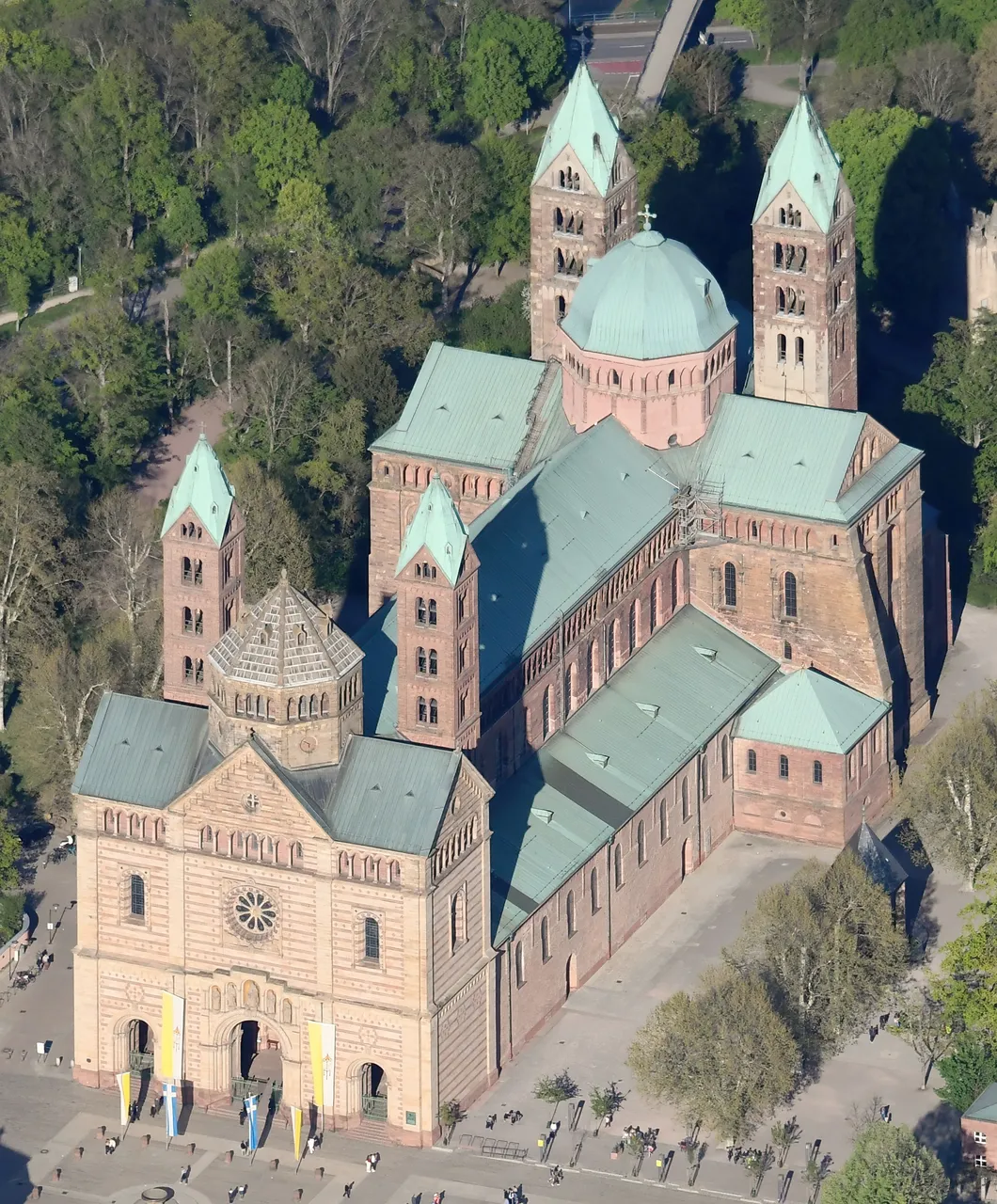
Bells roll across red sandstone, then the smell of river water drifts in from the Rhine: Speyer, Germany, feels grand and oddly intimate at the same time. One street gives you emperors in a UNESCO cathedral; the next drops you at a 12th-century Jewish ritual bath sunk deep into the earth. Few small German cities carry so much weight so casually.
 Photo: Mario Tabarra / Pexels
Built from cited sources · see the method · How we make our guides →
Speyer’s scale is part of the shock. The cathedral, begun in 1030 by Conrad II, still dominates the skyline with the blunt confidence of imperial architecture, yet the old town around it moves at café pace, with market squares, crooked facades, and the Altpörtel gate watching the traffic as it has for centuries.
History here never stays in one register. Romanesque stone, medieval Jewish heritage, Baroque rebuilding after the fire of 1689, and a museum where you can climb into a Boeing 747 all sit within easy walking distance. That mix keeps Speyer from turning into a museum piece.
Come for the cathedral if you like, but stay for the way the city keeps changing the story. Morning light in the Domgarten feels almost monastic; by afternoon the Rhine promenade loosens everything up, and the old imperial city starts to feel less solemn than slyly self-aware.
Not every monument, just the ones we'd walk you past ourselves.
Where to wander, by quarter — each with its own rhythm.
Before you go
Holy Roman Emperor · 990–1039
Founded the cathedral in 1030; buried in Speyer Cathedral
Conrad II used Speyer to make a point in stone. He began the cathedral soon after his imperial coronation, turning the city into a stage for Salian power, and he still lies in the crypt below, where the air feels colder and more political than devotional.
Holy Roman Emperor · 1050–1106
Rebuilt and enlarged Speyer Cathedral; buried in Speyer Cathedral
Henry IV returned from the humiliation of Canossa and answered with architecture. Under him, Speyer Cathedral became the first and largest consistently vaulted church in Europe, a reply in masonry, and his presence still hangs over the building's scale and defiance.
Bishop of Speyer · died 1090
Bishop of Speyer; granted privileges to Jewish settlers in 1084
Rüdiger Huzmann changed Speyer with a legal document as much as any builder changed it with stone. By inviting and protecting Jewish settlers in 1084 near the cathedral precinct, he helped create the community that made medieval Schpira one of the intellectual centers of Ashkenazic Judaism.
Painter · 1829–1880
Born here
Anselm Feuerbach was born in Speyer on September 12, 1829, before he went on to paint haunted, classical figures far from the Rhine. His birthplace survives as a museum, and one suspects he would still recognize the city's talent for solemn surfaces and hidden intensity.
Where locals actually book dinner — not the tourist menus.
Speyer has treated the pretzel as civic identity for centuries; the bakers’ guild coat of arms showed two pretzels as early as 1327. Buy one while it is still warm and salted hard, then understand why the city throws an entire Brezelfest around the idea every July.
This is the Palatinate classic: pig’s stomach stuffed with pork, potatoes and seasoning, then sliced and often browned. Done well, it is rich without turning heavy, especially with sauerkraut and a glass of Riesling that cuts straight through the fat.
Liver dumplings sound sterner than they eat. In the Pfalz they arrive in broth or with sauerkraut, soft at the center, peppery, and built for days when the cathedral stones feel colder than expected.
If a menu offers a Pfälzer Teller, that is the region trying to introduce itself in one plate: usually Saumagen, bratwurst, Leberknödel, sauerkraut and bread. Order it once, early in the trip, and the rest of the local menu starts making more sense.
The German Wine Route begins only about 20 kilometers west of Speyer, so local wine lists rarely feel like an afterthought. Start with dry Riesling for acidity and nerve; move to Spätburgunder if dinner turns toward roast meat.
These steamed yeast dumplings belong to the sweeter, softer side of the Pfalz table. You may find them with vanilla sauce or, in regional style, paired with a savory edge that makes the whole thing stranger and better.
For something firmly local, the brewpub by the cathedral is the place to pair Palatine pub food with house beer in a courtyard that catches the evening well. Order German dishes rather than the generic detours; the setting deserves a little discipline.
CLYNe takes regional produce and gives it a sharper outline through small seasonal menus. After a day of emperors, crypts and medieval stone, that kind of restraint feels exactly right.
Small things that change how the city treats you.
Yes, especially if you like cities that reveal themselves on foot. Speyer has two UNESCO World Heritage sites within a short walk of each other: the imperial cathedral and the medieval Jewish Courtyard, plus a strong museum scene and an old town that feels lived-in rather than staged.
Two days is the sweet spot for most travelers. One day covers the cathedral, Judenhof, Maximilianstraße, and Altpörtel; a second day gives you time for Technik Museum Speyer, the Historical Museum of the Palatinate, and a slower walk by the Rhine.
Use bus line 561 if you do not want to walk. It links Speyer Hbf with Maximilianstraße, the cathedral area, Festplatz parking, and the Technik Museum, and it runs every 10 minutes during the day according to the city tourism site.
Yes, easily. They sit close together near Kleine Pfaffengasse and the cathedral quarter, so most visitors can see both in half a day, though the cathedral tower and the museum deserve extra time if you like architecture or views.
No, not by German city-break standards. The Judenhof is low-cost at about €2 to €4, local bus fares inside the city corridor are €1 for adults, and the old town's main sights are close enough that you can save money by walking.
Yes, the historic center is compact, pedestrian-friendly, and built for strolling between sights. Normal city habits still apply after dark, but the practical challenge here is less safety than planning around seasonal opening hours and limited last entry times.
Saved and recently read places — kept on this device only.
Photos may have been resized or cropped.