


Place
Germany Updated Jul 2026
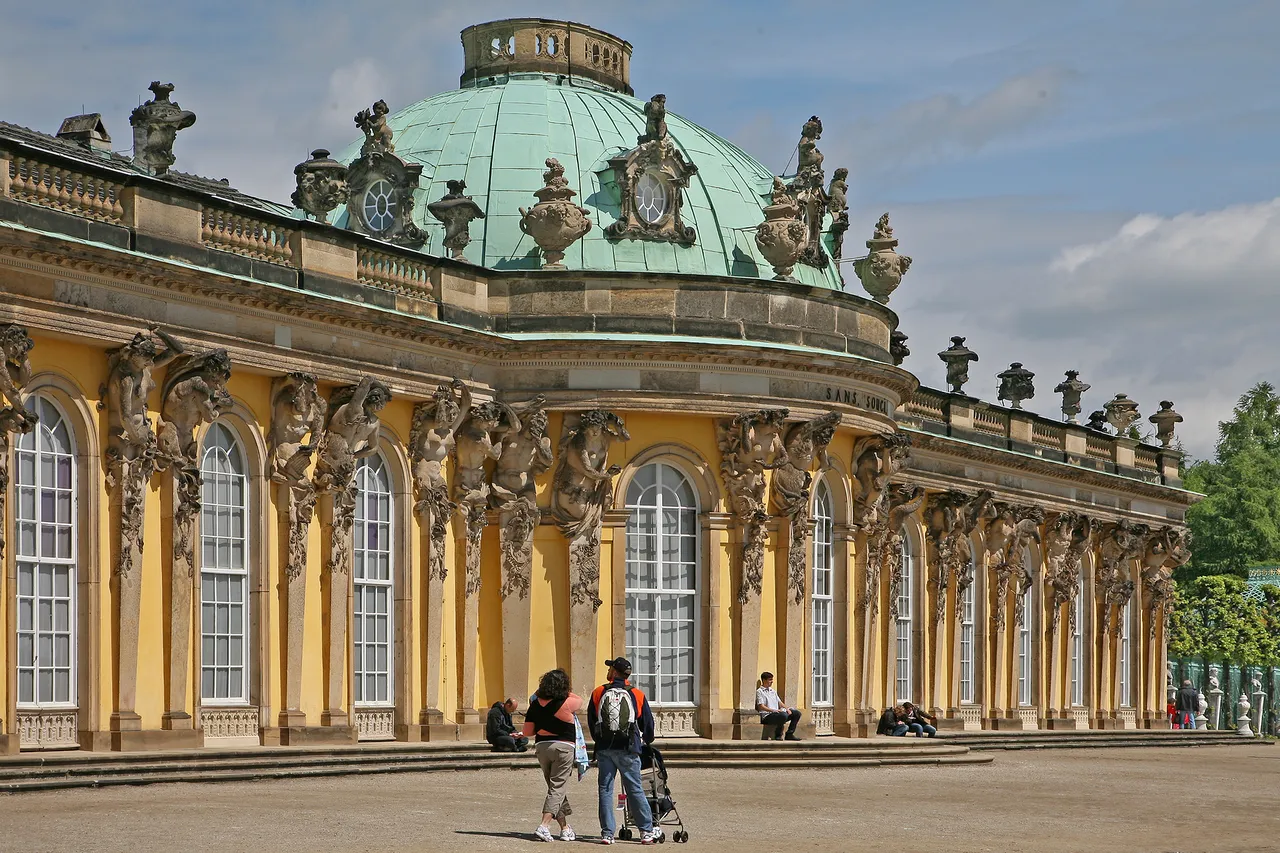
Potsdam has more water than pavement in places, and the surprise of the city is how much of it you see from the windows of palaces built by men who never learned to swim. Twenty-four kilometres southwest of Berlin, this Brandenburg capital of roughly 183,000 people holds the largest UNESCO World Heritage site in Germany — some 500 hectares of park stitched together by lakes, canals and the Havel. Frederick the Great wanted a place where he could be without worry. He got it, and then three generations of Hohenzollerns filled the surrounding countryside with everything he'd tried to escape.
 Photo: Franko / Pexels
Built from cited sources · see the method · How we make our guides →
The city reads as a collection of borrowed homelands. A Dutch quarter of red brick gables, a Russian colony of carved wooden log houses, an Italianate villa quarter along the lakeshore, a Tudor manor in the New Garden — Prussian kings imported architecture the way other monarchs collected paintings. The effect should be ridiculous. Somehow it isn't.
Then there's the twentieth century, which used Potsdam roughly. Babelsberg studios out east made 'Metropolis' in 1927 and became the GDR's film factory afterwards. In the summer of 1945, Truman, Stalin and Churchill sat in a Tudor-style drawing room at Cecilienhof and drew the lines that split Europe for the next forty-four years. The Wall then ran through the city's own gardens, and the Glienicke Bridge became the place where captured spies walked past each other in the dark.
What holds it together is the walking. Distances are honest here — you can cross from the Baroque grid of the Old Town into Sanssouci's terraced vineyards in fifteen minutes, and the gravel underfoot changes sound as you go. Come on a weekday in May or September. August brings Berlin day-trippers by the trainload, and Sanssouci's small rooms were designed for a king who hated crowds.
Not every monument, just the ones we'd walk you past ourselves.
Where to wander, by quarter — each with its own rhythm.
Before you go
King of Prussia · 1712–1786
Built and died at Sanssouci
He wanted a small house, six rooms, no grand staircase, close enough to the vines that he could walk out among them — and he got it in 1747, then ruled Europe's most aggressive army from it. He died at Sanssouci in August 1786 asking to be buried on the terrace with his greyhounds, a request the Nazis and then the Cold War kept unfulfilled until 1991. The potatoes people leave on his grave are a joke he'd have enjoyed: he pushed the crop on farmers who thought it was poison.
Philosopher and writer · 1694–1778
Lived at Sanssouci 1750–1753
Frederick lured him to Potsdam with a salary, a court title and the promise of conversation at a table where French was the only language spoken. It lasted three years before the flattery curdled into a public feud, and Voltaire fled — only to be detained at Frankfurt on the king's orders and stripped of a book of the king's poems. He later wrote about Prussia with the precision of a man settling a score.
Architect · 1699–1753
Designed Sanssouci Palace
He argued with Frederick over the vineyard palace and lost. Knobelsdorff wanted a raised basement so the building would read properly from the park below; the king wanted to step straight from his room onto the terrace, and the king won. Stand at the bottom of the six curved terraces today and you'll see the architect had a point — the palace almost disappears behind its own vines.
Landscape architect · 1789–1866
Shaped Potsdam's parks 1816–1866
For fifty years he treated the whole Havel basin as one composition, cutting sightlines between palaces that sit kilometres apart on opposite riverbanks. The view from Babelsberg toward Glienicke isn't luck; he planted and felled to make it. Half of what visitors call the Potsdam landscape is a garden that was designed to look like it wasn't.
Architect · 1781–1841
Built Charlottenhof and Babelsberg
Prussia's defining architect turned a modest farmhouse in the south of Sanssouci Park into Charlottenhof, a neoclassical villa so restrained it reads as a rebuke to the Rococo up the hill. He also drew the Gothic revival plans for Babelsberg, though the client's wife kept changing them. His buildings in Potsdam are the quiet ones — which is why most tour groups walk past them.
Physicist · 1879–1955
Einstein Tower built here; summer house nearby 1929–1932
The Einsteinturm on the Telegrafenberg went up between 1919 and 1922 — Erich Mendelsohn's expressionist observatory, designed to hunt for the spectral shift that general relativity predicted. Einstein reportedly circled it in silence, then offered one word: 'organic.' He spent his last German summers in a wooden house at Caputh, minutes down the Havel, until 1932 made returning impossible.
Film director · 1890–1976
Filmed at Babelsberg Studio 1925–1932
Metropolis was built and burned inside the Babelsberg halls across roughly 310 shooting days ending in 1926, bankrupting UFA in the process. The studio, opened in 1912, is still working — Wes Anderson and half of Hollywood have used the same lots since. Lang left Germany in 1933; the sets outlasted the regime that drove him out.
US President · 1884–1972
Potsdam Conference at Cecilienhof, 1945
He arrived at the mock-Tudor Cecilienhof in July 1945 as a president of three months, sat at a round table specially shipped from Moscow, and left having authorised the atomic bomb mid-conference. The three delegations each got their own entrance and their own study, an architecture of mistrust you can still walk through. Churchill was replaced by Attlee partway through — the British electorate had voted him out while he was in the room.
Where locals actually book dinner — not the tourist menus.
Small things that change how the city treats you.
The city, as it actually looks.


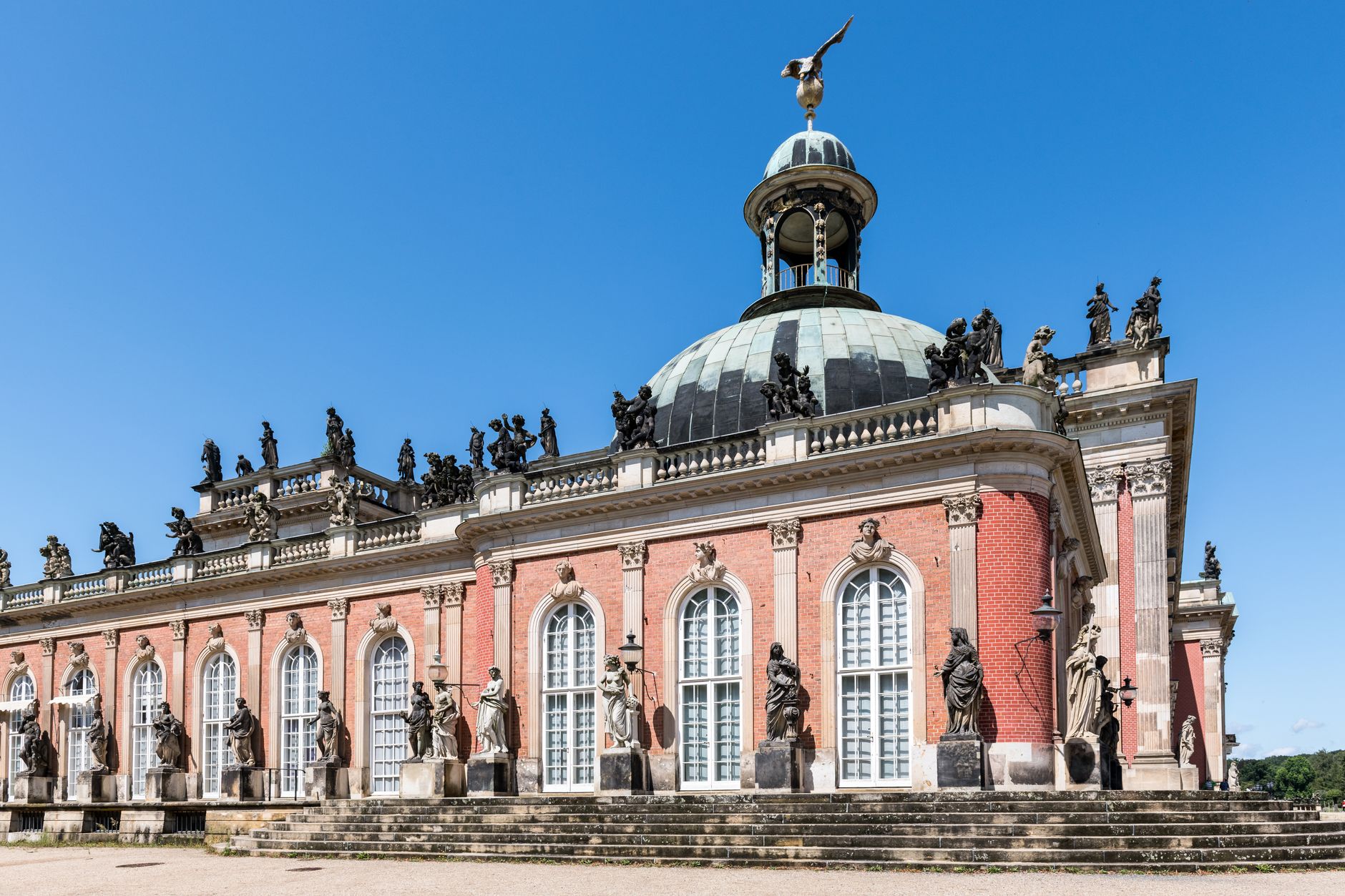


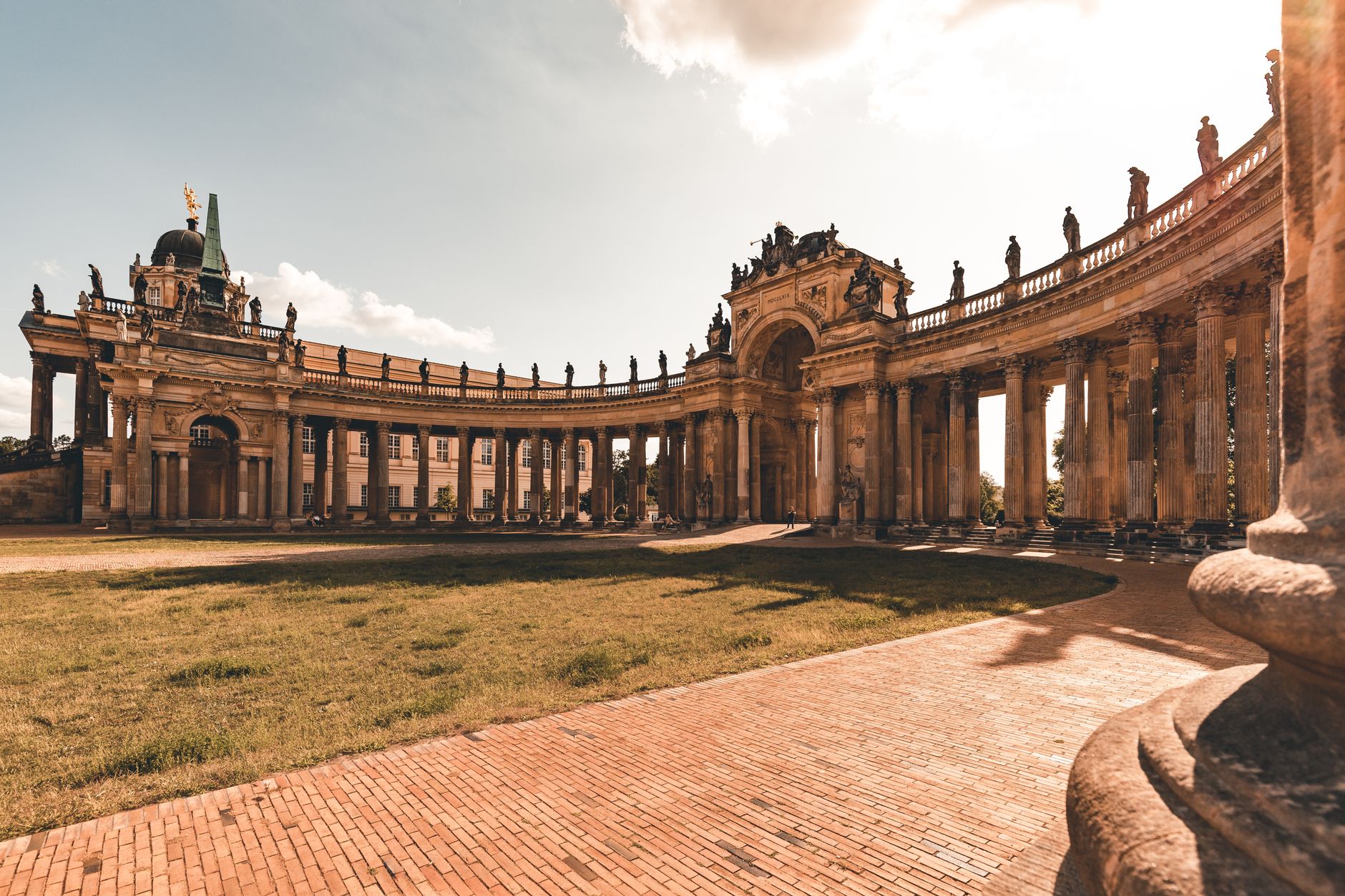

Yes, and it rewards more than the half-day most people give it. The city holds one of Europe's densest concentrations of 18th- and 19th-century palace architecture, listed by UNESCO in 1990, plus the room where Truman, Stalin and Churchill carved up postwar Germany in 1945. If you only care about one Baroque palace, Berlin has closer options — but nothing in Germany matches this many in one park.
Two full days covers it properly; three if you want Babelsberg. Day one is Sanssouci Park end to end, day two splits between the Dutch Quarter, Museum Barberini and Cecilienhof in the New Garden. A single-day visit means choosing between the palaces and the Cold War sites, not both.
Take the RE1 regional train from Berlin Hauptbahnhof to Potsdam Hauptbahnhof, roughly 25 minutes, or the S7 S-Bahn for about 40. Both need a Berlin ABC ticket, which also covers your buses and trams inside Potsdam for the day. From Potsdam Hbf, tram 91 or bus 695 gets you to the Sanssouci gates.
The park is open to anyone; the palace interiors are not. Sanssouci Palace itself uses timed-entry slots that regularly sell out, so book online in advance. The terraced vineyard, the fountains, the Chinese House exterior and Frederick's grave all cost nothing beyond the requested €2 park contribution.
Very. It's a state capital of about 185,000 people with low violent crime, and the palace districts are quiet after dark to the point of being empty. Standard bag-awareness on the crowded S7 platforms is about the extent of it. The parks are unlit in places, so bring a phone light if you're walking out after sunset.
Cheaper than Berlin for food and hotels, more expensive for sightseeing. Palace admissions stack up quickly, which is why the combined sanssouci+ day ticket usually pays for itself on the second building. Parks, the Dutch Quarter and the Glienicke Bridge are free.
The Glienicke Bridge, a 1907 steel span over the Havel linking Potsdam to Berlin-Wannsee. It carried three Cold War prisoner exchanges, including U-2 pilot Gary Powers for Soviet agent Rudolf Abel in February 1962 and dissident Anatoly Sharansky in February 1986. A colour change in the paintwork still marks where the two Germanys met.
May and June, when the palace fountains are running and the park's lime avenues are in full leaf. July and August bring the crowds and the coach tours. Winter is quiet and often beautiful under frost, but several palaces close or shorten hours from November through March.
The working studio, founded in 1912 and the oldest large-scale film studio in the world, isn't open for general walk-ins. Filmpark Babelsberg next door is the visitor version — stunt shows, sets, and a decent draw for kids. For the actual history, the Filmmuseum Potsdam in the old royal stables does more in an hour.
Saved and recently read places — kept on this device only.
Photos may have been resized or cropped.