Introduction
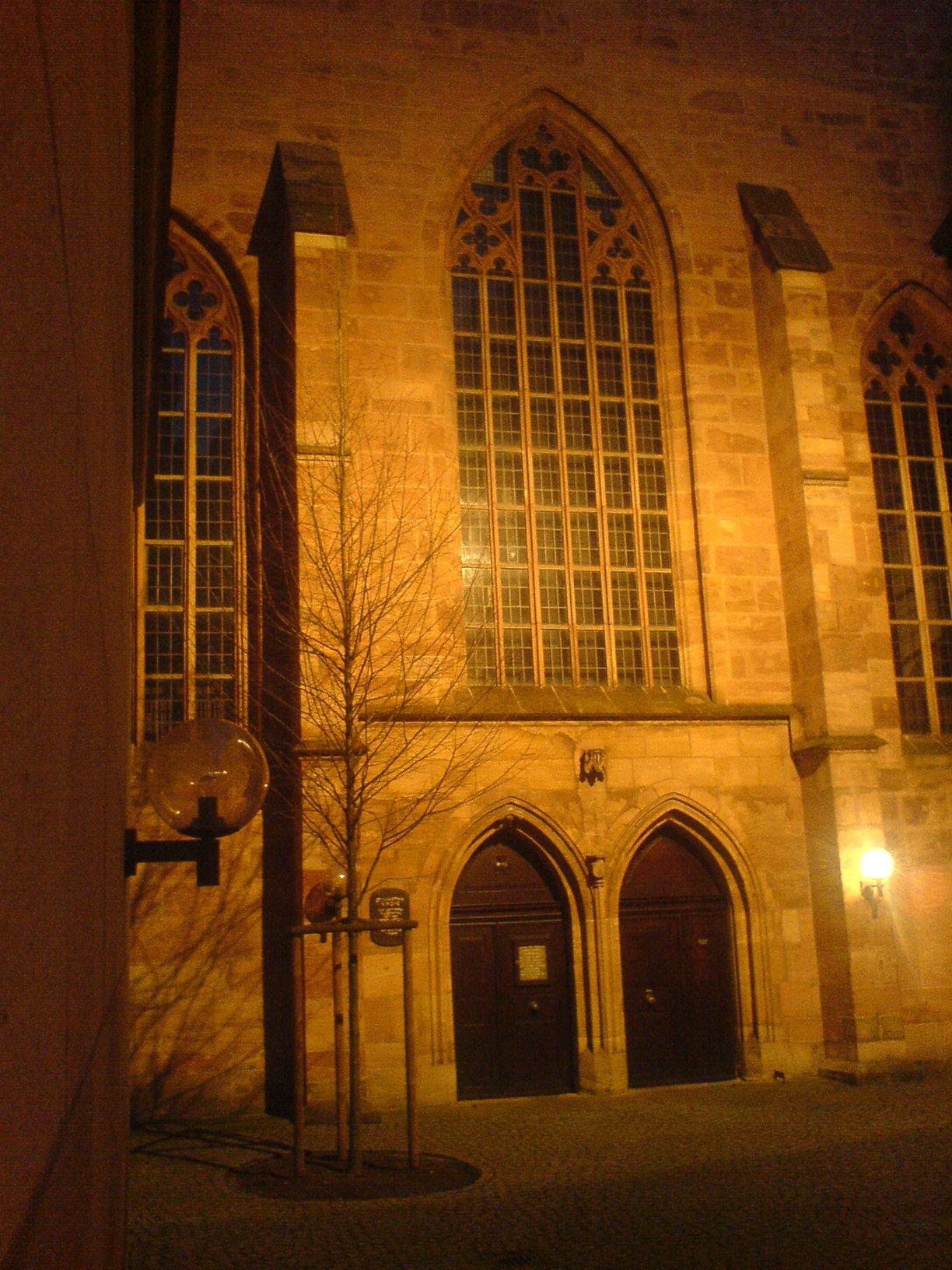
Peterskapelle (St. Peter’s Chapel) is one of Nuremberg’s oldest and most evocative religious landmarks, situated in the city’s St. Peter district. Combining centuries of architectural evolution, community resilience, and spiritual tradition, Peterskapelle invites visitors to experience a unique blend of history, art, and living faith. This comprehensive guide provides up-to-date details on visiting hours, ticket policies, accessibility, nearby attractions, and practical tips, ensuring a rewarding visit for travelers, history buffs, and those interested in Nuremberg’s cultural heritage.
Authoritative resources for planning your visit include the Nuremberg Tourism website and the Peterskapelle Virtual Tour. For further guidance and virtual exploration, consult the references at the end.
Origins and Early Development
Peterskapelle traces its roots to the 14th century, originating as a chapel attached to a leprosarium (“Siechkobel”) founded by Ulrich III. Haller. First mentioned in 1344 and completed in 1470 through the testamentary bequest of Gabriel Tetzel, the chapel stood just outside the city walls on the historic route to Regensburg. Initially serving women afflicted with leprosy, it expanded to admit men by 1484. This setting reflects the medieval European practice of isolating contagious patients while ensuring their spiritual care (Nuremberg Tourism, Sonntagsblatt).
Architectural Evolution and Artistic Heritage
The chapel’s architecture reveals a blend of Romanesque, Gothic, and Baroque influences:
- Exterior: Constructed from local sandstone, the modest façade features minimal ornamentation, with the most distinctive element being the six-sided roof turret above the chancel arch.
- Interior: The nave, completed in 1470, is complemented by a three-sided chancel and an 18th-century gallery. Artistic highlights include:
- A Baroque main altar (c. 1700)
- Side altars donated by prominent locals
- A Rococo pulpit (c. 1750)
- Medieval frescoes and stained glass
- Heraldic shields honoring influential Nuremberg families, such as the Ebner and Tetzel clans
These elements collectively showcase Peterskapelle’s role as a repository of religious art and a testament to the skills of Nuremberg’s historic craftsmen (travelsetu.com, unilocal.de).
Restoration and Preservation
Peterskapelle survived World War II with only minor damage, a rare feat among Nuremberg’s historic churches. Restoration efforts in the 18th, 19th, and mid-20th centuries prioritized authenticity and minimal intervention, preserving original stonework and artworks. Ongoing community involvement and donations continue to support the chapel’s upkeep (tourismus.nuernberg.de).
Social, Religious, and Community Context
Historically, the chapel provided spiritual solace for marginalized patients. Post-Reformation, it became a Protestant place of worship and remains active within the St. Peter parish. Today, Peterskapelle hosts regular services, community ceremonies (baptisms, weddings, memorials), charity events, educational tours, and participates in citywide cultural programs such as Nuremberg’s “Blue Night” (germanythingstodo.com).
Practical Visitor Information
Opening Hours
- Regular Season (Spring–Autumn):
- Tuesdays–Sundays: 10:00 AM – 5:00 PM
- Closed on Mondays and public holidays
- Sunday Service: 11:00 AM, with public access from 10:30 AM
- Winter/Special Circumstances: Hours may vary; check official sources before visiting
Tickets and Entry
- Admission: Free of charge; donations encouraged for preservation
- Guided Tours: Available on weekends and by appointment; some special tours may require a small fee (Guided Tours Information)
Accessibility
- Wheelchair Access: Limited due to historic construction; inquire in advance for details
- Audio Guides: Offered in multiple languages during special events
Photography Policy
- Photography: Permitted without flash; tripods require prior arrangement
- Restrictions: May apply during ceremonies or religious services
Location and Nearby Attractions
Address: Schanzenstraße 34, 90478 Nürnberg
Located in the tranquil St. Peter district, Peterskapelle is easily accessible by public transport or on foot. The area offers a peaceful contrast to the city center and proximity to:
- Imperial Castle of Nuremberg (Kaiserburg)
- Albrecht Dürer’s House
- Hauptmarkt (Central Market Square)
- Nuremberg City Walls
Additional amenities include local cafes and pubs, making for a pleasant pre- or post-visit experience (onlinestreet.de, budgetyourtrip.com).
Visitor Experience and Etiquette
- Atmosphere: Peaceful, intimate, and welcoming—ideal for quiet reflection
- Dress Code: Modest attire is expected; be respectful during services
- Behavior: Maintain silence or speak quietly, especially during ceremonies
- Engagement: The sacristan often shares insights into the chapel’s history and daily care; non-German speakers are welcome, and assistance is available
Frequently Asked Questions (FAQ)
Q: What are Peterskapelle’s visiting hours?
A: Typically Tuesday to Sunday, 10:00 AM – 5:00 PM; Sunday services at 11:00 AM. Hours may vary seasonally.
Q: Is there an admission fee or required ticket?
A: General entry is free; special tours or exhibitions may have a nominal fee.
Q: Is Peterskapelle accessible for visitors with disabilities?
A: Accessibility is limited due to historic structure; contact in advance for accommodations.
Q: Are guided tours available?
A: Yes, on weekends and during special events. Advance booking is recommended.
Q: Is photography allowed inside Peterskapelle?
A: Photography is generally allowed without flash, except during religious services.
Q: Can I attend a religious service?
A: Yes, public services are held on Sundays.
Recommendations and Summary
- Visit on a Sunday morning to experience both the architecture and the active community.
- Combine your visit with a walk through the St. Peter district or a stop at a local café.
- Respect the sacred space by dressing modestly and maintaining a quiet demeanor.
- Consult official resources for the latest visiting hours and event schedules.
Peterskapelle stands as a serene and meaningful site among Nuremberg’s historical landmarks, offering a unique perspective on the city’s spiritual, artistic, and communal legacy. With free admission, authentic architecture, and a welcoming community, it is a must-visit for anyone exploring Nuremberg’s rich cultural tapestry.
Helpful Links
- Official Nuremberg Tourism
- Peterskapelle Virtual Tour
- Guided Tours Information
- TravelSetu Nuremberg Guide
- Germany Things To Do: Nuremberg
- Sonntagsblatt: Mein Lieblingsplatz Peterskapelle
- Onlinestreet: Peterskapelle Location
- Budget Your Trip: Nuremberg
- Globe Guide: What to See in Nuremberg
- Exploring Nuremberg’s Imperial Castle
Enhance Your Visit with the Audiala App
Download the Audiala app for interactive maps, guided tours, and the latest updates on Nuremberg historical sites. Stay connected on social media for travel inspiration and news:
- Facebook: AudialaTravel
- Instagram: @AudialaTravel
Experience the tranquil charm and enduring significance of Peterskapelle—Nuremberg’s hidden gem.
Listen to the full story in the app
Your Personal Curator, in Your Pocket.
Audio guides for 1,100+ cities across 96 countries. History, stories, and local insight — offline ready.
Audiala App
Available on iOS & Android
Join 50k+ Curators
Sources
Last reviewed: