Introduction
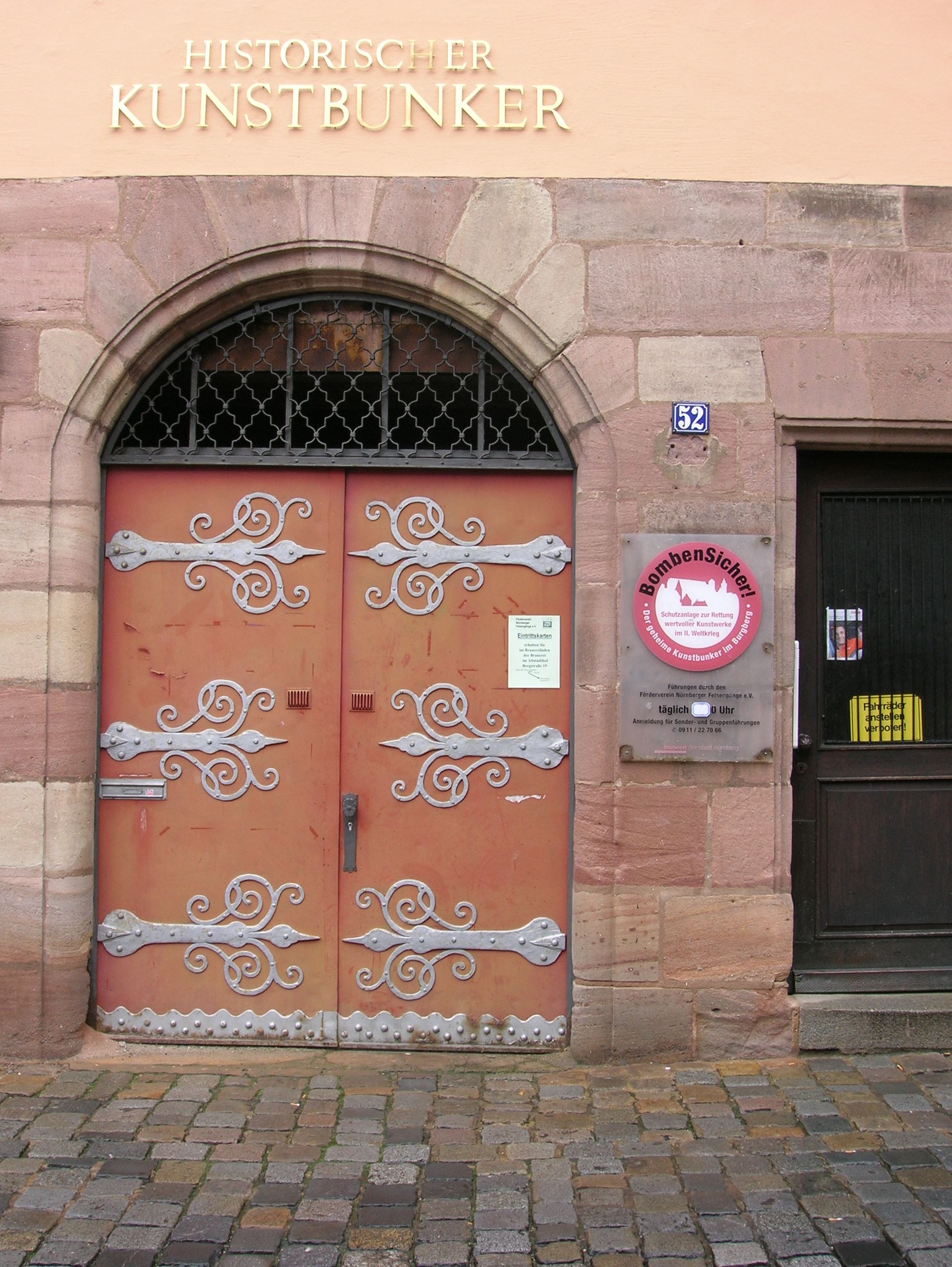
Beneath the storied streets of Nuremberg, the Historischer Kunstbunker stands as a testament to the city’s enduring commitment to cultural preservation. Originally carved as medieval beer cellars, this extensive underground network was ingeniously transformed during World War II into a state-of-the-art art bunker. Its purpose: to shelter priceless masterpieces, manuscripts, and regalia from the devastation of Allied bombing raids that destroyed most of Nuremberg’s Old Town. Today, the Kunstbunker functions as both a museum and a symbol of resilience, offering visitors a rare window into the intersection of medieval ingenuity and modern conservation.
This guide provides comprehensive, up-to-date information for planning your visit, including practical visitor tips, historical context, accessibility details, and highlights of nearby attractions. Whether you are a history enthusiast, art lover, or curious traveler, the Kunstbunker promises a unique and immersive journey into Nuremberg’s rich heritage (tourismus.nuernberg.de; Atlas Obscura; GetYourGuide).
History and Cultural Significance
Medieval Origins and Transformation
The tunnels beneath Nuremberg Castle were first excavated in the Middle Ages to serve as rock-cut cellars for beer storage, taking advantage of the soft sandstone and stable underground temperatures. Over centuries, this network expanded to approximately 25,000 square meters, providing not only commercial storage but also refuge during times of conflict (tourismus.nuernberg.de).
With the outbreak of World War II, the city’s medieval treasures—including works by Albrecht Dürer and the Reichskleinodien (Imperial Regalia)—were under grave threat. In 1940, city officials, recognizing the vulnerability of the Old Town, began converting sections of the cellars into a modern art bunker, installing reinforced doors, advanced climate controls, and ventilation systems to ensure optimal preservation conditions (Atlas Obscura; Mike’s Travel Guide).
WWII: Art Preservation Amidst Destruction
Throughout the war, as Nuremberg endured relentless bombing, the Kunstbunker became a sanctuary for thousands of precious artifacts. Its careful engineering and vigilant guardianship ensured the survival of works that define Nuremberg’s historic and artistic identity—even as 90% of the Old Town was reduced to ruins (tourismus.nuernberg.de; HistoryNet). The bunker’s story is part of a broader European effort to protect cultural heritage during wartime.
Artworks and Treasures Sheltered within
The Kunstbunker safeguarded:
- Paintings and drawings by Albrecht Dürer
- The monumental Altarpiece of Veit Stoss (temporarily housed before its return to Kraków)
- The intricate Automaton Clock from the Frauenkirche
- The historic Globus of Martin Behaim
- The Imperial Regalia (Reichskleinodien) of the Holy Roman Empire
- The Codex Manesse, a key medieval manuscript
- Stained glass, church treasures, goldsmith works, and manuscripts from Nuremberg and other regions
- Selected art looted by the Nazis from occupied countries, rescued by postwar efforts (Atlas Obscura; Mike’s Travel Guide; Unterwelten Nürnberg)
Conservation Innovations
The transformation from beer cellar to art bunker required pioneering conservation solutions:
- Climate and Humidity Control: Advanced systems maintained stable conditions, crucial for delicate artworks and manuscripts.
- Bomb-proof Doors and Reinforcements: Massive iron doors and fortified chambers protected against shockwaves and fire.
- Moisture-Proof Storage: Custom crates and moisture barriers protected highly sensitive items.
- Ventilation and Drainage: Designed to prevent mold and ensure air quality for both staff and stored objects (Unterwelten Nürnberg).
Visitor Information
Location and Accessibility
The main entrance to the Kunstbunker is at Obere Schmiedgasse 52, just beneath Nuremberg Castle. It is easily reached on foot from the city center and is well-signposted from major tourist routes. Nearby public transport options include the “Burgstraße” bus stop and “Lorenzkirche” U-Bahn station. Car parking is available at Parkhaus Hauptmarkt or Parkhaus Adlerstraße, though spaces are limited during busy periods (Nuremberg Tourism).
Visiting Hours and Tickets
Standard Visiting Hours (as of July 2025):
- Tuesday to Sunday: 10:00 AM – 6:00 PM (April–October)
- Tuesday to Sunday: 10:00 AM – 4:00 PM (November–March)
- Closed Mondays and public holidays
Tour Times:
- Monday–Friday: 11:30, 14:30 (English tours typically at 14:30)
- Saturday, Sunday, Holidays: 11:30, 13:00, 14:30, 16:00
(Check the official Kunstbunker website for current schedules and language availability.)
Tickets (2025 rates):
- Adults: €9.00
- Reduced (students, seniors, disabled): €7.00
- Children (under 6): Free
- Family ticket (2 adults + up to 3 children): €20.00 (Kunstbunker Tickets)
Tickets are best reserved in advance online, especially during the high season and major events.
Guided Tours: Experience and Duration
The Kunstbunker is accessible only via guided tours, which last approximately 75 minutes and traverse about one kilometer of underground passageways. Knowledgeable guides provide rich historical context and share archival photos and stories. Tours are available in German and, less frequently, in English; advance booking is recommended for English tours.
Tip: The tunnels are cool (10–12°C/50–54°F) and humid year-round—bring layered clothing and sturdy shoes.
Accessibility and Health Guidelines
- Mobility: Due to uneven floors, narrow corridors, and stairs, the Kunstbunker is not wheelchair accessible and is not suitable for strollers or those with significant mobility impairments. Contact the museum for possible accommodations (Accessibility Info).
- Health: The environment may be challenging for those with claustrophobia or respiratory issues.
- Facilities: No restrooms inside; use nearby facilities at the Imperial Castle or in the Old Town.
- Children: Not recommended for children under 6 due to environment and tour length.
Essential Visitor Tips
- Arrive Early: Check in 10–15 minutes before your scheduled tour.
- Language: Confirm tour language when booking.
- Dress Appropriately: Layered clothing and comfortable shoes are essential.
- Travel Light: Large bags are not allowed inside; no on-site storage.
- Food and Drink: Not permitted inside the bunker.
- Photography: Allowed without flash or tripod (confirm with guide at tour start).
- Combine Your Visit: The Kunstbunker is directly beneath the Imperial Castle and close to the Albrecht Dürer House and medieval city walls, allowing for a full day of historical exploration (Nuremberg Old Town Map).
Special Events and Seasonal Considerations
Special exhibitions related to wartime art protection and Nuremberg history are occasionally hosted. Visitor numbers peak during summer and the Christmas season (especially during the Christkindlesmarkt), so early booking is advised. Additional tours may be scheduled during these periods.
Nearby Attractions
- Nuremberg Castle: Panoramic city views and medieval history above the Kunstbunker.
- Germanisches Nationalmuseum: Houses many restored artifacts once sheltered in the bunker.
- Albrecht Dürer House: Home and museum of the Renaissance master.
- St. Lorenz Church: Features the Veit Stoss Altarpiece.
- Nuremberg Historic Mile: A self-guided route connecting key landmarks.
Frequently Asked Questions (FAQ)
Q: What are the current visiting hours?
A: Tuesday–Sunday, 10:00 AM–6:00 PM (April–October), 10:00 AM–4:00 PM (November–March), closed Mondays. Tour times vary—confirm via the official website.
Q: How do I purchase tickets?
A: Online advance booking via the museum’s website is recommended.
Q: Is the Kunstbunker wheelchair accessible?
A: No, due to stairs and narrow passages; contact the museum for possible accommodations.
Q: Are there English-language tours?
A: Yes, but less frequent; reserve in advance and confirm availability.
Q: Can I take photos inside?
A: Yes, without flash or tripod. Always check with your guide.
Listen to the full story in the app
Your Personal Curator, in Your Pocket.
Audio guides for 1,100+ cities across 96 countries. History, stories, and local insight — offline ready.
Audiala App
Available on iOS & Android
Join 50k+ Curators
Sources
- verified
- verified
- verified
- verified
- verified
- verified
- verified
Last reviewed:


