Plan and listen to Haus Rüschhaus with Audiala.
Audio guide in your pocket, itinerary in your browser. Built for the way you actually visit.
Introduction
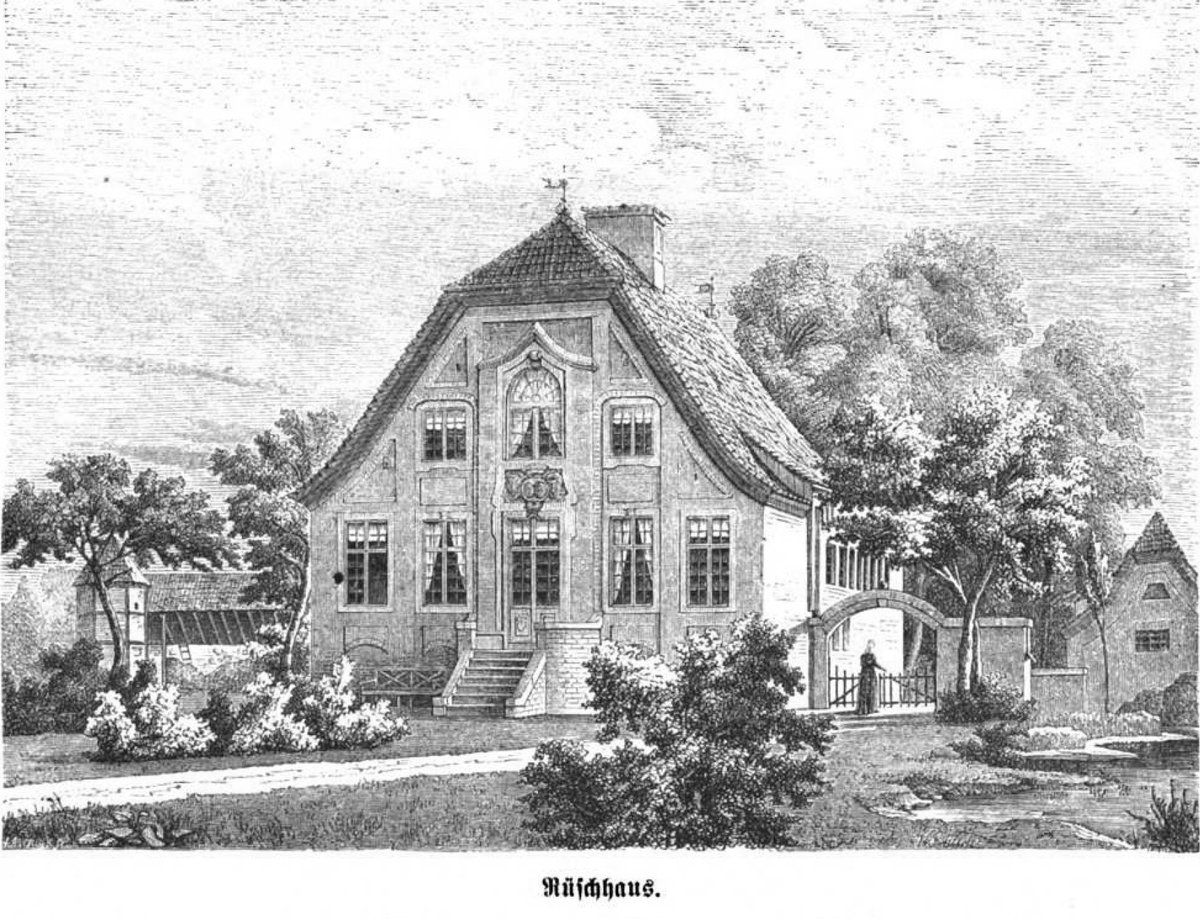
Nestled in the picturesque landscape of Münster, Germany, Haus Rüschhaus is a hidden gem that offers a unique blend of history, architecture, and culture. Built between 1745 and 1749 by the renowned Baroque architect Johann Conrad Schlaun, this historical estate stands as a testament to the region's rich cultural heritage and architectural brilliance. Originally designed as a country retreat, Haus Rüschhaus showcases a harmonious blend of Baroque and Rococo styles, making it an architectural treasure (Münster Tourism).
One of the most notable aspects of Haus Rüschhaus is its connection to Annette von Droste-Hülshoff, one of Germany's greatest poets. Droste-Hülshoff lived in the estate from 1826 until her death in 1848, and it was here that she penned some of her most famous works, including the novella "Die Judenbuche" (The Jew's Beech) (Annette von Droste-Hülshoff Foundation). Today, Haus Rüschhaus serves as a museum dedicated to her life and works, offering visitors a glimpse into her creative environment.
This comprehensive guide aims to provide you with all the essential information needed to plan your visit to Haus Rüschhaus. From its rich historical background and architectural significance to practical visitor information such as ticket prices, opening hours, and travel tips, this guide covers it all. Whether you're a history enthusiast, a literature lover, or simply looking for a peaceful and inspiring place to visit, Haus Rüschhaus promises a memorable experience.

History of Haus Rüschhaus
Origins and Early History
Haus Rüschhaus, located in Münster, Germany, was originally constructed between 1745 and 1749 by Johann Conrad Schlaun, a prominent Baroque architect. Schlaun designed the house as a country retreat for himself, blending elements of Baroque and Rococo styles with traditional Westphalian farmhouse architecture. The estate's design reflects Schlaun's architectural philosophy, which emphasized harmony with the surrounding landscape (Münster Tourism).
Architectural Significance
The architectural significance of Haus Rüschhaus lies in its unique combination of styles. The main building features a symmetrical façade with a central gable, flanked by two wings. The use of red brick and white sandstone for the window frames and cornices is characteristic of the region. The interior of the house is equally impressive, with ornate stucco ceilings, wood paneling, and period furnishings that have been preserved to this day (Haus Rüschhaus).
Ownership and Use Over the Centuries
After Schlaun's death in 1773, the estate changed hands several times. It was owned by various noble families, each of whom left their mark on the property. In the early 19th century, the estate was acquired by the von Droste zu Hülshoff family, one of the most influential families in the region. It was during this period that Haus Rüschhaus gained national significance.
Annette von Droste-Hülshoff's Residence
One of the most notable residents of Haus Rüschhaus was the poet Annette von Droste-Hülshoff. Born in 1797, Droste-Hülshoff is considered one of Germany's greatest poets. She moved to Haus Rüschhaus in 1826 and lived there until her death in 1848. During her time at the estate, she wrote some of her most famous works, including the novella "Die Judenbuche" (The Jew's Beech) and numerous poems that reflect her deep connection to the Westphalian landscape (Annette von Droste-Hülshoff Foundation).
20th Century and Preservation Efforts
In the 20th century, Haus Rüschhaus faced the challenges of modernization and changing ownership. The estate was eventually acquired by the city of Münster in 1936, which recognized its historical and cultural significance. During World War II, the house suffered minor damage but was restored in the post-war period. In 1979, the Annette von Droste-Hülshoff Foundation was established to preserve the estate and promote the poet's legacy (Münster City Archives).
Modern-Day Significance
Today, Haus Rüschhaus is a museum and cultural site that attracts visitors from around the world. The estate offers guided tours that provide insights into its architectural features, historical significance, and the life and works of Annette von Droste-Hülshoff. The surrounding gardens, designed by Schlaun, have been meticulously restored and offer a tranquil setting for visitors to explore (Haus Rüschhaus Tours).
Visitor Information
Visiting Hours and Tickets
Haus Rüschhaus is open to visitors from Tuesday to Sunday, 10 AM to 5 PM. The estate is closed on Mondays and public holidays. Tickets can be purchased on-site or online through the official website. General admission is €8 for adults, €6 for students and seniors, and free for children under 12 (Haus Rüschhaus Tickets).
Travel Tips
To reach Haus Rüschhaus, visitors can take a bus or drive from the Münster city center. Ample parking is available on-site. The estate is also accessible by bicycle, with scenic bike paths leading directly to the property. For those using public transportation, bus routes 5 and 19 stop near the estate.
Nearby Attractions
While visiting Haus Rüschhaus, consider exploring other nearby historical sites in Münster. The Münster Cathedral, the Prinzipalmarkt, and the LWL-Museum für Kunst und Kultur are all within a short distance and offer additional cultural experiences.
Accessibility
Haus Rüschhaus is committed to providing accessibility for all visitors. The estate has wheelchair-accessible pathways and restrooms, and guided tours can be arranged for visitors with special needs. For more information, contact the estate's visitor services (Haus Rüschhaus Accessibility).
Cultural Impact and Legacy
The cultural impact of Haus Rüschhaus extends beyond its architectural and historical significance. The estate has become a symbol of Westphalian heritage and a testament to the region's rich cultural history. Annette von Droste-Hülshoff's association with the estate has further cemented its place in German literary history. Her works continue to be studied and celebrated, and the estate serves as a focal point for literary events and educational programs (Droste Society).
Visitor Experience
Visitors to Haus Rüschhaus can explore the meticulously preserved rooms, which offer a glimpse into the life of the estate's former residents. The museum features exhibits on the history of the house, the architectural contributions of Johann Conrad Schlaun, and the literary achievements of Annette von Droste-Hülshoff. The estate also hosts cultural events, including poetry readings, concerts, and lectures, which highlight its ongoing relevance as a cultural landmark (Münster Events).
FAQ
What are the visiting hours for Haus Rüschhaus?
Haus Rüschhaus is open from Tuesday to Sunday, 10 AM to 5 PM. It is closed on Mondays and public holidays.
How much are the tickets for Haus Rüschhaus?
General admission is €8 for adults, €6 for students and seniors, and free for children under 12.
How can I reach Haus Rüschhaus?
Visitors can reach Haus Rüschhaus by bus, car, or bicycle from the Münster city center. Bus routes 5 and 19 stop near the estate.
Is Haus Rüschhaus wheelchair accessible?
Yes, Haus Rüschhaus has wheelchair-accessible pathways and restrooms. Guided tours can be arranged for visitors with special needs.
Listen to the full story in the app
The whole Haus Rüschhaus,
told well.
Audio guides for 1,100+ cities across 96 countries. History, stories, and local insight — offline ready.
Verified, and shown.
Researched and written by the Audiala editorial team from historical records, architectural archives, and local expertise.
Researched from Wikidata, Wikipedia & official sources · fact-checked · How we make our guides →