Introduction
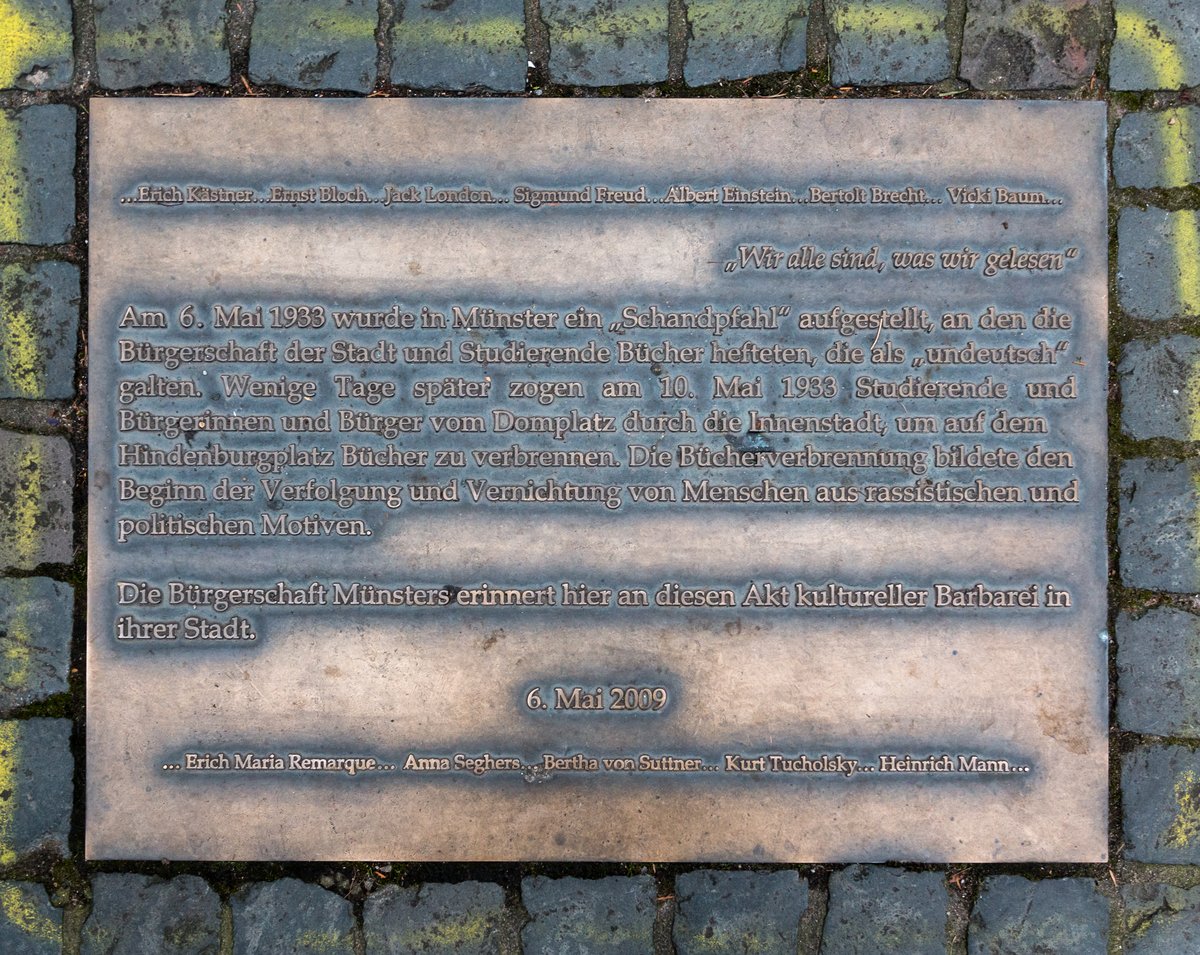
The Commemorative Plaque for Book Burning in Münster stands as a powerful yet understated reminder of the Nazi-led book burnings that swept across Germany in May 1933. Situated near the University of Münster, this memorial marks the site where thousands of books—deemed “un-German” by the Nazi regime—were publicly destroyed. The plaque embodies both the tragedy of cultural erasure and the resilience of intellectual freedom, inviting visitors to pause, reflect, and engage with Germany’s ongoing culture of remembrance (Erinnerungskultur).
This guide provides a detailed overview of the Münster plaque, including its historical context, significance, practical visitor information, accessibility, and nearby attractions. Whether you are a history enthusiast, student, or traveler, this memorial offers a meaningful opportunity to connect with Germany’s past and the ongoing importance of safeguarding free expression (City of Münster Tourism; Stiftung EVZ; Smithsonian Magazine).
Photo Gallery
Explore Commemorative Plaque Book Burning Münster in Pictures
Historical Background of Book Burnings in Münster
On May 10, 1933, the National Socialist German Students’ League, with support from the Nazi regime, coordinated book burnings in cities across Germany, including Münster. These acts targeted works by Jewish, Marxist, pacifist, and other authors whose ideas challenged Nazi ideology. Notable figures whose books were destroyed included Erich Kästner, Sigmund Freud, Karl Marx, Rosa Luxemburg, the Mann family, and many others (archives.wartimeni.com).
In Münster, students and Nazi supporters gathered in public squares to destroy these works, symbolizing the regime’s drive to control culture and suppress dissent. The book burning served as both a physical act of destruction and a warning of the broader campaign of persecution that would follow.
The Plaque: Location, Design, and Symbolism
The Münster Book Burning Plaque is embedded in the pavement near the university, close to the original site of the 1933 event. Its design is intentionally modest, blending into the urban environment to encourage quiet contemplation. The plaque bears a bilingual inscription and features a quote by Heinrich Heine:
“Dort, wo man Bücher verbrennt, verbrennt man am Ende auch Menschen”
(“Where they burn books, they will also ultimately burn people.”)
(en.berlin-memoire.com)
This quote, penned in 1820, poignantly connects the destruction of culture to the potential for human tragedy. The plaque’s understated presence aligns with Germany’s broader tradition of subtle, integrated memorials, such as the Stolpersteine (“stumbling stones”).
Visiting Hours, Admission, and Accessibility
- Location: Near the University of Münster, city center
- Visiting Hours: 24/7; the plaque is outdoors and always accessible
- Admission: Free; no tickets or reservations required
- Accessibility: The site is wheelchair accessible, with flat pavement and no barriers. Detailed assistance is available through Münster’s tourist offices.
How to Find the Plaque
The plaque is centrally located in Münster, typically near university buildings and civic squares. Münster is a compact and walkable city, with excellent infrastructure for pedestrians and cyclists (muensterland.com). The area is also easily reached from the main train station by public transport or on foot. For precise directions, consult maps from the local tourist office or use digital walking tour apps.
Nearby Attractions in Münster
Enhance your visit by exploring other renowned sites within walking distance:
- Prinzipalmarkt: The city’s historical marketplace, lined with medieval gabled buildings.
- St. Paul’s Cathedral: A Romanesque-Gothic cathedral with an astronomical clock.
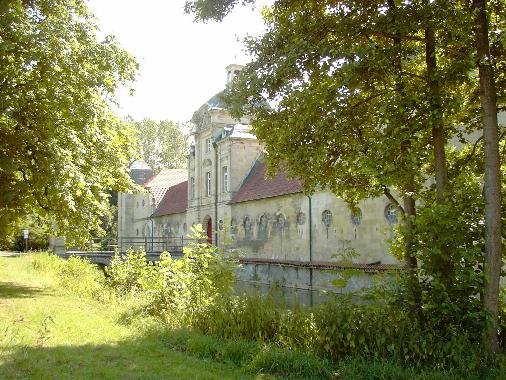
- Münster Castle: A baroque palace now part of the university, with beautiful gardens (germany.travel).
- Museums: The Pablo Picasso Museum and the LWL Museum of Art and Culture (muensterland.com).
Annual Commemorations and Events
Each May, Münster holds commemorative events marking the anniversary of the 1933 book burning. Activities may include public readings, open-air libraries featuring banned authors, and educational programs for schools and the public (Münsterland Events). These events aim to restore silenced voices and promote ongoing engagement with history.
Visitor Etiquette and Tips
- Approach with Respect: The plaque is a site of solemn remembrance; quiet reflection is encouraged.
- Photography: Discreet photography is permitted.
- Combine Visits: Consider exploring nearby historical and cultural sites for a richer experience.
- Best Times to Visit: Early mornings or late afternoons for a quieter visit; May for commemorative events.
- Educational Resources: Brochures and QR codes at the site offer historical context. Local organizations sometimes offer themed guided walks—check with the tourist office for schedules.
Frequently Asked Questions (FAQ)
Q: What are the visiting hours for the Commemorative Plaque in Münster?
A: The plaque is outdoors and accessible 24/7.
Q: Is there an entry fee or ticket required?
A: No, visiting the plaque is free of charge.
Q: Are guided tours available?
A: Yes, local organizations and schools occasionally offer tours; check with the tourist center.
Q: Is the site accessible for visitors with disabilities?
A: Yes, the area is wheelchair accessible.
Q: Can I take photographs at the memorial?
A: Yes, but please be respectful of the atmosphere.
Listen to the full story in the app
Your Personal Curator, in Your Pocket.
Audio guides for 1,100+ cities across 96 countries. History, stories, and local insight — offline ready.
Audiala App
Available on iOS & Android
Join 50k+ Curators
Sources
- verified
- verified
- verified
- verified
- verified
Last reviewed: