Plan and listen to Ruhmeshalle with Audiala
Audio guide in your pocket, itinerary in your browser. Built for the way you actually visit.
Introduction
The Ruhmeshalle Munich is an architectural and cultural icon, standing majestically above the Theresienwiese—the famed ground for Oktoberfest. Commissioned by King Ludwig I in the mid-19th century, this neoclassical monument was envisioned as Bavaria’s “Hall of Fame,” honoring outstanding individuals across the arts, sciences, politics, and military. Its horseshoe-shaped colonnade, crowned by the colossal Bavaria statue, has become a symbol of Bavarian unity and achievement. Whether you’re a history enthusiast, architecture lover, or simply exploring Munich’s rich tapestry, this guide provides essential information on visiting hours, tickets, accessibility, and nearby attractions to ensure a memorable visit (Lonely Planet; Munich.de).
Historical Origins and Purpose
The Ruhmeshalle (“Hall of Fame”) was conceived by King Ludwig I as a pantheon to immortalize distinguished Bavarians. Built between 1843 and 1853 under the guidance of architect Leo von Klenze, it reflects Ludwig’s ambition to foster a strong Bavarian identity during a time of national awakening. Its elevated position, overlooking the Theresienwiese, ensures the monument’s visibility during major public festivities, reinforcing its role as a civic symbol (Wikipedia).
Architectural Features
Design and Layout
The Ruhmeshalle’s neoclassical design draws inspiration from ancient Greek and Roman architecture. The open colonnade, shaped in a horseshoe measuring approximately 68 meters in length and 32 meters in depth, is formed by 48 imposing Doric columns made from local limestone. This layout creates a sense of grandeur while embracing the monumental Bavaria statue at its heart (Lonely Planet).
The Bavaria Statue
The centerpiece of the ensemble is the colossal Bavaria statue. Designed by Ludwig Michael Schwanthaler and cast by Ferdinand von Miller, the 18.5-meter-tall bronze figure stands atop a 9-meter pedestal. Symbolizing the Bavarian homeland, the statue is clad in a bearskin, holds an oak wreath (a symbol of honor) in her left hand, and rests her right hand on a sword, with a lion—the heraldic animal of Bavaria—at her side. Visitors can climb inside via a spiral staircase to a viewing platform in the statue’s head, offering sweeping views of Munich and the Theresienwiese (History Hit; absolutemunich.com).
Materials and Construction
The entire monument was built using durable local limestone for the hall and cast bronze for the statue. The Doric columns, over 5 meters tall, are meticulously carved, while the busts displayed within the hall are primarily marble or bronze, each accompanied by inscriptions detailing the achievements of the honored individuals (Wikipedia).
Artistic and Symbolic Elements
The Ruhmeshalle’s core function is to honor Bavarians who have made significant contributions across a range of fields. Over 90 busts line the colonnade, honoring luminaries from composers like Richard Wagner to scientists like Joseph von Fraunhofer. The classical horseshoe form and open gallery pay homage to ancient traditions of public commemoration, while the statue of Bavaria personifies the state’s unity, resilience, and cultural pride. The monument’s vantage point above the Theresienwiese highlights its role as a guardian of tradition, presiding over major celebrations (Lonely Planet).
Visitor Information
Opening Hours
- Ruhmeshalle: Open daily from 9:00 AM to 6:00 PM (April–19 October, last entry at 5:30 PM). Closed from 20 October to end of March.
- Bavaria Statue: Open April to October, 9:00 AM–6:00 PM (extended hours until 8:00 PM during Oktoberfest). Closed for winter (mid-October to March). (Bavarian Palace Department)
Tickets
- Ruhmeshalle Entry: €5 regular, €4 reduced; children under 18 free.
- Bavaria Statue Climb: Approximately €3–4 fee (free for children under 18).
- Guided Tours: Available for private groups by advance booking; audio guides rentable on-site.
Accessibility
- The Ruhmeshalle is accessible only by stairs; no ramps or elevators are available, making it unsuitable for wheelchair users or those with limited mobility.
- The climb inside the Bavaria statue involves a narrow spiral staircase and is not recommended for those with mobility impairments or claustrophobia.
- Surrounding park areas and the Theresienwiese are accessible (Bavarian Palace Department).
Visitor Tips
- Best Time to Visit: Early mornings or late afternoons for better lighting and fewer crowds.
- Weather: As an open-air site, it’s best enjoyed in good weather. Bring sun protection in summer.
- Photography: The panoramic views from the statue’s head and the colonnade are excellent for photos.
- Amenities: No restrooms or cafés on-site; public toilets are available nearby, especially during events.
- Oktoberfest: The Hall is closed for safety during Oktoberfest, but the statue remains open.
Nearby Attractions
- Theresienwiese: Home to Oktoberfest and other major events.
- Bavaria Park: Adjacent green area, ideal for relaxation.
- Deutsches Museum Verkehrszentrum: Museum focused on transport history.
- Marienplatz, Nymphenburg Palace, Munich Residenz: Easily accessible via public transport.
- MUCA and Alte Pinakothek: Art museums reachable by U-Bahn (Absolute Munich; The Broke Backpacker).
Frequently Asked Questions
Q: What are the Ruhmeshalle Munich visiting hours?
A: 9:00 AM–6:00 PM, April to 19 October. Closed 20 October–March.
Q: How much do tickets cost?
A: Ruhmeshalle: €5 (regular), €4 (reduced), free for children under 18. Bavaria statue climb: ~€3–4.
Q: Is the Ruhmeshalle wheelchair accessible?
A: No, due to stairs and lack of ramps or elevators.
Q: Can you climb inside the Bavaria statue?
A: Yes, via a narrow spiral staircase for panoramic views.
Q: Are guided tours available?
A: Yes, for private groups by prior arrangement.
Visual Gallery

Ruhmeshalle Munich exterior showing the Bavaria statue on an elevated terrace.

Detailed view of the bronze Bavaria statue representing Bavarian homeland.

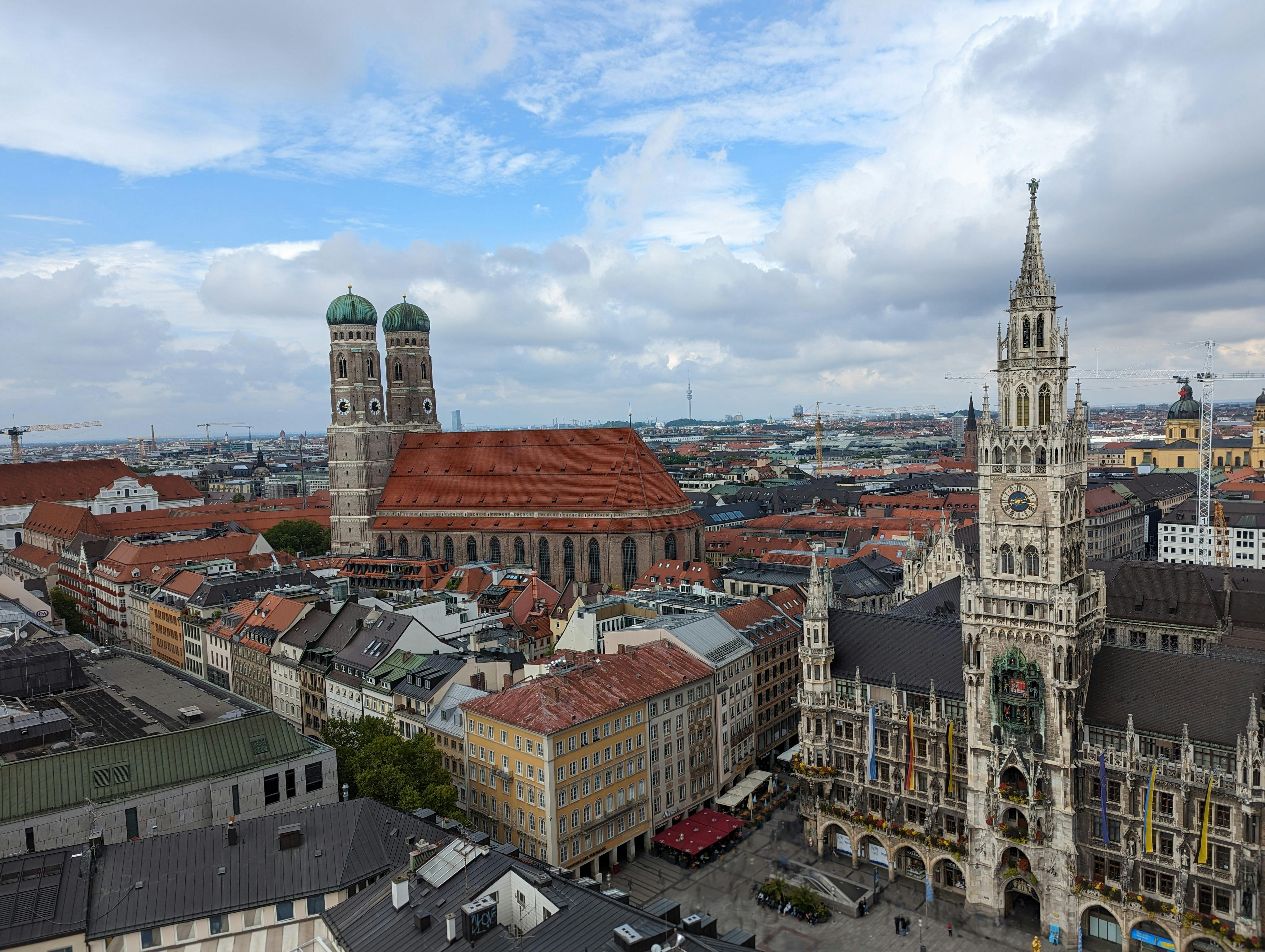
Panoramic view of Theresienwiese and Munich skyline from the Bavaria statue’s viewing platform.
Listen to the full story in the app
- verified
- verified
- verified
- verified
- verified
- verified
Last reviewed: