Plan and listen to Palais Preysing with Audiala
Audio guide in your pocket, itinerary in your browser. Built for the way you actually visit.
Introduction: Palais Preysing’s Legacy in Munich
Palais Preysing, located in Munich’s Altstadt-Lehel district, is a quintessential example of Bavarian Rococo architecture and an enduring symbol of the city’s aristocratic heritage. Built between 1723 and 1728 by acclaimed court architect Joseph Effner for Count Johann Maximilian von Preysing-Hohenaschau, this landmark was Munich’s first residence in the Rococo style, marking a stylistic shift from the Baroque’s grand solemnity to Rococo’s ornate playfulness. Today, it stands opposite the Munich Residenz and near the Feldherrnhalle, forming part of the city’s historic heart and offering visitors a window into Munich’s architectural and social evolution.
Despite suffering heavy damage in World War II, Palais Preysing was meticulously restored in the 1950s, preserving its intricate façade and grand ceremonial staircase while adapting the ground floor for modern uses such as boutiques and cultural venues. Free access to public ceremonial spaces and guided tours make the palace accessible for visitors seeking to immerse themselves in both Munich’s past and present. This guide details Palais Preysing’s visiting hours, ticketing, accessibility, historical context, and nearby attractions, and includes practical tips for a memorable visit.
For official updates and travel resources, consult the Palais Preysing page and Munich’s tourism portals (muenchenwiki.de; drhintermayer.de; Munich Tourist Office).
History and Construction
Palais Preysing was commissioned by Count Johann Maximilian von Preysing-Hohenaschau, a trusted advisor to Elector Karl Albrecht. Built between 1723 and 1728, it was designed by Joseph Effner, who brought French influences to Munich’s architectural scene. The palace features a four-story structure with a nine-window-wide façade and originally included lavish living quarters, a private chapel, ballroom, and the grand ceremonial staircase (muenchenwiki.de; onlinereisefuehrer.de).
Architectural Significance
As Munich’s first Rococo palace, Palais Preysing marks a pivotal transition in local architecture. The façade is adorned with elaborate stucco, floral garlands, and shell motifs—trademarks of the Rococo style (drhintermayer.de). The grand stairwell, enhanced by Dominikus Zimmermann’s stuccowork, is celebrated as one of Munich’s finest aristocratic interior spaces.
Inside, the original layout juxtaposed private family areas at the rear with ceremonial rooms facing the city (absolutemunich.com). The interplay of natural light and white stucco surfaces amplifies the Rococo emphasis on dynamism and ornamentation.
Visiting Information: Hours, Tickets, and Accessibility
Visiting Hours
- Monday to Saturday: 10:00 AM – 6:00 PM.
- Some shops and cafés may have extended or reduced hours; check individual listings.
- For special closures or seasonal adjustments, consult the Munich Tourist Office.
Tickets
- Free access to the public areas, including the grand stairwell and ceremonial spaces.
- Guided tours (available on weekends or by appointment) may require advance booking and a nominal fee.
Accessibility
- Wheelchair access is provided to the ground floor and most public spaces.
- Some historic staircases may be inaccessible; contact the administration in advance for assistance.
Guided Tours and Visitor Tips
- Guided tours offer deeper insight into the palace’s history and art, and may include neighboring sites.
- Photography is allowed in public areas; the grand staircase is a favorite spot.
- Visit early to avoid crowds and combine your trip with nearby landmarks.
Exterior and Urban Integration
Palais Preysing’s Rococo façade features symmetrical stucco ornamentation and pilasters, harmonizing with neighboring aristocratic residences. Its modest scale and decorative richness contrast with the grandeur of the adjacent Residenz, reflecting the early 18th-century shift toward refined elegance in Munich’s cityscape.
Interior Features and the Iconic Stairwell
The palace’s interior is best known for its grand three-armed staircase, adorned with stuccowork by Dominikus Zimmermann. Sweeping curves, caryatids, and ornamental motifs typify Rococo artistry. The space was both functional and ceremonial, highlighting the lifestyle of Munich’s aristocracy.
Other preserved rooms feature high ceilings, ornate cornices, and period-appropriate color palettes. While much of the interior is not open to the public, the accessible ceremonial spaces and stairwell are architectural highlights.
Artistic Innovations
Palais Preysing introduced Rococo motifs to Munich, emphasizing pastel colors, playful asymmetry, and naturalistic ornamentation. The intricate combination of stuccowork, frescoes, and gilding in each room exemplifies the era’s superior craftsmanship.
Restoration and Adaptive Reuse
After World War II damage, architect Erwin Schleich oversaw the palace’s restoration in the 1950s. Original plans and photographs guided the reconstruction, maintaining Rococo details while adapting the ground floor for modern use, including boutiques, offices, and cultural venues (onlinereisefuehrer.de). Contemporary elements, such as Talbot Runhof’s flagship store with striking modern design, highlight the palace’s ongoing cultural relevance (Vogue).
Nearby Attractions
Palais Preysing is ideally situated for exploring Munich’s historic center:
- Residenz München: Bavaria’s former royal palace complex.
- Feldherrnhalle: An iconic loggia commemorating Bavarian military leaders.
- Odeonsplatz: A grand square with historic architecture and lively cafés.
- Viktualienmarkt: Munich’s renowned open-air food market (Viktualienmarkt guide).
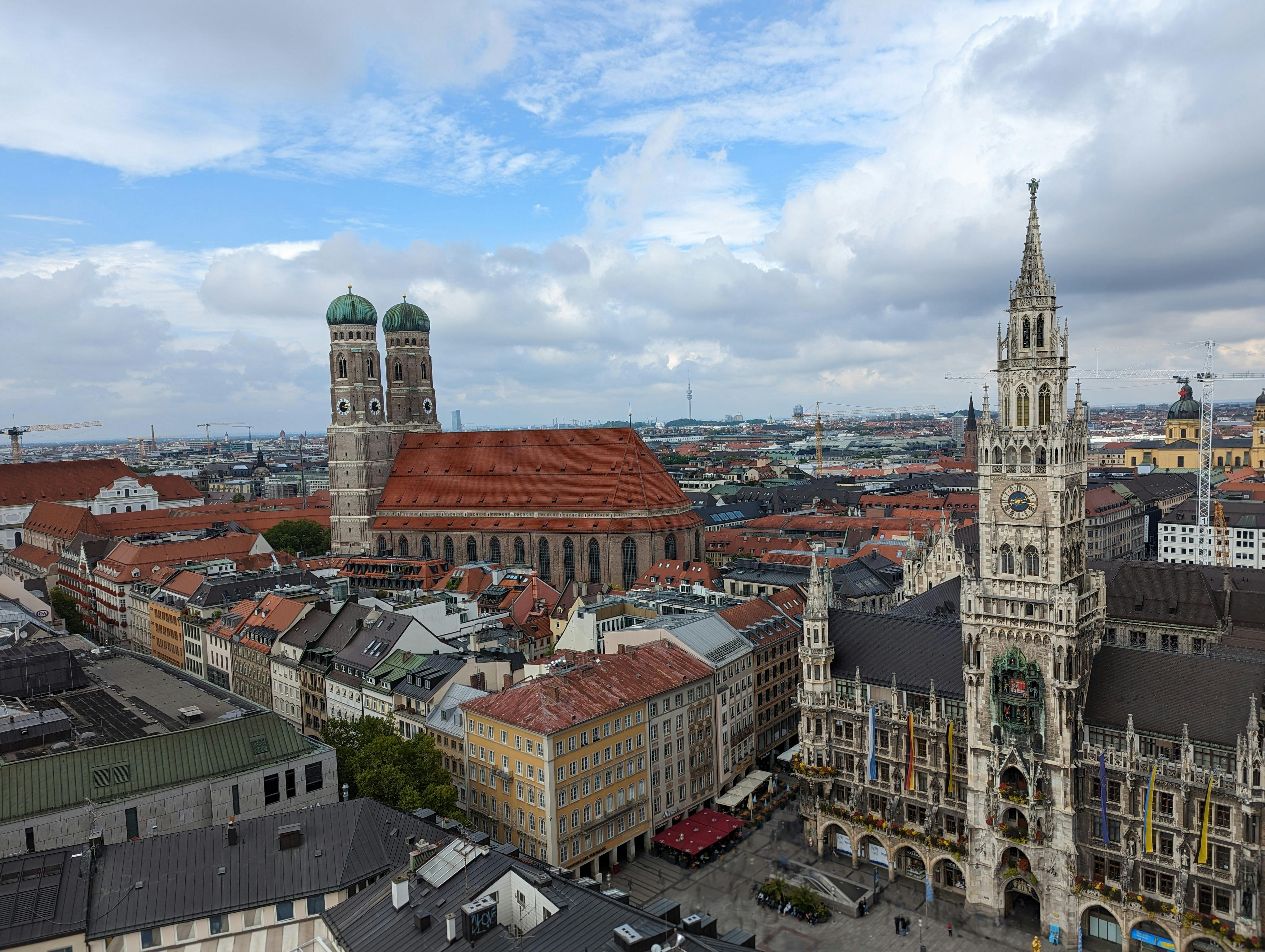
The palace is also near Marienplatz and the Frauenkirche, making it an excellent stop on a walking tour.
Social Memory: The Story of Viscardigasse
Behind Palais Preysing is Viscardigasse, famously known as “Drückebergergasse” (“shirker’s alley”). During the Nazi era, locals used this alley to avoid saluting at the nearby Feldherrnhalle, a site of Nazi martyrdom. A line of golden cobblestones now commemorates this act of passive resistance, serving as a poignant memorial to civil courage (Touristlink).
Visitor Experience: Atmosphere and Local Customs
Palais Preysing is not a museum but a living urban space with shops, galleries, and cafés. The tranquil inner courtyard (Preysinghof) offers respite from the bustling city. Visitors should be respectful of businesses and private offices, keep noise low, and avoid littering. Photography is welcome in public areas; always ask before photographing inside shops.
Facilities and Visitor Amenities
- Restrooms: Not available in the palace, but nearby cafés or the Marienplatz station provide facilities.
- Wi-Fi: Offered by some cafés.
- Seating: Benches and outdoor café seating are available in the courtyard.
Seasonal Considerations
The palace and courtyard are open year-round. Summer features outdoor seating and occasional art installations; the winter season is marked by festive lights and proximity to Christmas markets. Munich weather is variable—pack an umbrella during spring and autumn.
Responsible Tourism
Support local businesses, use public transportation, recycle, and respect historic features. Munich encourages eco-friendly practices—many shops and cafés participate in sustainability initiatives.
Frequently Asked Questions (FAQ)
Q: What are Palais Preysing’s visiting hours?
A: The public areas are open Monday to Saturday, 10:00 AM–6:00 PM. Shops and cafés may vary.
Q: Is there an entry fee or are tickets required?
A: No—entry to public areas is free. Guided tours may require a fee and advance booking.
Q: Is Palais Preysing accessible for visitors with mobility challenges?
A: Yes, the ground floor and courtyard are accessible. Some cobblestones may be uneven; upper floors are not open to the public.
Q: Can I take photographs inside Palais Preysing?
A: Photography is permitted in the courtyard and exterior spaces. Ask before photographing inside businesses.
Q: Are guided tours available?
A: Yes, through appointment or local walking tour operators. Check with the Munich Tourist Office for up-to-date options.
Listen to the full story in the app
- verified
- verified
- verified
- verified
- verified
- verified
Last reviewed: