Plan and listen to Glaspalast with Audiala
Audio guide in your pocket, itinerary in your browser. Built for the way you actually visit.
Introduction
The Glaspalast (Glass Palace) in Munich was a pioneering 19th-century architectural marvel and a vibrant center for art, industry, and culture. Though the original structure was tragically destroyed by fire in 1931, its legacy continues to shape Munich's cultural landscape. This guide provides a comprehensive overview of the Glaspalast’s historical significance, architectural innovations, and enduring impact, alongside practical information for visiting the site and nearby attractions.
Origins and Construction
Commissioned by King Maximilian II of Bavaria and designed by August von Voit, the Glaspalast was built in 1854, inspired by London’s Crystal Palace. Erected within the Alter Botanischer Garten (Old Botanical Garden), this glass and iron structure was a symbol of Munich’s ambitions in art, industry, and technological modernity. Its modular cast iron framework and expansive glass panes were cutting-edge, measuring 234 meters long, 67 meters wide, and 25 meters high at the central nave (Historisches Lexikon Bayerns).
Architectural Innovation
The Glaspalast’s transparent, light-filled design revolutionized exhibition architecture, inspiring similar buildings across Europe. Its use of prefabricated iron and large glass surfaces not only allowed for rapid construction but also created airy interiors ideal for hosting large-scale exhibitions. The building’s location in Maxvorstadt, Munich’s cultural heart, reinforced its status as a beacon of artistic and technological progress (Munich Art To Go).
Role as Art and Industry Hub
Initially opened for the First General German Industrial Exhibition in 1854, the Glaspalast quickly evolved into Munich’s premier venue for international art exhibitions, industrial fairs, and civic gatherings. Annual art exhibitions from 1869 onward established Munich as a key player in the global art scene, fostering exchange among artists, collectors, and critics (Bavarikon, arthistoricum.net).
The 1931 Fire and Aftermath
A devastating fire on June 6, 1931, destroyed the Glaspalast and approximately 3,000 artworks, including masterpieces by Caspar David Friedrich and others. The cause remains uncertain, with theories ranging from spontaneous combustion to arson. Plans for reconstruction were abandoned, and the site was transformed into a serene public garden, featuring the Neptunbrunnen (Neptune Fountain) and the Park Café (Historisches Lexikon Bayerns, Munich Art To Go).
Visiting the Glaspalast Site Today
Location
- Address: Alter Botanischer Garten, Sophienstraße, 80333 Munich
- Closest Stations: Karlsplatz (Stachus) U-Bahn/S-Bahn, Munich Hauptbahnhof (Central Station)
- Access: Short walk or cycle from city center
Visiting Hours & Admission
- Old Botanical Garden: Open daily, dawn to dusk; free entry
- Park Café: Open daily, typically 10:00 AM to midnight; check official site for variations
- Kunstpavillon München: Wednesday–Sunday, 12:00 PM–6:00 PM; free or low admission (Kunstpavillon München)
- No tickets are required for the Glaspalast site itself
Accessibility
- Wheelchair/Stroller Access: Paved, mostly flat paths throughout the garden
- Restrooms: Available at Park Café and public facilities nearby
- Seating: Benches throughout the garden
- Step-free access at Park Café and Kunstpavillon
What to See
- Commemorative Plaques: Provide historical context about the Glaspalast and its cultural significance
- Neptunbrunnen (Neptune Fountain): Iconic fountain on the former Glaspalast grounds
- Park Café: Vibrant beer garden and restaurant echoing the communal spirit of the original palace
- Kunstpavillon: Post-war pavilion hosting contemporary art exhibitions
- Glaspalast Fountain (Weißenburger Platz, Haidhausen): A tangible relic of the original palace
Nearby Attractions
- Kunstareal Art District: Includes Alte Pinakothek, Neue Pinakothek, and Pinakothek der Moderne (mygermanyvacation.com)
- Justizpalast (Palace of Justice): Historic courthouse near Karlsplatz (happytowander.com)
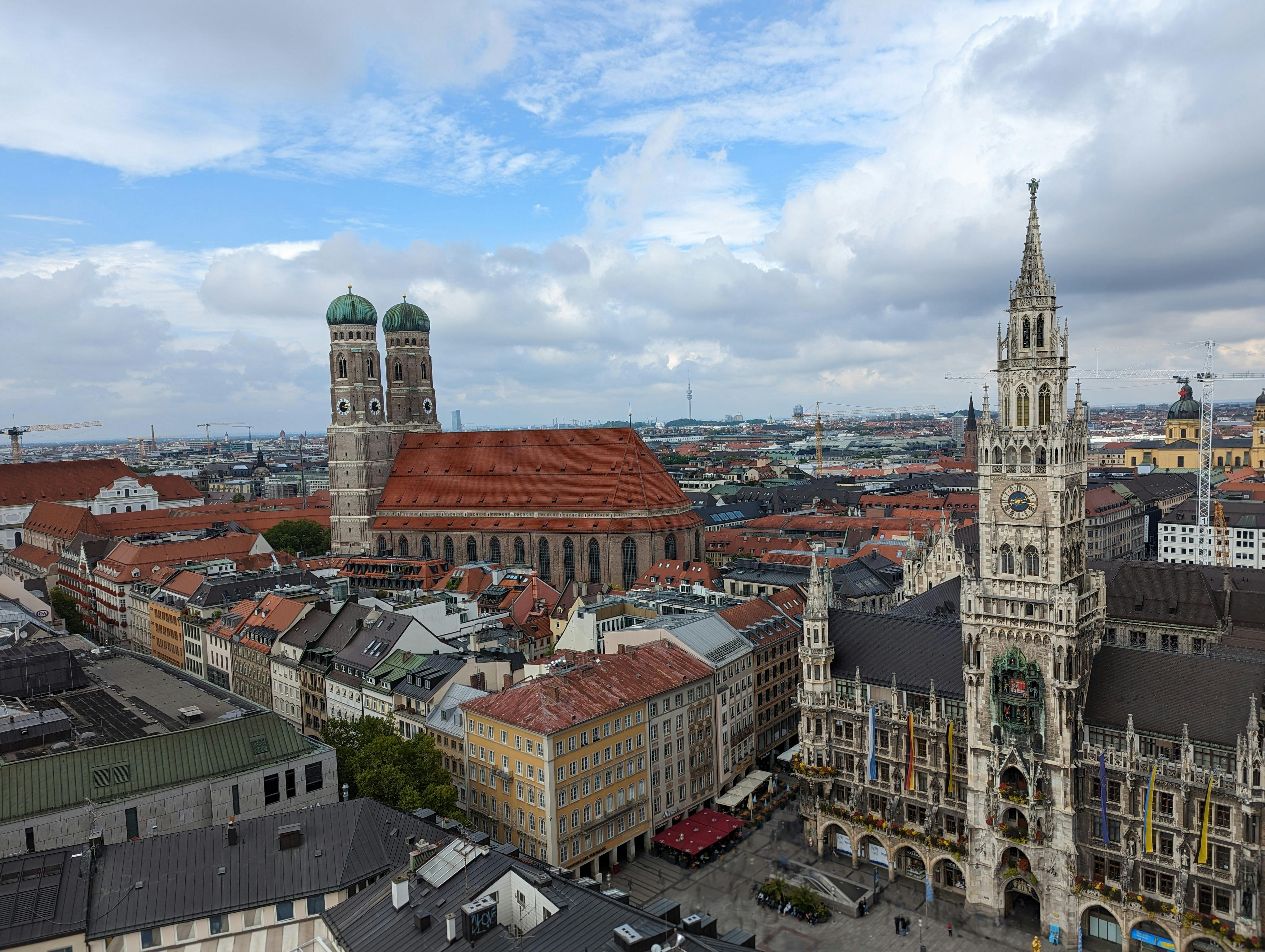
- Marienplatz & Neues Rathaus: Munich’s central square and town hall
- Zentralinstitut für Kunstgeschichte: Art history institute with exhibitions and lectures (zikg.eu)
Guided Tours and Cultural Activities
- Walking Tours: Many city center tours include the Alter Botanischer Garten and Glaspalast history (Munich Travel)
- Audio Guides: Downloadable or rentable for art and historical sites (historycurator.com)
- Kunstpavillon & Park Café Events: Rotating exhibitions, live music, and cultural happenings (Kunstpavillon Events, Park Café Events)
Visitor Tips
- Best Time to Visit: April–October for blooming gardens and outdoor events
- Combine Visits: Pair the Glaspalast site with nearby art museums for a full cultural day
- Photography: Capture the Neptune Fountain, garden sculptures, and vibrant flora
- Respect Memorials: Honor the commemorative plaques and tranquil setting
Frequently Asked Questions (FAQ)
Q: Can I visit the original Glaspalast building?
A: No, the original palace was destroyed in 1931. The site is now a public garden with historical markers.
Q: Are there tickets or entry fees?
A: No, the garden and Glaspalast site are free to enter. Park Café and Kunstpavillon may charge for food or special exhibitions.
Q: Is the site accessible?
A: Yes, paths are suitable for wheelchairs and strollers. Restrooms and step-free entries are available.
Q: Are guided tours available?
A: While there are no dedicated Glaspalast tours, many city walking tours include the site and its history.
Q: What else can I do nearby?
A: Explore the Kunstareal art district, Marienplatz, Justizpalast, and other landmarks—all within walking distance.
Final Recommendations
The Glaspalast’s legacy is alive in Munich’s thriving art scene, innovative architecture, and public spaces. Honor its history by exploring the Alter Botanischer Garten, reflecting at commemorative sites, and visiting world-class museums nearby. For a deeper experience, check for special exhibitions, guided walking tours, and cultural events in the area.
Stay up-to-date with current events and exhibitions by visiting official tourism websites and downloading the Audiala app for curated guides and exclusive content about Munich’s rich heritage.
Listen to the full story in the app
- verified
- verified
- verified
- verified
- verified
- verified
- verified
- verified
- verified
Last reviewed: