Plan and listen to Stolperstein Dedicated To Albert Strass with Audiala.
Audio guide in your pocket, itinerary in your browser. Built for the way you actually visit.
Introduction
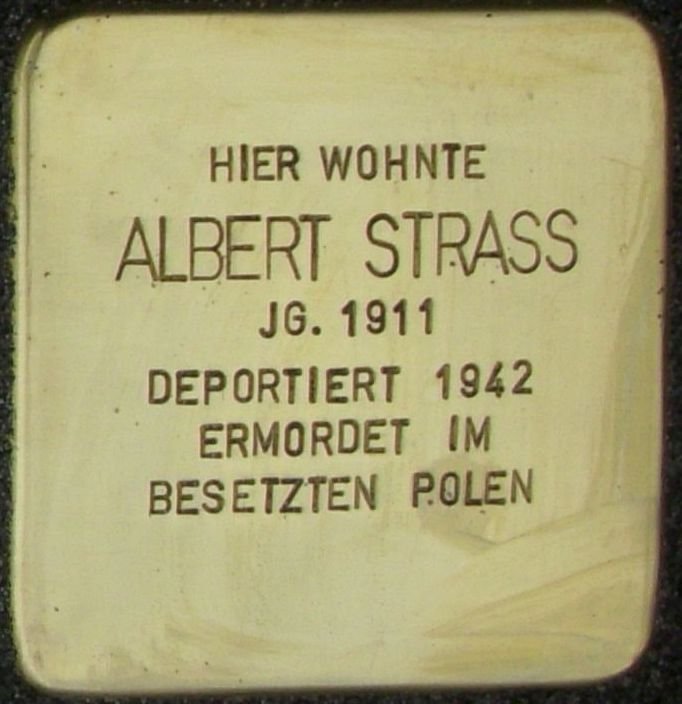
Visiting the Stolperstein dedicated to Albert Strass in Mainz, Germany, offers a deeply moving opportunity to engage directly with the memory of the Holocaust and the individual lives affected by National Socialism. Stolpersteine, or "stumbling stones," are small brass plaques embedded in sidewalks at the last voluntary residences of victims. Conceived by German artist Gunter Demnig in the early 1990s, the project now constitutes the world’s largest decentralized memorial, with over 100,000 stones across Europe—including more than 350 in Mainz (Stolpersteine Mainz; Germany.info).
The Albert Strass Stolperstein, found in Mainz’s Gonsenheim district, stands as a powerful symbol of remembrance, set in daily urban life. This guide provides historical background, practical visitor information, tips for a meaningful experience, and recommendations for exploring related sites in Mainz.

Historical Background of the Stolperstein Project
The Stolpersteine project was initiated by Gunter Demnig in the early 1990s to commemorate victims of the Nazi regime—Jews, Roma and Sinti, resistance fighters, LGBTQ+ individuals, people with disabilities, and others. Each Stolperstein is a brass plaque (10 x 10 cm), set in a concrete block and engraved with the victim’s name, year of birth, fate, and, if known, deportation or death details (Stolpersteine.eu).
The project’s decentralized, grassroots nature means that memory is literally embedded in the streets, inviting passersby to "stumble" across these stories in their daily lives. As of 2024, over 107,000 Stolpersteine have been installed in nearly 1,900 municipalities across 30 European countries (Stolpersteine.eu).
Persecution of Jews in Mainz: Local Context
Mainz, a city with a vibrant pre-war Jewish community, witnessed the systematic persecution and deportation of its Jewish residents during National Socialism. Hundreds of Jewish families, along with other targeted groups, lost their homes, rights, and lives. The Stolpersteine project in Mainz, including the stone for Albert Strass, is a way to return names and dignity to those erased from public record (Mainz Stadtführungen).
The Stolperstein for Albert Strass: Location and Details
- District: Gonsenheim, Mainz
- Placement: Sidewalk in front of Albert Strass’s last freely chosen address (Mapcarta)
- Nearby Stolpersteine: Commemorations for Sophie May, Alfred May, and Ernst Josef May illustrate the neighborhood’s shared trauma.
This stone is accessible at all hours, embedded in public pavement and forming part of Mainz’s daily landscape.
Biography of Albert Strass
Publicly available biographical data for Albert Strass is limited. Typically, Stolpersteine inscriptions include:
- Full name: Albert Strass
- Year of birth
- Date and place of deportation
- Fate (e.g., murdered, missing)
- Date and place of death, if known
To honor his memory, pause to read the inscription. For further information, consult the Stolpersteine Mainz database and Mainz city website.
Cultural and Memorial Significance
Unlike traditional memorials, Stolpersteine are part of everyday life, integrated into public sidewalks. Their presence personalizes Holocaust memory, shifting focus from statistics to individual stories. In Mainz, the first stones were laid in 2007; since then, over 340 Stolpersteine and one Stolperschwelle (a larger commemorative stone) have been installed citywide (Wikipedia: Liste der Stolpersteine in Mainz).
The stones often appear in clusters, highlighting the fate of multiple families from a single street and challenging the notion that neighbors were unaware of their persecution.
Practical Visitor Information
Location and Access
- Exact site: Sidewalk in front of the last address of Albert Strass (Mapcarta)
- Public Transport: Accessible by Mainz buses and trams; Gonsenheim is pedestrian-friendly.
Visiting Hours and Entry
- Open Access: 24/7, no tickets or entrance fees.
Accessibility
- The Stolperstein is at sidewalk level; most visitors, including wheelchair users, will find it accessible, but some pavements may be uneven.
Tips for a Meaningful Visit
- Research Albert Strass and nearby victims using the Stolpersteine Mainz database.
- Bring a soft cloth to gently clean the plaque—a symbolic act of care (folklife.si.edu).
- Read the inscription aloud or reflect silently; bow your head as a sign of respect.
- Leaving a small stone or flower is a traditional Jewish way to honor the deceased.
- Photograph respectfully, without standing on the plaque, and share images mindfully (pragueviews.com).
Nearby Attractions and Travel Tips
- Explore other Stolpersteine in Gonsenheim and Mainz.
- Mainz Cathedral: Over 1,000 years old, a Romanesque masterpiece.
- Gutenberg Museum: Celebrates the inventor of the printing press.
- Jewish Museum Mainz: Documents local Jewish history.
- Use RMV public transport for easy city navigation (strspecialist.com).
Stolpersteine in Mainz: Additional Context
Before WWII, Mainz’s Jewish community counted about 2,600 members. By 1945, only a handful survived, most in mixed marriages. The Stolpersteine in Mainz honor not only Jewish victims but also other persecuted groups (Mainz.de). Their installation results from collaboration between private sponsors, remembrance groups, and the city.
Controversies and Community Perspectives
While Stolpersteine are widely respected, some critics, especially in Munich, object to stepping on victims’ names. However, most Jewish organizations, including Yad Vashem and the Central Council of Jews in Germany, support the project for its personalizing impact (Mainz1933-1945.de). In Mainz, the project enjoys broad support.
Frequently Asked Questions (FAQ)
Do I need a ticket to visit the Albert Strass Stolperstein?
No, it is freely accessible in public space.
When can I visit?
Any time, 24/7. Daylight hours are recommended for visibility and safety.
How do I get there?
Take Mainz public transport to Gonsenheim; the stone is on a public sidewalk.
Are guided tours available?
Yes, by local remembrance organizations. Booking is recommended.
Is it accessible for people with disabilities?
Generally yes, but sidewalks may be uneven in some areas.
Listen to the full story in the app
The whole Stolperstein Dedicated To Albert Strass,
told well.
Audio guides for 1,100+ cities across 96 countries. History, stories, and local insight — offline ready.
Verified, and shown.
Researched and written by the Audiala editorial team from historical records, architectural archives, and local expertise.
V., Stolpersteine Information, 2025 [https://www.mainz1933-1945.de/stolpersteine.html]
Researched from Wikidata, Wikipedia & official sources · fact-checked · How we make our guides →