Plan and listen to Palais Boisserée with Audiala.
Audio guide in your pocket, itinerary in your browser. Built for the way you actually visit.
Introduction
Palais Boisserée, situated in the heart of Heidelberg’s Old Town, stands as a testament to the city’s rich cultural history, architectural evolution, and intellectual legacy. From its Baroque origins to its role as a center for the German Romantic movement, the Palais has shaped Heidelberg’s urban landscape for centuries. This guide provides an in-depth look at the Palais Boisserée’s history, architectural highlights, visiting information, and practical travel tips, ensuring visitors can fully appreciate one of Heidelberg’s most treasured historical sites (Heidelberg Tourist Information, Heidelberg City Guide, Literarische Gesellschaft Palais Boisserée).


Early Origins
Palais Boisserée, located at Hauptstraße 209 on Karlsplatz, was originally constructed between 1703 and 1705 by Franz von Sickingen, the Electoral Palatinate’s court chamber president (de.wikipedia.org). Stones from the destroyed "Dicker Turm" (Thick Tower) of Heidelberg Castle were repurposed in its construction, symbolizing the city’s resilience (holidaycheck.ch).
After Sickingen’s death, the building served various purposes, including housing clergy and church offices. Its later transformation in the 19th century reflects the city’s shift from Baroque to Neoclassical styles, mirroring broader trends in German architecture (Springer Link).
The Boisserée Brothers and the German Romantic Movement
Between 1810 and 1819, the Palais was home to Sulpiz and Melchior Boisserée, prominent art collectors and key figures of the German Romantic movement. Their remarkable collection of medieval German and Netherlandish art was first displayed here, transforming the Palais into a hub for artistic and intellectual exchange. Luminaries like Johann Wolfgang von Goethe visited, and the brothers’ efforts influenced art history, notably contributing to the founding of Munich’s Alte Pinakothek (ww2.heidelberg.de). Today, a commemorative plaque honors Goethe’s visits.
Architectural Features
Exterior and Façade
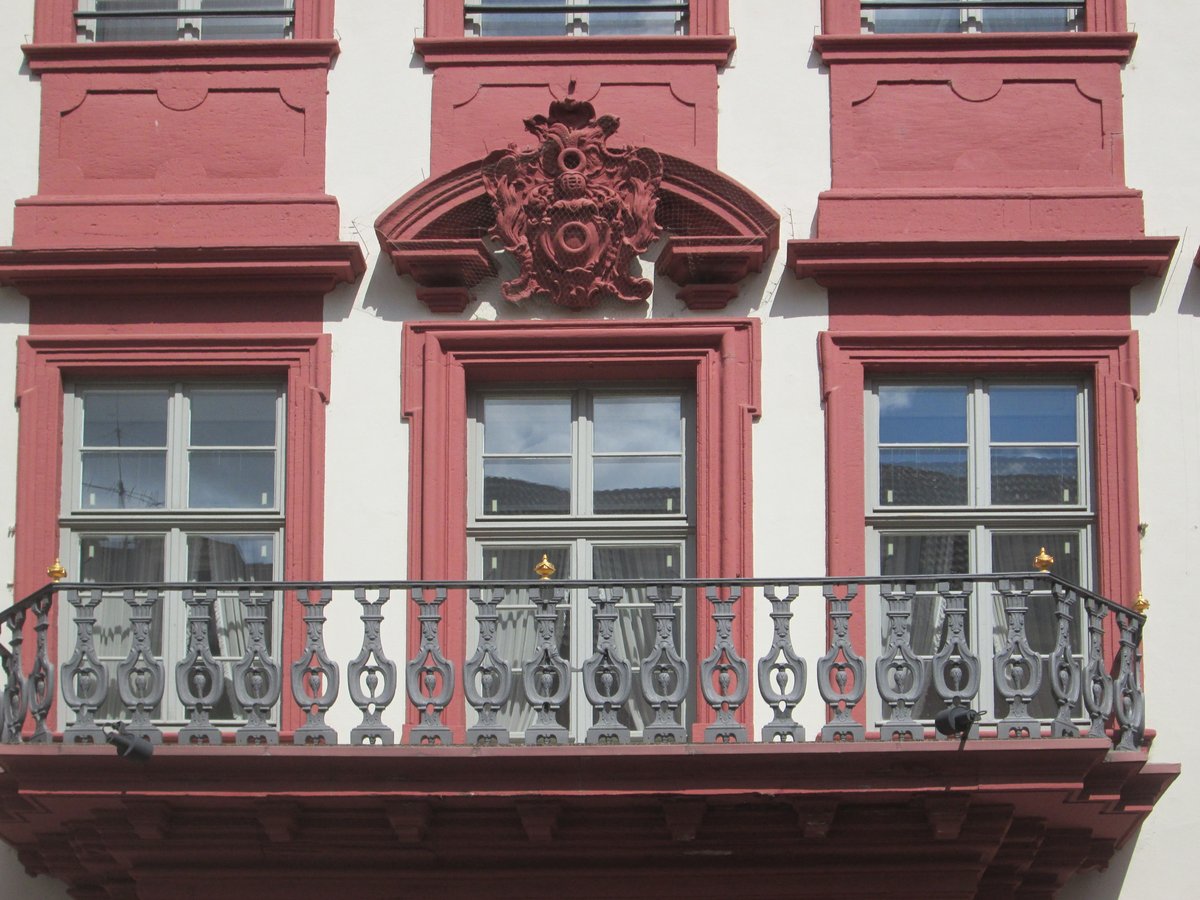
Palais Boisserée’s façade exemplifies late Baroque symmetry, enhanced by 19th-century Classical renovations. The building’s warm sandstone and restrained ornamentation harmonize with Heidelberg’s historic architecture. Key features include:
- A symmetrical two-story structure facing Karlsplatz.
- Modest portico with Ionic columns.
- Large windows, shallow pediment, and integrated garden courtyard. The use of stones from Heidelberg Castle’s destroyed tower adds historical significance (heidelberg.thomas-juelch.de).
Interior Elements
While public access to the interior is limited, historical records and special event accounts describe spaces such as:
- A grand staircase with wrought-iron railings.
- High-ceilinged salons featuring stucco moldings, parquet floors, and period furnishings.
- The "Green Salon" (Grüner Salon), renowned for its deep green wall coverings and use in literary and musical events (Literarische Gesellschaft Palais Boisserée).
Visiting Palais Boisserée: Hours, Tickets, and Accessibility
Opening Hours
Palais Boisserée currently functions as an academic facility (Heidelberg University’s Department of German Literature) and does not offer regular public tours or set visiting hours for the interior. The building’s façade and commemorative plaques can be freely viewed from Karlsplatz and Hauptstraße at any time. Occasionally, public lectures or cultural events are held here; check the university’s website for updates.
Tickets and Tours
- No entrance fee is required to view the exterior.
- There are no regular guided tours inside the building.
- Local tourist offices offer walking tours of Old Town that include the Palais Boisserée in their route. Advance booking is advised during peak season (Tour My Germany).
Accessibility
- The area around Palais Boisserée is flat and pedestrian-friendly, suitable for those with mobility challenges.
- As a historic structure, interior accessibility may vary and should be confirmed for special events.
- Public transportation stops (Universitätsplatz, Rathaus) are nearby (adac.de).
Travel Tips & Nearby Attractions
- Best Time to Visit: Early mornings or evenings for photography and a quieter atmosphere.
- Combine Your Visit: Explore Heidelberg Castle, the Old Bridge (Alte Brücke), Philosophenweg, the Church of the Holy Spirit, and Kurpfälzisches Museum.
- Seasonal Events: Karlsplatz hosts a Christmas market and open-air ice rink in winter, offering picturesque views of the Palais (adac.de).
Visitor Experience and Engagement
Events and Adaptive Use
Palais Boisserée hosts occasional public lectures, literary readings, and concerts, particularly through the Literarische Gesellschaft. These events offer rare opportunities to appreciate the interior’s preserved salons and historic ambiance (Literarische Gesellschaft Palais Boisserée).
Frequently Asked Questions (FAQ)
Q: Can I tour the inside of Palais Boisserée?
A: Regular public tours are not available. Interior access is limited to university events or special occasions.
Q: Is there an entrance fee or ticket required?
A: No, viewing the exterior and commemorative plaques is free.
Q: What are the best times to visit?
A: Weekday mornings and evenings are ideal for viewing and photography.
Q: Is Palais Boisserée accessible for visitors with disabilities?
A: The exterior and surrounding Karlsplatz are accessible; interior access may be limited.
Q: Where can I see the Boisserée brothers’ art collection?
A: Their collection is now part of Munich’s Alte Pinakothek.
Listen to the full story in the app
The whole Palais Boisserée,
told well.
Audio guides for 1,100+ cities across 96 countries. History, stories, and local insight — offline ready.

Verified, and shown.
Researched and written by the Audiala editorial team from historical records, architectural archives, and local expertise.
Researched from Wikidata, Wikipedia & official sources · fact-checked · How we make our guides →