Plan and listen to Stolperstein Dedicated To Siegfried Epstein with Audiala.
Audio guide in your pocket, itinerary in your browser. Built for the way you actually visit.
Introduction
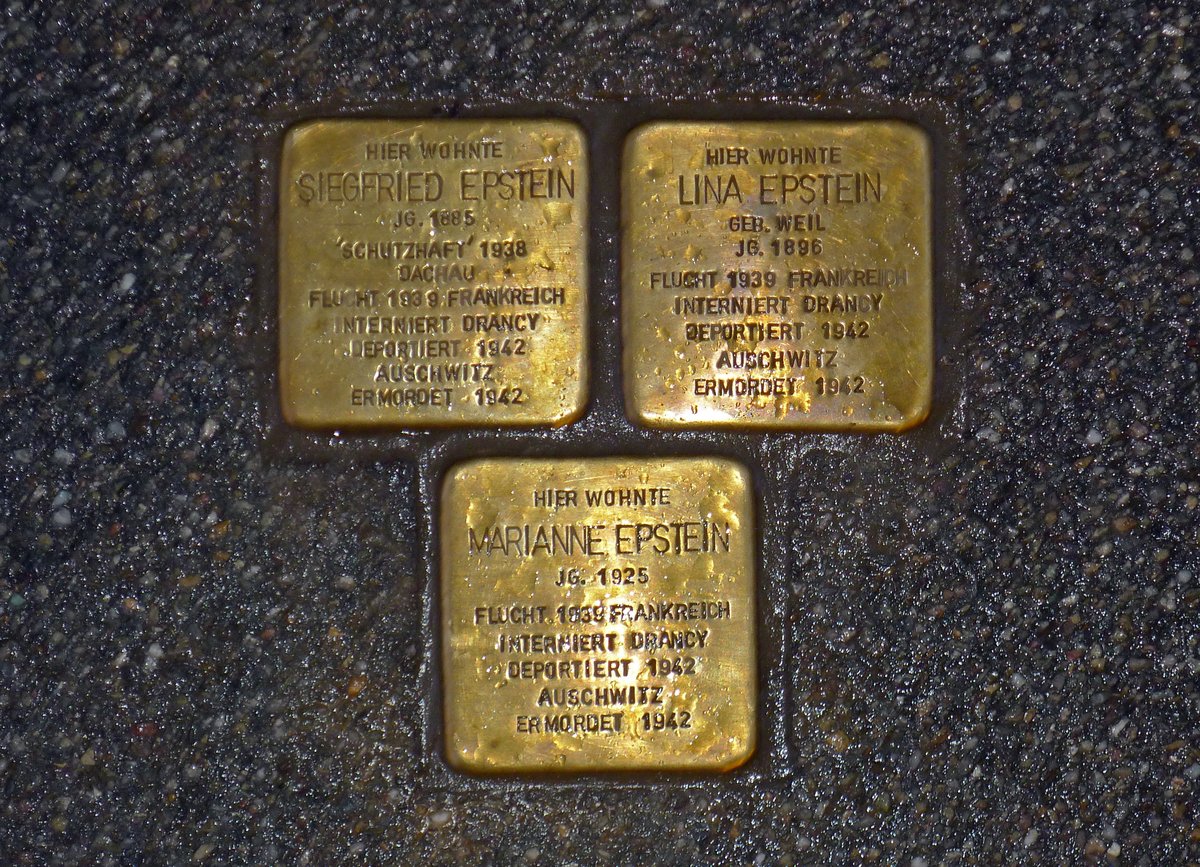
The Stolperstein dedicated to Siegfried Epstein in Freiburg im Breisgau stands as a profound reminder of the lives impacted by Nazi persecution. These "Stumbling Stones"—brass plaques set into city sidewalks—invite passersby to pause and reflect on individual victims, ensuring that their names and stories endure within the urban fabric. Conceived by artist Gunter Demnig in 1992, the Stolpersteine project has become the world’s largest decentralized Holocaust memorial, with over 116,000 stones across 31 European countries as of 2024 (stolpersteine.eu). In Freiburg, more than 480 stones commemorate the city’s former Jewish residents and other victims of Nazi persecution (Stolpersteine in Freiburg).
This guide offers a comprehensive overview for visitors, covering the origins and purpose of the Stolpersteine, practical information for visiting the Siegfried Epstein Stolperstein, historical context, and ways to engage with remembrance efforts in Freiburg.

Origins and Purpose of the Stolpersteine Project
The Stolpersteine project began in 1992 as a grassroots memorial to victims of National Socialism. Each stone is placed at the victim’s last freely chosen residence or workplace, reconnecting individual memory with the community (pragueviews.com). The project is anchored in the Talmudic principle: “A person is only forgotten when his or her name is forgotten.” By embedding names in public spaces, Stolpersteine make memory tangible and accessible, fostering reflection among all who encounter them.
Stolpersteine honor a diverse range of victims, including Jews, Roma and Sinti, political prisoners, homosexuals, Jehovah’s Witnesses, and individuals targeted by the Nazi “euthanasia” program (stolpersteine-luebeck.de). The design—a 10 x 10 cm brass plaque engraved by hand—ensures each memorial is personal and dignified (pragueviews.com).
Stolpersteine in Freiburg: Historical Context
Freiburg embraced the Stolpersteine project in 2002, beginning with a stone for Prof. Dr. Robert Liefmann at Goethestraße 33. The city’s Jewish community, once vibrant and integral to local cultural life, was shattered by the Nazi regime. The Stolpersteine in Freiburg, including that for Siegfried Epstein, reclaim these personal histories from anonymity (Stolpersteine in Freiburg).
Siegfried Epstein: Life and Persecution
Siegfried Epstein was born on April 17, 1896, in Freiburg im Breisgau to Simon and Ester Epstein (Deutsche Digitale Bibliothek). He married Lina Zerline Weil, and together they raised a daughter, Marianne. The Epstein family was deeply rooted in the city’s Jewish community, contributing to its social and economic life.
With the rise of the Nazi regime, the Epsteins faced escalating persecution. Siegfried was arrested during Kristallnacht and briefly interned at Dachau concentration camp. Released on the condition of immediate emigration, the family fled to France in January 1939 (refugiesjuifs87.fr). The Stolperstein for Siegfried Epstein stands not only as a memorial to his life but as a testimony to the broader suffering and resilience of Freiburg’s Jewish community.
Visiting the Siegfried Epstein Stolperstein: Location, Hours, and Access
Location
The Stolperstein for Siegfried Epstein is embedded in a residential sidewalk in central Freiburg, near other stones commemorating Lina and Marianne Epstein. Its precise location is available via the Stolpersteine in Freiburg website and mapping tools like Mapcarta.
Visiting Hours and Tickets
- Availability: Stolpersteine are public memorials and can be visited at any time, day or night.
- Tickets: No tickets or fees are required; access is always free.
Directions and Transportation
- By Foot: A short walk from Freiburg Hauptbahnhof brings visitors to the city center and Stolperstein locations.
- By Tram: The efficient tram system serves stops near most Stolpersteine. For routes, see the Freiburg public transport site.
- By Bicycle: Bike rentals and dedicated lanes make cycling a convenient option.
Accessibility
Most Stolpersteine are set flush into public sidewalks, but Freiburg’s historic cobblestone streets may pose challenges for those with limited mobility. For accessible routes, consult the city’s tourism office.
Visitor Etiquette and Best Practices
- Reflection: Pause to read the inscription, considering the individual’s story.
- Respect: Avoid standing directly on the stone or placing heavy objects atop it.
- Photography: Discreet photos are welcome; include educational context when sharing.
- Maintenance: If the stone appears dirty, gently clean it with a soft cloth—no abrasives or chemicals (Stolpersteine Freiburg).
- Reporting: Notify the Stolpersteine team if you notice damage or a missing stone.
Nearby Historical Sites
Enhance your visit by exploring other sites of Jewish heritage in Freiburg:
- Freiburg Synagogue: A modern memorial on the site of the destroyed synagogue.
- Jewish Museum Freiburg: Exhibits on local Jewish history (Jewish Museum Freiburg).
- Freiburg Old Town: Features many Stolpersteine and historical landmarks.
Frequently Asked Questions (FAQ)
Do I need tickets to visit the Siegfried Epstein Stolperstein?
No, the site is a public memorial with no ticket requirements.
Are there specific visiting hours?
Stolpersteine are accessible 24/7.
Are guided tours available?
Yes, especially on remembrance days and by arrangement with local organizations.
How can I find the stone?
Use the Stolpersteine in Freiburg website or mapping services like Mapcarta.
Is the site accessible to wheelchairs?
Stolpersteine are generally flush with sidewalks, though cobblestones may be uneven. For details, contact the tourism office.
Practical Tips for Your Visit
- Best Time: Late spring to early autumn offers mild weather for walking tours (Wanderlog).
- Respectful Tribute: Consider leaving a small stone or flower to honor the memory.
- Combine Visits: Plan a route to see other Stolpersteine and Jewish heritage sites.
- Augmented Experiences: Download the Audiala app for audio tours and interactive content.
Continuing Legacy and How to Engage
The Stolpersteine project is ever-evolving, with new stones added annually and communities actively preserving existing memorials (stolpersteine.eu). Visitors can support remembrance by:
- Participating in cleaning or commemorative events
- Sharing educational content
- Supporting local research and educational outreach
Stay updated on events and installations through the Stolpersteine in Freiburg website and related organizations.
Listen to the full story in the app
The whole Stolperstein Dedicated To Siegfried Epstein,
told well.
Audio guides for 1,100+ cities across 96 countries. History, stories, and local insight — offline ready.
Verified, and shown.
Researched and written by the Audiala editorial team from historical records, architectural archives, and local expertise.
Researched from Wikidata, Wikipedia & official sources · fact-checked · How we make our guides →