Plan and listen to Stolperstein Dedicated To Olga Mayer with Audiala.
Audio guide in your pocket, itinerary in your browser. Built for the way you actually visit.
Introduction to the Stolperstein Dedicated to Olga Mayer in Freiburg im Breisgau
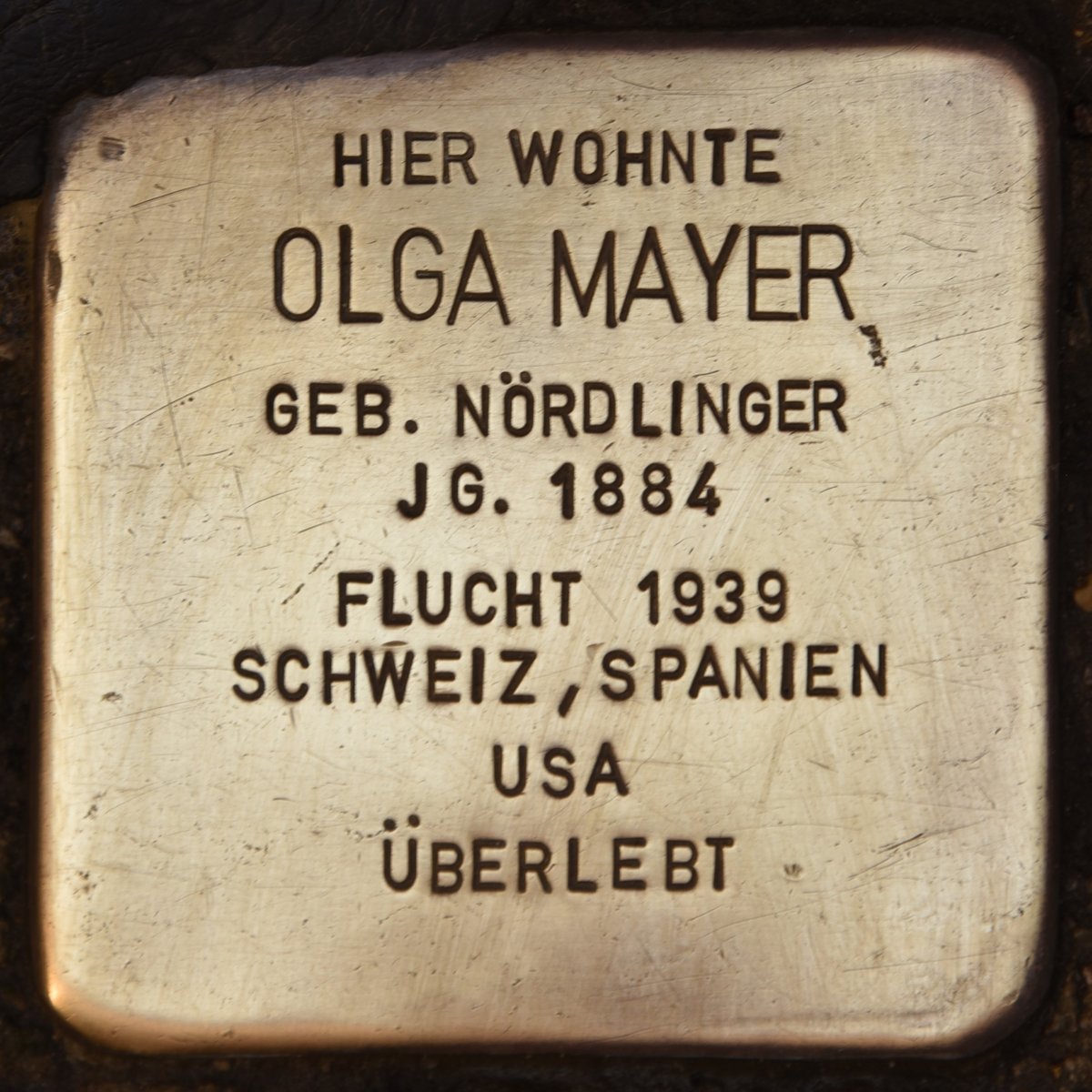
Visiting the Stolperstein dedicated to Olga Mayer in Freiburg im Breisgau offers an intimate encounter with history and remembrance. Stolpersteine, or "stumbling stones," are small brass plaques embedded in sidewalks at the last freely chosen residences of victims of National Socialism. Conceived in the early 1990s by German artist Gunter Demnig, the project has grown into the world’s largest decentralized memorial, with more than 116,000 stones installed across Europe, including over 480 in Freiburg alone (Stolpersteine.eu; Wikipedia: Stolpersteine in Freiburg).
Olga Mayer’s Stolperstein stands as a poignant testament to her life and the fate of Freiburg’s Jewish community under Nazi persecution. Located outside her last self-chosen home in the city center, the memorial encourages reflection on the individual lives behind historical atrocities and connects visitors to Freiburg’s multifaceted past (Stolpersteine-in-Freiburg.de; Gedenkbuch Freiburg).
This guide presents the history and cultural significance of the Stolperstein project and Olga Mayer’s memorial, along with practical information: location, accessibility, visiting hours, guided tour recommendations, and nearby attractions. Whether you are a history enthusiast, a pilgrim of remembrance, or a curious traveler, this article equips you with the knowledge to engage meaningfully with this unique memorial and the broader heritage of Freiburg. For further details, consult the Stolpersteine Freiburg website and consider joining tours from local organizations (Breisgau Guides; Freiburg Tourist Information).

Historical Background of the Stolpersteine Project
Origins and Concept
The Stolpersteine project was initiated by Gunter Demnig in the early 1990s. The first stone was laid in 1992 in Cologne, originally to commemorate the Sinti and Roma victims of the Nazis. By 1993, the project expanded to honor individual victims, with hand-engraved plaques placed in front of their last self-chosen residences (Stolpersteine.eu; LBI.org; Wikipedia).
Artistic Vision and Scale
Demnig describes Stolpersteine as a "social sculpture," engaging survivors, families, and communities in remembrance. Each 96 x 96 x 100 mm brass plate is hand-engraved with the victim’s name, birth year, fate, and, where known, place and date of death. Since its inception, the project has expanded to more than 1,860 municipalities in 31 European countries (Stolpersteine.eu Facts and Figures), with local volunteers and researchers often involved in the process (Amusing Planet).
Commemorative Philosophy
The guiding belief of the Stolpersteine project is that "a person is only forgotten when their name is forgotten" (Stolpersteine-in-Freiburg.de). Stones commemorate all victims of the Nazi regime—Jews, Sinti and Roma, people with disabilities, political prisoners, and others. The act of stooping to read a Stolperstein is symbolic of respect and remembrance (Amusing Planet).
Stolpersteine in Freiburg im Breisgau
Freiburg joined the Stolpersteine initiative in 2002, led by Marlis Meckel. As of June 2025, there are over 480 Stolpersteine in Freiburg (Wikipedia: Stolpersteine in Freiburg). The stones are primarily located at victims’ last self-chosen addresses, with a few at significant sites such as the former Gestapo headquarters.
Visiting Stolpersteine in Freiburg: Practical Information
Locations and How to Find Stolpersteine
Stolpersteine are dispersed throughout Freiburg’s historic districts, especially in the Altstadt (Old Town) and around key historical sites. Interactive maps and guides are available on the Stolpersteine-in-Freiburg.de website.
Visiting Hours and Admission
Stolpersteine are embedded in public sidewalks and are accessible 24/7, year-round. There is no admission fee; anyone can visit at any time.
Guided Tours and Accessibility
Guided walking tours focusing on Stolpersteine and Freiburg’s Holocaust history are available through local organizations. These tours deepen the visitor experience with expert context and personal stories. Most Stolpersteine are on public sidewalks and generally accessible, though some areas have cobblestones or uneven pavements. Check tour provider websites for accessibility details (Breisgau Guides; Freiburg Tourist Information).
Nearby Attractions
Complement your visit by exploring the Freiburg Minster, Historical Merchants’ Hall, Old Synagogue, and other Stolpersteine throughout the city. Freiburg's efficient public transit and pedestrian-friendly layout make it easy to combine multiple sites in one outing.
Controversies and Debates
While widely embraced, the Stolpersteine project has faced criticism, particularly concerning placing victims’ names on the ground where they may be stepped on. Some cities, like Munich, ban Stolpersteine on public property and use alternative memorials instead (LBI.org; Smithsonian Folklife Magazine). Proponents argue that this very placement integrates remembrance into daily life and prompts spontaneous reflection.
Legacy and Continuing Impact
The Stolpersteine project continues to grow, engaging communities in research, installation, and maintenance. The stones restore dignity to victims and keep their stories in public consciousness, fostering education and dialogue across generations (Stolpersteine Freiburg; Badische Zeitung).
Olga Mayer: Life and Commemoration
Olga Mayer, born into a Jewish family in Freiburg, suffered persecution under the Nazi regime. Married to Max Mayer, she was affected by anti-Jewish measures such as forced name changes and Aryanization of businesses. Her Stolperstein, placed outside her last self-chosen residence, transforms abstract statistics into a tangible, personal narrative and serves as a permanent reminder of Freiburg’s once-thriving Jewish community (Gedenkbuch Freiburg).
Visiting the Olga Mayer Stolperstein: History, Significance, and Practical Guide
Location and Accessibility
The Olga Mayer Stolperstein is located in front of her last known address in central Freiburg im Breisgau. The exact address can be found via local online resources or by consulting the Jewiki list of Stolpersteine in Freiburg. The memorial is accessible at all times and is on a public sidewalk, making it wheelchair accessible.
Guided Tours
Guided tours focusing on Holocaust remembrance and Jewish history in Freiburg often include the Olga Mayer Stolperstein. These tours are available through the Freiburg tourism office and local organizations and provide deeper context and personal stories (Breisgau Guides; Freiburg Tourist Information).
Nearby Attractions and Travel Tips
When visiting Olga Mayer’s Stolperstein, consider exploring nearby historical sites such as the Freiburg Minster, Old Synagogue, and Historical Merchants’ Hall. Public transportation and bike rentals are widely available. Combining your visit with other sites provides a comprehensive experience of Freiburg’s heritage.
Cultural and Societal Significance
Stolpersteine like Olga Mayer’s foster community engagement, education, and dialogue. Schools and local groups often participate in researching, funding, and installing Stolpersteine, and many residents maintain the stones by cleaning or decorating them. These acts reinforce the city’s commitment to remembrance and countering antisemitism (Stolpersteine Freiburg; Zentralrat der Juden).
Visitor Experience and Participation
- Pause and Reflect: Reading the inscription requires stooping, symbolizing respect.
- Cleaning the Stone: On remembrance days, it's customary to clean Stolpersteine as a sign of honor.
- Leave a Token: Placing a small stone or flower is a traditional gesture of remembrance.
- Photography: Allowed, but please be discreet.
- Maintain Respect: Keep a quiet, contemplative atmosphere, especially in residential areas.
FAQ
Where is the Olga Mayer Stolperstein?
Located in central Freiburg outside her last chosen residence. Use Jewiki or local maps for specifics.
When can I visit?
Anytime—Stolpersteine are accessible 24/7.
Is there an admission fee?
No, visiting is free.
Are guided tours available?
Yes, through local organizations and the Freiburg tourism office.
Is the site accessible for people with disabilities?
Yes, as it is on a public sidewalk with no barriers.
Preservation and Future Directions
Stolpersteine are maintained by volunteers and local authorities, who clean and protect them from weather and vandalism. Digital resources such as interactive maps and dedicated apps enhance educational outreach (Stolpersteine App).
Listen to the full story in the app
The whole Stolperstein Dedicated To Olga Mayer,
told well.
Audio guides for 1,100+ cities across 96 countries. History, stories, and local insight — offline ready.
Verified, and shown.
Researched and written by the Audiala editorial team from historical records, architectural archives, and local expertise.
Researched from Wikidata, Wikipedia & official sources · fact-checked · How we make our guides →