Plan and listen to Stolperstein Dedicated To Hedwig Metzger with Audiala.
Audio guide in your pocket, itinerary in your browser. Built for the way you actually visit.
Introduction
The Stolperstein for Hedwig Metzger in Freiburg im Breisgau is a moving, decentralized memorial that honors the life and fate of a Holocaust victim at her last freely chosen residence. As part of the wider Stolpersteine project initiated by artist Gunter Demnig, this small brass plaque embedded in the pavement transforms everyday space into a site of active remembrance. This guide provides an in-depth overview for visitors, covering the memorial’s history and significance, practical visitor information, cultural and ethical considerations, and recommendations for a meaningful experience in Freiburg.

Origins and Development of the Stolpersteine Project
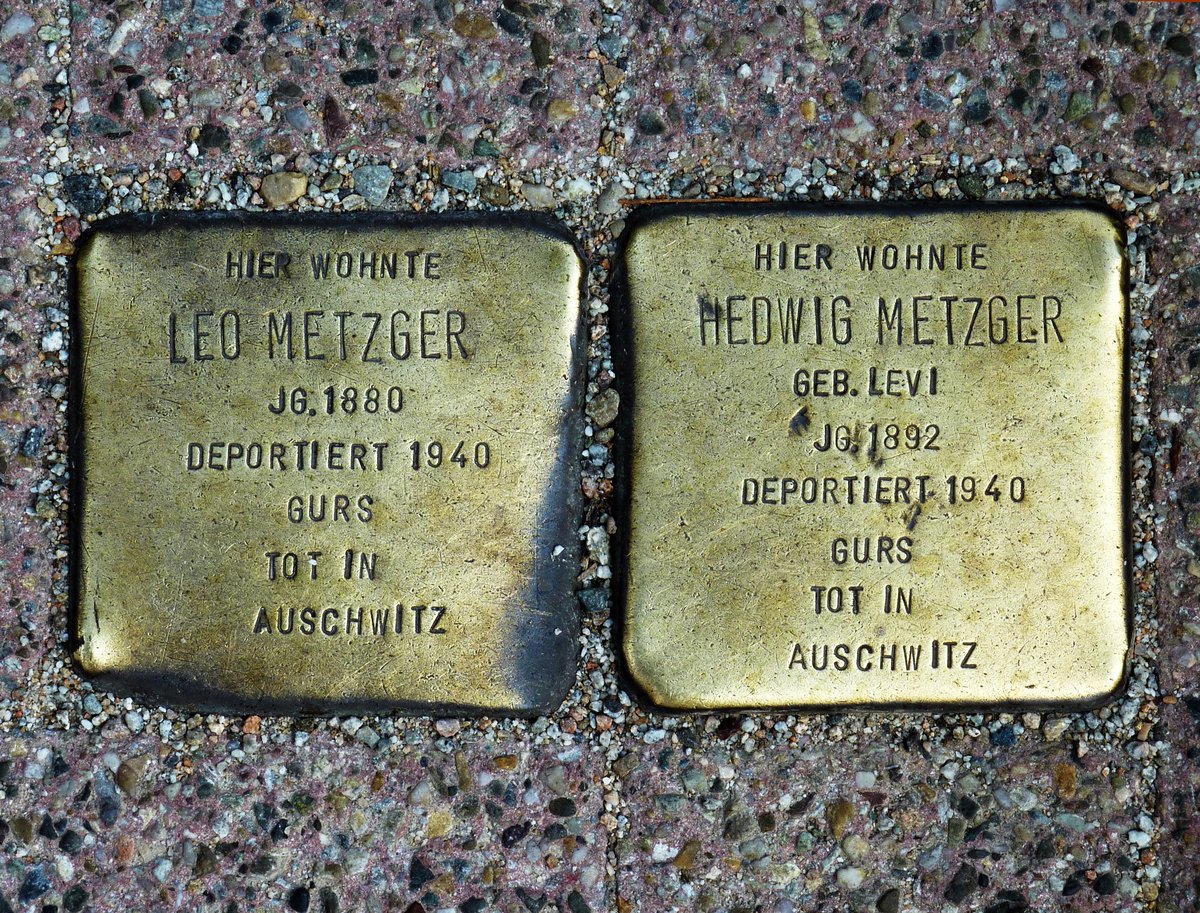
The Stolpersteine ("stumbling stones") project began in 1992 when German artist Gunter Demnig sought to create a decentralized, personal way to commemorate victims of Nazi persecution. Each Stolperstein is a 10x10 cm concrete cube with a hand-engraved brass plate, inscribed with the victim’s name, date of birth, fate, and—if known—date and place of death (Wikipedia - Stolperstein). The stones are placed outside the last known address where the person lived freely, integrating memory into the fabric of daily urban life.
The term "Stolperstein" is rich with meaning, alluding not only to the literal act of stumbling but also to the metaphorical "stumbling block" that prompts reflection. The project is now the world's largest decentralized memorial, with over 100,000 stones installed across more than 1,800 cities in Europe (IamExpat - Stolpersteine, pragueviews.com).
The Stolperstein for Hedwig Metzger: History and Location
Historical Background
Hedwig Metzger (née Levi) was born on June 7, 1892, in Schwetzingen. She and her husband, Leo Metzger, moved to Freiburg from Karlsruhe and lived at Zunftstraße 13 (now Zunftstraße 7) between 1936 and 1938. On October 22, 1940, during mass deportations of Jews from Freiburg, Hedwig and Leo were arrested and deported to the Gurs internment camp in southern France. After two years, Hedwig was sent via Drancy transit camp to Auschwitz-Birkenau, where she was murdered in the gas chambers in August 1942 at the age of 50. Of her transport’s 1,006 deportees, only one survived (Traces of War - Stumbling Stones Zunftstraße 7, freiburg-schwarzwald.de).
Location
The Stolperstein dedicated to Hedwig Metzger is embedded in the pavement outside Zunftstraße 7, Freiburg im Breisgau, marking the address where she last lived freely. This site is in the heart of Freiburg’s historic center, making it easily accessible to visitors.
Visiting Information: Hours, Accessibility, and Directions
Visiting Hours
- Availability: The Stolperstein is installed in a public sidewalk and can be visited at any time, day or night.
- Admission: No tickets or fees are required; the site is always freely accessible (Freiburg Tourism Office).
Accessibility
- Physical Accessibility: The stone is flush with the pavement and located in a pedestrian-friendly area. Wheelchair access is generally good, though Freiburg’s historic streets may sometimes be uneven.
- Wayfinding: Zunftstraße 7 is a short walk from the Freiburg Hauptbahnhof (main train station). Public trams and buses serve the area, and city maps or digital guides can help you locate the Stolperstein.
Guided Tours and Special Events
- Freiburg offers guided walking tours focused on Holocaust remembrance and the Stolpersteine project. Tours often include the Hedwig Metzger Stolperstein and provide historical context. Check with the Freiburg Tourism Office or local historical societies for up-to-date schedules.
Cultural and Ethical Considerations
Memorial Purpose and Symbolism
Stolpersteine are intentionally modest and decentralized, prompting reflection through everyday encounters. Their placement at street level not only refers to the desecration of Jewish gravestones during the Nazi era but also requires the viewer to bow slightly to read the inscription—a gesture of respect (IamExpat - Stolpersteine).
Respectful Behavior
- Pause and Reflect: Take a moment to read the inscription and consider the life and fate of the individual commemorated.
- Offerings: Small stones or flowers may be left as a sign of remembrance, following Jewish tradition.
- Photography: Discreet, respectful photography is allowed; avoid disturbing residents or blocking the sidewalk.
- Cleaning: Many communities organize cleaning events, especially on Holocaust Remembrance Day (January 27) and the Kristallnacht anniversary (November 9). Visitors are welcome to gently clean the stone if needed (folklife.si.edu).
Ethical Engagement
- Privacy: Stolpersteine are often placed in front of private residences. Be mindful not to intrude on the privacy of current occupants.
- Context: Approach the Stolperstein as a place of mourning and reflection rather than a tourist attraction.
- Awareness: Recognize that the memorial commemorates not only Jewish victims but also other groups persecuted by the Nazis, including Roma, Sinti, LGBTQ+ individuals, and political dissidents (stolpersteine.eu).
Community Involvement and Preservation
The installation and maintenance of Stolpersteine are community-driven, with local volunteers, schools, and descendants of victims playing key roles. In Freiburg, research, installation ceremonies, and preservation efforts are part of ongoing educational and commemorative initiatives (Wikipedia - Stolperstein, freiburg-schwarzwald.de).
Nearby Historical Sites and Tours
While visiting the Stolperstein for Hedwig Metzger, consider exploring other significant sites in Freiburg, such as:
- Freiburg Minster (Freiburger Münster): A renowned Gothic cathedral.
- Historical Merchants’ Hall: An architectural landmark.
- The Old Town (Altstadt): Medieval streets and historical charm.
- Museums: Including the Augustinermuseum and Museum für Stadtgeschichte.
Guided tours are offered by local organizations and can deepen your understanding of Freiburg’s Holocaust history and broader heritage (Freiburg Tourism Office).
Frequently Asked Questions (FAQ)
Q: Where is the Stolperstein for Hedwig Metzger located?
A: Outside Zunftstraße 7, Freiburg im Breisgau.
Q: What are the visiting hours?
A: The Stolperstein is accessible 24/7 as it is on a public sidewalk.
Q: Is there an entry fee or ticket required?
A: No, visiting is free of charge.
Q: Are guided tours available?
A: Yes, local organizations offer guided tours focusing on Freiburg’s Stolpersteine and Holocaust history.
Q: Is the site wheelchair accessible?
A: Generally yes, though some historic streets may be uneven.
Q: Can I participate in maintaining Stolpersteine?
A: Community cleaning events are regularly held; consult local organizations for participation.
Listen to the full story in the app
The whole Stolperstein Dedicated To Hedwig Metzger,
told well.
Audio guides for 1,100+ cities across 96 countries. History, stories, and local insight — offline ready.
Verified, and shown.
Researched and written by the Audiala editorial team from historical records, architectural archives, and local expertise.
Researched from Wikidata, Wikipedia & official sources · fact-checked · How we make our guides →