Plan and listen to Stadtarchiv Freiburg with Audiala.
Audio guide in your pocket, itinerary in your browser. Built for the way you actually visit.
Introduction: Why Visit the Stadtarchiv Freiburg?
Located in the heart of Freiburg im Breisgau, the Stadtarchiv Freiburg (Freiburg City Archive) is a cornerstone of the city’s historical and cultural identity. Established with the city’s founding in 1120 by the Dukes of Zähringen, the archive has safeguarded Freiburg’s documentary heritage through centuries of political transformation, urban development, and social change. Today, it not only preserves a remarkable collection of documents, maps, images, and cultural artifacts but also serves as a vibrant hub for research, education, and public engagement.
Whether you are a scholar, genealogist, student, or curious traveler, a visit to the Stadtarchiv offers unparalleled access to the living memory of Freiburg. This guide provides all the practical details you need—opening hours, ticketing, accessibility, highlights of the collections, and tips for combining your visit with other Freiburg attractions. For the latest updates, consult the official Stadtarchiv Freiburg website and related cultural portals (fribourg.ch; freiburg.de).


A Brief History of the Stadtarchiv Freiburg
Origins in the Middle Ages
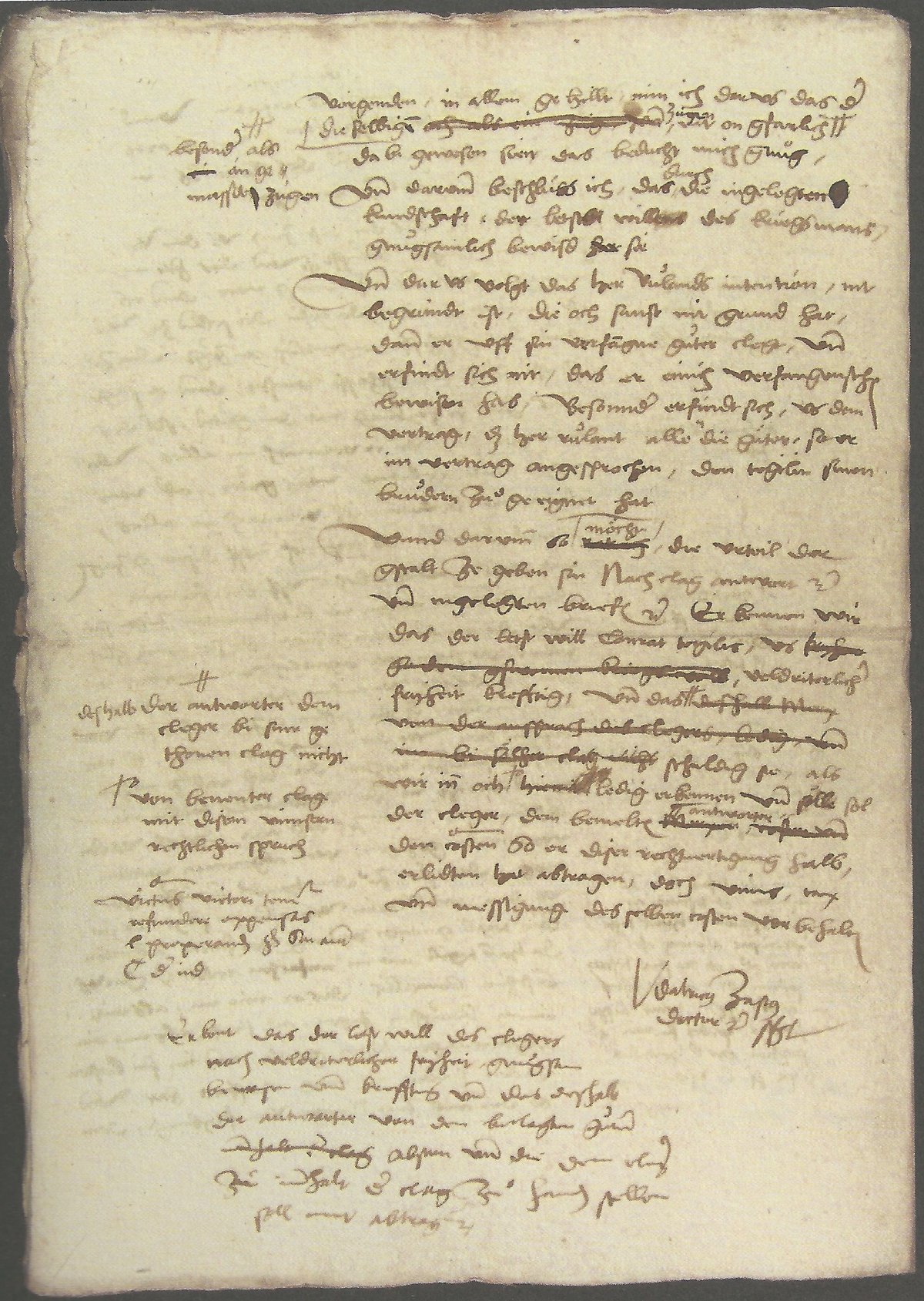
The Stadtarchiv’s roots stretch back to Freiburg’s founding by the Dukes of Zähringen in 1120 (en.wikipedia.org). Early on, documents such as charters and legal records were housed in a “wandering archive”—a chest moved between officials’ homes. Only with the establishment of the first town hall in 1303 did records begin to find a more permanent home, although sensitive documents often remained mobile, reflecting the city’s turbulent medieval politics (de.wikipedia.org).
Much of the earliest material—such as the original constitution and documents from the City League period—has been lost, but holdings from the late 18th and 19th centuries remain, offering a window into Freiburg’s dynamic early history (www.ville-fribourg.ch).
Through Political Change
Over the centuries, the archive’s contents and organization evolved with Freiburg’s shifting allegiances—from Zähringen to the Counts of Freiburg, Habsburg rule, and finally integration into Baden in 1806 (en.wikipedia.org). Each era left its mark through new administrative practices and document types, including records from Freiburg’s time as an imperial city and its administrative restructuring after 1803 (www.ville-fribourg.ch).
The Archive’s Evolving Role and Buildings
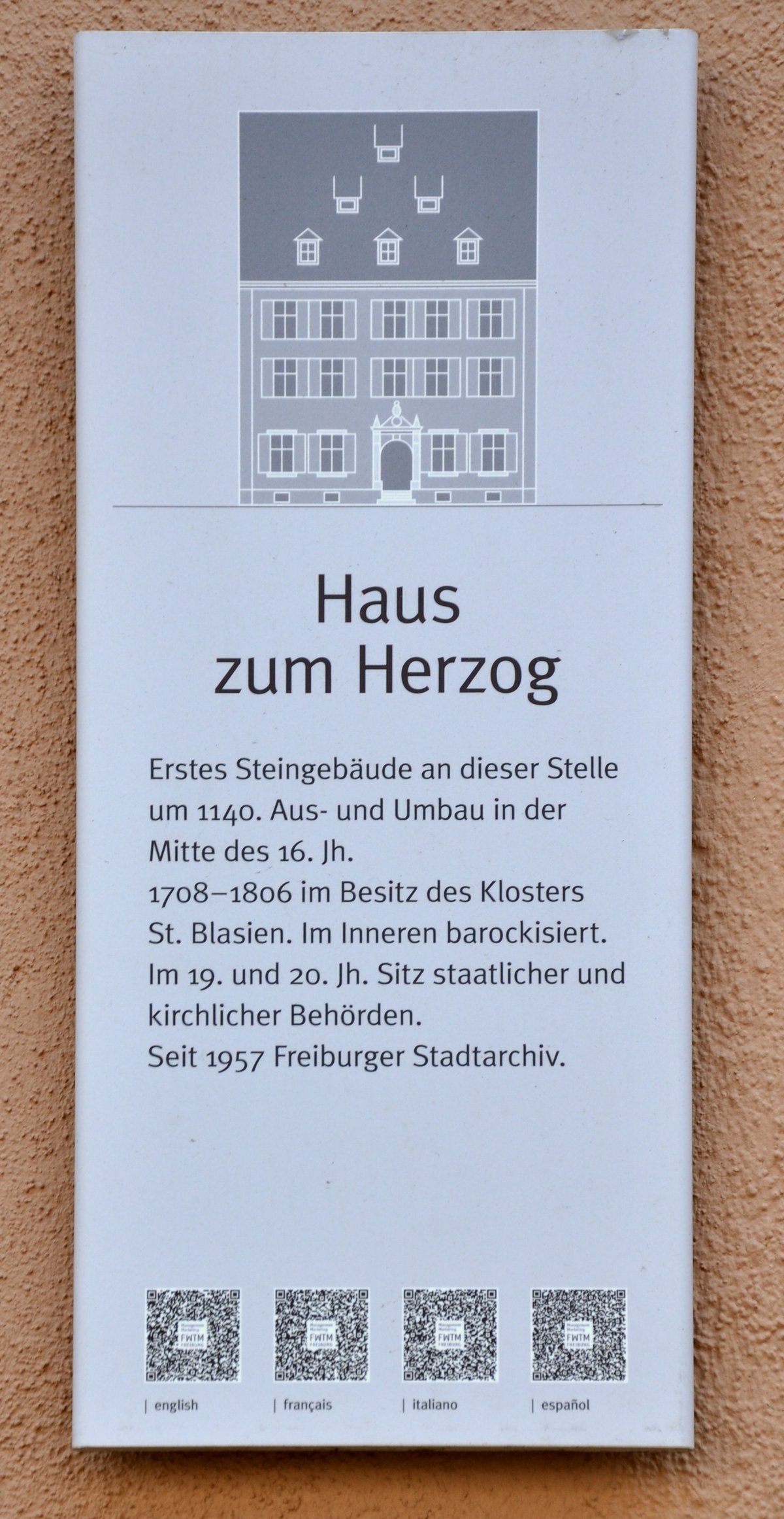
The Stadtarchiv’s physical home has changed repeatedly as the city grew. For much of the 20th century, it was housed in the medieval “Haus zum Herzog,” one of Freiburg’s oldest buildings with foundations from 1120 and a beam ceiling dating to 1263 (de.wikipedia.org). After WWII, the collections were dispersed, but by 1957, they were consolidated in this historic building. Space constraints led to further relocations, and plans are underway for a modern facility at Freiburg Messe, reflecting the archive’s ongoing importance and the city’s commitment to preservation (de.wikipedia.org).
Collections and Notable Holdings
Archival Treasures
The Stadtarchiv Freiburg serves as the city’s political, social, and cultural memory (fribourg.ch). Key holdings include:
- Medieval and Early Modern Charters: Surviving statutes, legal records, and city council minutes.
- Administrative Records: Files documenting urban development, public works, and social services from the 19th century onward.
- Cultural and Private Collections: Donations from local families and organizations, providing insight into everyday life and traditions.
- Special Collections: Highlighted by the “Jean und Marie-Jeanne Dubas-Cuony” collection and the “Le Galetas” fire brigade collection, with materials ranging from rare art to firefighting history.
- Visual Materials: Maps, posters, photographs, and tourism memorabilia dating back to 1903 (Freiburg Collections).
Specialized Library
The archive’s reference library holds approximately 80,000 volumes on Freiburg, Baden-Württemberg, and the Upper Rhine, as well as archival science and research publications (Stadtarchiv Freiburg – Veröffentlichungen).
Publications and Research
The Stadtarchiv is a center for research and public education. Landmark publications include the 1520 “Freiburger Stadtrecht” and the 1828 “Urkundenbuch der Stadt Freiburg i. Br.” by Heinrich Schreiber (de.wikipedia.org). Since 1890, the archive has published research series and illustrated booklets for wider audiences, as well as producing documentary films in partnership with cultural institutions (Stadtarchiv Freiburg – Veröffentlichungen).
Practical Visitor Information
Address and Getting There
- Address: Grünwälderstraße 15, 79098 Freiburg im Breisgau
- Public Transport: Tram lines 1, 2, 3, and 4 (stop "Bertoldsbrunnen"), buses from all city districts
- Parking: Nearby public garages—limited spaces during peak hours
Opening Hours and Appointments
- Regular Hours: Monday, Tuesday, Thursday: 10:00–16:00; Wednesday: 10:00–18:00; closed Fridays
- Research Visits: Advance registration recommended; contact via official website for appointments and material requests
Admission and Services
- Entry: Free for individual research and most exhibitions
- Special Events/Tours: Some may require advance booking and a nominal fee
- Accessibility: Fully wheelchair accessible; ramps, elevators, and accessible restrooms available
Facilities
- Reading Rooms: For research and document consultation—photo ID required for registration
- Digital Catalogues: On-site and partial online access for preliminary research
- Visitor Assistance: Professional staff available for guidance and support
- Lockers: Provided for coats and bags; not permitted in reading rooms
Guided Tours, Exhibitions, and Events
- Guided Tours: Available by advance arrangement for groups and schools
- Exhibitions: Regularly scheduled, with bilingual (German/English) panels on Freiburg’s history and archive highlights
- Educational Programs: Workshops, lectures, and partnerships with local schools and universities (Freiburg for Art and Culture Enthusiasts)
Nearby Attractions and Travel Tips
- Freiburg Münster (Cathedral): Iconic Gothic landmark nearby
- Historic Old Town: Explore the Altstadt’s medieval streets and architecture
- Museums: Augustiner Museum and others within walking distance (The Crazy Tourist)
- Dining: Numerous cafés and restaurants around Münsterplatz and Bertoldsbrunnen
- Seasonal Tip: June offers mild weather and vibrant local markets (Wanderlog)
Frequently Asked Questions (FAQ)
Q: What are the visiting hours?
A: Monday, Tuesday, Thursday 10:00–16:00; Wednesday 10:00–18:00; closed Fridays.
Q: Is an appointment required?
A: Advance registration is recommended for research visits and required for group tours.
Q: Is entry free?
A: Yes, entry is free for research and most exhibitions. Some events or tours may charge a fee.
Q: Is the archive accessible for visitors with disabilities?
A: Yes, the building is wheelchair accessible and assistance is available.
Q: Are guided tours available?
A: Yes, by advance arrangement; check the website for upcoming exhibitions and workshops.
Q: Can I take photos?
A: Photography is not permitted without prior permission; reproduction services available for a fee.
Q: Are English-language resources provided?
A: Some exhibitions and guides are bilingual; staff can assist English-speaking visitors.
Discover More
- Website: stadtarchiv.freiburg.de
- Address: Grünwälderstraße 15, 79098 Freiburg im Breisgau
- Contact: Book tours or group visits in advance; check for current hours and special events
- Mobile App: Download the Audiala app for self-guided historical tours, including highlights related to the Stadtarchiv and Freiburg’s heritage
Enhance your experience by combining your visit to the Stadtarchiv with nearby historical sites, markets, and museums. For the latest updates on events and exhibitions, follow the archive on social media and consult the official website.
Listen to the full story in the app
The whole Stadtarchiv Freiburg,
told well.
Audio guides for 1,100+ cities across 96 countries. History, stories, and local insight — offline ready.
Verified, and shown.
Researched and written by the Audiala editorial team from historical records, architectural archives, and local expertise.
Researched from Wikidata, Wikipedia & official sources · fact-checked · How we make our guides →