



Place
Germany Updated Oct 2026
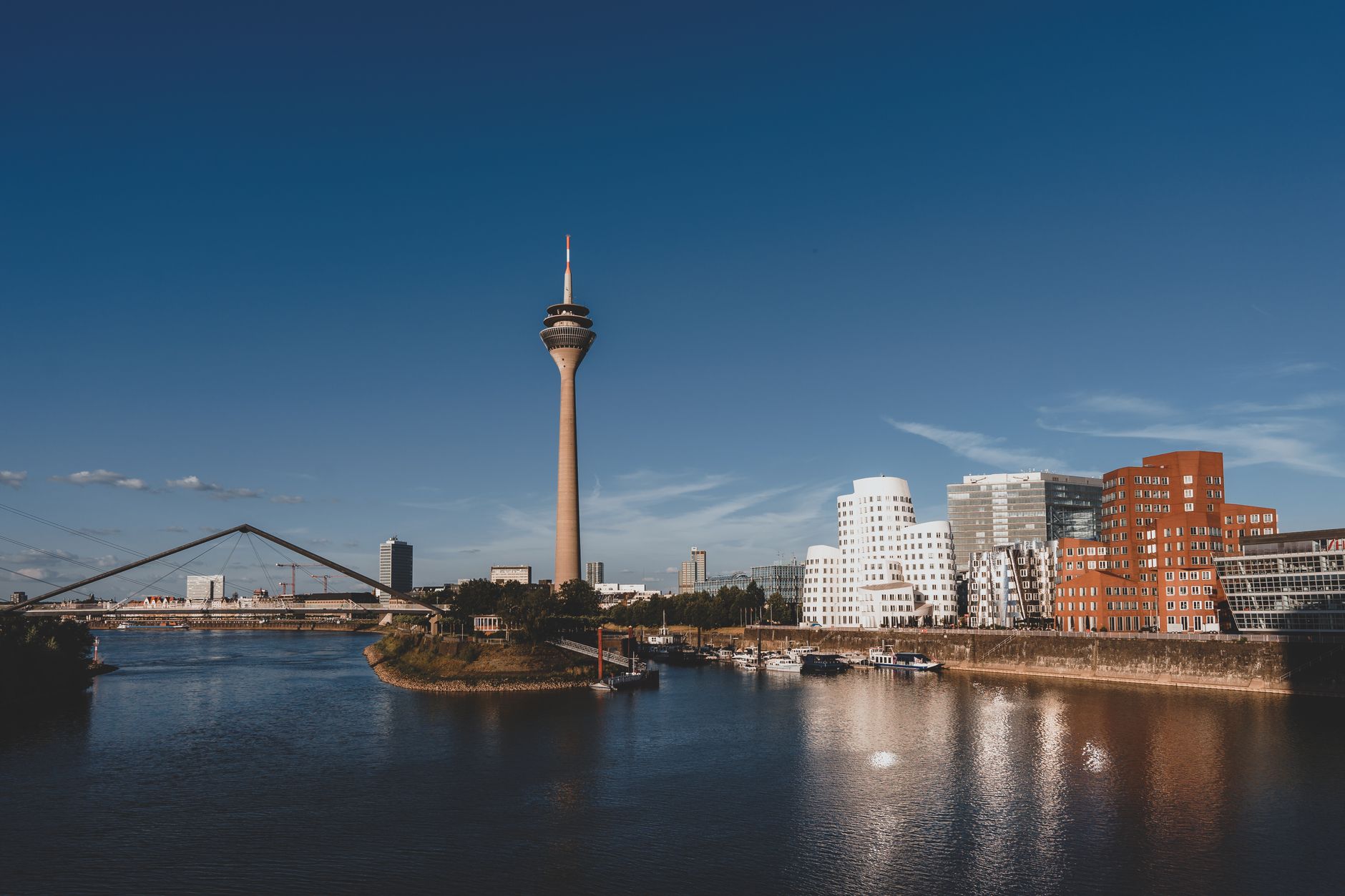
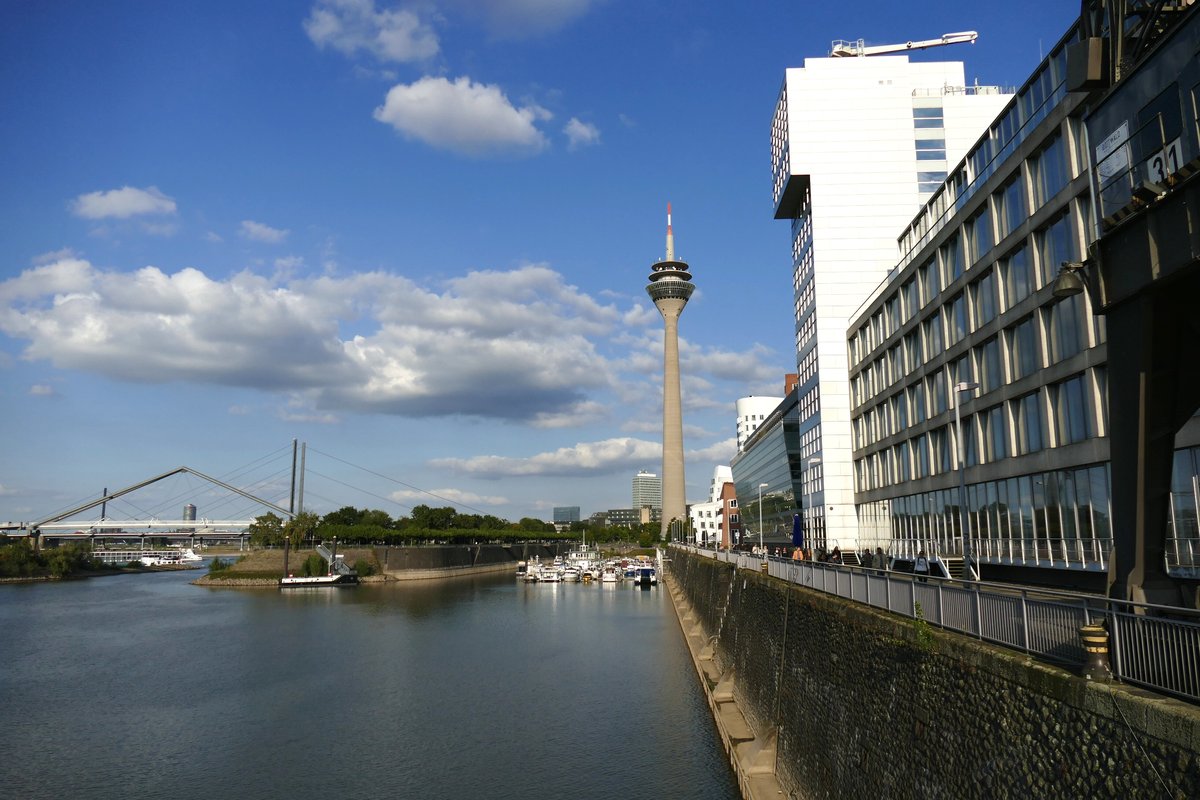
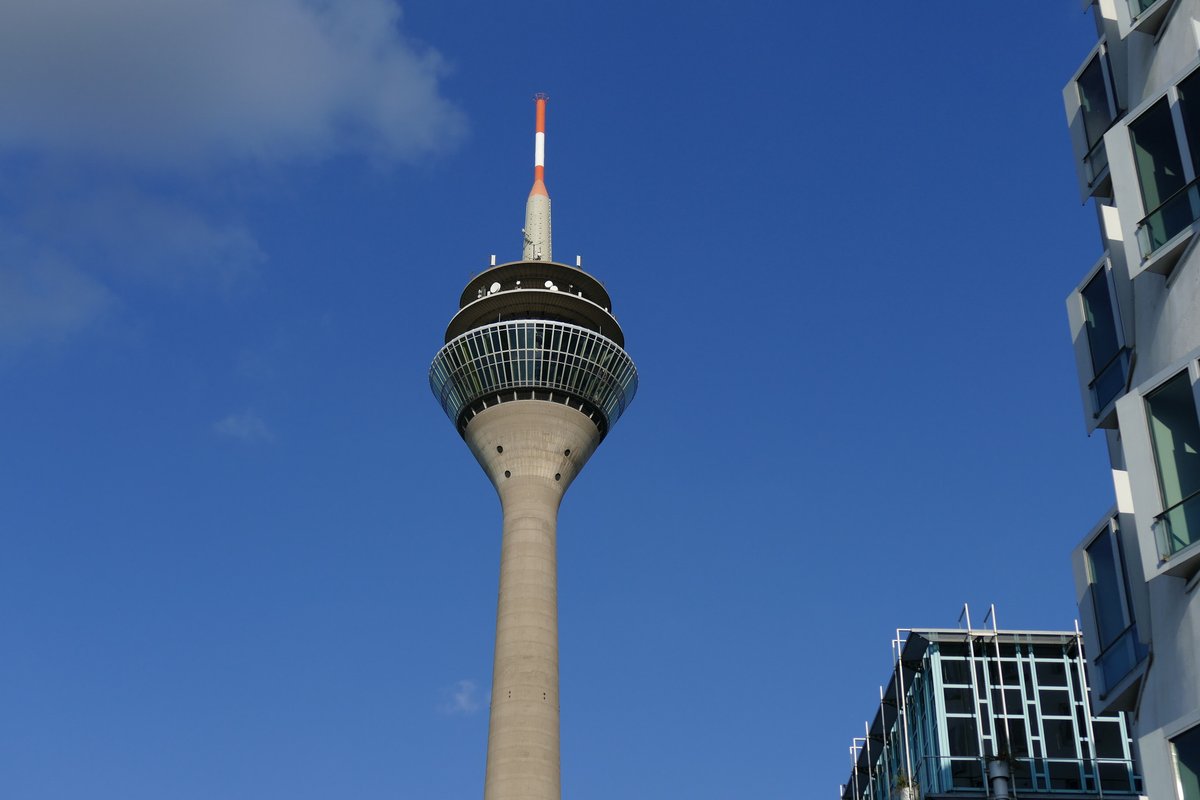
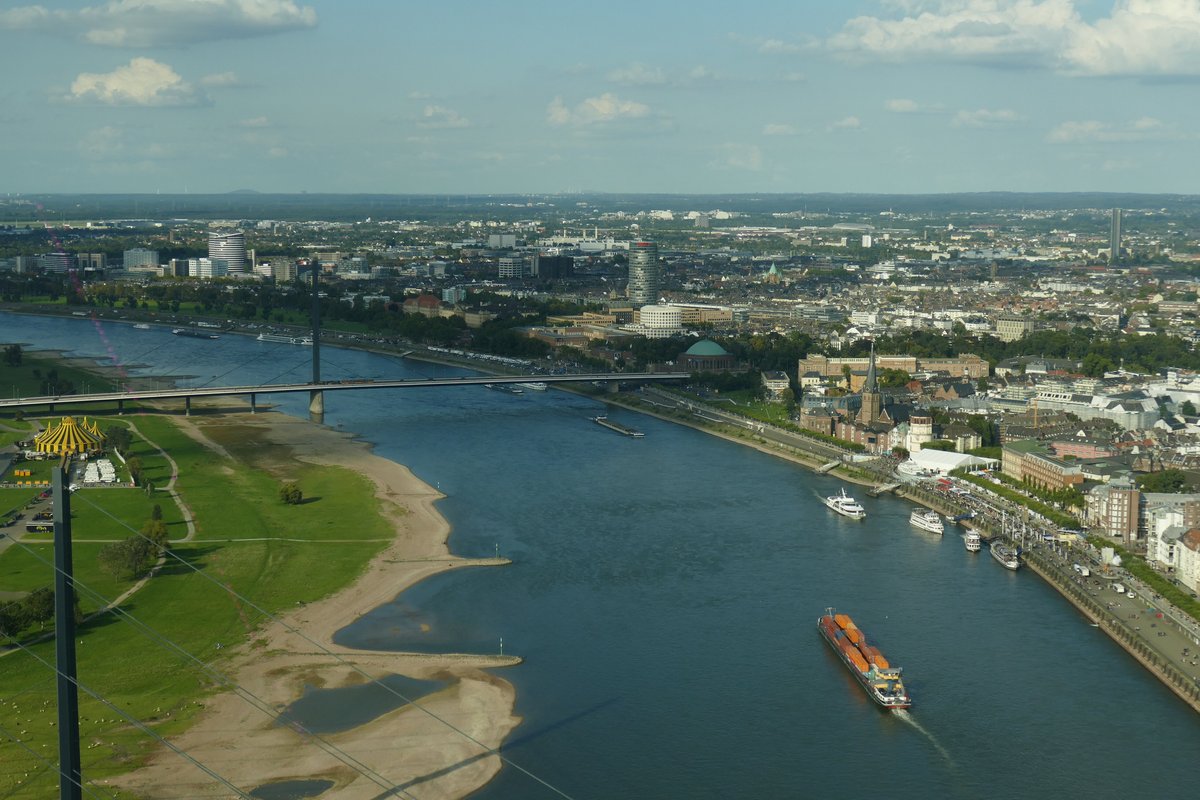
After dark, the Rheinturm’s light clock sends glowing numerals up a 240.5-meter shaft; below, the Rhine carries the last light past Gehry’s leaning, mismatched towers. This is Düsseldorf, Germany, where an evening can move from copper-brown Altbier in an old brewhouse to ramen on Immermannstraße.
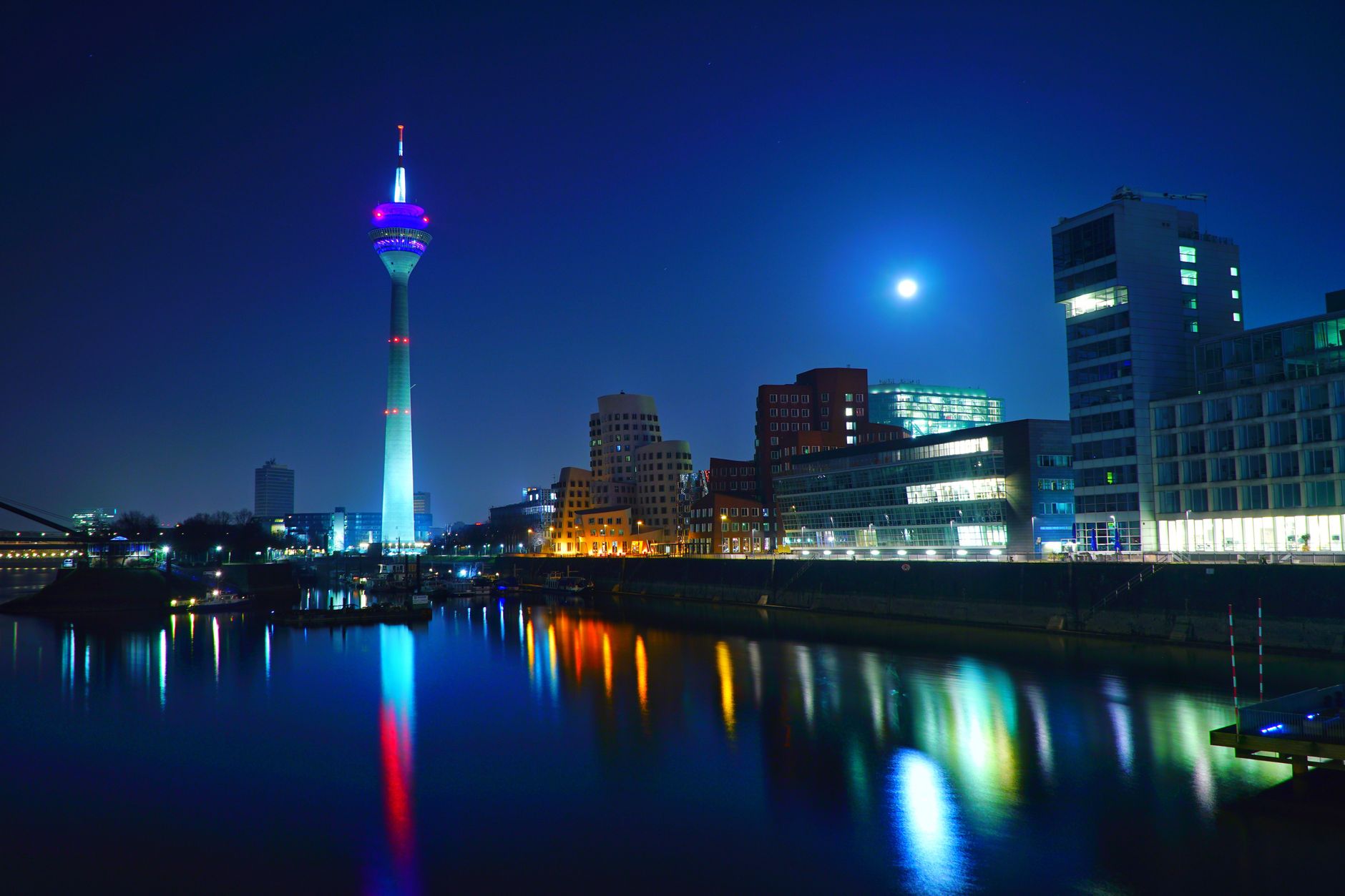 Photo: Nicooo76 / Pexels
Built from cited sources · see the method · How we make our guides →
The city changes register from one block to the next. In the Altstadt, Köbes servers keep the 0.2-liter Altbier glasses coming until you cover yours with a coaster; in Little Tokyo, noodle counters send out bowls fragrant with broth, scallion, and sesame.
Art here spills beyond museum walls: the six stations of the Wehrhahn U-Bahn line each have their own installations, and the route opened in 2016 without commercial advertising. The Kunstakademie shaped artists from Joseph Beuys to Gerhard Richter, while the sculptural white Schauspielhaus makes its own mark on Gustaf-Gründgens-Platz.
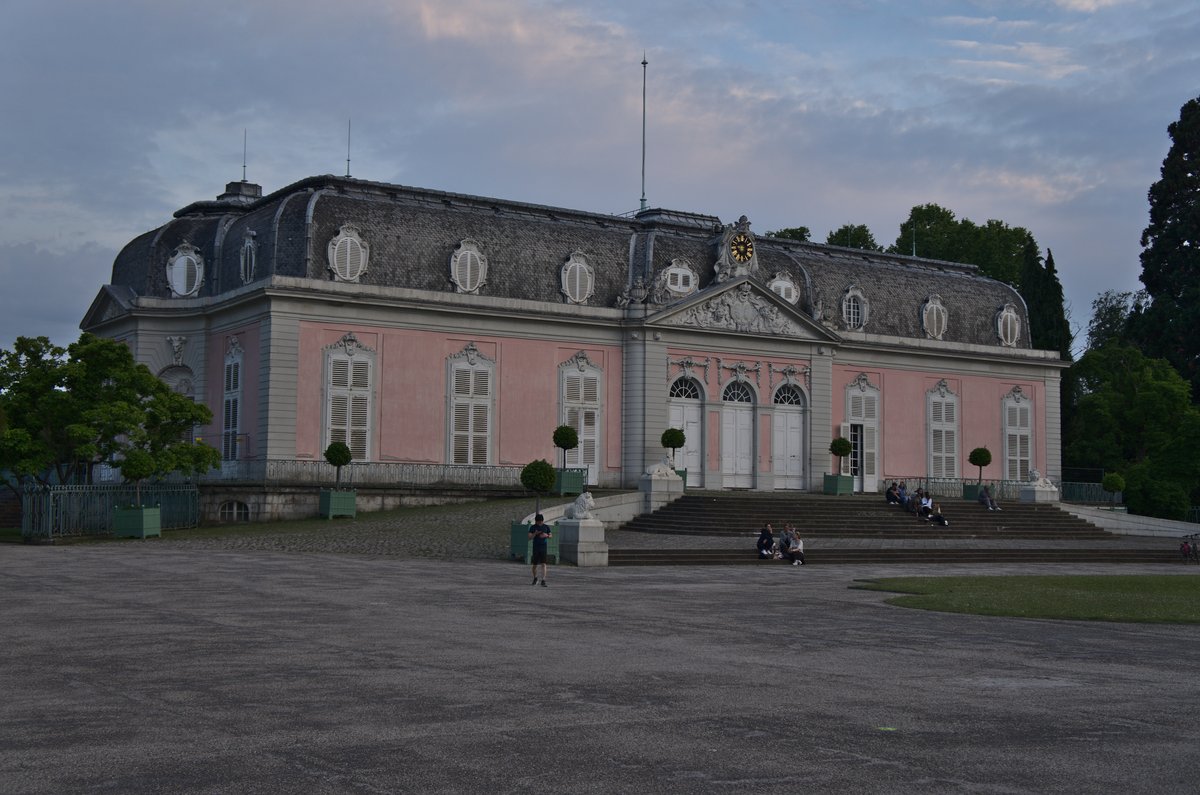
Stay near the center for galleries, shopping arcades, and walks beside the Rhine, then head north to the riverside ruins at Kaiserswerth or south to Benrath Palace and its mirror pond. Düsseldorf’s pleasures lie in those quick shifts—from polished avenues and sharp-edged architecture to beer halls, Japanese bakeries, and quiet water.
Not every monument, just the ones we'd walk you past ourselves.
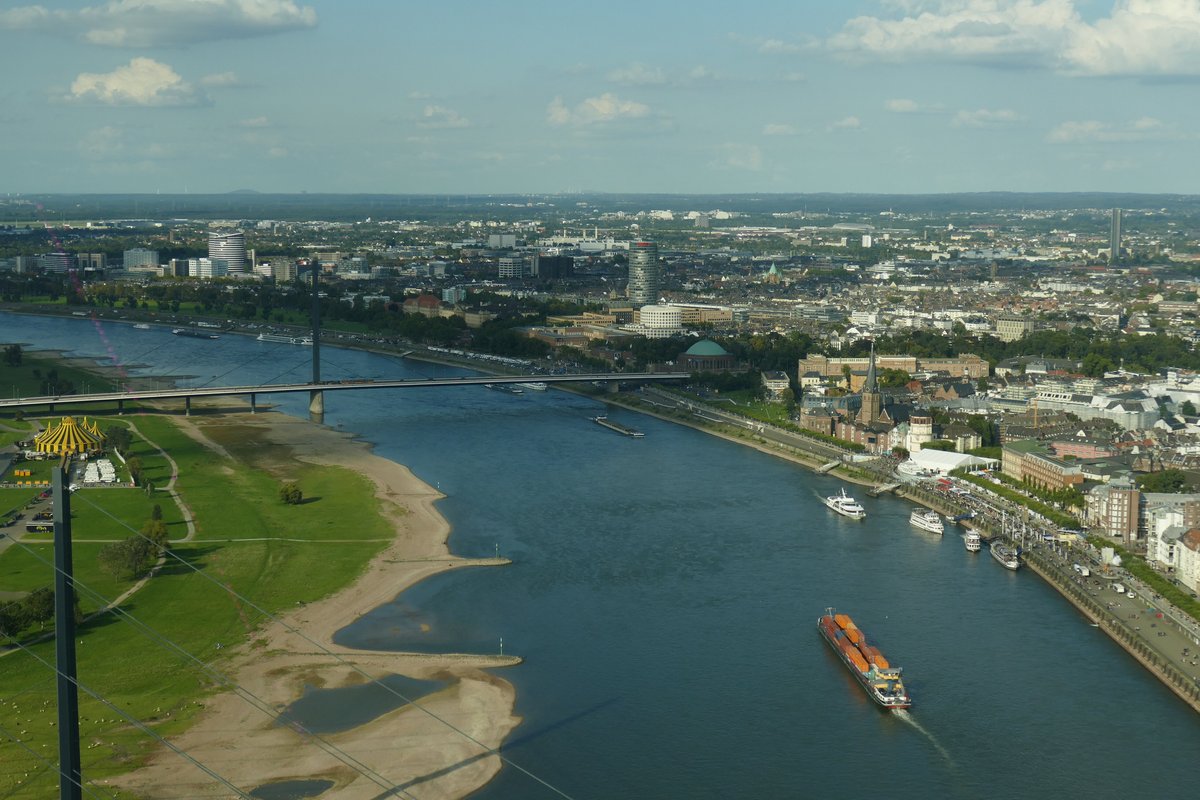
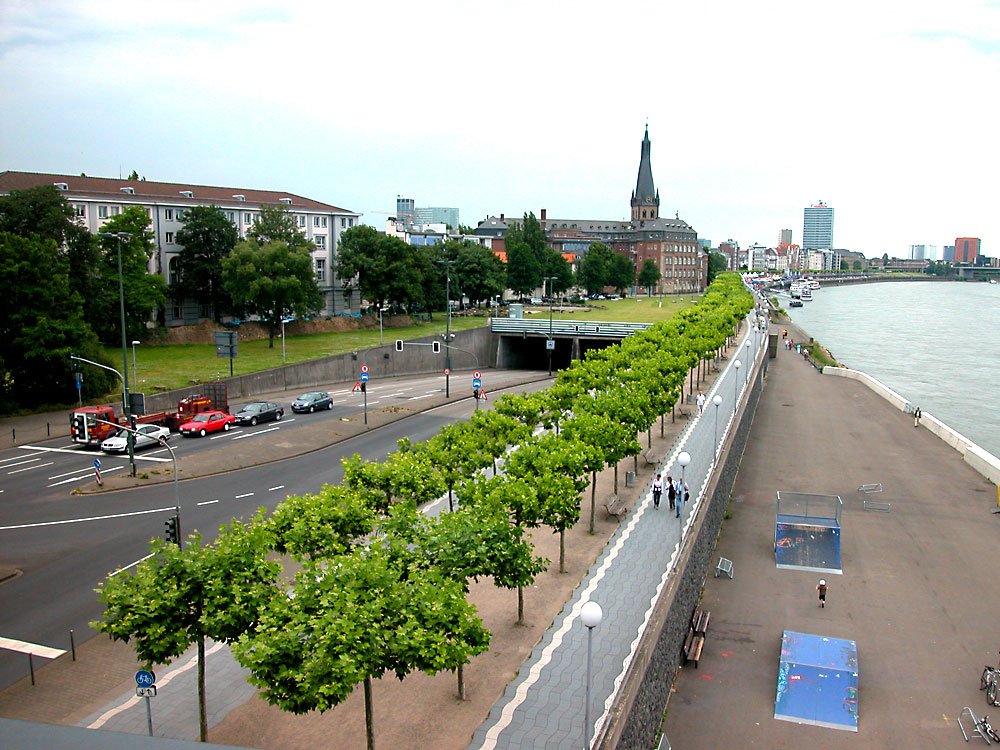
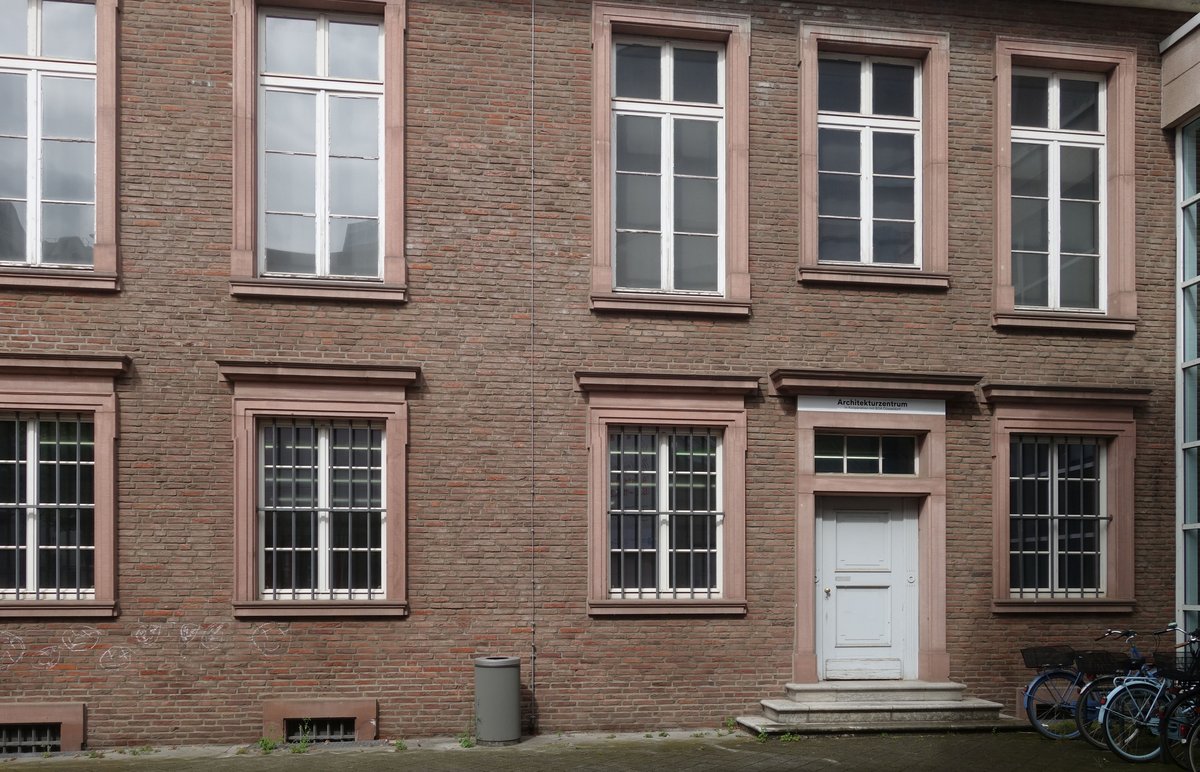
Where to wander, by quarter — each with its own rhythm.
Before you go
Curated from places in this city. Same price as official sites.


Prices shown are indicative — final pricing and availability are confirmed at checkout. Audiala may receive a commission from bookings made via these links.
Ducal courts, industrial power and a postwar cultural pulse
Long before Düsseldorf became a city, Suitbert established a monastery on the Rhine island of Kaiserswerth, now part of the city. Gerresheim grew around a women’s convent founded around 870, giving the wider area a religious life centuries before the town center took shape.
The earliest surviving written mention of Dusseldorp describes a small settlement near the mouth of the Düssel, where it meets the Rhine. Its name suggests a village by the water; the city would come later.
On June 5, Count Adolf V of Berg and his allies defeated the Archbishop of Cologne at the Battle of Worringen, a bloody contest over the Duchy of Limburg. On August 14, Adolf granted Düsseldorf town rights, strengthening his foothold on the Lower Rhine and giving the hamlet a new political weight.
Duke Wilhelm of Berg moved his residence from Schloss Burg to Düsseldorf, making the Rhine town a center of regional government. Court officials, craftsmen and merchants followed the household, changing the scale of everyday life.
A Gothic church dedicated to St. Lambertus began to anchor the growing town beside the Rhine. Its brick walls and later twisted spire became a familiar mark above the Old Town’s tightly packed roofs.
Anne of Cleves was born in Düsseldorf into the ruling House of La Marck, amid the courtly world of the united duchies. In 1540 she married Henry VIII of England; after the marriage was annulled, she remained in England as the king’s “beloved sister.”
The town hall on Marktplatz took its Renaissance form between 1570 and 1573, its facade facing the square where civic business and public life met. The building still gives the Old Town a visible reminder that Düsseldorf was once a compact seat of government, not a sprawling metropolis.
The death of Duke Johann Wilhelm without a male heir set off the War of the Jülich Succession. The Treaty of Xanten in 1614 divided the territories: Palatinate-Neuburg gained Jülich and Berg, with Düsseldorf as its capital, while Brandenburg took Cleves and Mark.
Johann Wilhelm, remembered locally as Jan Wellem, took up rule over Jülich and Berg and made Düsseldorf the stage for an ambitious court. With his wife, Anna Maria Luisa de’ Medici, he backed artists, musicians and architects, turning the city into an international center of Baroque culture.
Jan Wellem died without an heir, and his successor moved the electoral court away from Düsseldorf, first toward Heidelberg and later Mannheim. The city lost its place at the center of dynastic power, though the art and buildings left behind kept its courtly past in view.
Elector Carl Theodor commissioned Schloss Benrath, a pale, symmetrical pleasure palace designed by Nicolas de Pigage and completed in 1773. The Hofgarten followed in 1769, bringing a public park into the city’s daily life at a time when open green space was still a rarity.
French Revolutionary forces bombarded and occupied Düsseldorf, setting parts of the ducal palace, church towers and town quarters ablaze. The attack marked the end of the old defensive order and began a period of upheaval under French power.
Heinrich Heine was born on Bolkerstraße in the French-occupied city and later attended school in Düsseldorf. His sharp lyric voice carried the sounds and memories of the Rhine far beyond the town where he grew up.
Napoleon created the Grand Duchy of Berg, a French client state with Düsseldorf as its capital. New administrations and reforms arrived with the regime, even as the city’s celebrated painting collection was transferred to Munich in 1805.
The Congress of Vienna awarded Düsseldorf and the surrounding Rhineland to Prussia, placing the city in a new province and political system. In 1819, the Prussian government re-established the Kunstakademie, which soon drew painters from across Europe and the Americas.
Düsseldorf became a center of democratic agitation during the German revolutions, as workers, writers and artists pressed for political change. The city’s public squares and meeting rooms turned into places of argument over who should hold power in a Prussian state.
Robert Schumann became Düsseldorf’s municipal music director, and he and Clara settled at Bilker Straße 15. In the city, Robert composed his “Rhenish” Symphony while Clara performed, taught and sustained the family’s musical life through years of mounting strain.
A fire on March 20 consumed Düsseldorf’s old ducal palace, leaving only its Renaissance tower standing. The Schlossturm on Burgplatz is the surviving fragment: a single remnant of the residence that once housed rulers, collections and court ceremony.
Düsseldorf began incorporating neighboring municipalities, including Wersten, Rath and Gerresheim, as industry and population pushed beyond the old city limits. Railway links, established from 1838 onward, had helped make the city an administrative and commercial desk for the expanding Ruhr industries; further annexations followed through 1929.
French and Belgian forces entered Düsseldorf after the First World War as part of Allied enforcement in the Rhineland and Ruhr. Their occupation lasted until August 1925, leaving daily life under the shadow of foreign military control and bitter political dispute.
After the Nazis seized power, Düsseldorf became the capital of Gau Düsseldorf and a key administrative link to the Ruhr’s coal and steel industries. The same offices and industrial networks that had served commerce were drawn into a dictatorship preparing for war.
A major RAF raid on the night of June 11–12 set off fires that tore through neighborhoods and gutted much of the historic center. By the end of the war, more than half of the city’s built-up area had been damaged or destroyed, and the Old Town had lost most of its prewar fabric.
In Aktion Rheinland, a civilian resistance group tried to hand Düsseldorf to advancing American forces without another round of artillery fire. Several conspirators were executed by Nazi loyalists, but U.S. troops entered and liberated the city on April 17, sparing it further fighting.
British military authorities created the state of North Rhine-Westphalia on August 23, joining the former northern Rhineland with Westphalia. Düsseldorf became its capital, its rail connections and surviving administrative buildings helping it secure the role over larger Cologne.
In the mid-1950s, Japanese trading companies began establishing European offices in Düsseldorf, building the foundations of the community now centered around Immermannstraße. In 1957, local artists Heinz Mack and Otto Piene founded the ZERO movement, seeking a fresh start after the wreckage of war.
Joseph Beuys became professor of monumental sculpture at the Kunstakademie, where his teaching would challenge what art could be and who could make it. His classes and confrontations drew students into arguments that spilled beyond the studio walls.
Ralf Hütter and Florian Schneider formed Kraftwerk in Düsseldorf, building a sound from synthesizers, clipped rhythms and the city’s industrial pulse. Their Kling Klang studio became a base for music that would shape electronic pop far beyond the Rhine.
Construction began on the Rheinturm, a concrete telecommunications tower completed in 1982 and rising 240.5 meters above the river. Its shaft carries Horst H. Baumann’s Lichtzeitpegel, a vertical clock whose glowing numbers make time visible from across the city.
Frank Gehry’s three-building Neuer Zollhof complex was completed in the former commercial harbour, its leaning forms clad in plaster, steel and brick. The project helped turn working docks into MedienHafen, where new architecture now stands beside warehouses built for freight.
Düsseldorf hosted matches in UEFA Euro 2024, continuing a run of international events that included the Eurovision Song Contest in 2011 and the Tour de France Grand Départ in 2017. The city’s public image had shifted far from its medieval river crossing: now it was a stage for crowds arriving from across Europe.
Poet and essayist · 1797–1856
Born and educated in Düsseldorf
Heine was born at Bolkerstraße 53, in the middle of today’s Altstadt, and went to school in the city. The nearby bars now crowd the streets he knew; his sharp eye for public life might have found plenty to write about.
Composer · 1810–1856
Municipal music director in Düsseldorf, 1850–1854
Schumann arrived to lead the city’s music, and Düsseldorf became the setting for a large share of his work, including the Third Symphony, known as the Rhenish. The Rhine still gives the piece a local point of reference, even if today’s city sounds very different.
Pianist and composer · 1819–1896
Lived in Düsseldorf, 1850–1857
At Bilker Straße 15, Clara Schumann built a working life around performances, teaching and raising her children. She continued to perform and compose through a difficult period for her family; the city’s Schumann House preserves that more personal history.
Artist and professor · 1921–1986
Studied and taught at Kunstakademie Düsseldorf
Beuys studied sculpture at the Kunstakademie and returned as a professor in 1961, where his teaching and protests made the academy a site of public argument as well as art. A city still known for experimentation might have suited him, though he would likely have challenged its polished side.
Musician · born 1946
Co-founded Kraftwerk in Düsseldorf
Hütter helped form Kraftwerk in Düsseldorf in 1970, turning the city into the starting point for music built from machines, repetition and carefully controlled sound. The polished towers of MedienHafen feel far removed from a recording studio, but both suggest a city willing to make the future audible—or visible.
Musician · 1947–2020
Co-founded Kraftwerk in Düsseldorf
Schneider and Hütter founded Kraftwerk in Düsseldorf and established their Kling Klang recording base near the main station. Their cool, precise sound offers a different key to the city: beneath its social ease runs an interest in design, systems and what comes next.
Ruler and arts patron · 1658–1716
Born, ruled and died in Düsseldorf
Known as Jan Wellem, he made Düsseldorf a centre of courtly art and culture, and his equestrian statue still anchors Marktplatz. Stand near the bronze horse and the city’s modern architecture feels less like a break with history than another chapter in its habit of collecting styles.
Film director · born 1945
Born in Düsseldorf
Wenders was born in Düsseldorf before becoming one of the defining directors of New German Cinema. A city that shifts from old-town lanes to glass towers in a few kilometres might still offer him good material for a film about changing how we see.
Where locals actually book dinner — not the tourist menus.
Small things that change how the city treats you.
The city, as it actually looks.


Yes, especially if you like cities where old streets and contemporary architecture sit close together. You can pair the Altstadt and its brewpubs with the Gehry buildings at MedienHafen, art-filled subway stations and Japanese food around Immermannstraße.
Two to three days gives you time for the Altstadt, MedienHafen, the Rheinturm and a museum or two. Add another half-day for Schloss Benrath or the riverside ruins at Kaiserswerth.
Use the city’s U-Bahn and tram network, then walk between sights in the central districts. The six stations on the Wehrhahn line are worth a closer look in their own right, with individual artworks at each stop.
Use ordinary city precautions, especially in crowded areas such as the Altstadt at night. Keep valuables secure and check your route back before settling in for the evening.
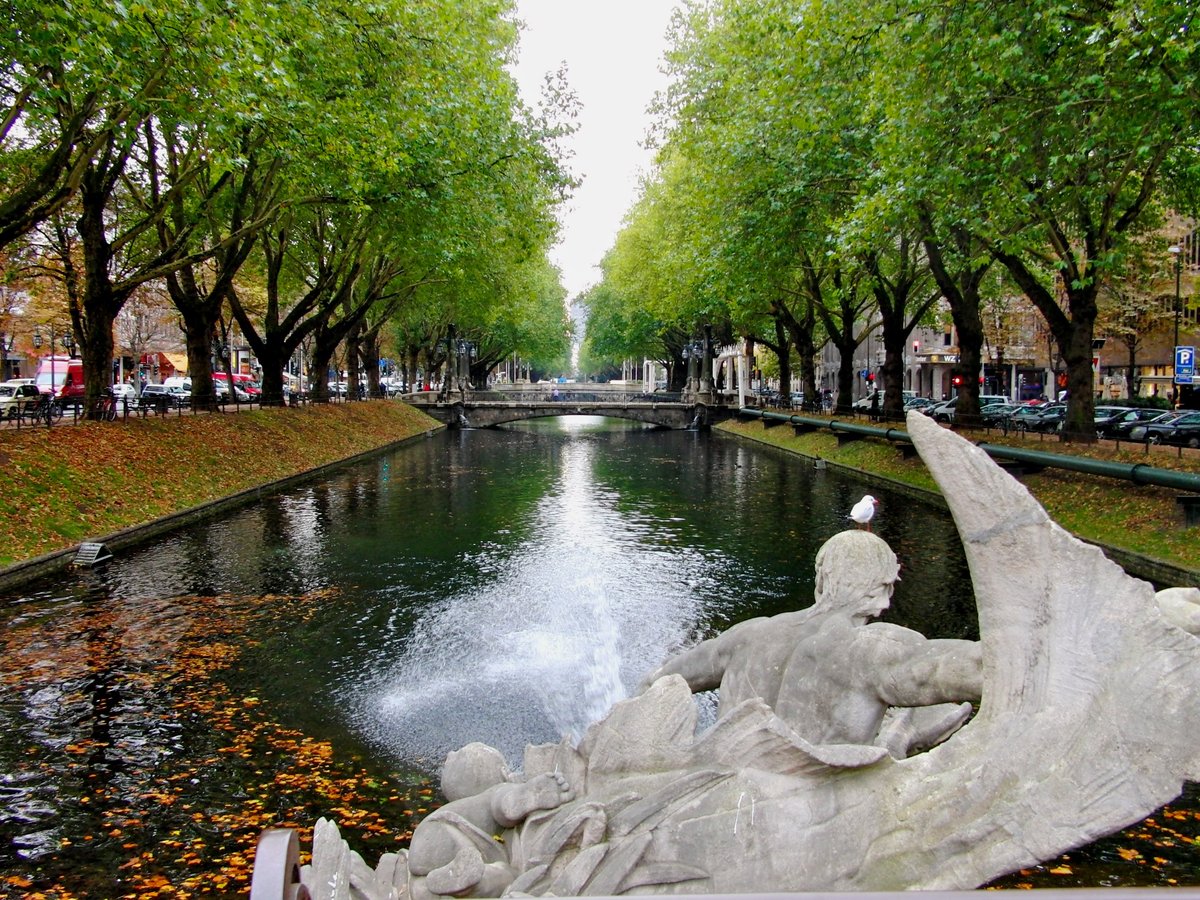
It can be, particularly if you shop along luxury-focused Königsallee or choose high-end dining. For a lower-cost day, walk the public streets of MedienHafen, follow the Rhine promenade and explore the Altstadt on foot.
Düsseldorf is known for its Altstadt bar district, fashion shopping on Königsallee and the contemporary buildings of MedienHafen. The city also has a large Japanese community around Immermannstraße and a strong art connection through the Kunstakademie.
100 places to discover










Showing 1–48 of 100 places
Saved and recently read places — kept on this device only.
Photos may have been resized or cropped.