Introduction
A countess's deathbed vow built Berchtesgaden — and the canons who drafted her foundation deed slipped salt-mining rights into the parchment without telling her. That medieval sleight of hand bankrolled a 700-year monastic principality wedged into the Bavarian Alps, in what is now the Berchtesgadener Land district of southeast Germany near the Austrian border. Come for the Watzmann massif rising 2,713 metres over an emerald lake; stay for Germany's oldest working salt mine, the surviving Augustinian cloister on the market square, and the forested shelf above town where the 20th century took one of its darkest turns.
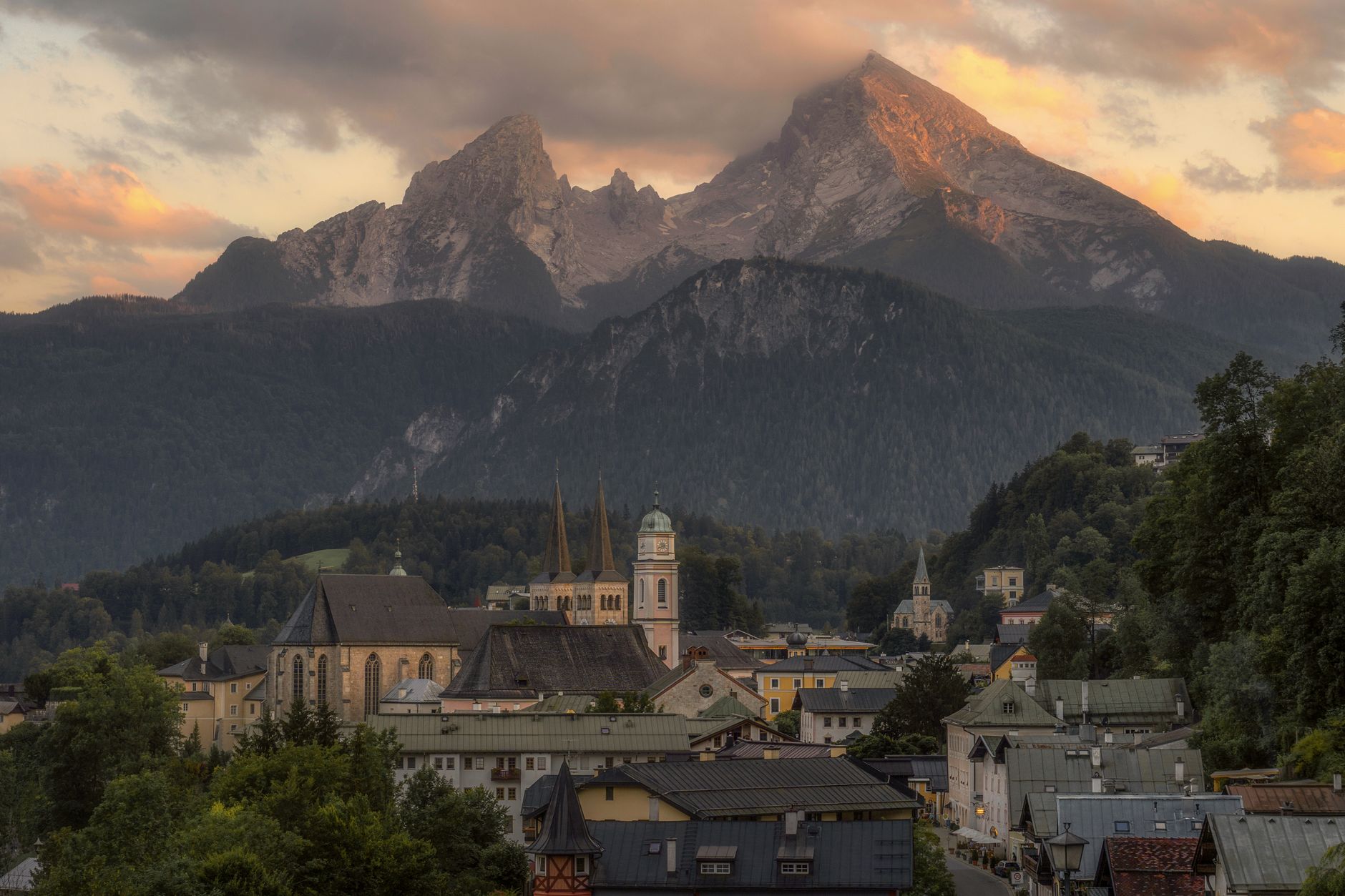
Two stories share one valley here. The older Berchtesgaden is the canons, the salt, the painted houses, the Watzmann legend that turns a tyrant-king into a mountain. The other sits 1,000 metres up at Obersalzberg, where Hitler chose his weekend address and Chamberlain came calling in September 1938. The town below was spared in the 1945 raid and looks essentially as it did in 1900. Walking from the market square to the Dokumentationszentrum takes twenty minutes by car. Walking between the centuries takes longer.
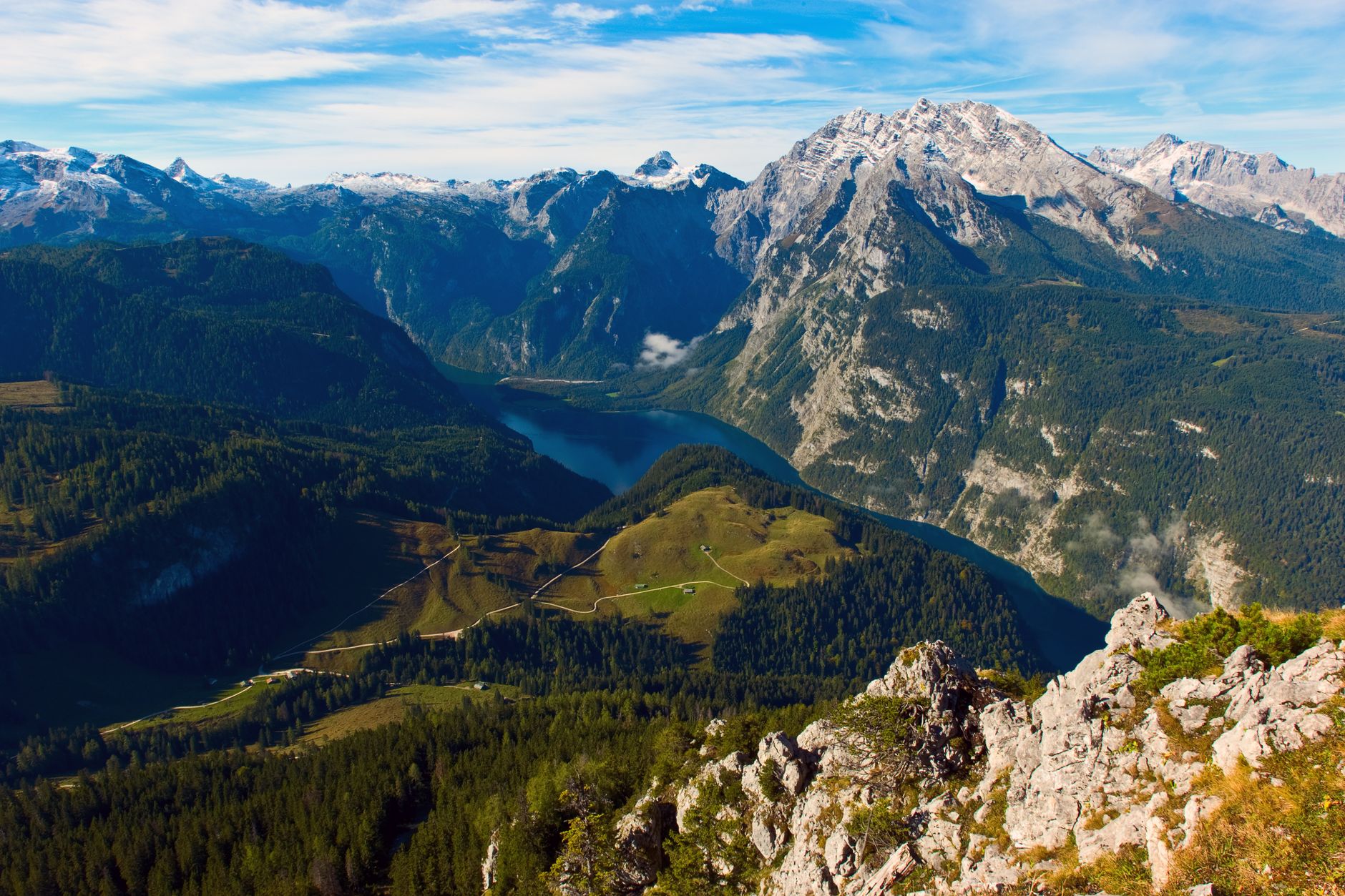
Most visitors arrive for the Königssee — the fjord-like lake the canons used as a private trout pond and transport route, ringed by cliffs so steep the only practical way down is on foot from the Jenner ridge. The salt mine in town runs guided tours through galleries where prince-provosts once skimmed off the wealth that paid for their palace. The Augustinian church holds the bones of those provosts. The painted façade of the Hirschenhaus on the market square holds their tenant farmers' editorial opinions of them.
The town is small — about 8,000 people — and it knows what it is. A working alpine community that happened to be a sovereign state for seven centuries, and that happened to host two of the most consequential diplomatic meetings of the late 1930s. The hiking is excellent. The history is dense. Plan two days minimum.
BERCHTESGADEN TOP 10 | ALLES was du in 2026 sehen MUSST | Travel Guide
BorntoBeeWildWhat to See
Salzbergwerk — the working salt mine since 1517
Prince-Provost Gregor Rainer opened this mine in 1517 and miners have been crawling into the same mountain ever since. You pull white-and-orange coveralls over your clothes, board a narrow electric train, and rattle several hundred meters into rock that holds a steady 12°C whether it's August or February. Then come the wooden slides — two parallel rails worn glass-smooth by generations of leather-trousered miners, the centers dished into a slick concave channel you can feel with your palm before you sit.
Deeper in, the tunnel opens onto an underground lake. Red and white lights bounce off water so still it doubles the cavern, and a wooden raft carries you across in near-silence broken only by drips. The chapel of St. Barbara, patron of miners, sits carved into rock salt nearby — her illuminated figure glittering faintly because the walls around her are, literally, salt.
Two hours, €22.50, and you come up tasting minerals on your lips. Book ahead in summer. The German-dialect commentary is hard work for non-natives, so grab the headset translation at the entrance.
Dokumentationszentrum Obersalzberg
Ten minutes by bus above the pastel town, the mountain shoulder called Obersalzberg holds something the postcard views won't tell you: this was Hitler's second seat of government. The Berghof stood here. So did homes for Bormann, Göring, Speer. Allied bombs flattened most of it in April 1945, and the foundations are still visible in the woods.
The Documentation Center reopened in September 2023 after years of rebuilding, with a permanent exhibition called "Idyll und Verbrechen" — Idyll and Crime. Some 350 objects, photographs, and documents trace how the Nazi regime turned an alpine retreat into a propaganda stage and a node of state terror. Beneath the building, you walk through the original bunker network: damp concrete corridors, blast doors, the dim hush of a place built to outlast the war it lost.
It's a hard visit, deliberately so. Allow two hours minimum and don't pair it with anything cheerful afterward. The exhibition runs in German and English; entry is free.
Königssee and the seven-echo flugelhorn
Take the short bus from town to the Königssee dock, where Germany's cleanest lake sits emerald-green between cliffs that drop straight into the water. The boats have run on electricity since 1909 — one of the world's first electric ferry services, mandated to keep the water drinkable — so you glide rather than chug. Halfway down the lake the captain cuts the motor in front of a sheer rock face called the Echo Wall, lifts a flugelhorn, and plays four or five notes. The cliffs send them back seven times, each return softer than the last.
Most passengers film it. Try not to. The gaps between the echoes are where you actually hear how big the valley is.
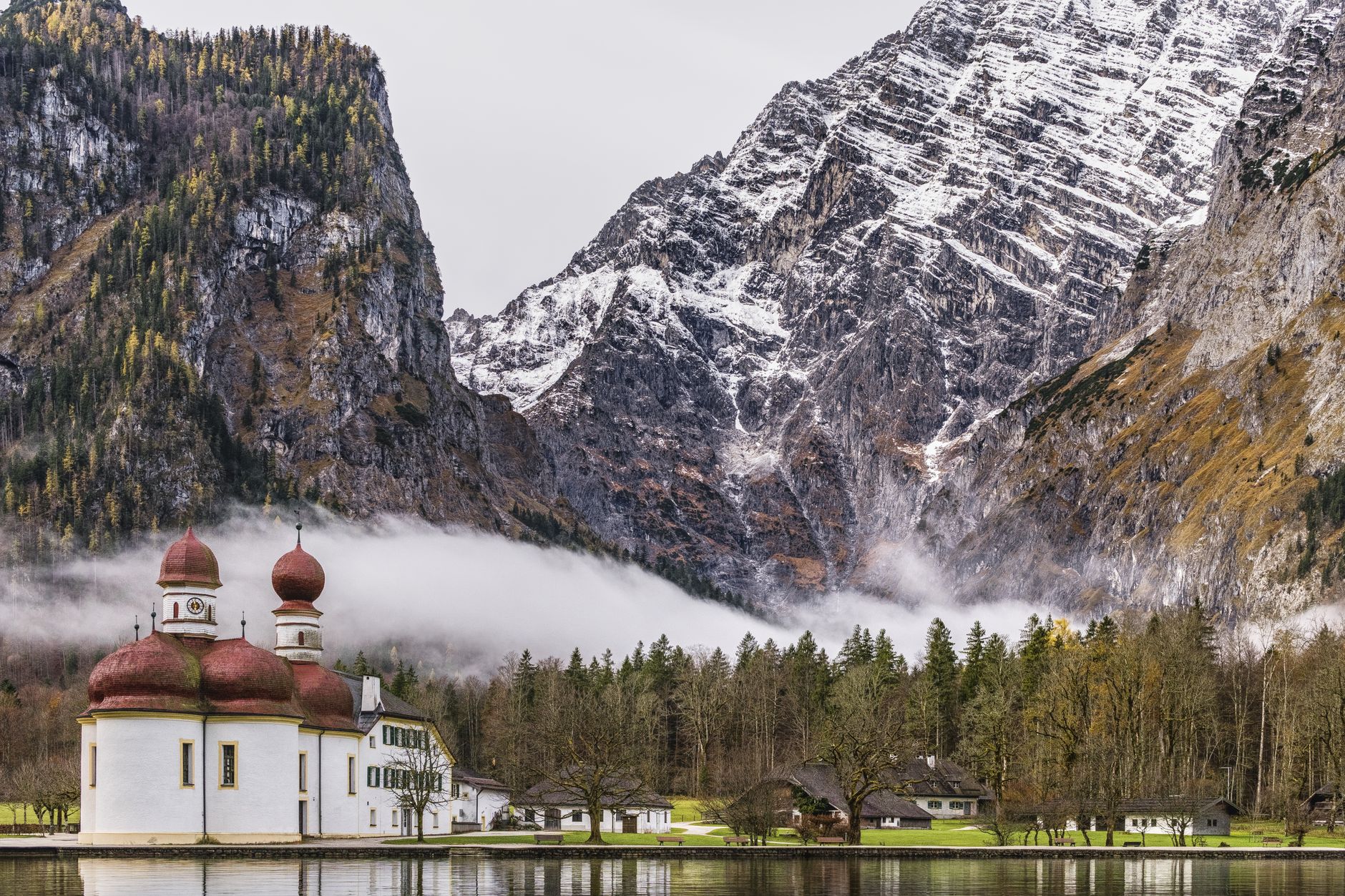
Get off at St. Bartholomä for the red-onion-domed chapel, then walk 15 minutes through forest to Malerwinkel — Painter's Corner — for the view every Bavarian calendar uses. Boats run Easter to mid-October; the Obersee extension only opens in peak season.
Walking the old town: Schlossplatz, Luftmalerei, and a quiet arcade
Start at Schlossplatz before 10am, when the pink façade of the former Augustinian provostry catches soft alpine light and the tour buses haven't arrived. The Schloss itself rewards a tour for its Romanesque cloister alone — primitive 12th-century capitals carved with foliage and beasts, among the oldest stonework in Bavaria. Tours run in German with an English booklet.
Wander into the Markt to read the houses. The painted façades are called Luftmalerei — biblical scenes, hunting parties, trompe-l'œil window frames that aren't really there. Look for the painters' signatures and the household patron saints tucked into the fake niches. Then duck into the arcade off Schlossplatz and find the mural of Wehrmacht soldiers saying goodbye to their families. Most visitors walk straight past it. Don't.
Finish at the Alter Friedhof, the old cemetery in use since 1685. The wall plaques carry photographs of the war dead — each face individual, most barely out of their teens. It's a five-minute detour that recalibrates the rest of your day.
Photo Gallery
Explore Berchtesgaden in Pictures
Berchtesgaden sits below snow-dusted Alpine peaks as storm clouds break over the valley. Church towers, steep roofs, and forested slopes fill the wide mountain view.
Felix Mittermeier on Pexels · Pexels License
An elevated view over Berchtesgaden shows the deep blue lake below, forested ridges, alpine huts, and limestone peaks under clear daylight.
Oliver Wagenblatt on Pexels · Pexels License
Berchtesgaden glows at blue hour beneath the snow-dusted peaks of the Bavarian Alps. Church towers, steep roofs, and winding streets fill the valley below.
Felix Mittermeier on Pexels · Pexels License
Berchtesgaden sits below steep Alpine peaks as sunset light catches the clouds and mountain faces. Church towers and slate rooftops anchor the town in the valley.
Michael Schlierf on Pexels · Pexels License
A lakeside church with red onion domes sits below the steep, snow-dusted Alps near Berchtesgaden. Low mist hangs over the forest, giving the scene a cold, quiet edge.
Felix Mittermeier on Pexels · Pexels License
Berchtesgaden glows under winter night lights, with church towers and snow-covered roofs below the dark alpine peaks. Mist softens the valley, making the town feel almost suspended between mountain and sky.
Michael Schlierf on Pexels · Pexels License
Videos
Watch & Explore Berchtesgaden
Top 10 Things to Do in Berchtesgaden Germany! 🇩🇪
Berchtesgaden -10 Dinge die du in deinem Berchtesgaden Urlaub unbedingt sehen MUSST | Elsa Reiseblog
Stunning Landscape and Dark History in the Bavarian Alps
On the Marktplatz, find the Hirschenhaus and study its Lüftlmalerei — painted facades depicting folk and biblical scenes. Look closely at the cattle headpieces (Fuikln) in any Almabtrieb photo display: if the flowers and mirrors are missing, a cow or herder died that summer on the alm.
Visitor Logistics
Getting There
From Munich, the IC 'Königssee' runs direct in roughly 2h30, or drive the A8 in about 2 hours. From Salzburg, RVO bus 840 leaves hourly from Südtiroler Platz beside the Hauptbahnhof and beats the train at 50 minutes — and if you drive that route, buy a €3 Austrian Vignette at any petrol station, since the road clips the A10.
Opening Hours
As of 2026, the Royal Castle runs guided tours only — summer (16 May–15 Oct) Sun–Fri at 10:30, 12:00, 14:00, 15:30, closed Saturdays; winter cuts to 11:00 and 14:00 Mon–Thu, 11:00 Fri, closed weekends. Haus der Berge stays open daily 9:00–17:00 year-round, last entry 16:00. Eagle's Nest and the gorges close November through mid-May.
Time Needed
Treat Berchtesgaden as a basecamp, not a day trip. Two full days cover the salt mine (2h), a Königssee boat to St. Bartholomä (half day), and either Eagle's Nest or the Obersalzberg Documentation Center (each 2.5–3h). Three to four days lets you add Almbachklamm, Hintersee, and the castle tour without sprinting.
Tickets & Combi
Haus der Berge is €4 adults, €2 kids, free under 6. The €13.50 combi ticket is valid one full year and bundles Haus der Berge, Berchtesgaden Castle, Obersalzberg Documentation, and the Adelsheim Castle Museum — verify on arrival as the combi was suspended during Covid. Local guest cards knock €0.50 off most entries and make buses 838 and 843 free.
Accessibility
Königssee uses electric boats with step-on boarding. Eagle's Nest reaches the summit by bus and tunnel elevator, but the cliffside paths up top are uneven gravel. The Royal Castle is a tour-only historic building with stairs; the tourism office at AlpenCongress on Maximilianstraße can confirm specifics by phone before you commit.
Tips for Visitors
No Drones, Anywhere
Drones are flatly banned across Berchtesgaden National Park, and Bavarian Palace Administration rules block them over the castle too. Any commercial filming needs a permit from the District Office filed at least 10 working days ahead — rangers actively patrol and fine.
Skip the Salzburg Combo Tour
Day tours from Salzburg to Eagle's Nest run €60 and up. Public bus 840 to Berchtesgaden plus bus 838 to the Obersalzberg Kehlstein shuttle does the same trip for a fraction, and a local guest card from your hotel makes the 838 leg free.
Eat Off the Marktplatz
The 'authentic Bavarian' places on the main square are overpriced for what they are. Walk a side street to Gasthof Goldener Bär (€10–18 mains, family-run, locals eat there) or Bräustüberl Berchtesgaden for the royal brewery's beer garden. Splurge night: Restaurant 1875 at the Kempinski.
Dress for the Salt Mine
The mine sits at a steady 12°C and provides protective overalls over your clothes. Wear long sleeves and closed shoes underneath — you'll slide down wooden chutes and cross an underground salt lake, and what you arrive in is what you'll do it in.
Check the Fog at Kehlstein
Eagle's Nest is pure cloud half the time. If the summit is socked in, you'll pay for a 1,834m bus ride and see white walls — pivot to Hintersee in Ramsau instead, where the mirror reflections of the Reiteralpe don't need clear skies.
Go in September or December
Late September brings the Almabtrieb cattle drive around St. Michaeli (29 Sept), when herders parade decorated cows down from alpine pastures — locals consider it the real festival. Early December delivers the Berchtesgadener Advent market with 50+ huts at Schlossplatz and the Buttenmandllauf straw-suit run. July–August is overrun.
Park Smart
The underground garage just past AlpenCongress on Maximilianstraße runs 24/7 but charges full-day rates that sting. The lot behind the Hauptbahnhof is cheaper — check the zone-specific machine. At Königssee, stick to the official €5–6 Schönau lots and ignore private 'Parkplatz' signs charging €10+.
Königssee Tickets at the Counter Only
Boats are operated solely by Bayerische Seenschifffahrt — buy at their official window at the Schönau dock, never from touts. Book online in July–August or expect a 90-minute queue. The full Salet stop (for Obersee) takes a half day; St. Bartholomä alone takes two hours.
Historical Context
The Hay-Shed That Outlived an Empire
The name comes down from Old High German parach — a hay shed — combined with gadem, a one-room hut. Local guides will tell you it traces to Frau Perchta the winter spirit, or to a Salzburg hunting lord called Perther. Both stories are folk etymology, retrofitted after the original meaning was forgotten. The humbler truth: a 700-year principality named for an alpine cattle shelter.
That principality survived because its founders bypassed the Archbishop of Salzburg and placed the entire territory directly under papal and imperial protection. Salzburg spent the next seven centuries trying to reverse the arrangement — through warfare, trade pressure, and one short-lived annexation between 1394 and 1409 — and never fully succeeded. Berchtesgaden remained reichsunmittelbar, an island of clerical sovereignty in alpine forest, until Napoleon's secularization erased it in 1803.
Irmgard's Vow
Sometime in the late 1090s, Irmgard of Rott's husband — sources disagree on whether he was Gebhard II of Sulzbach or Engelbert, a real and unresolved point — vanished on a hunting expedition into the wild forest south of Salzburg. Weeks passed. Irmgard, daughter of the Count Palatine of Rott, made a vow: if he returned alive, she would build a monastery on the spot where he disappeared.
He returned. She did not get to build it. Records show she died in 1101 with the vow unfulfilled, charging her sons Berengar I of Sulzbach and Kuno of Horburg to carry it out. They founded the Augustinian provostry in 1102 — but did not place it under the Archbishop of Salzburg, the obvious local authority. They transferred the endowment lands directly to Rome.
That single legal move created the conditions for everything that followed. Pope Calixt II confirmed the arrangement in 1121. Salt extraction began at Gollenbach around 1190, and according to tradition the 1102 foundation deed already contained mining rights the founding family had not knowingly granted. Whether the canons really slipped that clause past Irmgard's sons or whether later writers invented the detail to explain monastic wealth, the result was identical: a hay-shed hut became one of the smallest, richest, most stubborn states in the Holy Roman Empire.
The Salt Wars
Berchtesgaden sat between Salzburg's salt monopoly and Bavaria's salt hunger, and the prince-provosts spent four centuries fighting both. The Salzirrungen — "salt disputes" — flared into open war repeatedly between the 13th and 17th centuries. Salzburg briefly annexed Berchtesgaden between 1394 and 1409 before being forced to give it back. From the 1550s onward, Bavaria bound the principality through commercial treaties rather than swords. The salt mine that prince-provost Gregor Rainer opened in 1517 still runs today — Germany's oldest continuously working salt mine, and the literal economic foundation of every event in this valley between 1190 and 1803.
April 1945
Hitler chose Obersalzberg, the wooded shelf 1,000 metres above town, as his weekend residence in 1933. The Berghof became the most photographed Nazi private address in the world. In February 1938 he used it to coerce Austrian chancellor Schuschnigg into accepting German domination, and in September of the same year he received Neville Chamberlain there in the meeting that produced the Munich Agreement. On 25 April 1945, 359 RAF Lancasters dropped 1,232 tons of explosives on the Obersalzberg buildings and broke the Berghof apart. The town in the valley below watched the smoke rise against the Watzmann snow and took no damage itself. US troops accepted the town's surrender nine days later, on 4 May.
Listen to the full story in the app
Your Personal Curator, in Your Pocket.
Audio guides for 1,100+ cities across 96 countries. History, stories, and local insight — offline ready.
Audiala App
Available on iOS & Android
Join 50k+ Curators
Frequently Asked
Is Berchtesgaden worth visiting? add
Yes — it's one of the most dramatic alpine settings in Germany, with the Watzmann massif rising directly behind the town and the emerald Königssee a short bus ride away. Plan at least two full days: one for Königssee and the salt mine, one for Obersalzberg and the old town. Skip it only if the forecast is solid fog, since most of what you came for is the view.
How long do you need at Berchtesgaden? add
Two full days minimum, three or four to cover the whole district properly. Königssee plus salt mine fills one day; Obersalzberg Documentation Centre plus the Eagle's Nest fills another; the Royal Castle, Haus der Berge, and the Almbach or Wimbach gorges round out a third. Treat the town itself as a basecamp, not a single attraction.
How do I get to Berchtesgaden from Salzburg? add
Take RVO bus 840 from Salzburg Hauptbahnhof — it runs roughly hourly, takes about 50 minutes, and drops you straight at Berchtesgaden Hauptbahnhof. The train via Freilassing takes around 1 hour 20 minutes but runs earlier and later than the bus. Driving is about 40 minutes, but some routes cross the Austrian autobahn and need a Vignette (€3 / 10 days), which most German rental cars don't carry.
How do I get to Berchtesgaden from Munich? add
By car, around two hours on the A8 autobahn. By train, about two and a half hours, usually changing at Freilassing onto the Berchtesgadener Land Bahn — the IC "Königssee" runs direct from Hamburg via Munich on certain days. Day-trippable, but tight if you also want Königssee.
What is the best time to visit Berchtesgaden? add
Late September is the local answer — the Almabtrieb cattle drive around St. Michaeli (29 September) is when residents actually celebrate, the larches turn gold, and the July–August crowds are gone. Early December brings the Berchtesgadener Advent market on Schlossplatz, with Buttenmandllauf straw-figure runners in the streets. Avoid mid-July to mid-August unless you genuinely want company.
Can you visit the Eagle's Nest without a tour? add
Yes — take RVO bus 838 from Berchtesgaden Hauptbahnhof to the Obersalzberg stop, then buy a ticket for the special Kehlstein shuttle bus, which is the only vehicle allowed on the mountain road. From the top, a 124-metre brass-lined tunnel elevator (1938 original fittings) lifts you the last stretch. The summit road opens mid-May to late October; last up-bus around 16:00.
What should I not miss at Berchtesgaden? add
The flugelhorn echo on the Königssee electric boat — the captain stops mid-lake at the Echo Wall and the cliffs throw the notes back seven times. Also the miner's slides and underground salt lake at the Salzbergwerk (operating since 1517, Germany's oldest working salt mine), and the Dokumentationszentrum Obersalzberg, reopened in 2023 with a permanent exhibition called "Idyll und Verbrechen." If the weather turns, the Royal Castle's Romanesque cloister and the Wittelsbach state rooms hold up beautifully in rain.
Is the Eagle's Nest the same as Hitler's Berghof? add
No — these are two different buildings, and the mix-up is the single most common visitor mistake. The Berghof, Hitler's actual residence, stood about a thousand metres lower on Obersalzberg and was bombed by 359 RAF Lancasters on 25 April 1945, then levelled in 1952. The Kehlsteinhaus (Eagle's Nest) was a 50th-birthday gift from Bormann that Hitler visited only about 14 times — it survived the war intact and is now a restaurant.
Sources
-
verified
Wikipedia — Berchtesgaden
Town history, Nazi-era chronology (25 April 1945 RAF raid, 4 May 1945 surrender), etymology debunking the Frau Perchta folk derivation, Kehlsteinhaus vs Berghof distinction.
-
verified
Historisches Lexikon Bayerns — Fürstpropstei Berchtesgaden (Politische Geschichte)
Academic chronology of the Augustinian provostry: 1102 foundation, 1121 papal protection, 1294 Blutbann, 1559 Fürstpropstei elevation under Ferdinand I.
-
verified
Historisches Lexikon Bayerns — Fürstpropstei Berchtesgaden (Territorium und Verwaltung)
Territorial and administrative history of the prince-provostry, including the 1594–1723 Wittelsbach administration period.
-
verified
Britannica — Berchtesgaden
Overview of the town's role in 20th-century diplomacy: February 1938 Schuschnigg coercion, September 1938 Chamberlain meeting, 1704 Austrian occupation.
-
verified
Bavaria.travel — Daytrip Berchtesgaden
Foundation legend of Irmgard of Rott, the 1558 market-square fountain, Hirschenhaus painted façade, Reichenbach 1816 brine pipeline detail.
-
verified
Undiscovered Berchtesgaden — A Brief History
Local-author background on the founding legend and the alternative husband-name (Engelbert) used in popular literature.
-
verified
Undiscovered Berchtesgaden — Essential Tips for Visiting
Parking (AlpenCongress underground car park), Vignette warning for Austrian autobahn routes, walking routes from town to salt mine and Königssee, luggage lockers at Hauptbahnhof.
-
verified
Salzbergwerk Berchtesgaden — Official Site
Salt mine history from 1190 first extraction, 1517 founding by Prince-Provost Gregor Rainer, secularisation chronology.
-
verified
Salzbergwerk Berchtesgaden — English Visitor Info
Practical visit information for the salt mine tour: miner's overalls, electric train, slides, underground salt lake, ~12°C interior temperature.
-
verified
Schloss Berchtesgaden — Opening Times
Royal Castle guided-tour schedule: summer (May 16–Oct 15) and winter (Oct 16–May 15) tour times, closed Saturdays in summer, German-only tours with English booklet.
-
verified
Nationalpark Berchtesgaden — Haus der Berge
Haus der Berge hours (9:00–17:00), pricing (€4 adult, €2 child, €10 family), €13.50 combi-ticket with Castle and Obersalzberg, locker and dog-crate facilities.
-
verified
Nationalpark Berchtesgaden — Getting There
Bus and rail access to the national park, RVO routes 838/840/843, guest-card-free bus travel.
-
verified
Deutsche Bahn
Train connections Munich–Freilassing–Berchtesgaden, IC "Königssee" direct service from northern Germany.
-
verified
ÖBB Austria
Train connections from Salzburg via Freilassing to Berchtesgaden, used for cross-border routing.
-
verified
DB Regio Bus Bayern — Timetables
RVO bus schedules for routes 838 (Obersalzberg/Eagle's Nest), 840 (Salzburg), 843 (Königssee).
-
verified
Tourism Attractions — Berchtesgaden Hours
Aggregator hours for Eagle's Nest, Obersalzberg Documentation Centre, salt mine, Almbachklamm and Wimbachklamm gorges (cross-check on official sites).
-
verified
Bavaria.travel — Sights of Berchtesgaden
Royal Castle interiors, Romanesque cloister, Alter Friedhof war-memorial photo plaques, Stiftskirche detail.
-
verified
Uncommon Travel Germany — Berchtesgaden
Town atmosphere, Luftmalerei façades, Wehrmacht farewell mural in Schlossplatz arcade, salt mine "Salt Cathedral" experience.
-
verified
Uncommon Travel Germany — Berchtesgaden Town Detail
Joseph Mohr (Silent Night lyricist) connection at Ramsau, Eisenhower painting of Ramsau church, Königssee electric boats since 1909.
-
verified
Uncommon Travel Germany — Obersalzberg
Obersalzberg context, Berghof ruins, Hotel zum Türken, bunker system beneath the Documentation Centre.
-
verified
Obersalzberg Documentation Centre
Official site for the Dokumentationszentrum and its 2023 permanent exhibition "Idyll und Verbrechen."
-
verified
Haus der Berge
Official national park visitor centre site, "Vertikale Wildnis" multimedia exhibition.
-
verified
Berchtesgaden — Historical Walk
Self-guided 4.4 km Soleleitung brine-pipeline circuit, certified guide languages, town squares walking route.
-
verified
Berchtesgaden — Sagen (Legends)
Municipal collection of local legends: King Watzmann, dwarves, Perchta tradition.
-
verified
Heimatkundeverein Berchtesgaden — Der Talkessel
Local heritage society notes on the Talkessel basin geography and cultural identity.
-
verified
Haus der Bayerischen Geschichte — Kloster Berchtesgaden
1695 Franciscan-Reformat monastery foundation by Joseph Clemens of Bavaria.
-
verified
Classic History — Berchtesgaden
Anton Adner (1705–1822) biography, Christlieger Island St. John of Nepomuk statue, King Watzmann legend retelling.
-
verified
Grokipedia — Berchtesgaden Provostry
Provostry foundation chronology cross-check for the 1102 founding date.
-
verified
In Between Travels — Berchtesgaden
Best viewpoints (Lockstein, Maria Gern, Malerwinkel, Ramsau bridge), seasonal differences, photography spots.
-
verified
My Wanderlusty Life — 2 Days in Berchtesgaden
Two-day itinerary structure, attraction sequencing, time budgets.
-
verified
Tripadvisor — Berchtesgaden Attractions
Visitor reviews of Eagle's Nest tours, salt mine guide quality, Haus der Berge sensory exhibition.
Last reviewed: